You’ve likely savored The Compound’s scrumptious Chicken Schnitzel, draped in a parsley lemon sauce and dotted with capers. Or perhaps you’ve relished the hearty slow-braised Osso Bucco, Grilled Heritage Pork Chop with pomegranate pork jus, or flavorful Bucatini with Maine Lobster Tails. Yet, no matter how often you’ve dined at this venerated Santa Fe restaurant or how many extraordinary seasonal dishes you’ve tasted, one meal will always remain off-limits. Unless that is, you’re hard at work in the kitchen, turning out the fabulous food that has long placed The Compound on the world’s culinary map.
A Kitchen Family Tradition
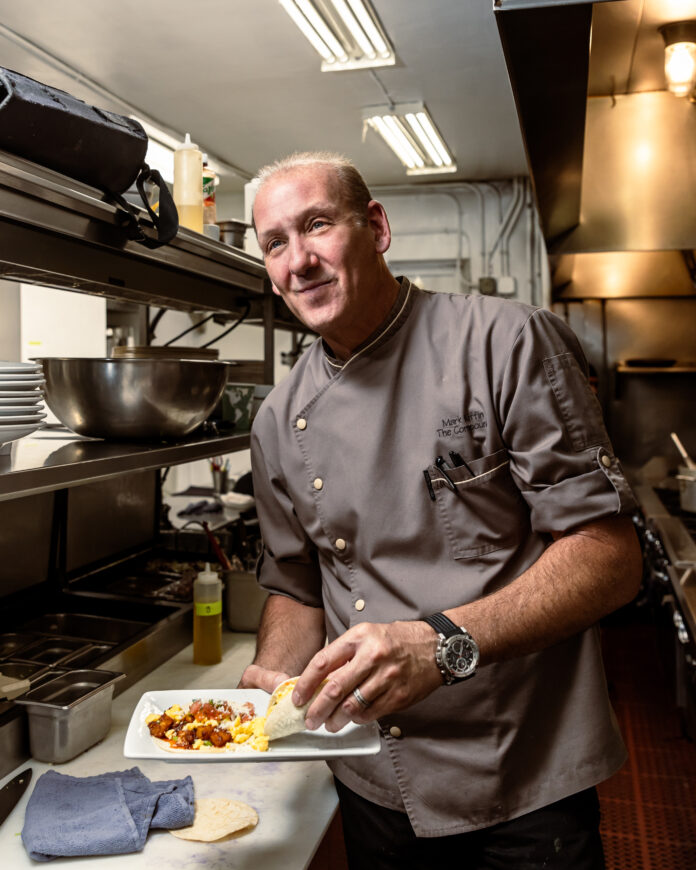
“It’s kind of a tradition in the kitchen where the cooks will often cook for themselves,” says Mark Kiffin, who has owned The Compound for more than 20 years and, in 2005, became only the second person in New Mexico to win the coveted James Beard Best Chef of the Southwest award. “It’s a simple thank you. The big part of it is you’re not under any pressure. It’s not about the wow factor, it’s about a thank you. The camaraderie is already there, and the chefs really are making the meal to take care of each other.”
The Compound’s kitchen meal is a variation on the family meal, or staff meal, that many restaurants serve to their employees for sustenance and a sense of togetherness before the start of a long, often demanding shift. A few eateries in the country started serving the family meal in the 1970s, and by the 1990s, the tradition had firmly taken hold. It became so rooted, in fact, that The Family Meal: Home Cooking with Ferran Adrià—a collection of nearly 100 relatively easy-to-make recipes from one of the world’s greatest chefs who cooked at El Bulli, the now-closed three-star Michelin restaurant in northern Spain—remains a global bestseller more than a decade after it was published.
Spicing Up Breakfast
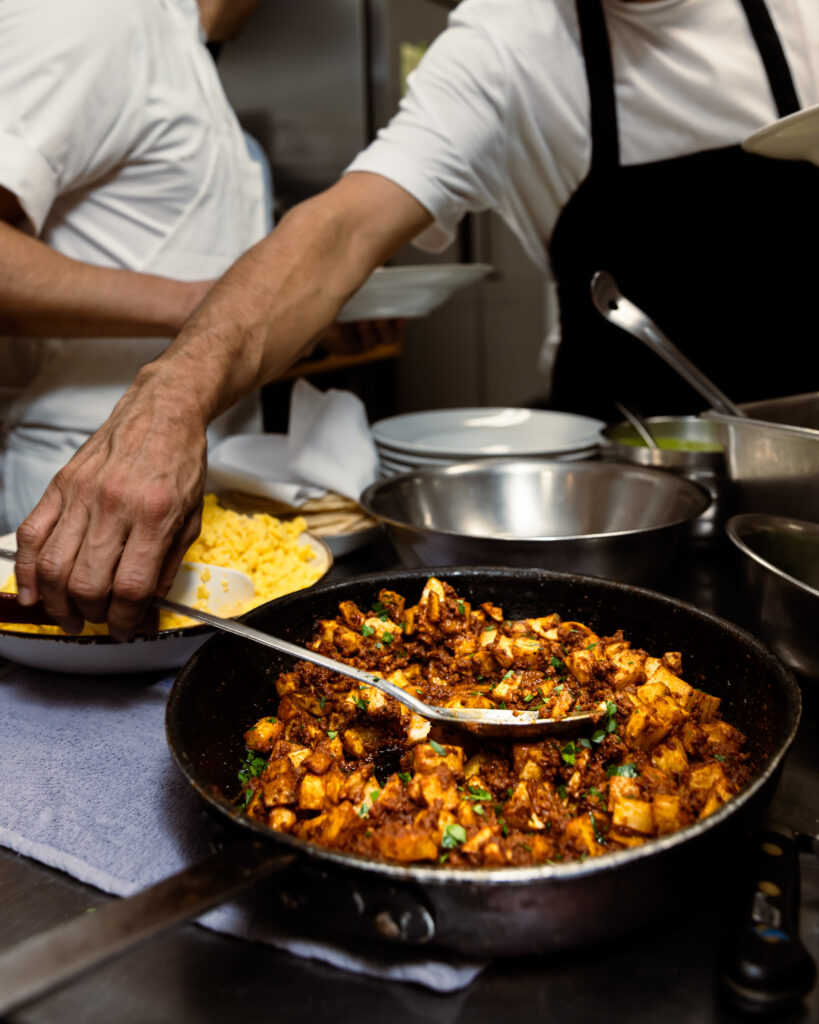
The Compound’s version of the family meal, shared by 10 or so chefs of all ages, is often served for breakfast, as the work day begins, or later, as an after-dinner shift snack. “It’s usually of the Latin flavors, which The Compound doesn’t serve,” says Kiffin, known for his signature Contemporary American menu, which blends New World influences with Mediterranean flavors. “There are times when I’m a part of it, and then times when I will buy things at the grocery store for them to cook with, like chorizo, tortillas, and cilantro.”
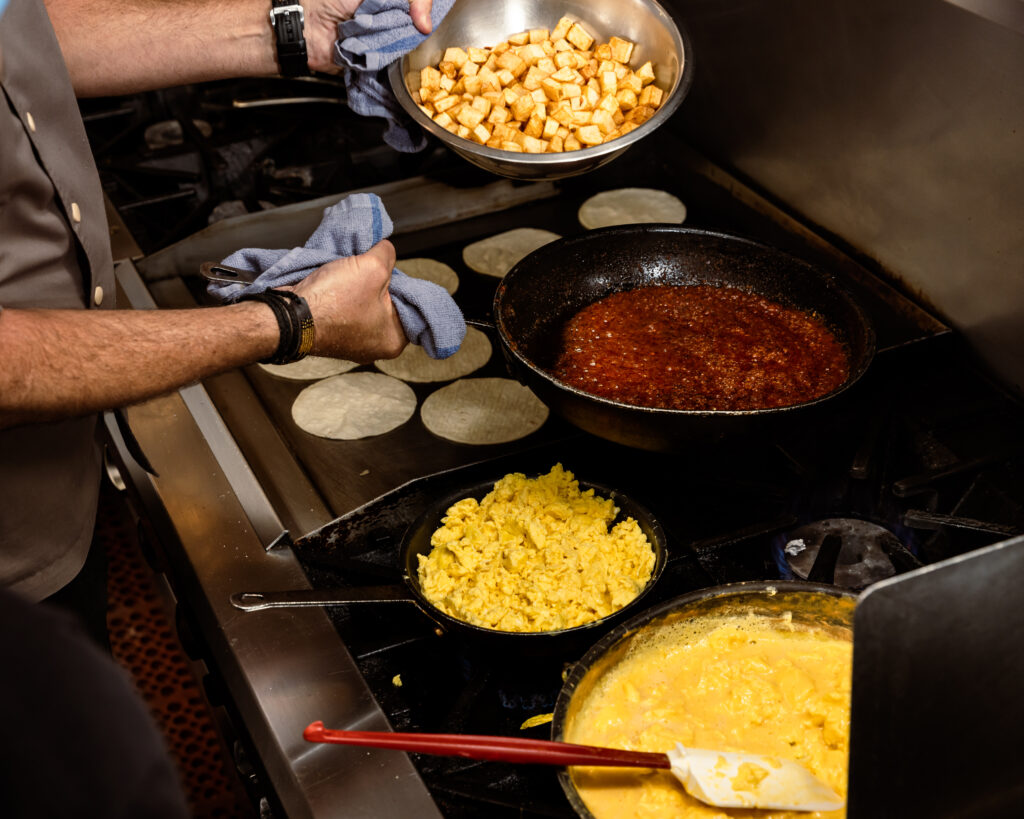
As the kitchen staff preps for the day starting around nine or 10 a.m. before The Compound opens for lunch service, the chefs will often throw together a meal that reflects their Mexican heritage. “They’ll always put a salsa together. The degree of heat depends on who makes it,” Kiffin says. Then they might cook scrambled eggs with potatoes or refritos, chorizo seasoned with garlic and cilantro, and serve it all with a stack of corn tortillas.
Sometimes, French toast is on the menu, made with Bimbo bread, a product of the iconic Mexican bakery company that now operates throughout the United States. Everyone eats on the fly as they’re setting up for lunch. “We don’t get a lot of sitting down,” Kiffin says. “Eating while standing over the trash can is a way of life. It also gives them a little energy. They have to make sure they have something to keep them going once we start lunch.”
Late-Night Snack
The kitchen meal that is cooked up after The Compound’s dinner shift ends amounts to more of a snack that the crew enjoys while closing things down. Tacos are at the top of the list for this time of night. “We also do pasta, and depending on where we are in the schedule, there are spicy chicken legs and thighs and, every now and then, one of the guys will bring in mole from home,” says Kiffin. “This meal is usually done quickly, to give someone a snack before they’re going home. We shouldn’t eat this late. It makes your heart race and you don’t sleep well.”
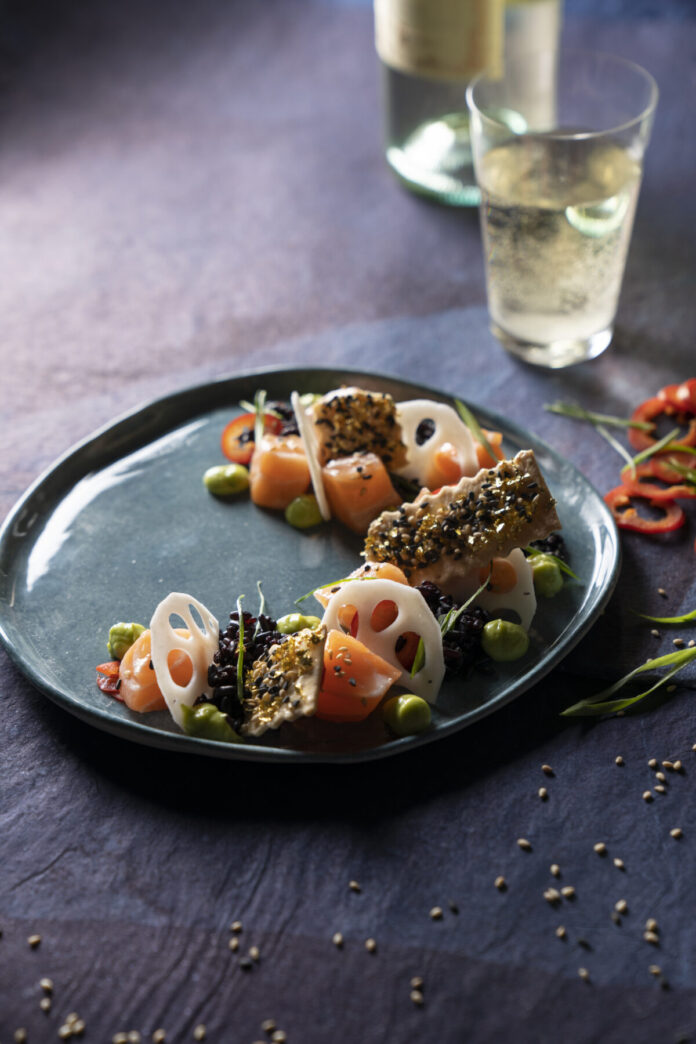
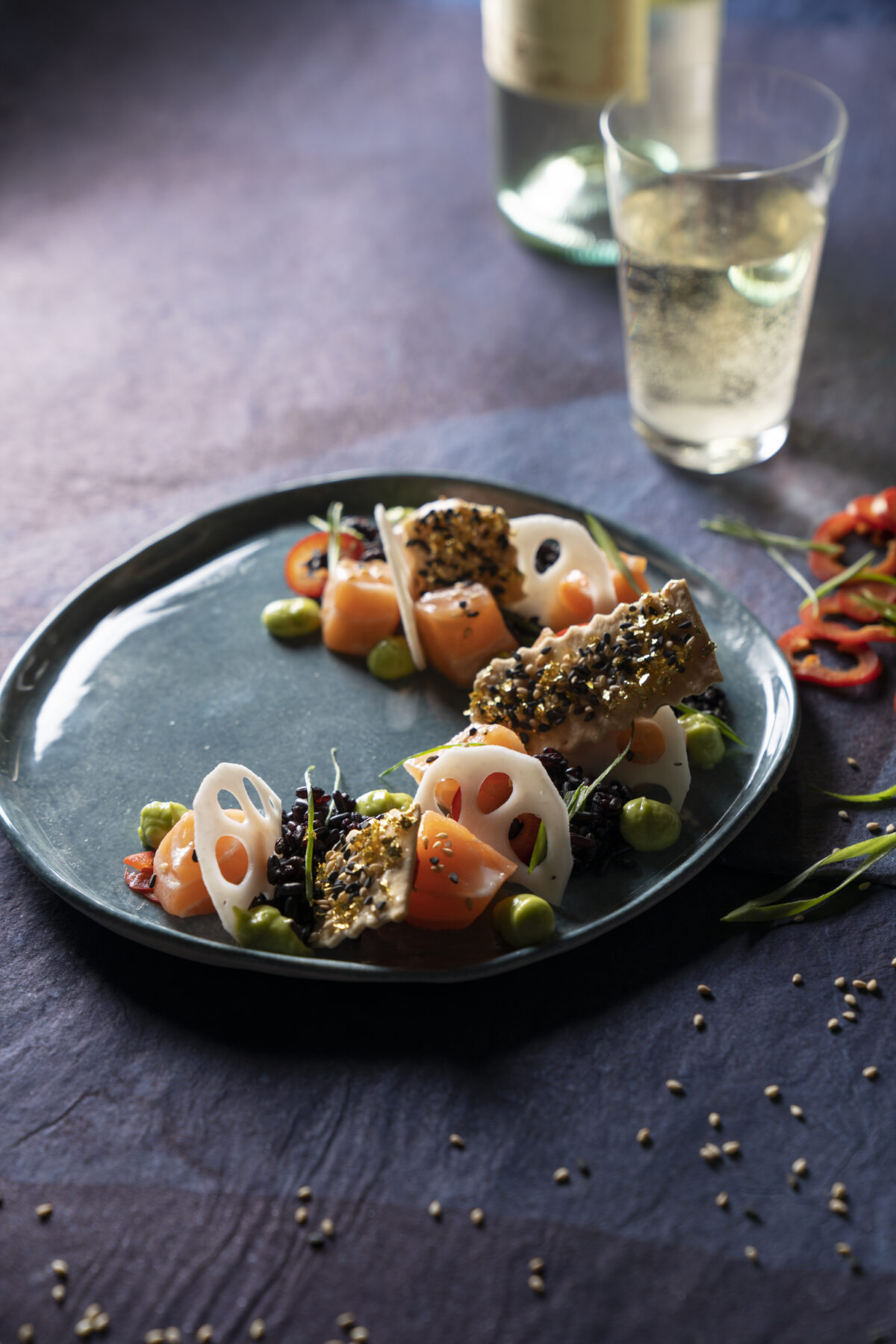
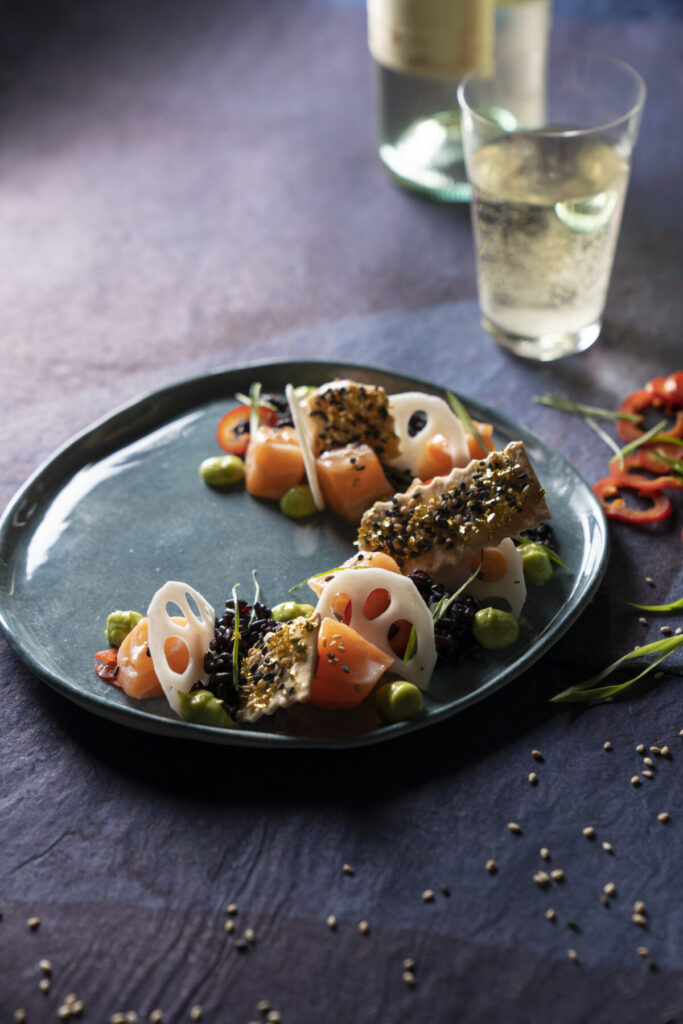
Chef Dakota Weiss’s Salmon Poke with Yuzu is nothing less than a plate of delicious, edible art. The ingredients–from the wafer-thin slices of lotus root and Fresno chile, to the green pops of color from her avocado purée–create a dazzling display of contrasting yet complementary flavors and textures. Artfully arranged gold flake miso sesame cracker shards finish this dish off with the pièce de resistance. To drink? Chef Weiss suggests a dry Riesling or an Albariño as the perfect accompaniment to this work of art.
What is Yuzu?
You may have heard of Yuzu in Asian cooking but did you know it’s actually a fruit? This citrus fruit is native to East Asia. It’s sort of like a cross between a mandarin orange and a citron. Plus, it has a complex aroma that blends the tartness of lemon with the sweetness of mandarin and a hint of grapefruit. Its fragrant, zesty, and intensely flavorful, especially when used for its juice. Add this bright, citrusy burst to sauces, marinades, and desserts.
Salmon turns into a delicacy with the citrusy flavors of yuzu.
Ingredients
Scale
For the truffled yuzu kosho sauce:
¼ cup yuzu kosho*
1 cup rice vinegar
1 cup yuzu juice
½ cup mirin
½ cup orange juice
1 cup fish sauce
½ cup truffle oil
1 cup blended oil
For the spicy avocado purée:
2 avocados, peeled and roughly chopped
¼ cup lime juice
1 small bunch cilantro
2 ½ tsp salt
½ a serrano chili, seeded
¼ cup fish sauce
For the rice cracker:
4 rice paper wraps
Black and white sesame seeds
Sea salt
Gold flakes
For the salmon poke:
12 oz sushi grade salmon fillet, diced in ¾ x ¾-inch cubes
1 lotus root, peeled and sliced thinly
2 Fresno chiles, sliced thinly
2 tbsp black and white sesame seeds
4 green onions, sliced thinly
Salt
1 cup black rice
Instructions
For the truffled yuzu kosho sauce, purée ingredients in a blender until smooth.
For the spicy avocado purée, purée ingredients in a blender until smooth.
Cook the rice according to the package directions.
For the rice cracker, fry the rice paper wraps in a deep-fat fryer for 30 seconds each side. Sprinkle with sesame seeds and salt. Before serving, break them and sprinkle on the gold dust.
For the salmon poke, mix together the salmon, lotus root, Fresno chiles, sesame seeds, green onions, yuzu kosho sauce, and salt to taste.
To plate, place small mounds of the cooked black rice in a half moon shape. Arrange the remaining ingredients. Add dollops of the avocado purée and then garnish with the crackers.
Notes
Yuzu kosho is a paste made from fermented chiles and the Japanese citrus fruit yuzu.
if ( unit && ( ‘metric’ === unit || ‘usc’ === unit ) ) {
document.querySelector( ‘.tasty-recipes-convert-button[data-unit-type=”‘ + unit + ‘”]’ ).click();
}
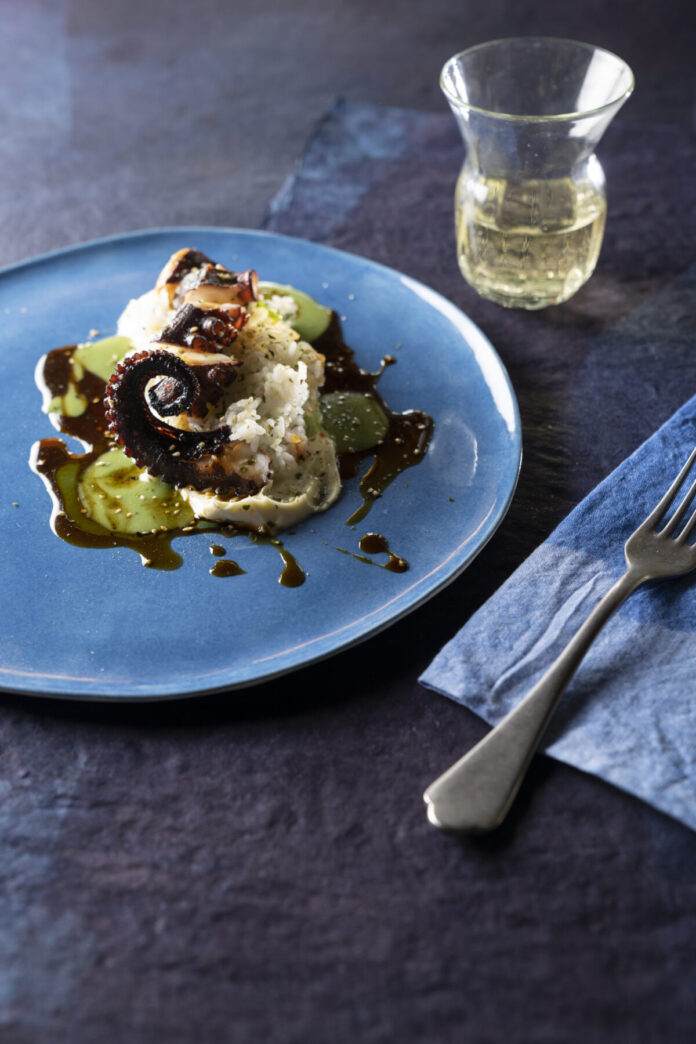
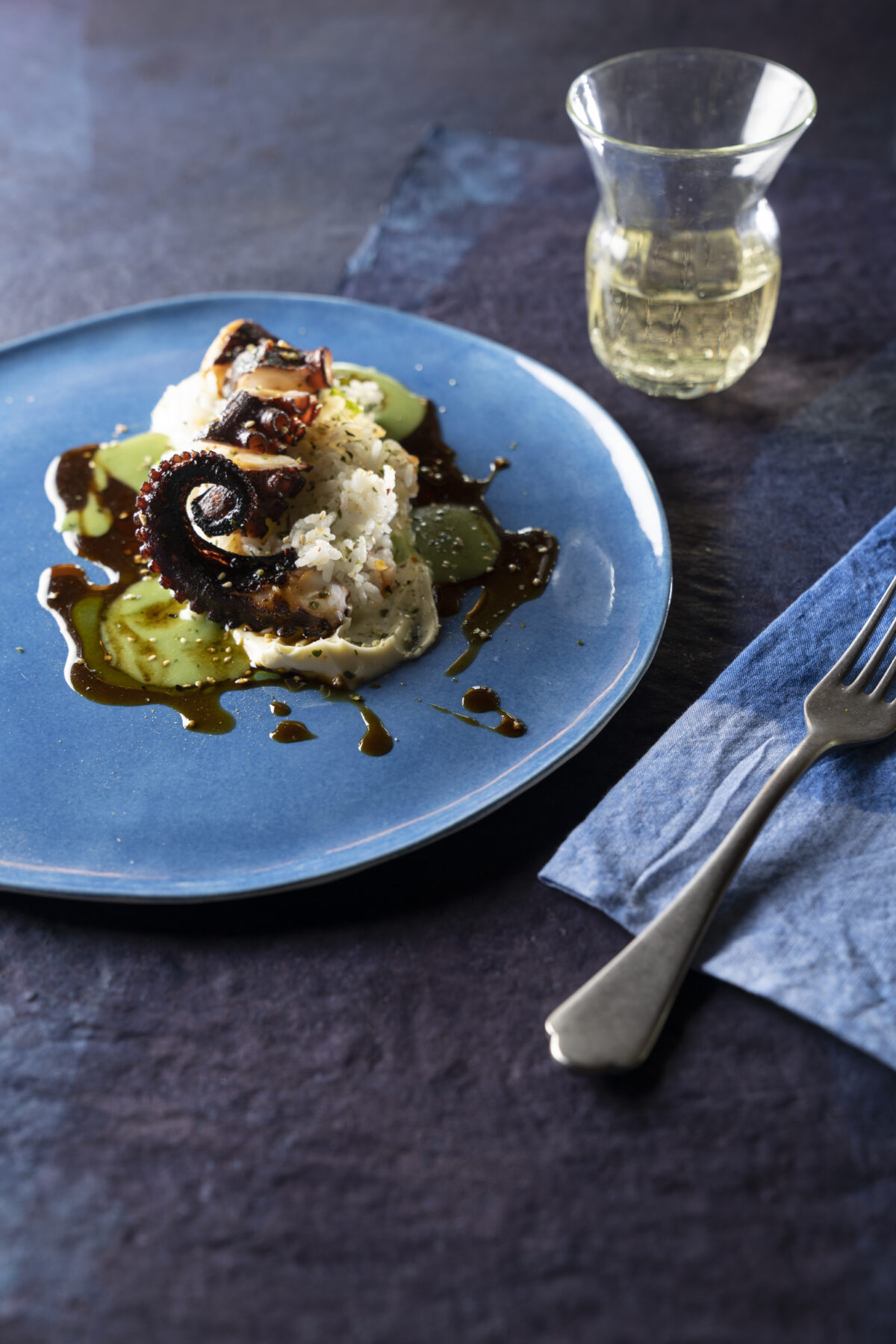
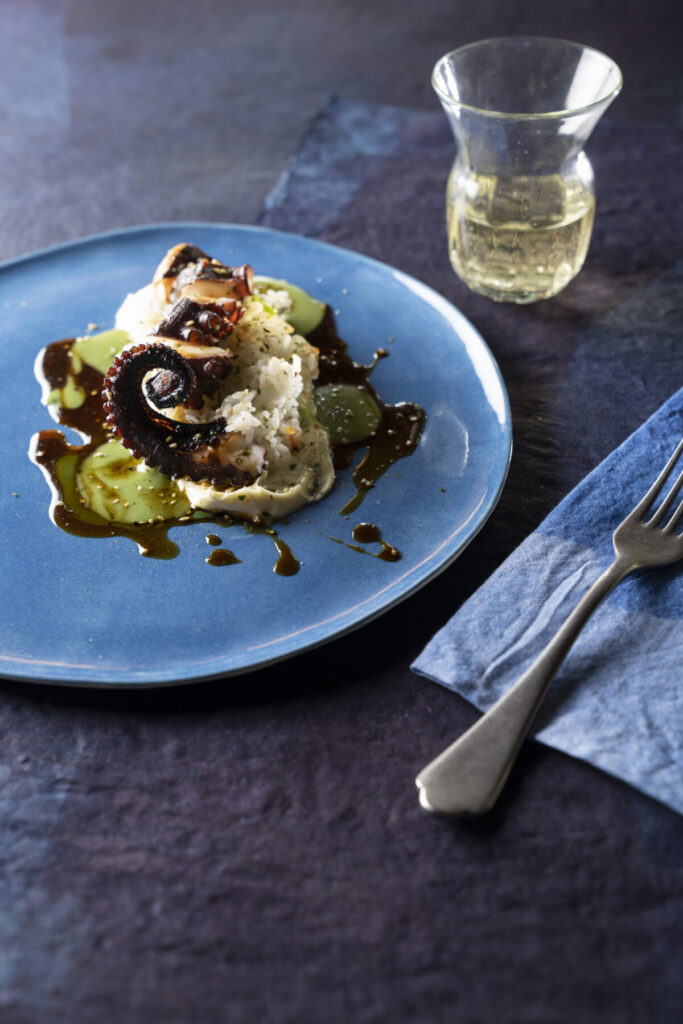
Chef David Sellers’s Teriyaki-Glazed Grilled Octopus, like the food he serves at his restaurant Horno, is all about contrasts. Here, there is richness from the teriyaki, balanced by the acidity from the yuzu and heat from the wasabi. To drink, Chef Sellers suggests L’Escale, a Sauvignon blanc from the Loire Valley. It’s juicy, fresh and can hold its own with this dish. Treat yourself on a special evening and be sure to take your time plating. How you present your food can truly make all the difference.
What is Furikake Spice?
Furikake spice is a mixture of nori seaweed, sesame, chile, and other delicious things and is available in most Asian markets. It is a savory Japanese seasoning blend that adds a burst of flavor and texture to our Teriyaki-Glazed Grilled Octopus. The combination of salty, savory, and slightly sweet flavors makes it unlike any American seasoning you can find. You can find many different varieties of furikake and each carries a special element. Some may include dried fish, bonito flakes, vegetables, garlic powder, and red pepper flakes to name a few.
If you want to learn to create an elevated meal, here’s where to start.
Ingredients
Scale
For the octopus braise:
¼ cup canola oil
1 onion, chopped
1 carrot, chopped
3 ribs celery, chopped
5 cloves garlic, peeled and sliced
1 cup white wine
3 lemons, sliced in half
4 bay leaves
3 sprigs fresh thyme
Kosher salt
3 ½ –4 lb octopus
For the sticky rice:
1 cup sushi rice or similar short grain Southeast Asian rice variety
½ cup rice wine vinegar
¼ cup sugar
1 bunch green onion, sliced
For the wasabi emulsion:
½ cup wasabi powder
¼ cup rice wine vinegar
¼ cup granulated sugar
½ cup canola oil
For the teriyaki glaze:
1 cup soy sauce
½ cup orange juice
Juice of 3 limes
¼ cup sugar
3 tbsp cornstarch
For the yuzu aoili:
3 egg yolks
2 tbsp yuzu juice
1 cup canola oil
Pinch salt
For garnish:
Furikake spice
Instructions
Warm the canola oil in a small roasting dish or pot large enough to hold the octopus. Over medium heat, sauté the onion, carrot, celery, and garlic in the oil until translucent.
Deglaze with white wine and add the lemons, bay leaves, thyme, and season with salt. Add 4 cups water, bring to a simmer, and cook for 20 minutes. Turn the heat down to low and add the whole octopus. Cook covered in a 225-degree oven for one hour 45 minutes. Check for tenderness, if not quite ready give it another 15 minutes.
Remove the octopus from the liquid and cool in a refrigerator until completely cold. Cut off the head and discard. Slice off the legs individually.
To make the rice, bring the sushi rice to a simmer in 1 ½ cups of water, cover, and cook until just tender. Turn rice out into a bowl.
In a small saucepan combine the rice wine vinegar, sugar, and green onion and simmer until sugar is completely dissolved. Season with a pinch of salt. Mix gently with rice and set aside.
To make the wasabi emulsion, combine the wasabi powder, rice wine vinegar, sugar, and ¼ cup water. Stir until mixed and the sugar dissolves. Let rest for 15 minutes then whisk in the oil until emulsified.
To make the teriyaki glaze, combine the soy sauce, orange juice, lime juice, and sugar in a small saucepan; simmer until the sugar is dissolved. Mix cornstarch with a small amount of water and whisk into the mixture. The sauce should thicken enough to coat the back of a spoon. Simmer for 2 or 3 minutes and let cool completely.
To make the yuzu aioli, combine egg yolks and yuzu juice in a food processor. Turn the food processor on high and slowly add the canola oil until well incorporated. It should resemble a mayonnaise. Season with salt to taste.
Brush the octopus pieces with oil and season with salt and pepper. Cook on a hot grill until slightly charred all over. Slice the octopus into pieces.
To plate, smear a dollop of the yuzu aioli on six plates. Divide the rice among 6 plates, and place the octopus on top of and around the rice. Spoon wasabi emulsion and teriyaki glaze on and around the octopus. Sprinkle furikake spice over the middle of each dish to your liking.
if ( unit && ( ‘metric’ === unit || ‘usc’ === unit ) ) {
document.querySelector( ‘.tasty-recipes-convert-button[data-unit-type=”‘ + unit + ‘”]’ ).click();
}
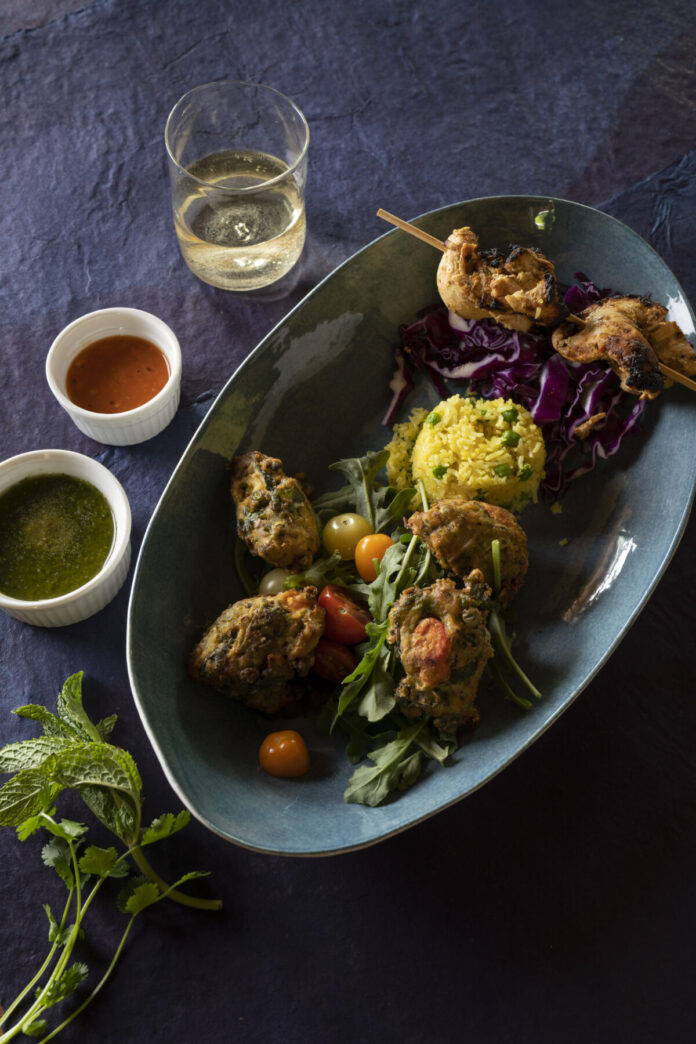
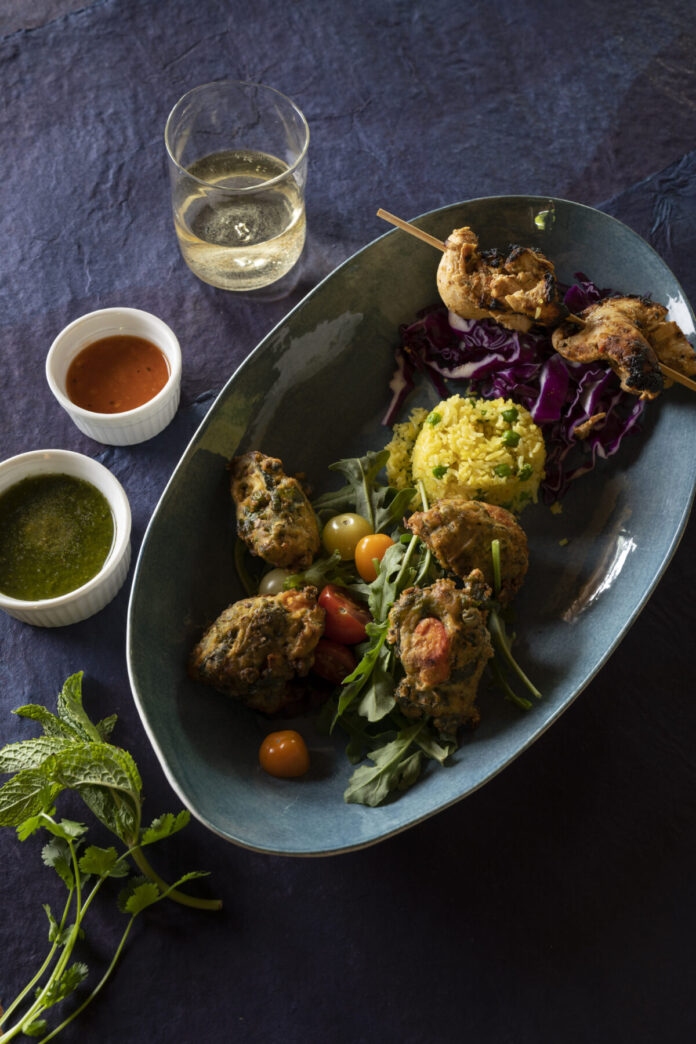
Ask Chef Paddy Rawal what inspires his cooking and he’ll tell you two things. “People eat with their eyes first, and spice is for flavor, not for heat.” His food is indeed eye-catching, colorful and bright, generous with herbs like cilantro and mint. His use of spices is a masterclass with everything from fenugreek leaves, chaat masala, carom seeds, coriander, and cumin making appearances. The result is food that is balanced and spiced impeccably. It’s also a food that’s as generous and welcoming as the chef himself.
Chile Pakora with Cilantro-Mint Chutney Recipe
INGREDIENTS
FOR THE CHILE PAKORA: 4 cups vegetable oil
3 cups baby spinach, lightly packed and coarsely chopped
1 white onion, thinly sliced
¼ cup serrano chile, chopped
1 cup besan (chickpea flour)
2 tbsp rice flour
1 tbsp ginger-garlic paste
1 tbsp dried fenugreek leaves
1 tsp chaat masala
1 tsp garam masala
½ tsp carom seeds*
Kosher salt
FOR THE CILANTRO-MINT CHUTNEY: 2 cups fresh cilantro, tightly packed
2 cups fresh mint, tightly packed
1 or 2 jalapeños
¼ cup fresh lemon juice
Kosher salt
INSTRUCTIONS
For the pakoras, pour the oil into a large, deep pan and place over medium heat.
Meanwhile, combine the spinach, onion, chiles, chickpea flour, rice flour, ginger-garlic paste, fenugreek, chaat masala, garam masala, carom seeds, and salt to taste in a large bowl. Stir the mixture well. Stir in enough water, about half a cup or a little more, to make a thick batter.
When the oil is hot, working in batches, use a spoon to scoop the mixture and drop it into the hot oil. Fry until golden brown, 4-5 minutes. Drain on paper towels, and sprinkle with chaat masala.
For the cilantro-mint chutney, in a food processor combine the cilantro, mint, jalapeño, lemon juice, and salt to taste and blend until smooth. Serve alongside the pakora.
*Note: Carom or ajwain seeds are a special Indian spice that is used very sparingly.
Chicken Malai Kebab with Mango Habanero Chutney Recipe
A delicious chicken kebab recipe made with serrano chiles, white boneless chicken chunks, and a creamy marinade.
INGREDIENTS
FOR THE CHICKEN MALAI KEBAB: 1 cup Greek yogurt
1 cup soft cream cheese
1 tbsp cracked black pepper
Salt to season
1 tsp fresh chopped garlic
1 tsp fresh chopped ginger
1 tbsp oil
¼ cup chopped serrano chiles
1 tsp cumin powder
1 tsp coriander powder
¼ tsp nutmeg powder
½ tsp green cardamom powder
1 ½ lb boneless chicken breast, cut in 2 x 2-inch chunks
INSTRUCTIONS
In a mixing bowl, add all the ingredients except the chicken. Mix well and set aside.
Add the chicken pieces and thoroughly coat each piece. Marinade in the refrigerator for 30 minutes.
Remove from the refrigerator, place the chicken on skewers, and lay on an ovenproof sheet.
Preheat the oven to grill or convention-cook at 425 degrees. Once ready, place the tray in the oven.
The chicken should take about 15 minutes at the most to cook (if using a thermometer, an internal temperature of at least 165 degrees). Flip the skewers halfway through cooking.
FOR THE MANGO HABANERO CHUTNEY: 25 fresh habanero chiles, stems removed
14 oz bottled mango chutney
2 tbsp lemon Juice
2 tsp rice vinegar
1 cup chopped green bell peppers
1 tsp chopped garlic
½ cup thinly sliced onion
1 tbsp salt
1 tbsp sugar
½ cup chopped tomatoes
INSTRUCTIONS
Place all the ingredients in a saucepan big enough to hold the ingredients along with half a gallon of water.
Let the water come to a boil and then reduce the heat to medium and boil for 10 minutes more.
Let the ingredients cool down.
Using a food processor, blend the mixture in batches and place in the refrigerator for 30 minutes before serving.
Recipe by Chef Paddy Rawal of Raaga-Go / Story and Styling by Julia Platt Leonard / Support from Alex Hanna / Photography by Kate Russell
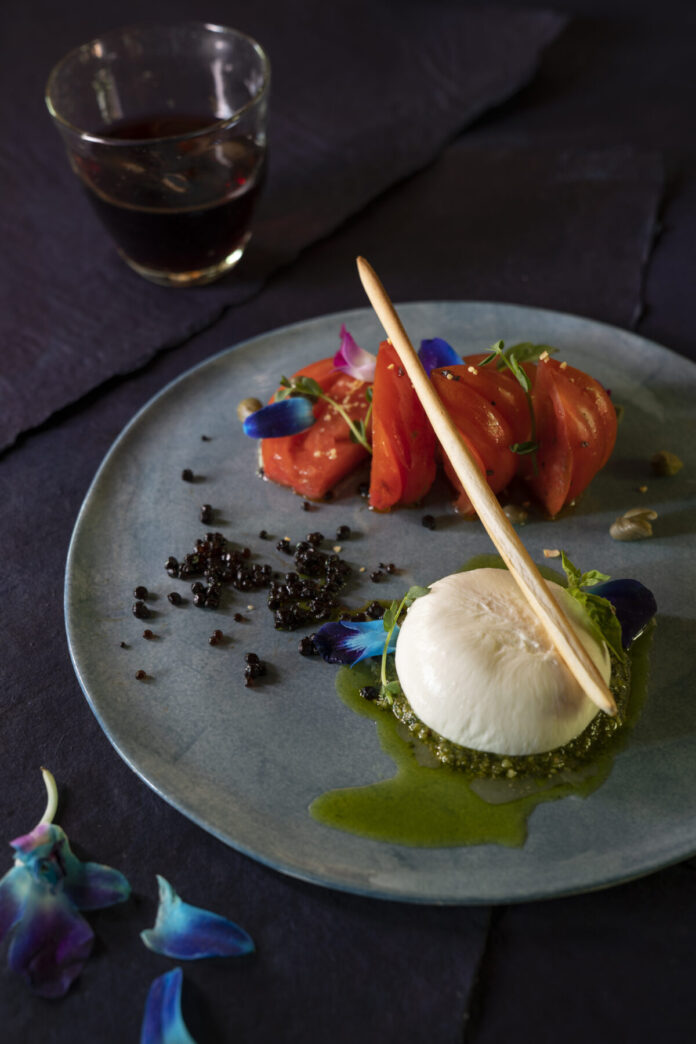
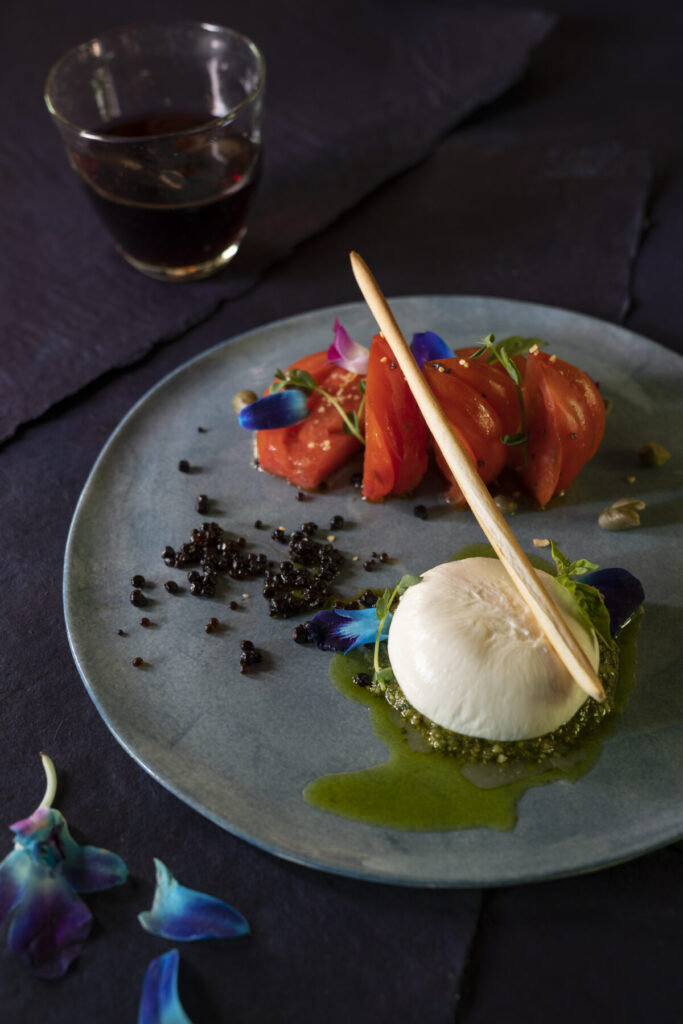
There is Caprese salad, and then there is Sassella’s Burrata Caprese salad. Chef Cristian Pontiggia starts with house-made burrata, pairs it with local heirloom tomatoes, adds capers for a sharp punch as well as a swirl of walnut basil pesto, and finishes it with a garnish of Hawaiian basil, tangerine Calabrian chile oil (a game-changing ingredient), dehydrated garlic, volcanic black salt, and balsamic pearls that he creates. It’s a dish that speaks to both the eyes and the stomach in equal measure. To drink, he suggests a Brunello di Montalcino: “Strong on flavor, but with the burrata, a perfect pairing.”
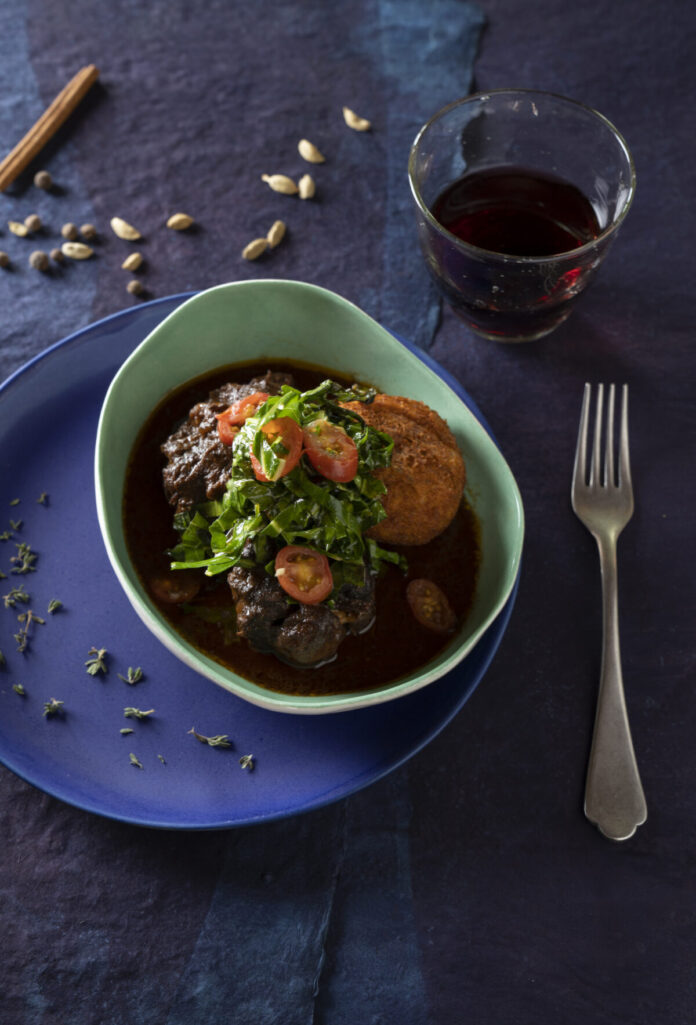
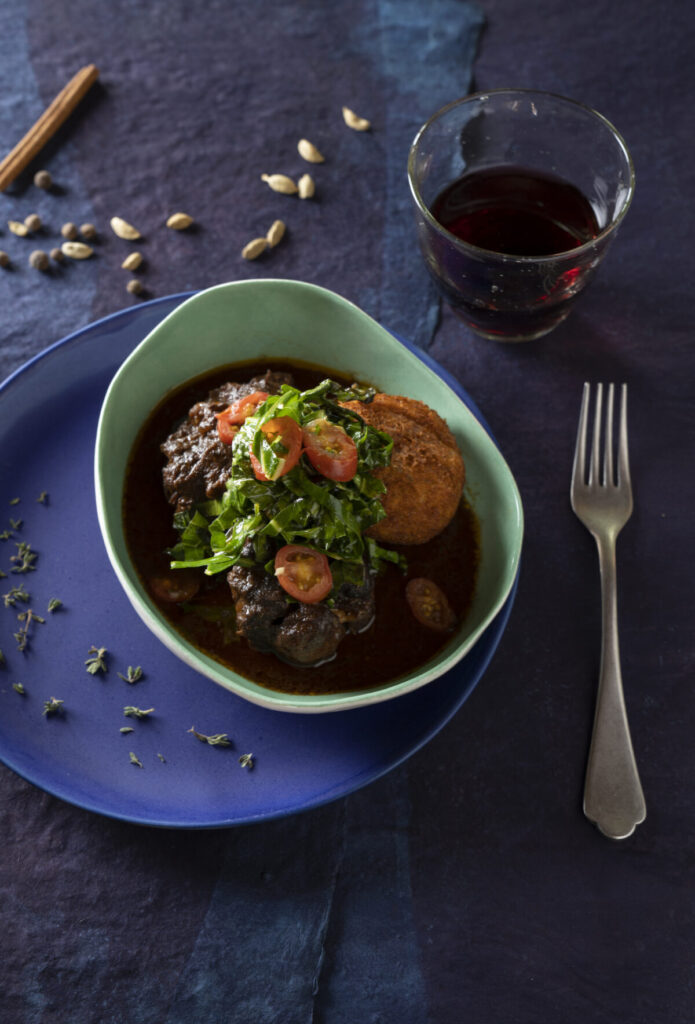
If you’ve always wanted to learn to make oxtail at home but aren’t sure where to start, our Jambo Slow Cooked Oxtail is here to help. You’ll want to begin this dish the day before to give the rub a chance to do its thing. This way the oxtail has time to slowly cook and become tender enough to fall off the bone on its own. To make a fulfilling dinner, serve the oxtails hot with greens and starch of your choice. At Jambo Cafe, where Chef Ahmed Obo works, this Slow Cooked Oxtail is served with collards and mofongo, a dish of mashed green plantains.
Once you learn to properly slow-cook oxtail, you’ll be hooked on Caribbean-influenced dish.
Ingredients
Scale
For the rub:
2–3 green onions, chopped
2–3 cloves of garlic, chopped
1–2 tbsp jerk seasoning
2 tsp dried thyme
2 tsp ground cinnamon
1 tsp ground allspice
2 tsp ground coriander 1-2 tbsp olive oil (enough to form a rough paste)
For the slow cooked oxtail:
5 lb of oxtails
Olive oil
1 medium onion, chopped
1–2 cloves of garlic, chopped
1 tbsp jerk seasoning
1 tsp dried rosemary
1 tsp dried thyme
1 tsp ground coriander
2 tsp ground cinnamon
1 tbsp tomato paste
¼ cup Worcestershire sauce
4 cups chicken stock
2 tsp beef base (highly concentrated beef stock)
1–2 cinnamon sticks
Instructions
To make the rub, mix the ingredients with the olive oil to create a paste. Rub over oxtails, cover, and refrigerate overnight.
To cook the oxtails the next day, heat a teaspoon or so of oil in a roasting pan or Dutch oven–enough to keep the oxtails from sticking. Sauté the onions and garlic for a few minutes. Add the spices and cook them for a few minutes so that you can smell their aroma. Stir the tomato paste into the mixture, add the Worcestershire sauce, chicken stock, and beef base.
Add the oxtails, cover, and roast for 30 minutes at 400 degrees. Lower the temperature to 350 degrees and slow roast for 2 ½ -3 hours. The meat should fall off the bone.
Recipe by Chef Ahmed Obo of Jambo Cafe Story and Styling by Julia Platt Leonard Support from Alex Hanna Photography by Kate Russell
It’s a must on Santa Fe’s culinary calendar. The Wine & Chile Fiesta returns for its 32nd year, September 27 to October 1, 2023. It all started in September 1991 as a one-day food and wine event. Today, it’s five days with over 60 restaurants and 90 wineries. Come hungry (and thirsty), and you’re guaranteed to leave happy and full. We asked six chefs who are taking part to prepare one of their dream dishes.
Caribbean-Spiced Slow-Cooked Oxtail with Mofongo & Collard Greens
Chef Ahmed Obo’s oxtail dish is comfort food that meets the Caribbean. The oxtail is tender and melting. The collard greens cut through the richness of the meat, while the mofongo–a patty made with green plantains–is the perfect sponge to soak up the juices. What to drink? Chef Obo suggests a Porcupine Ridge Syrah from South Africa. It’s full-bodied with ripe dark fruit flavors and a hint of black pepper and violets–just the thing for this Caribbean comfort classic. Get the recipe here.
There is Caprese salad, and then there is Sassella’s Caprese salad. Chef Cristian Pontiggia starts with house-made burrata, pairs it with local heirloom tomatoes, adds capers for a sharp punch as well as a swirl of walnut basil pesto, and finishes it with a garnish of Hawaiian basil, tangerine Calabrian chile oil (a game-changing ingredient), dehydrated garlic, volcanic black salt, and balsamic pearls that he creates. It’s a dish that speaks to both the eyes and the stomach in equal measure. To drink, he suggests a Brunello di Montalcino: “Strong on flavor, but with the burrata, a perfect pairing.” Get the recipe here.
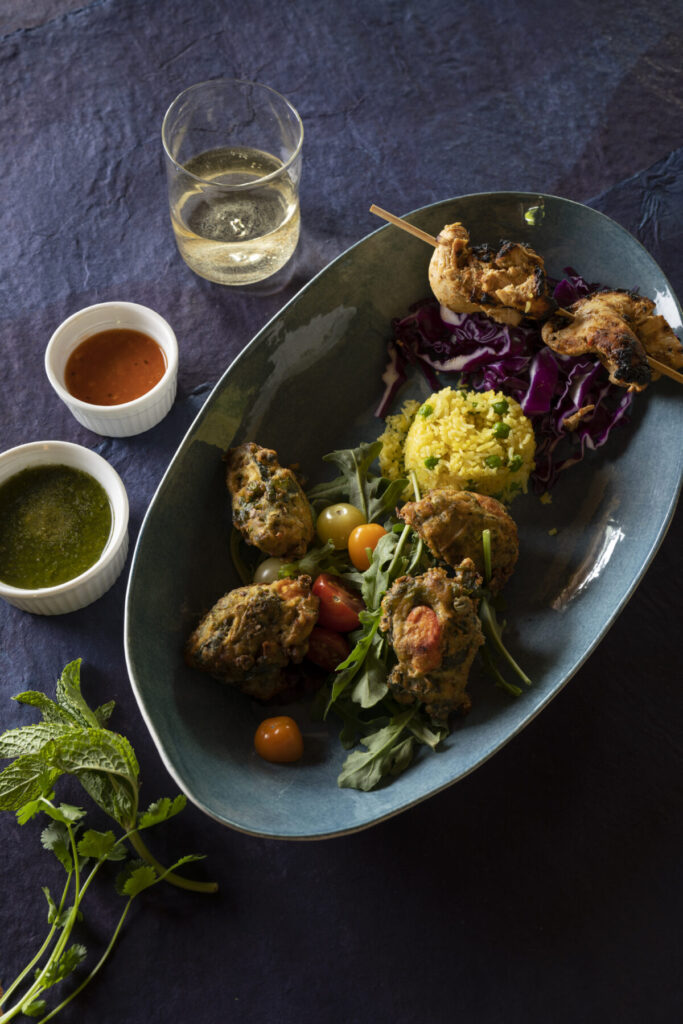
Chile Pakora with Cilantro-Mint Chutney and Chicken Malai Kebab with Mango Habanero Chutney
Ask Chef Paddy Rawal what inspires his cooking and he’ll tell you two things. “People eat with their eyes first, and spice is for flavor, not for heat.” His food is indeed eye-catching, colorful and bright, generous with herbs like cilantro and mint. His use of spices is a masterclass with everything from fenugreek leaves, chaat masala, carom seeds, coriander, and cumin making appearances. The result is food that is balanced and spiced impeccably. It’s also a food that’s as generous and welcoming as the chef himself. Get the recipe here.
Chef David Sellers’s dish, like the food he serves at his restaurant Horno is all about contrasts. Here there is richness from the teriyaki, balanced by the acidity from the yuzu and heat from the wasabi. To drink, Chef Sellers suggests L’Escale, a Sauvignon blanc from the Loire Valley. It’s juicy, fresh and can hold its own with this dish. For Sellers–a seasoned Wine & Chile Fiesta veteran–the annual event never loses its magic. “I love it. I’ll always support Wine & Chile. I think it’s one of the best events in Santa Fe.” Get the recipe here.
Chef Dakota Weiss’s Salmon Poke with Yuzu is nothing less than a plate of edible art. The ingredients–from the wafer-thin slices of lotus root and Fresno chile, to the green pops of color from her avocado purée–create a dazzling display of contrasting yet complementary flavors and textures. Artfully arranged gold flake miso sesame cracker shards are the pièce de resistance. To drink? Chef Weiss suggests a dry Riesling or an Albariño as the perfect accompaniment to this work of art. Get the recipe here.
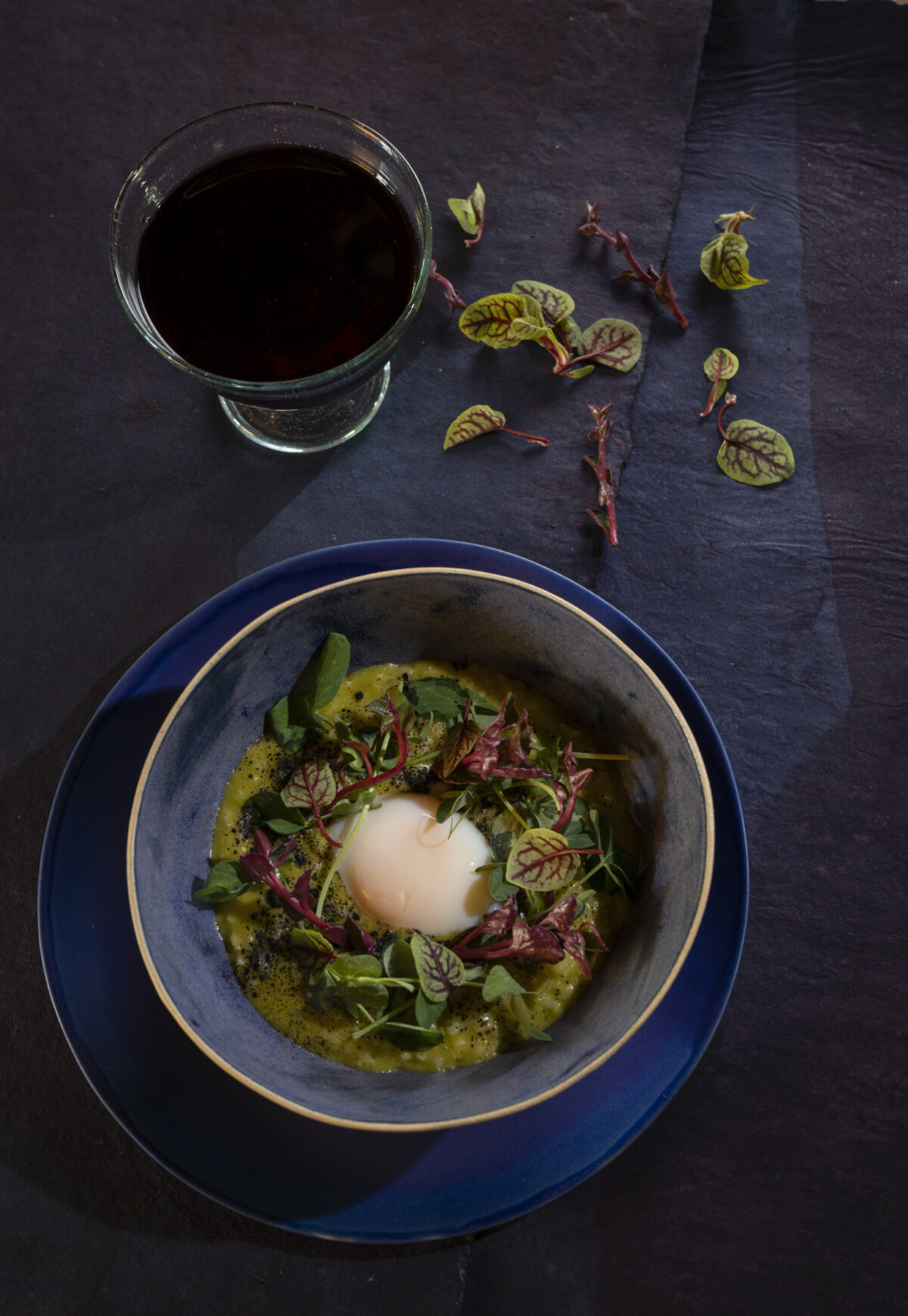
Ask Chef Peñalosa Nájera of Bishop’s Lodge about the ingredients for his signature green risotto and the answer is simple: Hatch green chile, poblano, “perfect egg,” and mushrooms. But probe deeper and you’ll discover a huge amount of technique behind this Southwestern riff on a classic Italian risotto. Chef Nájera is from Mexico City and has worked in Colombia, Spain, and England and this immersion in other cultures and cuisines shows in his food. “I try to bring my own experience of traveling to this dish,” he says, and it shows. Get the recipe here.
Tira Howard explored the markets of Singapore's Little India last year. A scrumptious plate of Genovese Classico
photographed (and enjoyed) in Naples.
In interviews with five photographers from the United States and Canada, Mark Oppenheimer explores an essential element of 21st-century visual culture: the food photo. Whether taken by a professional with an expensive lens and a support team, or by a passionate amateur wielding a smartphone, images of food abound in our world. Settle in for a good read about what motivates the pros, and what they think makes their work not just good, but deliciously transformative.
Tira Howard
As a child, Tira Howard captured her world with a point-and-shoot camera. After studying writing and acting in college, she returned to photography in 2013. She once considered being a war correspondent but abandoned the idea after her husband reminded her of her family responsibilities. Tira and her family reside in Santa Fe.
In many of your shots there is an implied unseen presence round the edge of frame.
I feel like there’s something unnerving about the desire to have everything revealed. I enjoy secrets, and having secret worlds to exist in, because I think that makes what’s visible so much more interesting. I want there to be questions still left to answer at the end of your interaction with one of my images.
How would you describe working on set with your team?
With food photography, you’re coming to it from a place in time. You’re in your life, meeting other people who are participating in the creation of the image. You’re working as a team with a chef or someone who’s styling the scene. We converge around a plate of food that’s not going to last longer than the few minutes we’re there to photograph it.
What is the story you want to tell?
It’s all so temporary, so fleeting. And the eating of what’s in the image, the implied eating of it, is an invitation. In a photograph, that invitation just keeps on being extended. It’s always an invitation to pleasure.
How do you engage a viewer’s emotions in the shot when you can only imply the other senses?
You’re telling another human’s brain to read the frame in a way that feels good. Moving the eye from left to right, with lighting and composition, letting the rule of thirds work, following the kind of spiraling of the Fibonacci sequence, because it’s naturally occurring. And it often elicits its own emotional response. Pleasure, like sweets, is universally enjoyed.
Would you talk a little bit more about yourself working as an artist?
I think a lot of times it’s easy for artists who are trying to make a living to lose track of the meaning of what they’re doing. I want to feel the importance of every little stupid thing I have to do to arrive at an image that feels good. I want to make everything important. I want to elevate everything that interests me.
What do you hope to accomplish with your work?
More than anything, I want to have meaning in my life, and do meaningful work. It’s a tightrope, an almost impossible task, but I absolutely want, on the day of my death, to have at least some work that’s left behind that has meaning for other people, even the commercial things I do.
Food shots can seem very isolated, depicting a world that’s clinical, lacking a sense of human interaction.
I struggle to stay away from a clinical kind of documenting. That’s not what I’m interested in. I’m interested in that moment before you take your first bite, or if you’re in the middle of a bite, or the origin of the dish. I don’t understand the appeal of just showing a plate of food lit very clinically, because it looks to me like it’s just a crime scene photo.
Story by Mark Oppenheimer / Photography by Tira Howard
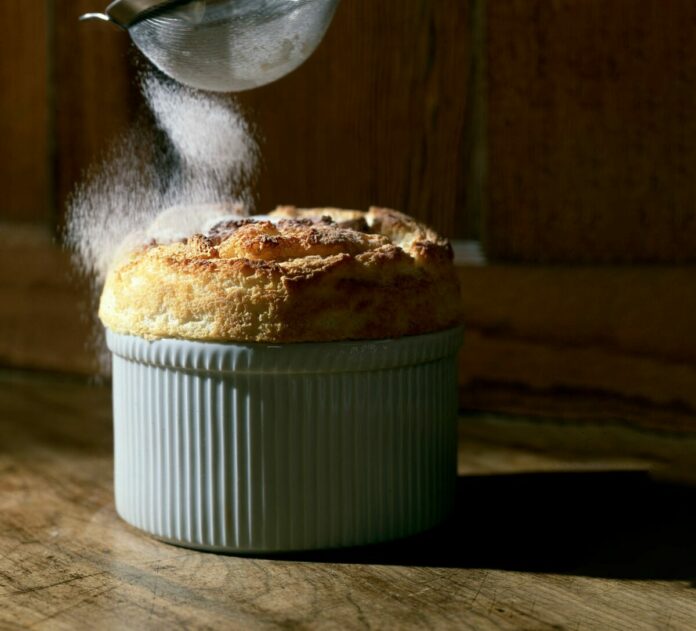
Vanilla bean soufflé with mango sauce, photographed by Penina Meisels for Williams Sonoma.
In interviews with five photographers from the United States and Canada, Mark Oppenheimer explores an essential element of 21st-century visual culture: the food photo. Whether taken by a professional with an expensive lens and a support team, or by a passionate amateur wielding a smartphone, images of food abound in our world. Settle in for a good read about what motivates the pros, and what they think makes their work not just good, but deliciously transformative.
Penina Meisels
Over a four-decade career, Penina Meisels has received a James Beard Award and an Addy Award, and her photos are in the collections of the Smithsonian, the National Sporting Library, and the Library of Congress. With more than 30 books to her name, Penina has collaborated with Julia Child, Jacques Pepin, Joann Weir, and Williams Sonoma. She lives in Santa Fe with her loyal corgi, Dr. Watson.
Are there similarities between shooting sculpture and food?
In a food shot, there are so many different layers. It’s a team sport, not a single person endeavor, and so one of the big layers is the team. The end product is only as good as the weakest component.
How do you work within the constraints of an assignment?
One of the reasons I love doing cookbooks is that it’s editorial work. The constraints involve following the recipes that are given to us. Sometimes the author will give us snapshots of what that dish is supposed to look like. Sometimes we follow, sometimes we don’t. There’s creative license.
How do you prepare yourself before you hit the set?
I try to start with a blank mind, without anything to say or any particular purpose. I investigate these questions: what am I trying to say with it? And who am I saying it to? It’s kind of the Twyla Tharp method of the creative process; not starting with a preconceived notion of what it’s supposed to be, which requires being comfortable with discomfort.
What is the moment of engagement, that thing that hooks your curiosity?
If I don’t get goosebumps the viewer isn’t going to be curious. I want to capture beauty and to try, if possible, to make something that’s already beautiful more beautiful.
Do you think there is a decisive moment in food photography?
I think that the phrase decisive moment was something said when a film load had only 24 to 36 frames. Now, in the digital age it is no longer relevant. We no longer have the moment. We just have to figure out the start and the finish. We pick the shot from what is in-between.
How has failure lead you to the choices you make as a photographer?
It’s my best teacher. I don’t think of it as failure but rather as well, it didn’t work out first try, let’s try again. It goes back to the idea of being comfortable with discomfort for me.
Ideally, are you shooting a beautiful plate of food or a story?
I get annoyed when people just shoot a plate of food. I want a story, a sense of place, an emotion. Is it someplace that you want to walk into and sit down? You want to see the rest of the table, eat that food, know what it tastes like. A photo of a straight plate of food doesn’t really spark my curiosity.
Story by Mark Oppenheimer / Photography by Penina Meisels
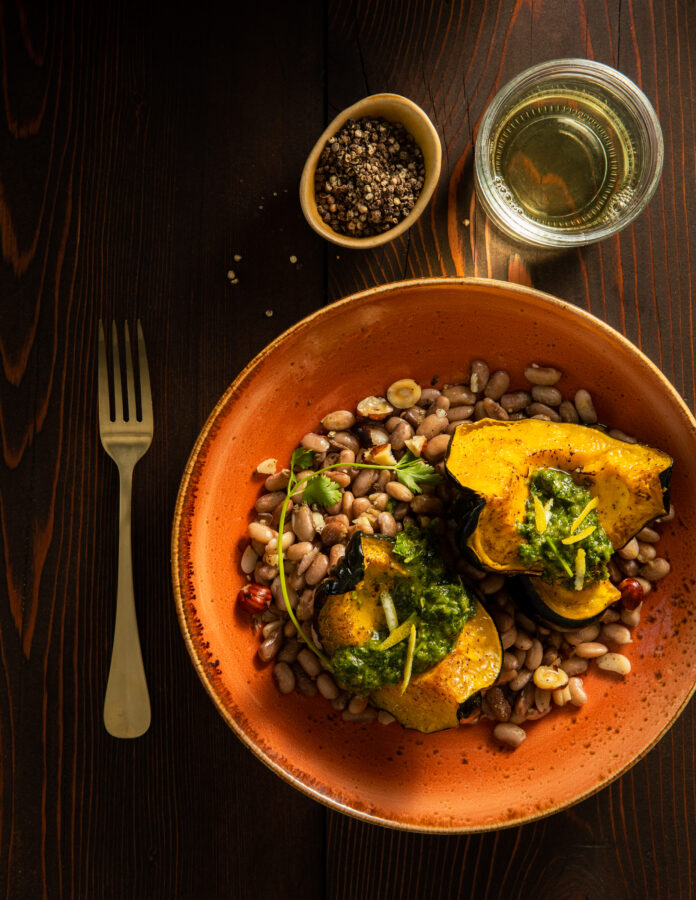
Zhoug is a Middle Eastern spicy cilantro sauce. Start with one jalapeño and feel free to add more if you’d like more heat. This zhoug recipe can be made a day ahead and stored in an airtight container in the refrigerator. Any leftover zhoug is perfect with other roasted vegetables, fried eggs, or grilled chicken or fish.
There are many ways to cook beans, including soaking them overnight before cooking or making them in a pressure cooker. Another option is to boil them for a few minutes and allow them to rest covered for an hour before simmering them until cooked and tender. Start with our master bean recipe and whip up the following delicious side dish.
Recipes by Julia Platt Leonard Food Photography by Dave Bryce Styling by Merrie O’Donnel