While you’re decking the hall with boughs of holly, don’t forget to buy local baubles for tree trimming, gift-giving, and memory-making. Here are our top picks of places in New Mexico to find ornament treasures for your tree.
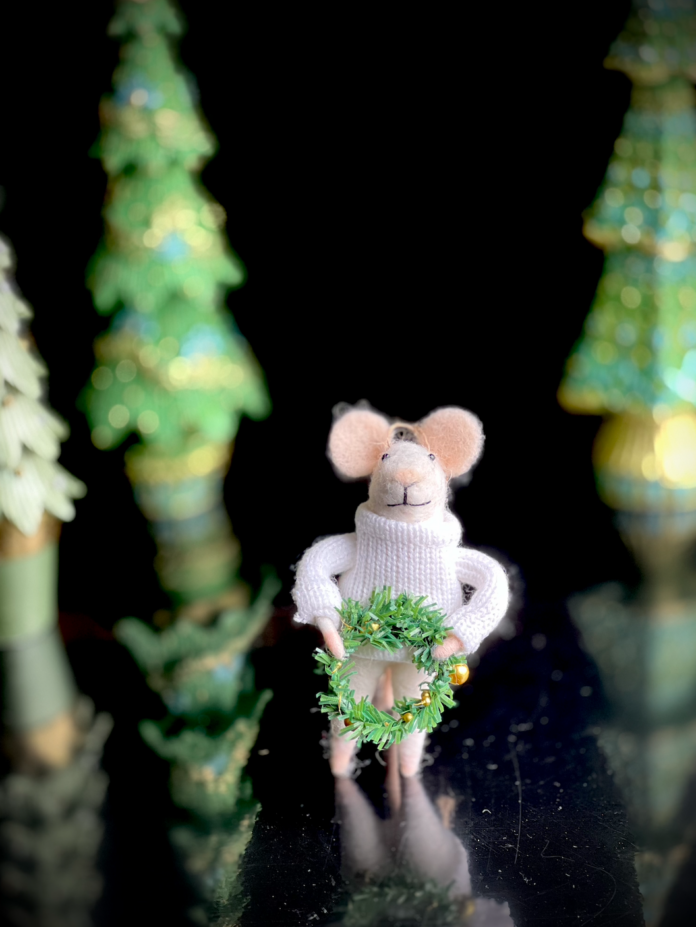
We dare you to go to Doodlet’s and come out empty handed. It’s even more dangerous – if that’s possible – in the run up to Christmas when you’ll find everything for the well-dressed tree, from bright turquoise skulls to wreath-carrying mice, like the one in the photo above.
For the person who feels the Christmas spirit 365-days a year, there’s Susan’s. Favorites? Pick up a Loretto Chapel staircase glass ornament or Rancho de Taos one.
More inspiration no matter what the season with a focus on one-of-a-kind pieces made by New Mexico craftspeople. Let your decorations take flight with a single origami crane or a strand by local artist Ross Tapia.
Decorate your tree and everything else in your home with a visit to Sun Country Traders. Pick up glow-in-the-dark beaded trees or cacti by Zuni artists Farlan & Alesia Quetawki or a painted, wooden Christmas rooster sporting cowboy books by Navajo artist Matthew Yellowstone.
Yes, Pennysmiths Papers sells paper and pens and lots of them but stop by and shop for stocking stuffers and tree trimming must-haves like their glass vegetable ornaments (we fell in love with the Brussel sprout) and felt ornaments like a hot pink-clad Frida Kahlo.
Located in Old Town, The Christmas Shop delivers on its name with a selection of Christmas ornaments, Nativity scenes and other festive decorations – many made by local artists.
Feel good shopping doesn’t get much better than at Moxie in Taos where they sell fair trade and handmade goodies for the home and to wear. Check out their year-round wall of ornaments and nab an embroidered beauty or piece made from recycled metal trays.
This is the place for everything New Mexico-made including hand-blown glass hot air balloons from Robbins Ranch Art Glass, located in Stanley, New Mexico. Choose from four different styles including a festive green alien or multi-colored confetti.
Every holiday from Halloween to Valentine’s Day gets love from this Mesilla, New Mexico favorite, but Christmas is the star year-round. Fill your basket with an endless array of glass and other ornaments to make your tree a showstopper.
Story by Julia Platt Leonard / Photography by Keith Recker
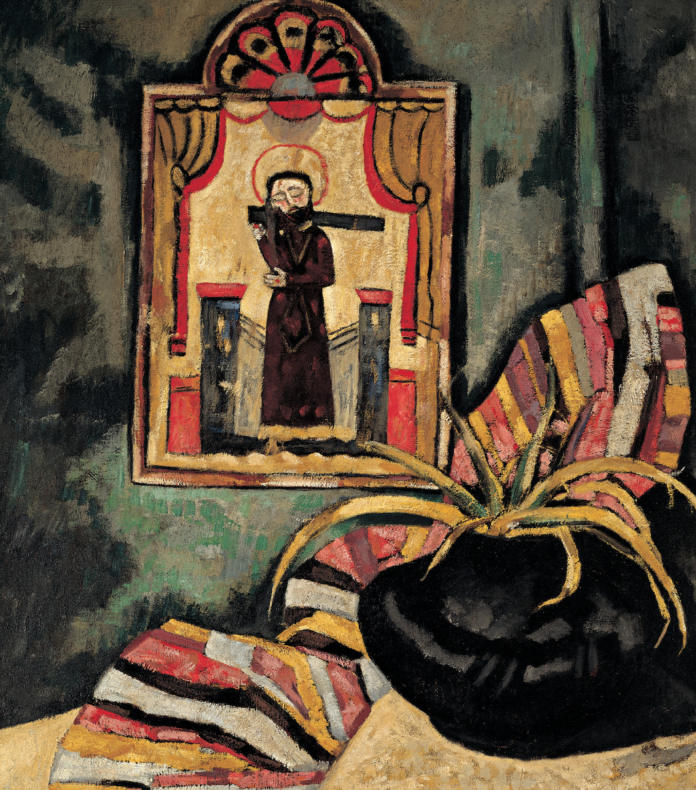
Marsden Hartley was part of the second generation of artists to come to Taos. This group, including Andrew Dasburg, John Marin, and Georgia O’Keeffe, introduced Modernism into the Southwest.
Hartley often came into conflict with many of the academic painters who made up the Taos Society of Artists. In 1918 Hartley wrote an essay in El Palacio Magazine critiquing the application of European academic techniques to what he saw as the uniquely American subject matter of the Southwest. Criticizing the Taos Society Artist, he wrote, “they tell themselves that the great art of America is to come from Taos. Well, there will have to be godlike changes for the better in this case.”
Hartley eventually moved to Santa Fe to distance himself from Taos’s artistically conservative climate. Like many American Modernist painters of the 20th Century, Marsden Hartley was looking for a distinctly American subject for his artwork, and a certain “aesthetic sincerity.”
Hartley first visited New Mexico in 1918, the year after the New Mexico Museum of Art opened, and wrote of the experience, “I am an American discovering America.” During his early visits to New Mexico his style shifted from abstract to more realistic subject matter, and he found what he believed to be definitively American subject matter in the blending of Native, Hispanic, and Euro-American cultures. He produced a number of still lifes here, such as the Hispanic Catholic retablo in this painting, depicted along with Native pottery and textiles.
Jennifer Lopez, Mick Jagger, Madonna and Tony Bennett. Throw in Mae West, Coco Chanel and Mata Hari and you can see that those born in Leo — the fifth sign of the zodiac — aren’t shy and retiring. I know this from personal experience as my Mom was a Leo. Her idea of an intimate gathering was sixty of her closest friends, bottles of champagne, and new potatoes that had been boiled, sliced in half, flesh scooped out and replaced with caviar and sour cream.
So it’s not surprising that the foods we harvest in August are all singing and all dancing. We can barely keep up with the bounty. It’s heady and intoxicating and we know it can’t last. And we’re probably a bit relieved too. Autumn comes in quietly. Like the sunlight itself this time of year, it’s softer and more subtle.
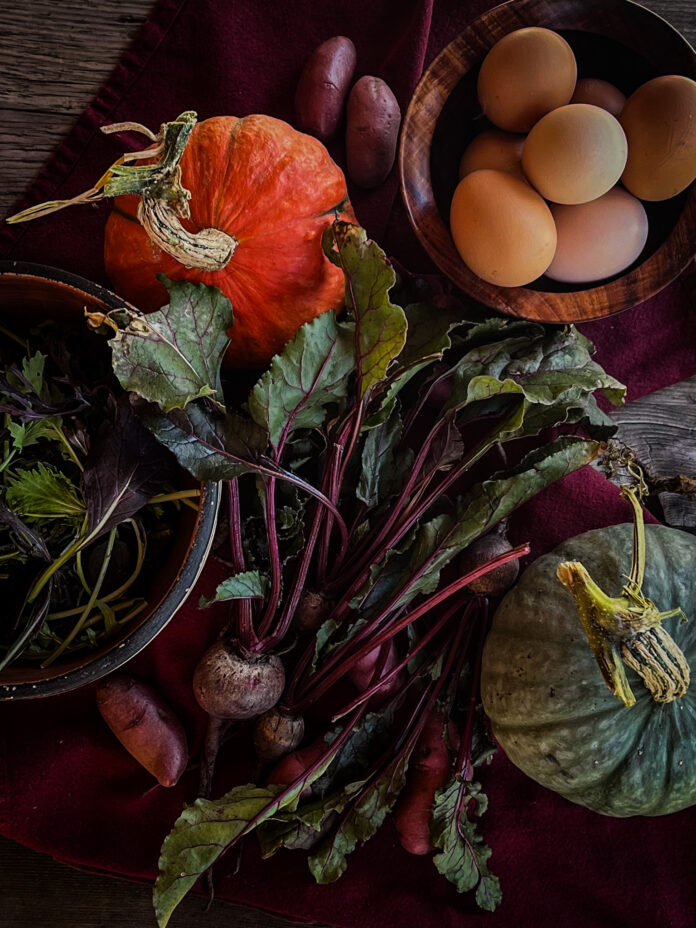
But don’t underestimate what you’ll find at farmers’ markets in New Mexico this time of year. Winter greens have a bitter bite that begs for a creamy, mustardy vinaigrette. Kabocha squash is more flavorful than butternut and is multi-talented — roast them in wedges or cook and puree for a creamy soup dusted with chile and toasted pepitas.
And beets may be small, a bunch resting comfortably in the palm of your hand, but there is a concentrated sweetness in them. Save the leaves and sauté like you would chard. Give the beets themselves a scrub and place them in a baking dish lined generously with aluminum foil. Tuck in lemon peel and a bay leaf, anoint generously with olive oil, salt, and pepper, then fold the aluminum foil to form a packet. Into a 350 degree oven until you can insert a knife in easily.
Let cool, then slide the skins off and let your imagination run wild. In a salad with toasted walnuts and goat’s cheese — beets and goat’s cheese adore each other — or blitzed with a spoonful of tahini and lots of lemon juice for a dip.
Here are some of our TABLE favorites, plus an Instagram must-make, to utilize your New Mexico farmers’ market bounty.
Gifting is one of the five languages of love (alongside touch, time, affirmation, and action). Whether you give a tiny statement of thoughtfulness or a major monument of adoration, you can always find a lovely something from local boutiques and makers, like the below gift ideas for kids. Perhaps shopping local is a sixth love language — one that speaks to lively main streets and healthy small businesses!
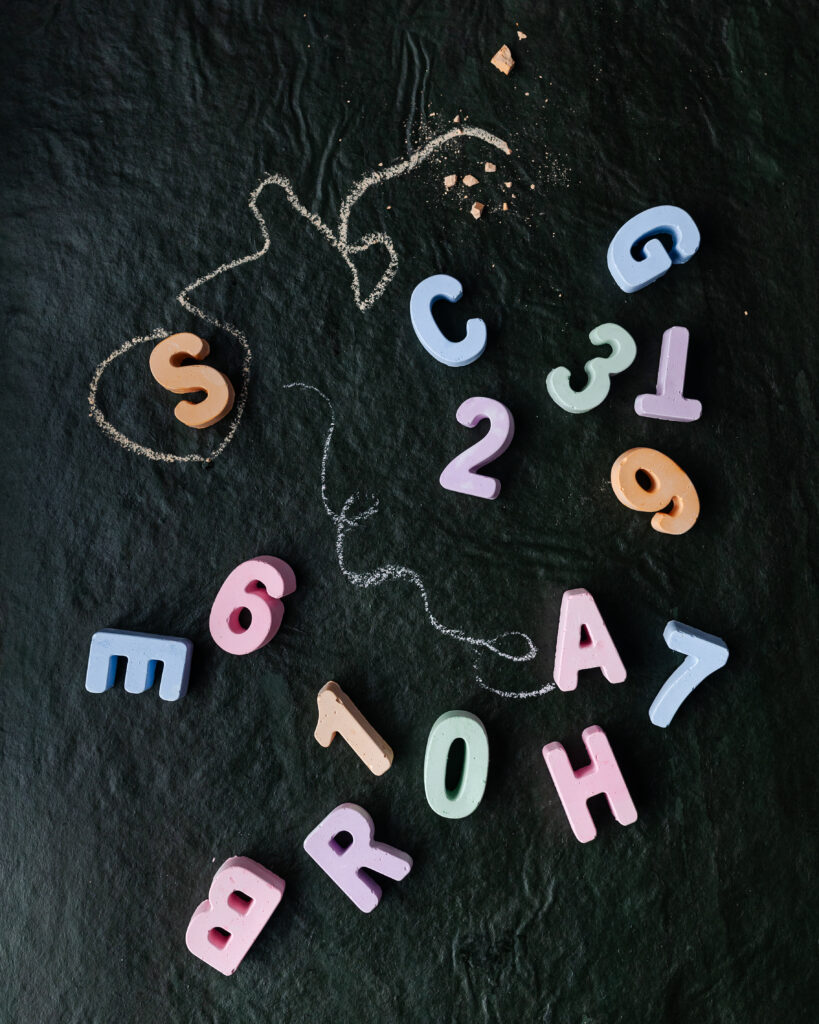
Inspire the future writer and big-brain mathematician with ABC and number chalks. They come in soft pastel shades and are chunky enough for the smallest hands to grab and go.
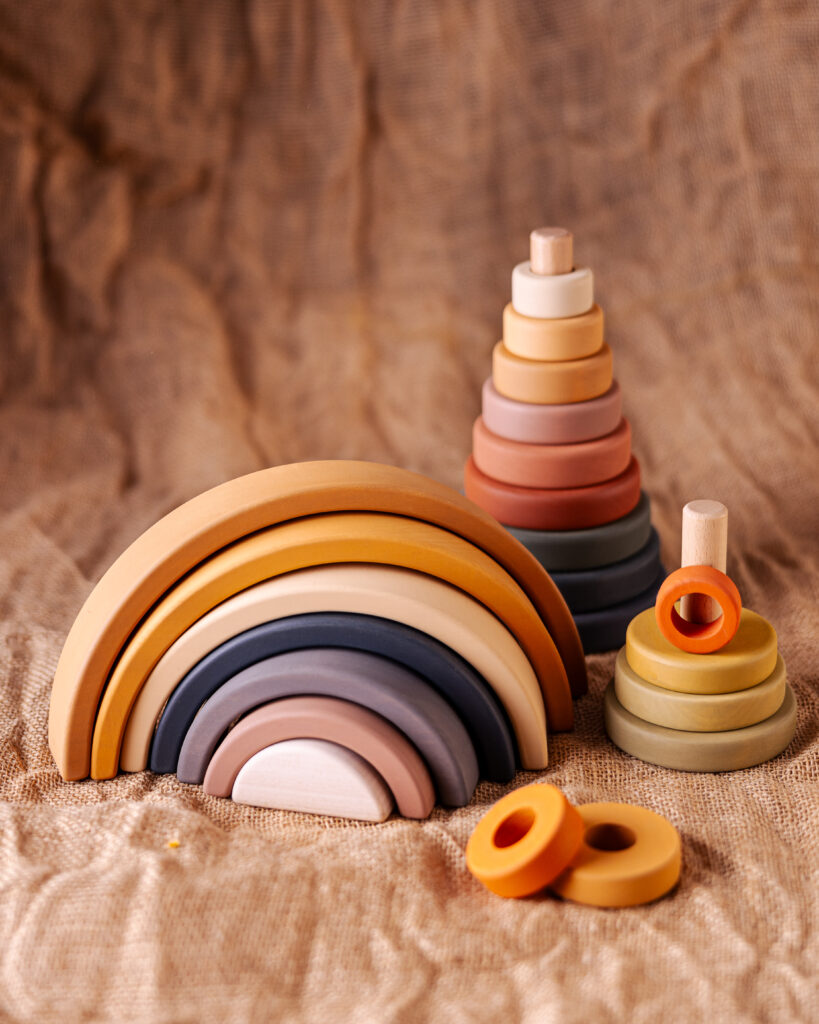
Go low-tech with a wooden ring or rainbow stacking toy for the curious kid. While you’re at it, give yourself a pat on the back as they’re made in Ukraine with nontoxic, water-based paints, plus your purchase helps Artisans in Ukraine.
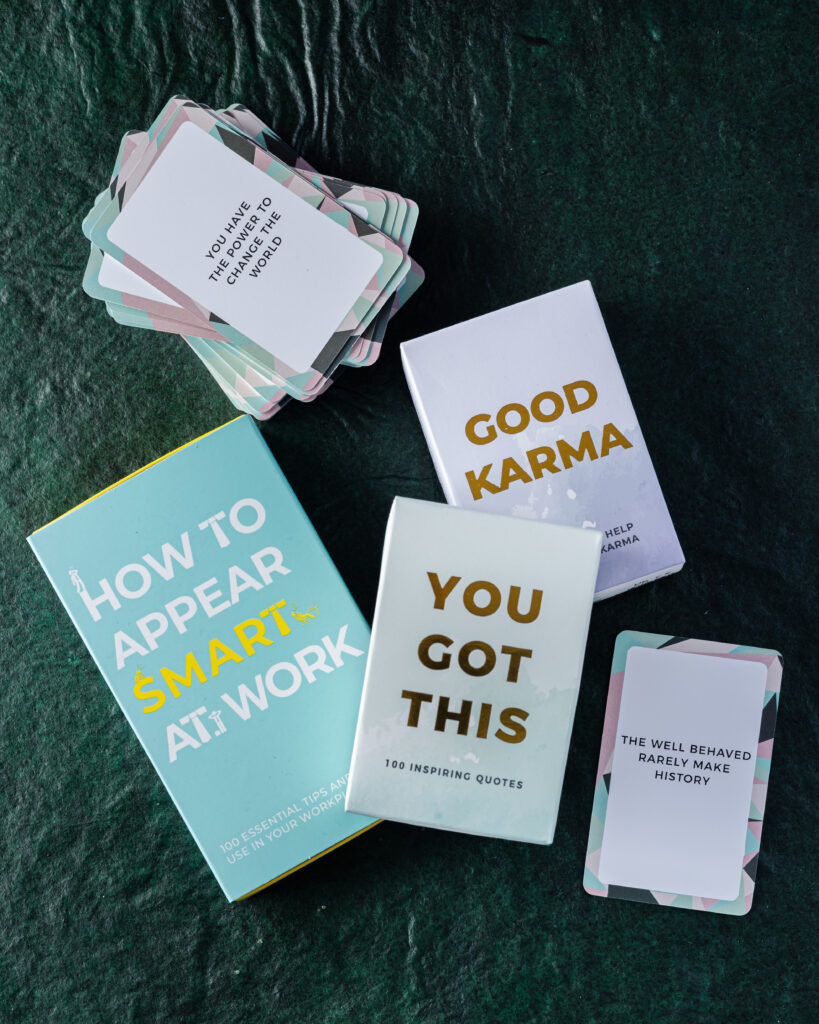
We can all use a little motivation from time to time. These cards featuring inspiring quotes will instill positive thinking into kids of any age.
Gifts for Kids Selected by Julia Platt Leonard, Keith Recker, Justin Matase, and Wendy Ilene Friedman / Styling by Keith Recker / Principal Photography by Tira Howard
This fall, Wendy’s brought the taste of autumn to fast foodies across the country with the addition of the Pumpkin Spice Frosty to its menu. But with a small order of the creamy beverage featuring a whopping 51 grams of sugar, it’s not exactly a keto-friendly treat. Enter our low-sugar version of Wendy’s Pumpkin Spice Frosty — all of the fall flavor, none of the guilt.
What Makes This Pumpkin Spice Frosty Keto?
The ketogenic diet or “keto” is meant to change the way your body processes food. It puts your body into ketosis, a state where it burns fat for energy instead of storing carbohydrates. You’ll often see keto recipes, like this keto pumpkin spice Frosty, using monkfruit sweetener instead of sugar. This is because monkfruit sweetener has no calories or carbs, which keeps your body from storing them. Monkfruit sweenter is actually made of the extract of a fruit known as lo han guo or Swingle. Always do your research about diets, though, and be informed about what you’re eating and drinking, low calorie doesn’t always mean better for. you! .
if ( unit && ( ‘metric’ === unit || ‘usc’ === unit ) ) {
document.querySelector( ‘.tasty-recipes-convert-button[data-unit-type=”‘ + unit + ‘”]’ ).click();
}
Gifting is one of the five languages of love (alongside touch, time, affirmation, and action). Whether you give a tiny statement of thoughtfulness or a major monument of adoration, you can always find a lovely something from local boutiques and makers, like the following home products perfect for gifting. Perhaps shopping local is a sixth love language — one that speaks to lively main streets and healthy small businesses!
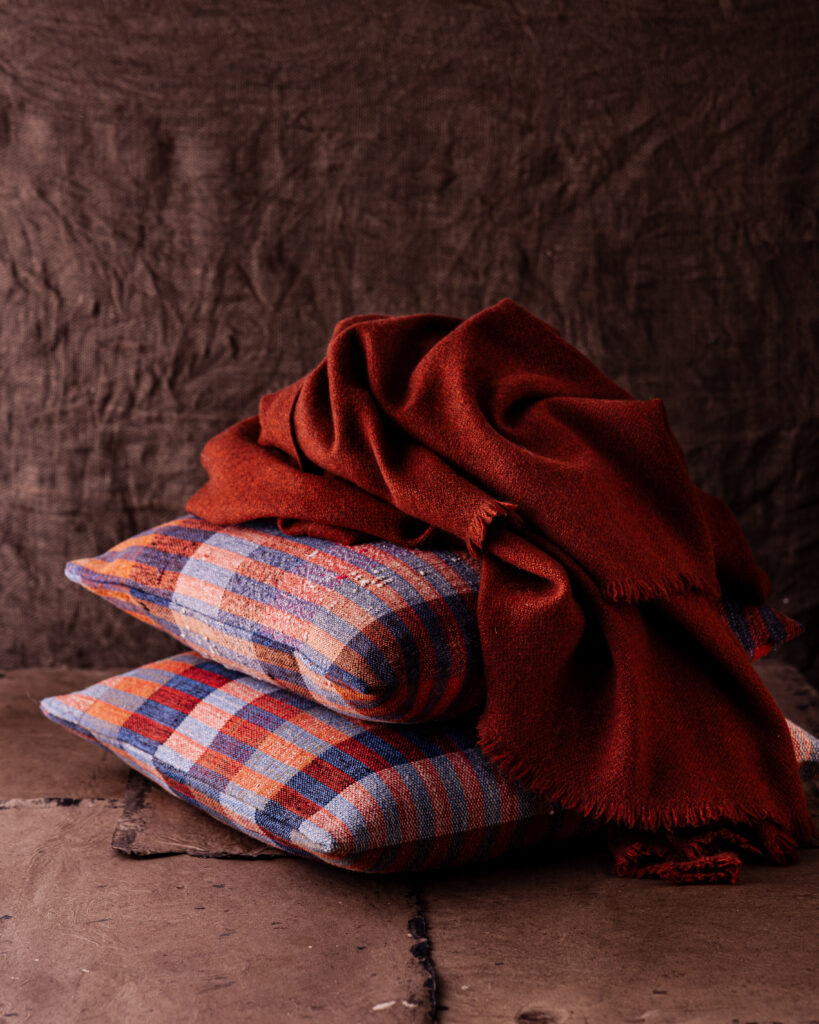
Living Threads is home to an astonishing range of hand-woven, natural-fiber textiles–everything from cashmere to yak. From the softest throws to the most plumpable pillows, many tactile experiences await your curious fingers.
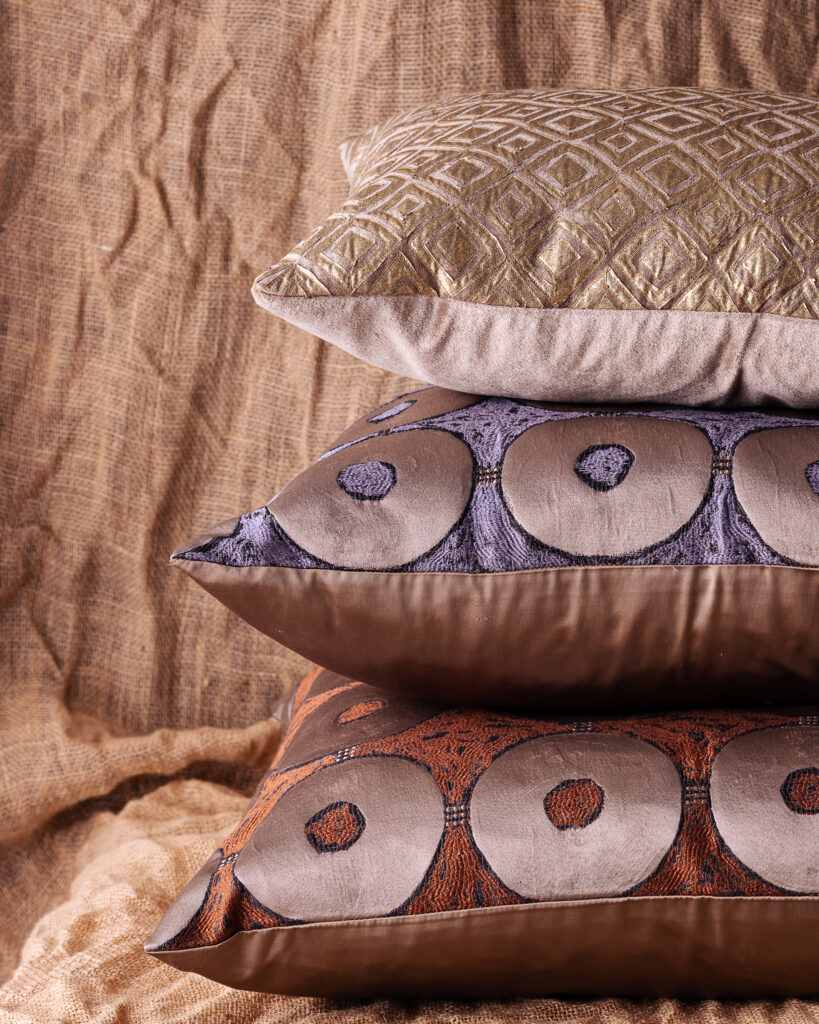
Sit back, relax, and ease into the holidays with unique cushions from The Collective. Ideal for a quick pre-party design makeover or as a cushy gift idea. These three are the merest sampling of the riches stocked at the store.
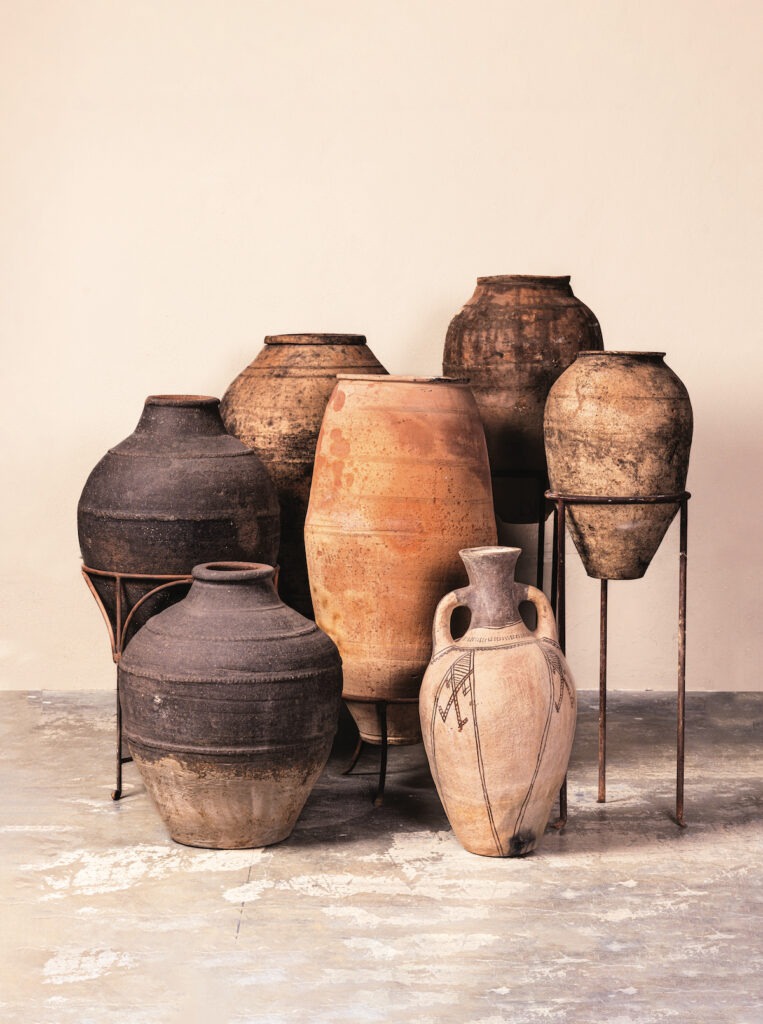
The timeless appeal of terra cotta vessels lends gravitas to any interior. These handmade, vintage beauties — some elevated with wrought metal stands–do the job with elegance and authority. Find them amid the many layers of finery on offer at this Railyard store.
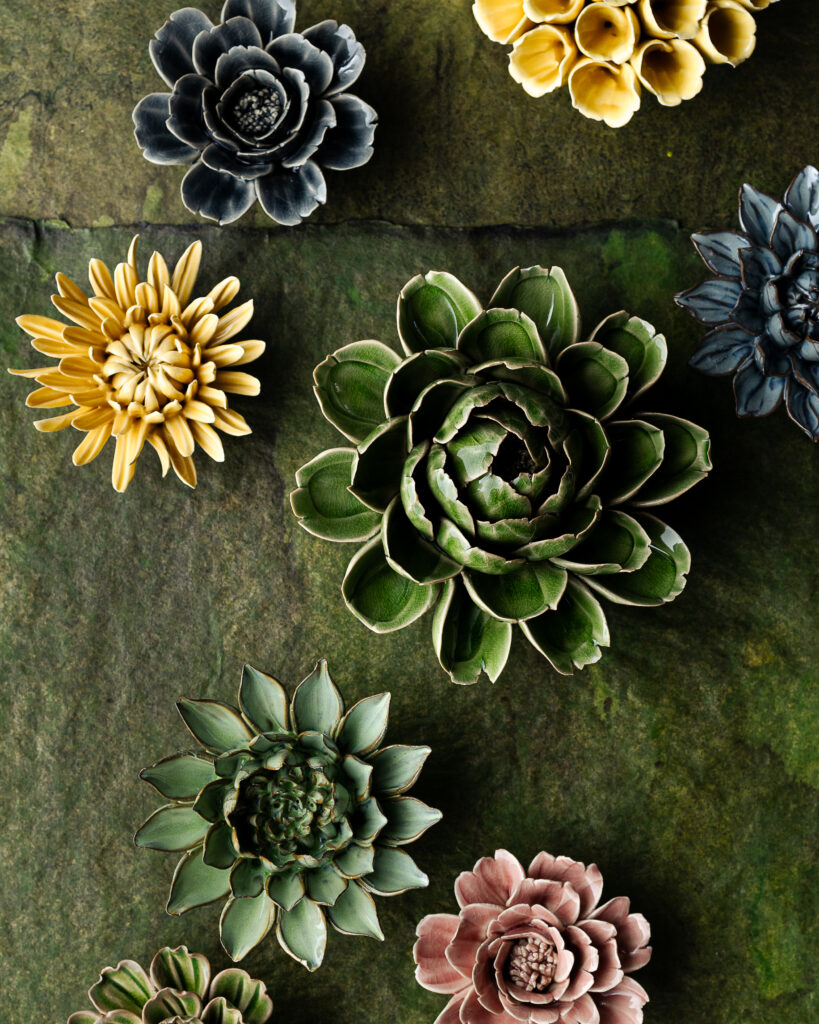
Ceramic flowers from Array Home bring a breath of spring to your table. Flowers in soft greens, pinks, and yellows create an outdoor landscape indoors.
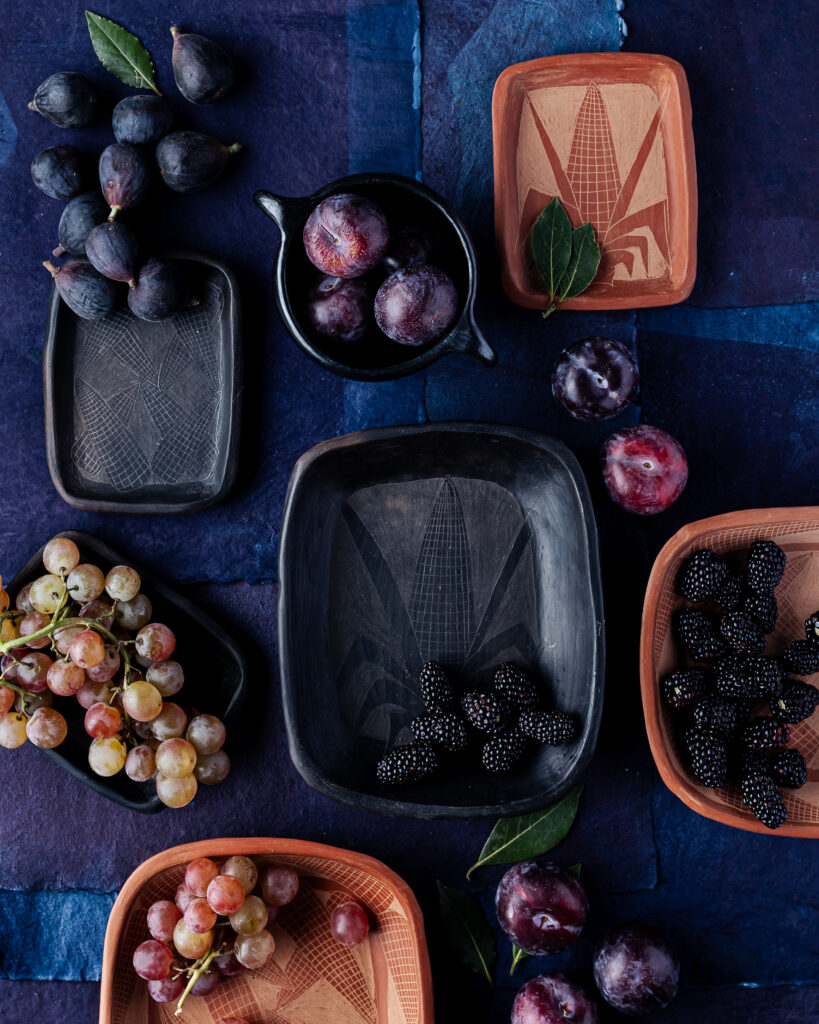
Trek to Truchas to find one-of-a-kind, fun and funky gifts at Eight Million Gods. Clay coasters in the shape of a hand are ideal to hold a holiday cocktail or even a votive candle.
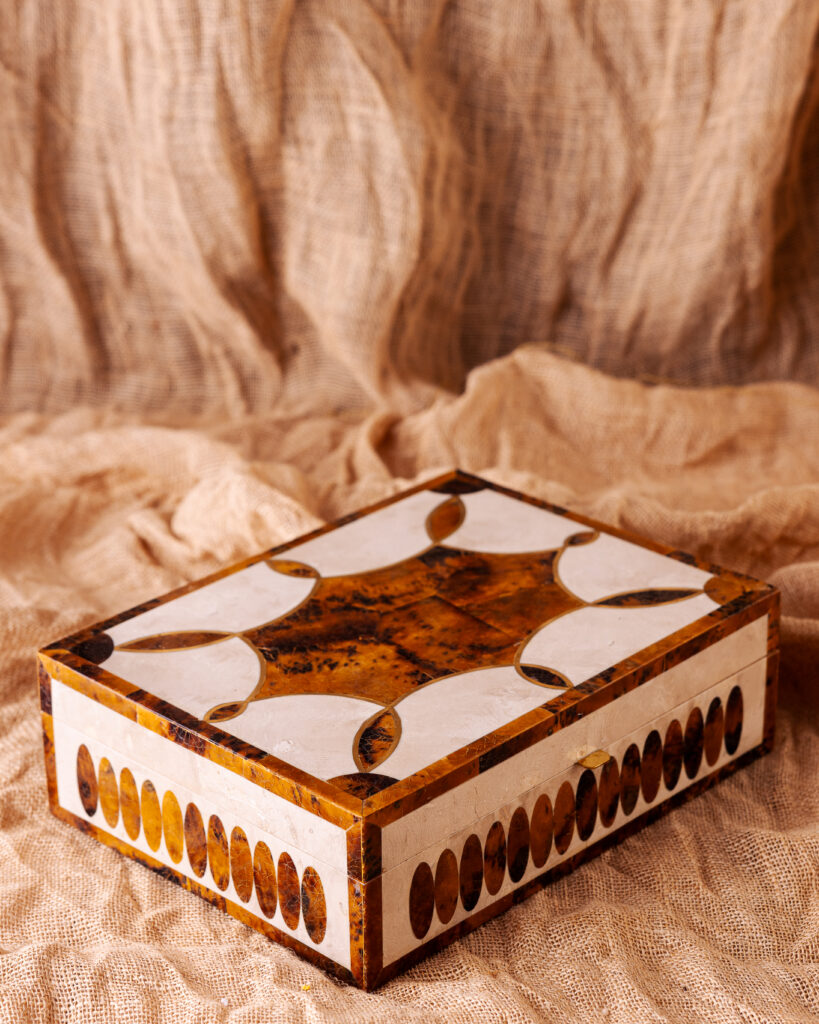
Store the trivial or treasured in this handsome, inlaid box made from white fossil stone and tiger penshell, a large, saltwater clam found near the Philippines. The interior is lined and the box features smart polished brass accents.
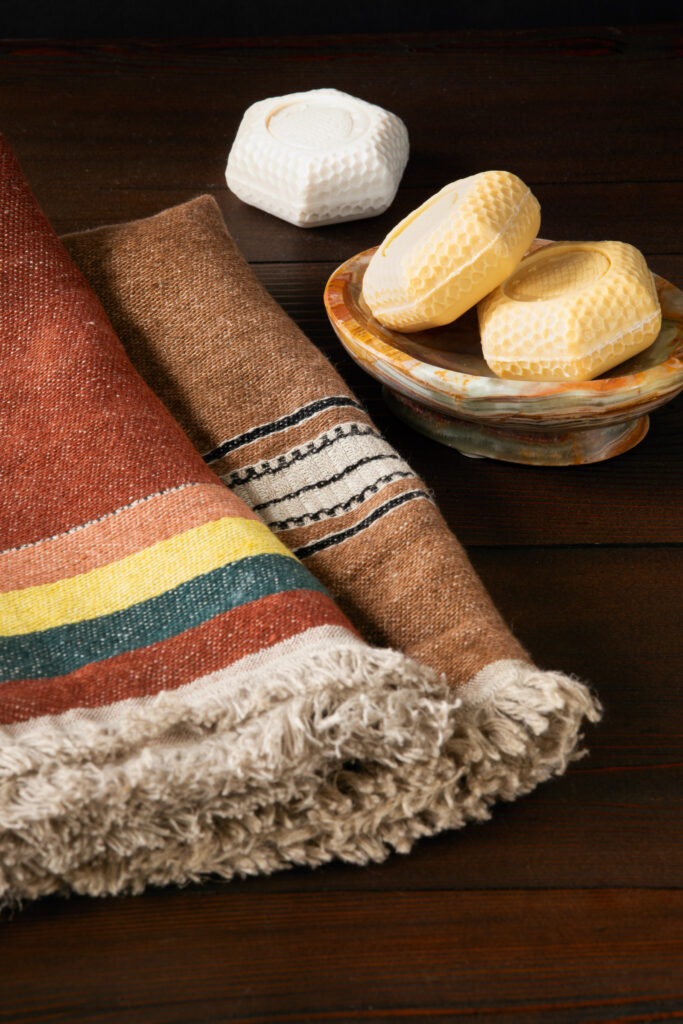
As the days grow shorter and nights longer, create a sanctuary in your home. This marble soap dish with swirls of amber, gold, and creamy white holds bars of honey soap–rich in lanolin–or goat’s milk honey soap with a hint of wild rose. Belgium linen hand towels are almost too lovely to use (they look fabulous on the table or crafted into pillows, too).
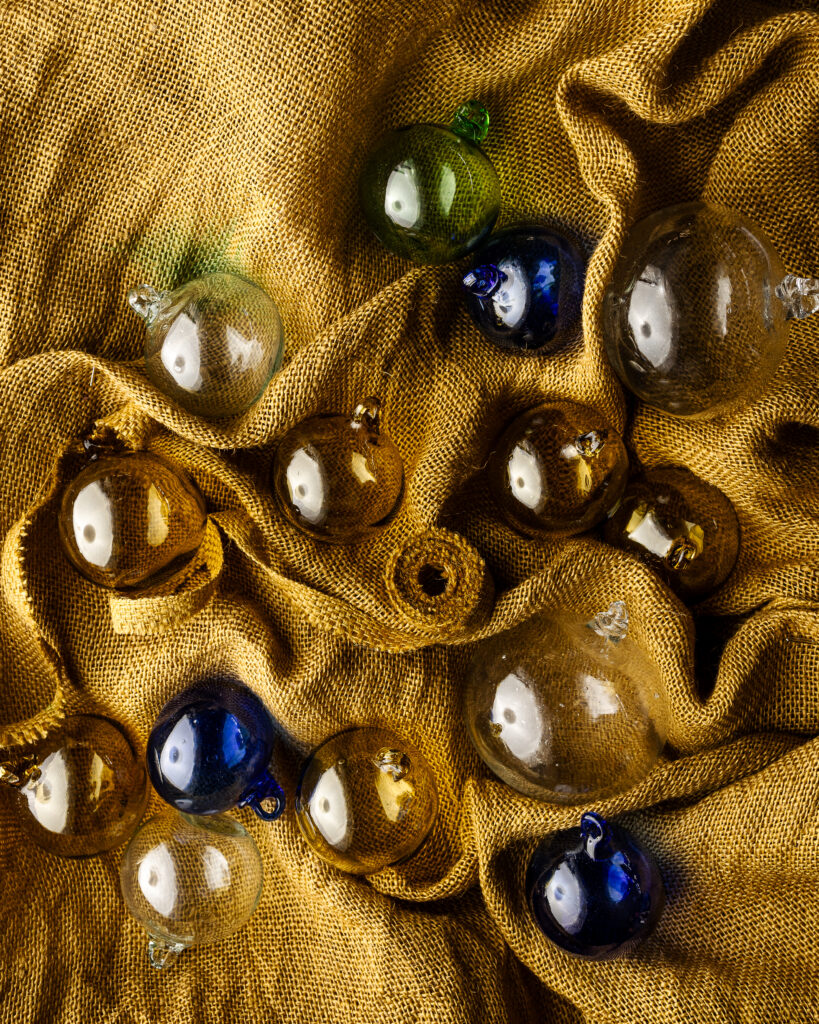
Handblown glass baubles made from recycled glass come in a sophisticated range of colors. They can be hung on your holiday tree, or nestled in a bowl all year long.
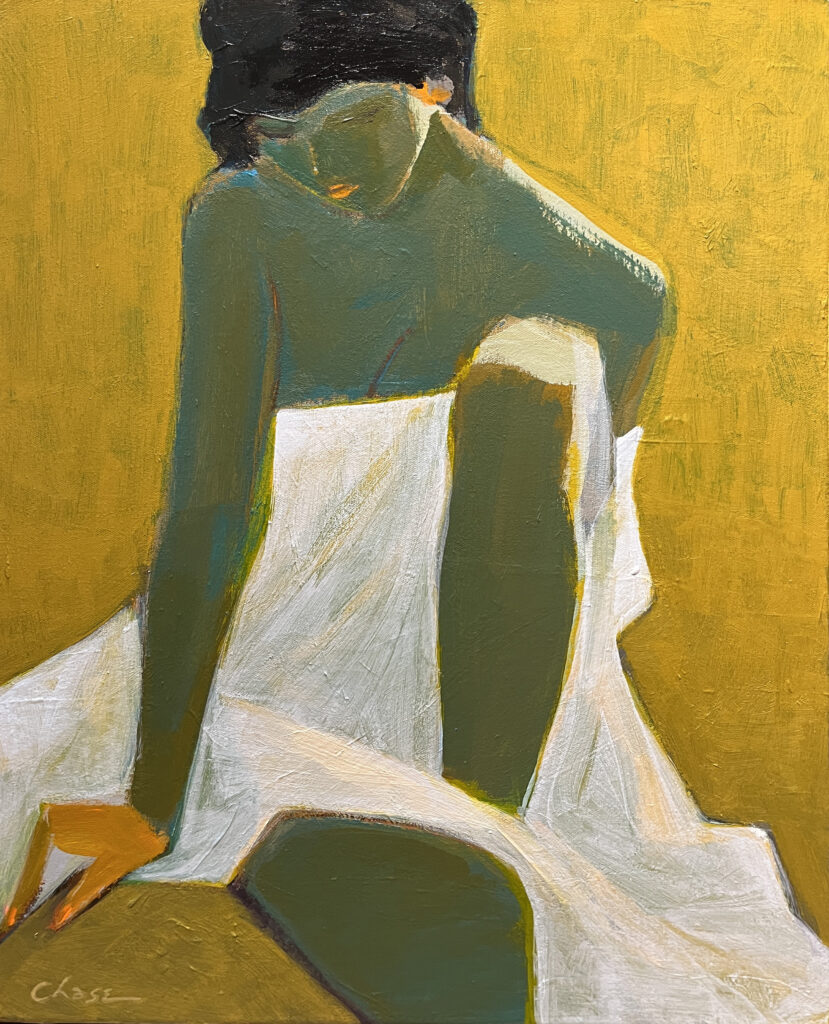
Jamie Chase, Skin Deep, acrylic on canvas, 24 x 18”
“Skin Deep,” by artist Jamie Chase, draws on the artist’s interest in abstracted figurative work, his years in Europe, and inspiration from ancient Egyptian art, European cave paintings, and Native American art.
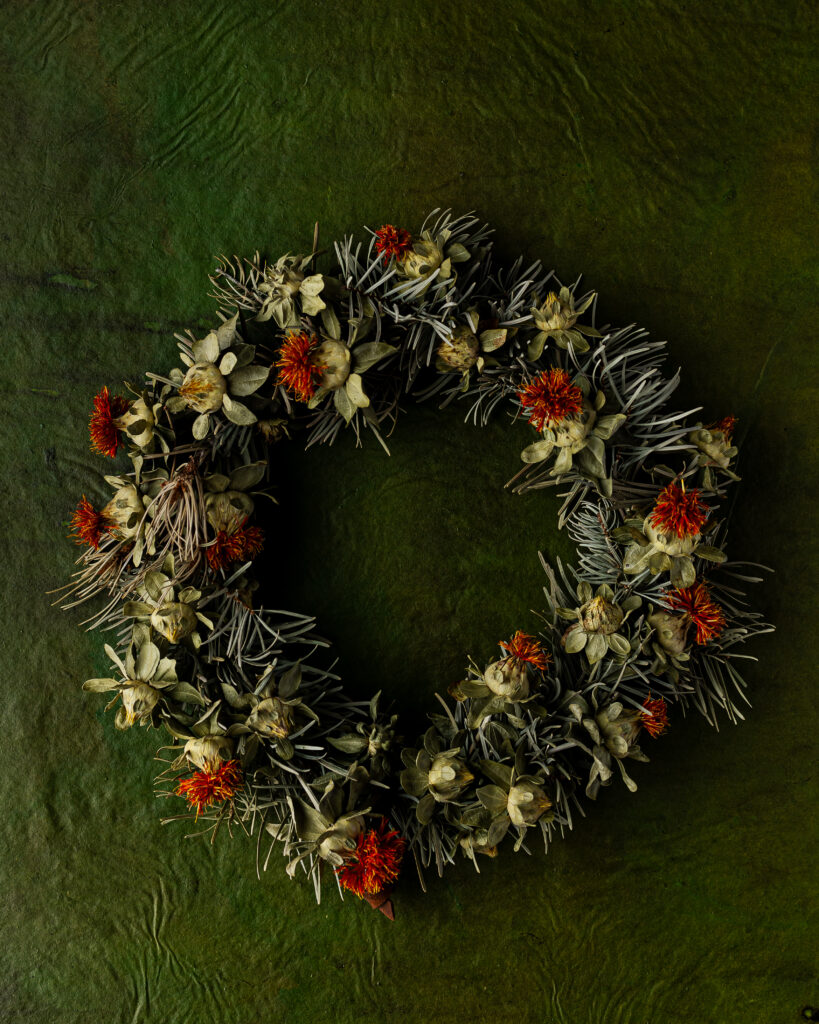
Flowers and foliage foraged in New Mexico are the basis for these stunning wreaths by Canadian-born and now Santa Fe-based artist Arella Hordyk. Visit Folklore on Garcia Street in Santa Fe for more.
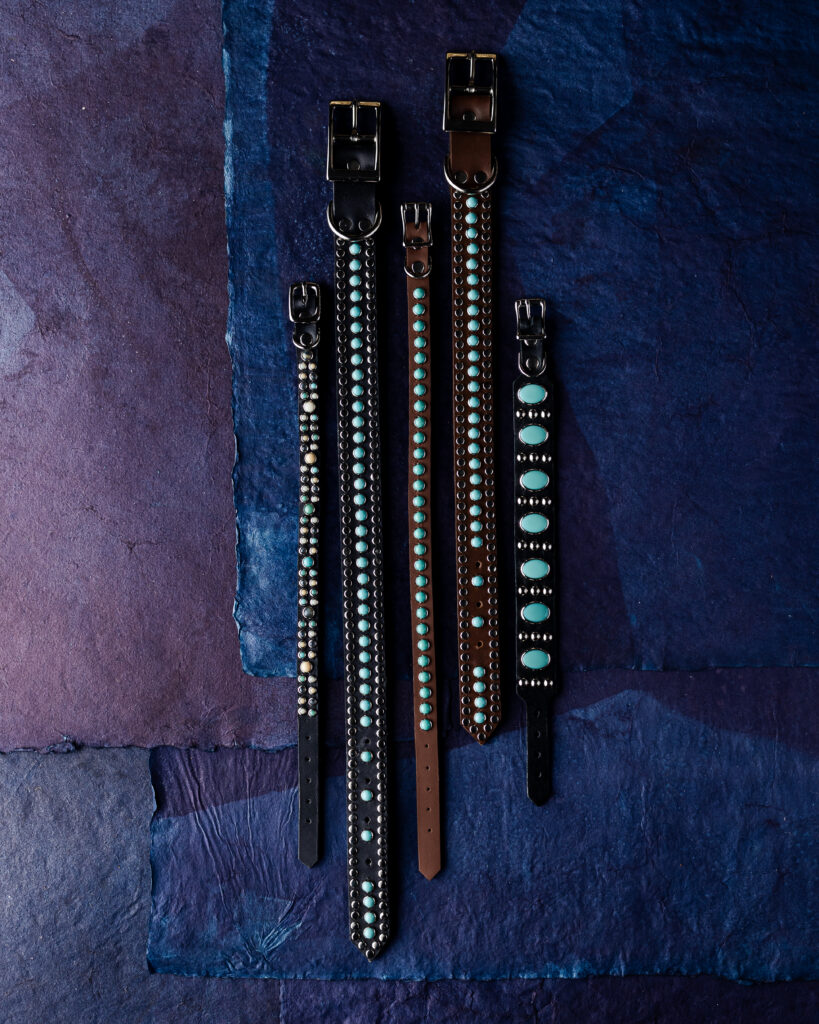
This paws-worthy pet emporium features neckwear for the most discerning dog. Collars made of Italian leather with European cabochons in light turquoise. Available in cat sizes too, for your feline friends.
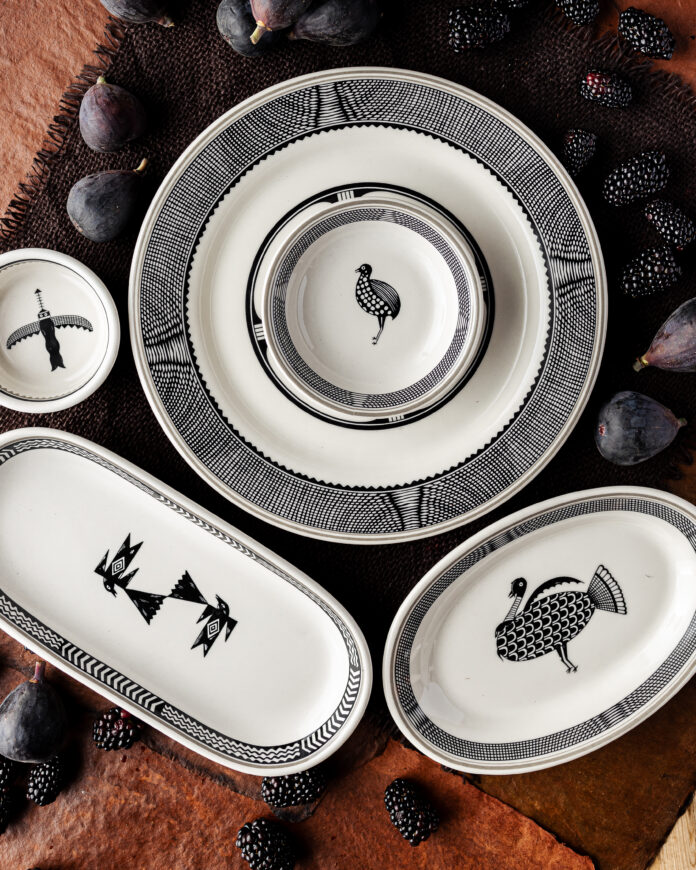
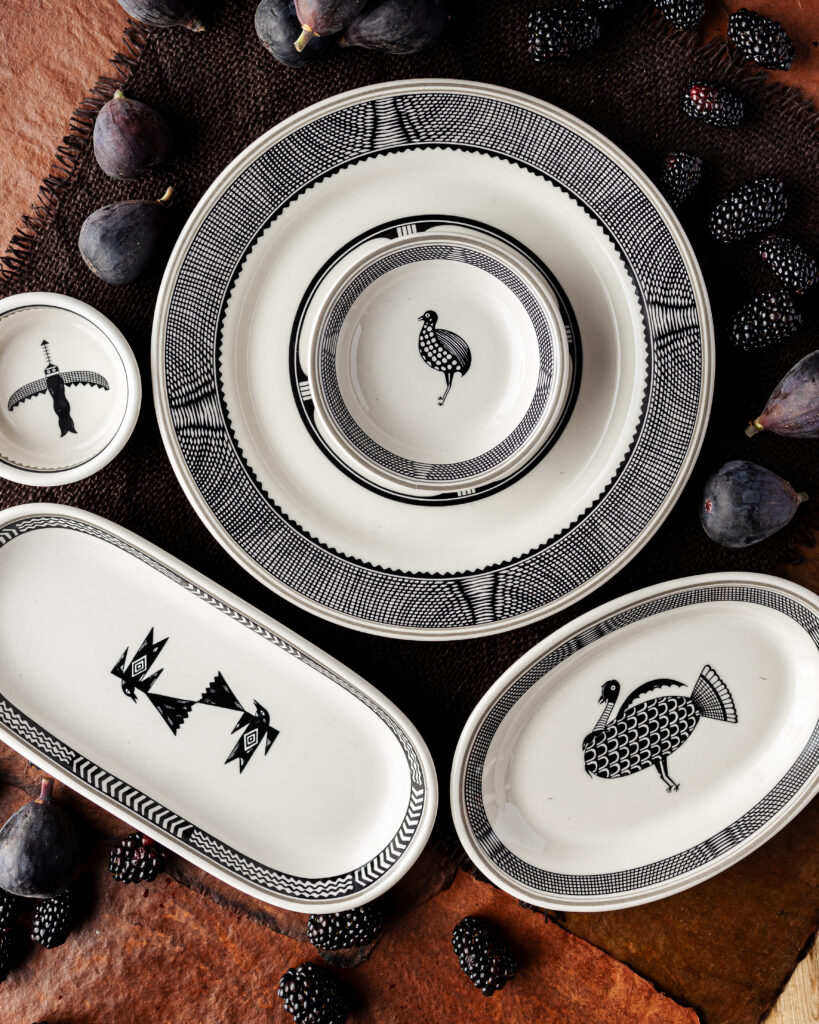
Mimbreño dinnerware is part of the heritage of the American Southwest. Made in the USA for the Fred Harvey Company’s El Tovar Lodge, it is available at La Fonda on the Plaza – another splendid hotel that was once a Harvey House. Oven-, dishwasher- and microwave-safe. Available in dark gray (shown here) or maroon.
Hanselmann Pottery
From a line of stoneware made for over 50 years in Corrales, NM, these oil and vinegar dispensers are sturdy, simple, and stand the test of time.
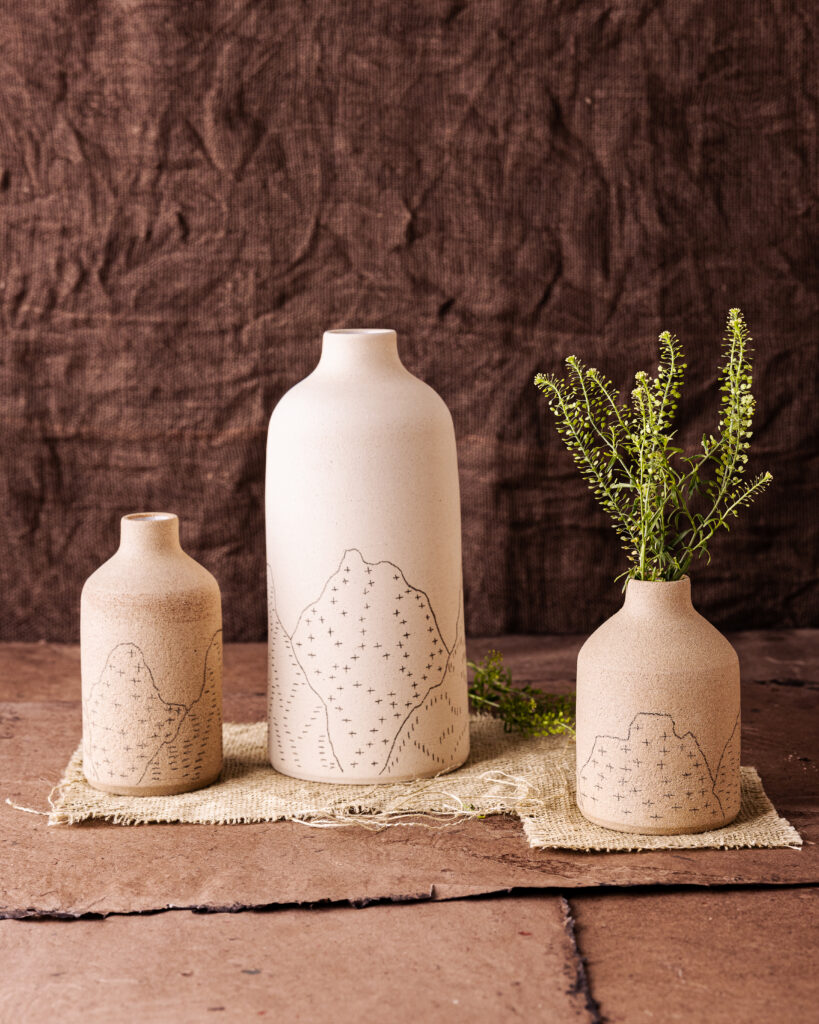
Stoneware incised with iconic Southwest images, textures and landscape elements, these vases make a fantastic hostess gift, or a present for a gardener whose summer blooms need to come inside for enjoyment at all hours of the day and night. Visit Folklore on Garcia Street in Santa Fe for more.
Home Gift Ideas Selected by Julia Platt Leonard, Keith Recker, Justin Matase, and Wendy Ilene Friedman / Styling by Keith Recker / Principal Photography by Tira Howard
Gifting is one of the five languages of love (alongside touch, time, affirmation, and action). Whether you give a tiny statement of thoughtfulness or a major monument of adoration, you can always find a lovely something from local boutiques and makers, like the jewelry items featured below.
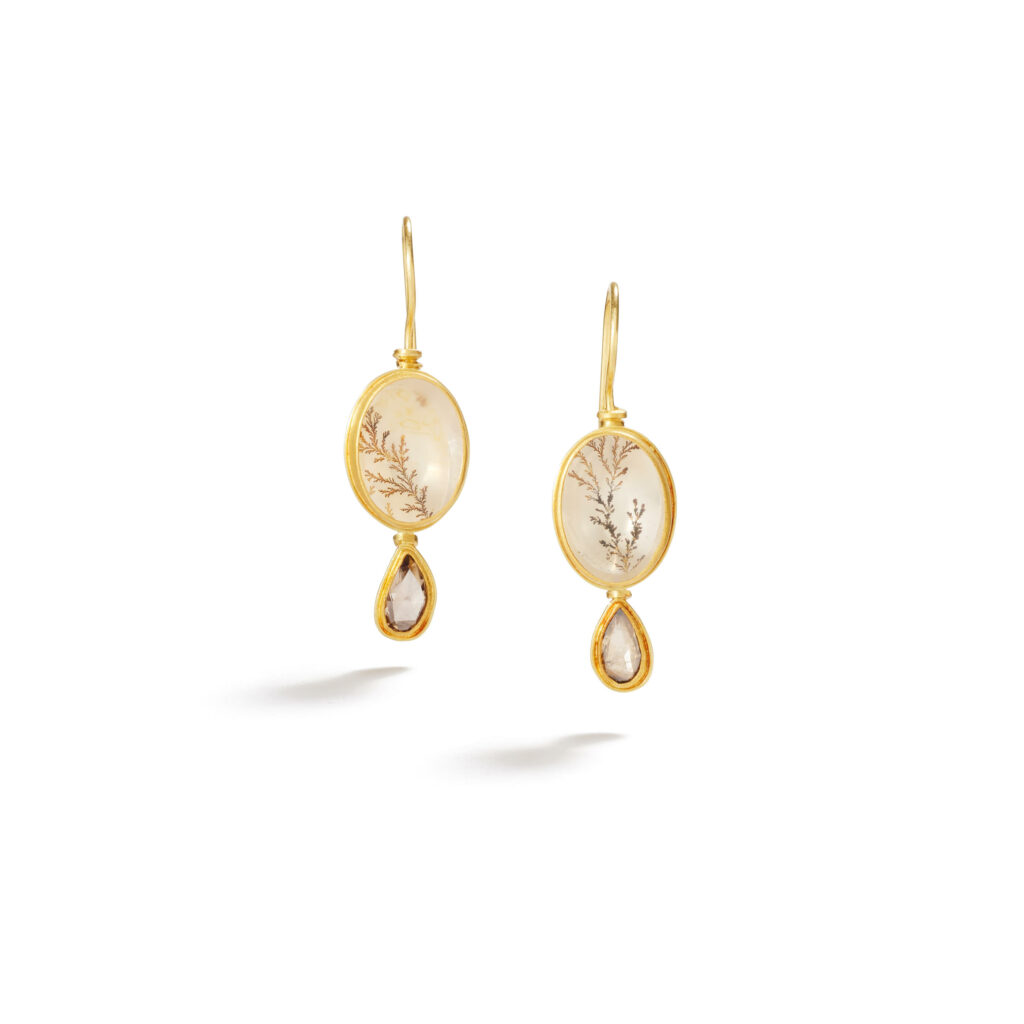
Dazzle with these ‘Dendritic Quartz Drop Earrings’ made by artist Carolyn Morris Bach from 18- and 22-carat yellow gold, dendritic quartz, and brown diamonds. When worn, the unique peculiarities of the earrings emit gorgeous soft tones — guaranteed to put a smile on someone’s face.
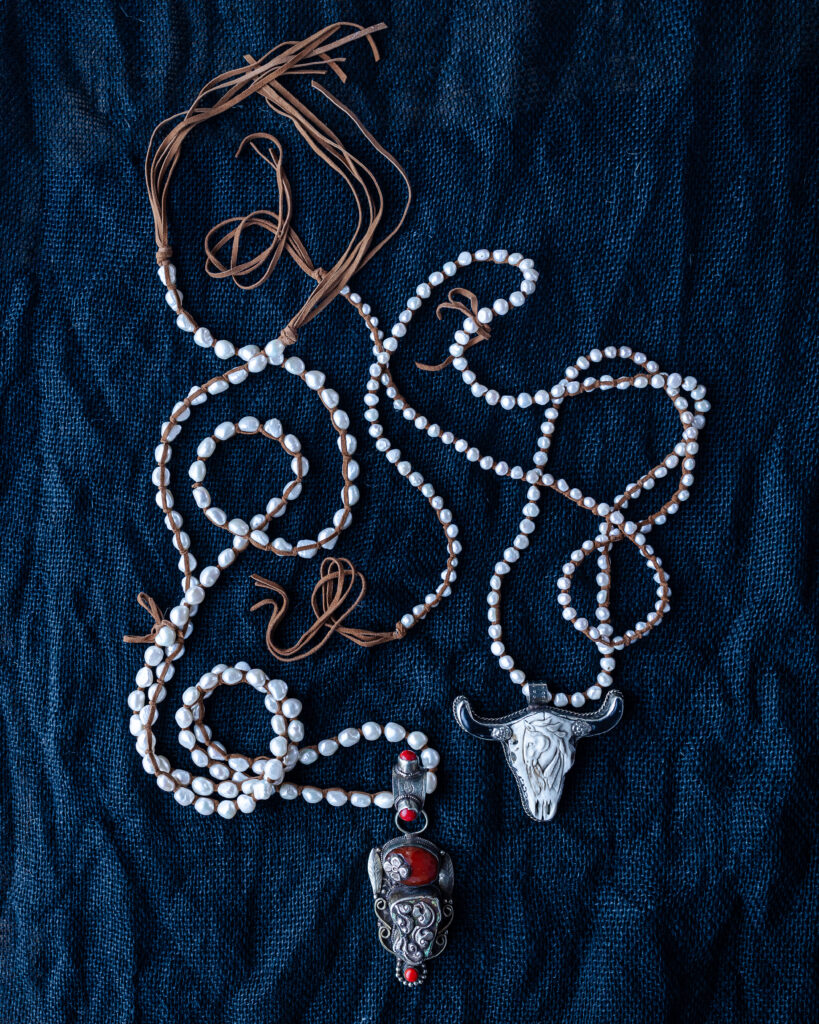
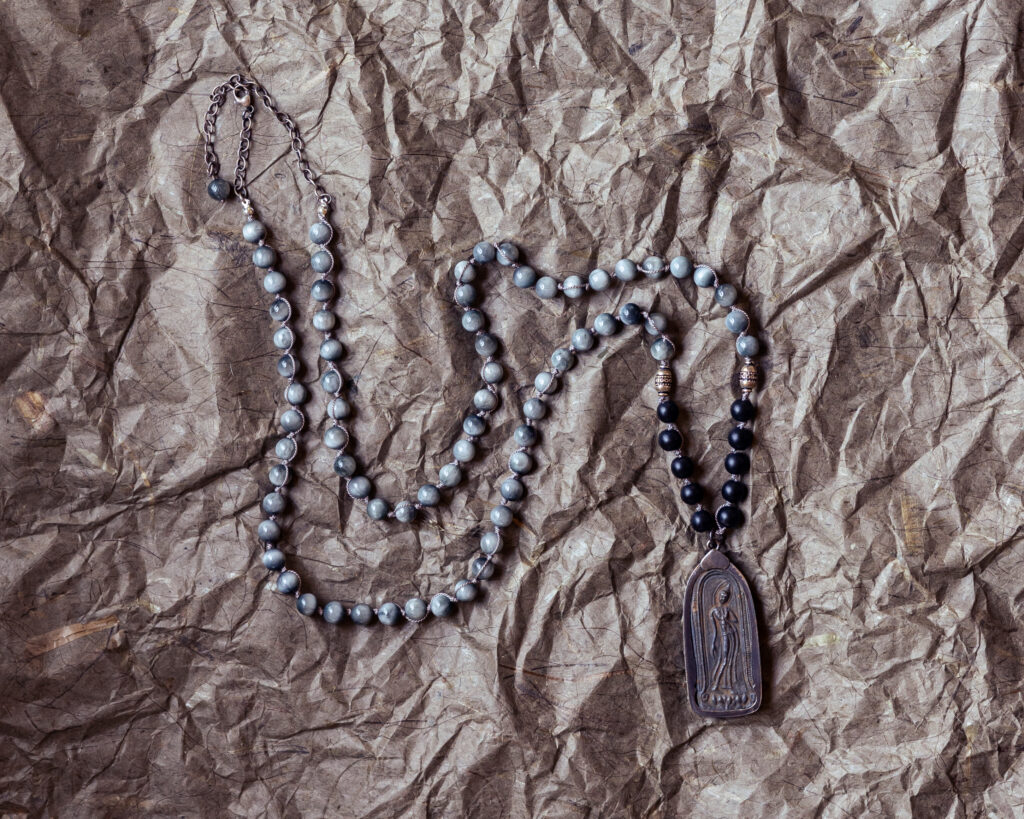
Wrap yourself in a string of pearls woven together with supple suede and set off with a carved pendant. One-of-a-kind pieces that are as much artwork as jewelry.
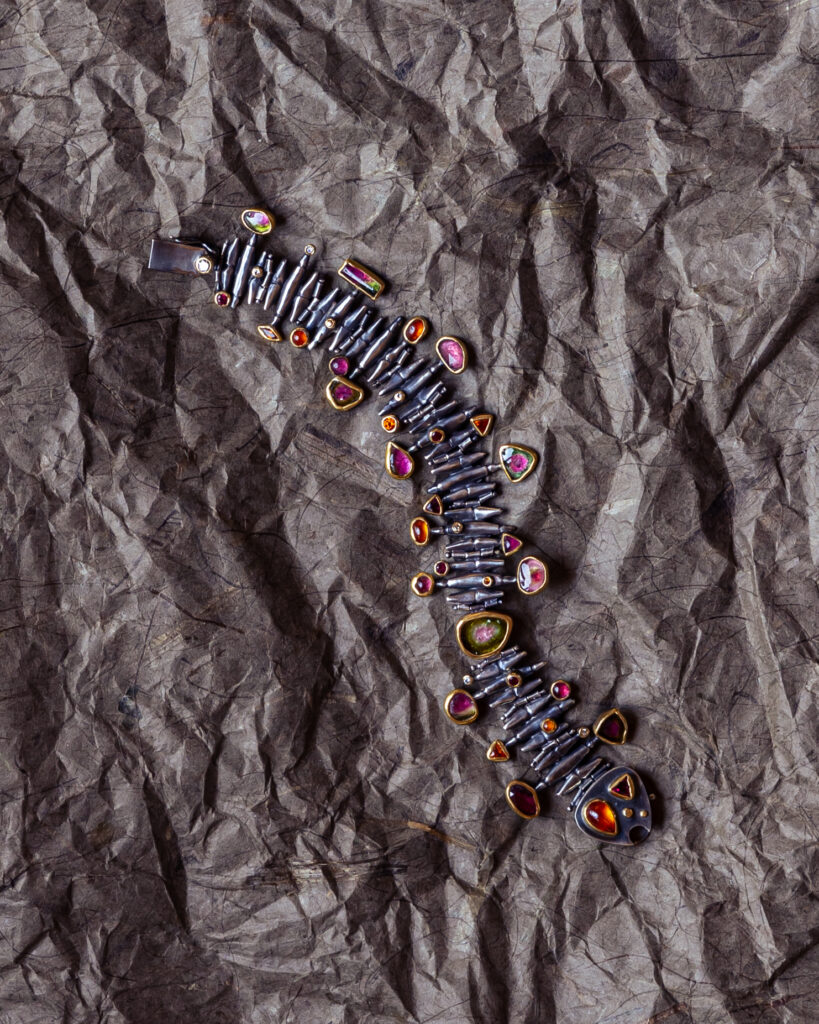
Artist Alison Antelman is inspired by both the human-made as well as the natural world. Each piece is fabricated and forged by hand with individual “pods” hinged and soldered so the pieces–like this tourmaline bracelet–drape beautifully.
This mysteriously smoky pendant depicts a lithe and lovely apsara, a Southeast Asian spirit of air and water. She sways from a string of stone and silver beads whose adjustable length closure will help you position her to best advantage.
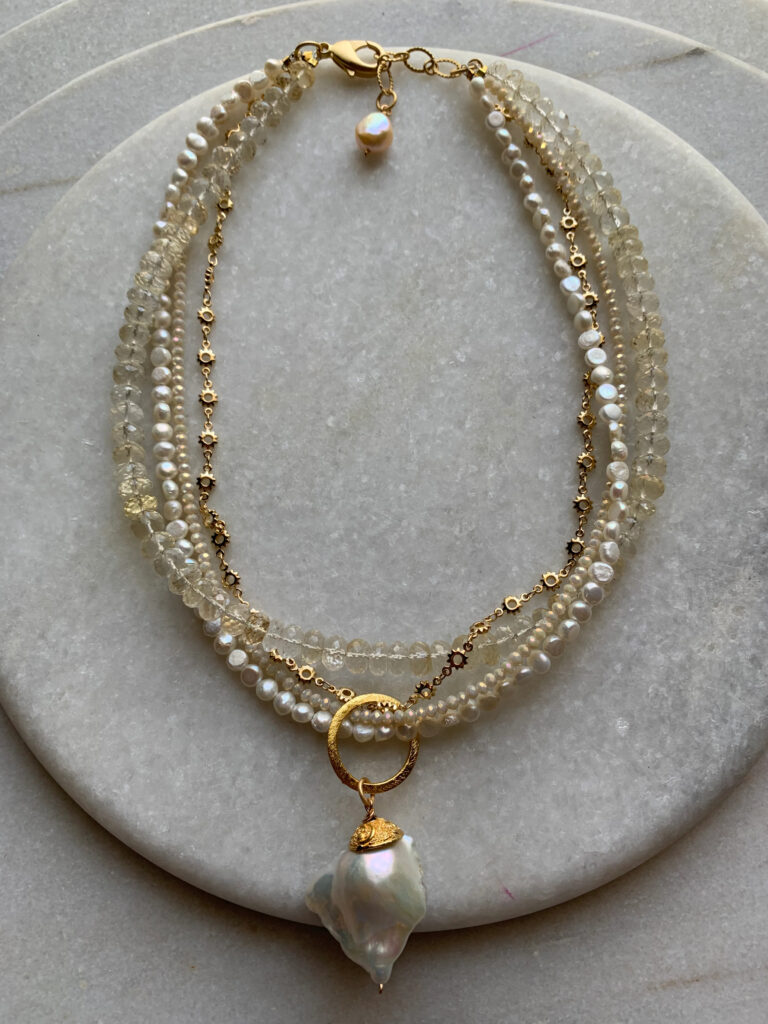
A flaneur strolls about town, taking in the sights and sounds, and contributing a bit of charming chatter to his or her environs. Your flaneur-ing is bound to be rich and rewarding when decked out in this gathering of unique trinkets. You can wear the necklace, an 18″ choker with four individual strands of semi-precious stones and a gold finish chain. Or you can unclasp and split the strands into two sets to wear as a 36″ long necklace. Handmade in Santa Fe. Each one varies slightly.
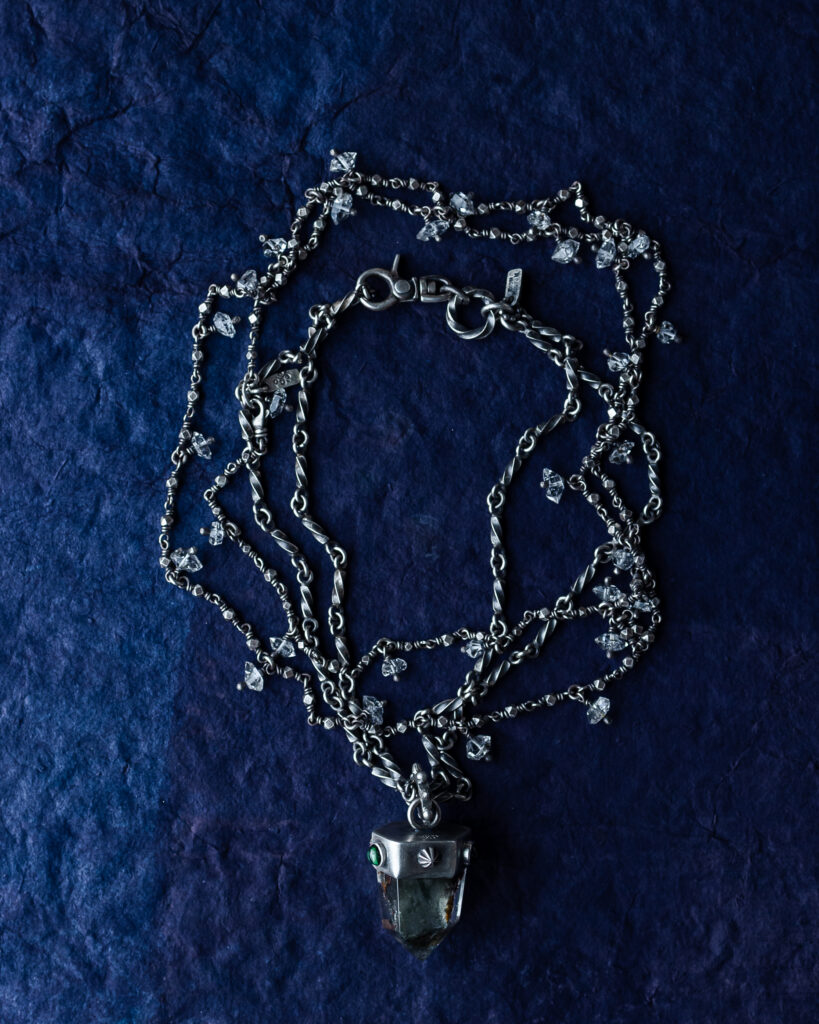
Raw and natural minerals, like the Garden quartz crystal and green tourmaline cabochons shown here, form evocative pendants suspended from handmade, adjustable sterling silver chains. A second necklace enriches this photo: the handmade Fringe Flapper Chain combines Herkimer diamonds and sterling silver.
Cicada Collection
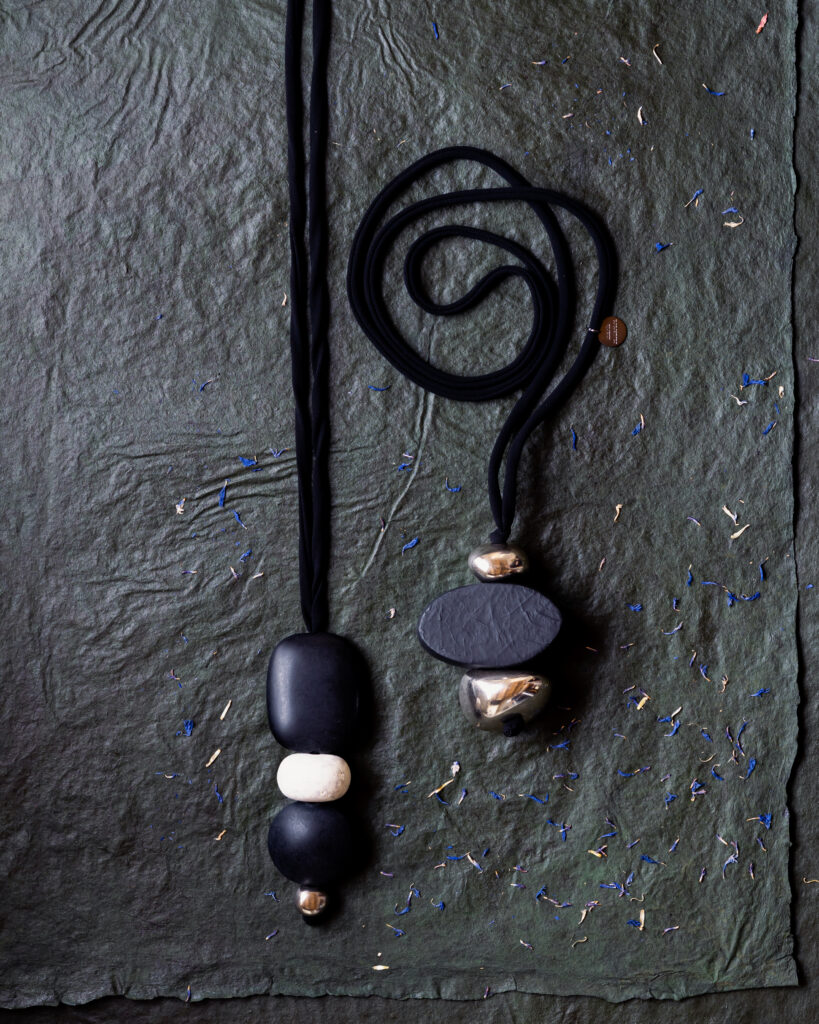
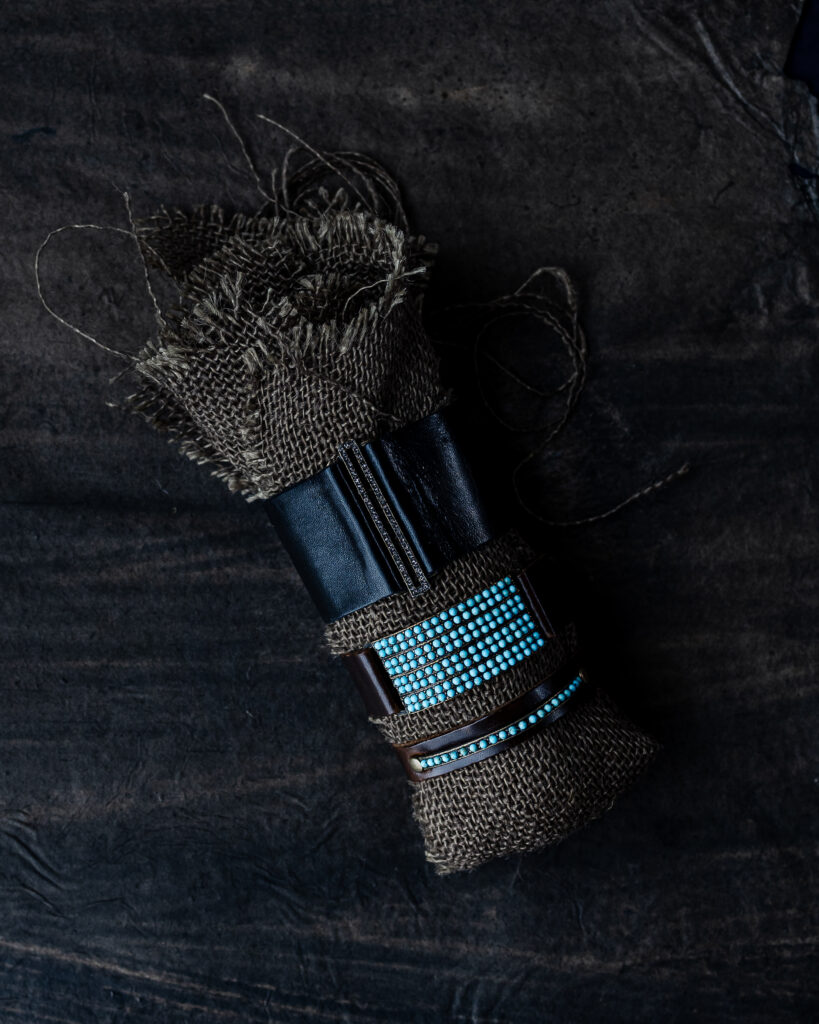
Specializing in clothing with clean lines and flowing forms, this store also offers lovely jewelry with a Minimalistic bent. Take these elemental beaded pieces, for example: their scale, simplicity, and eternally appealing materials are admirable.
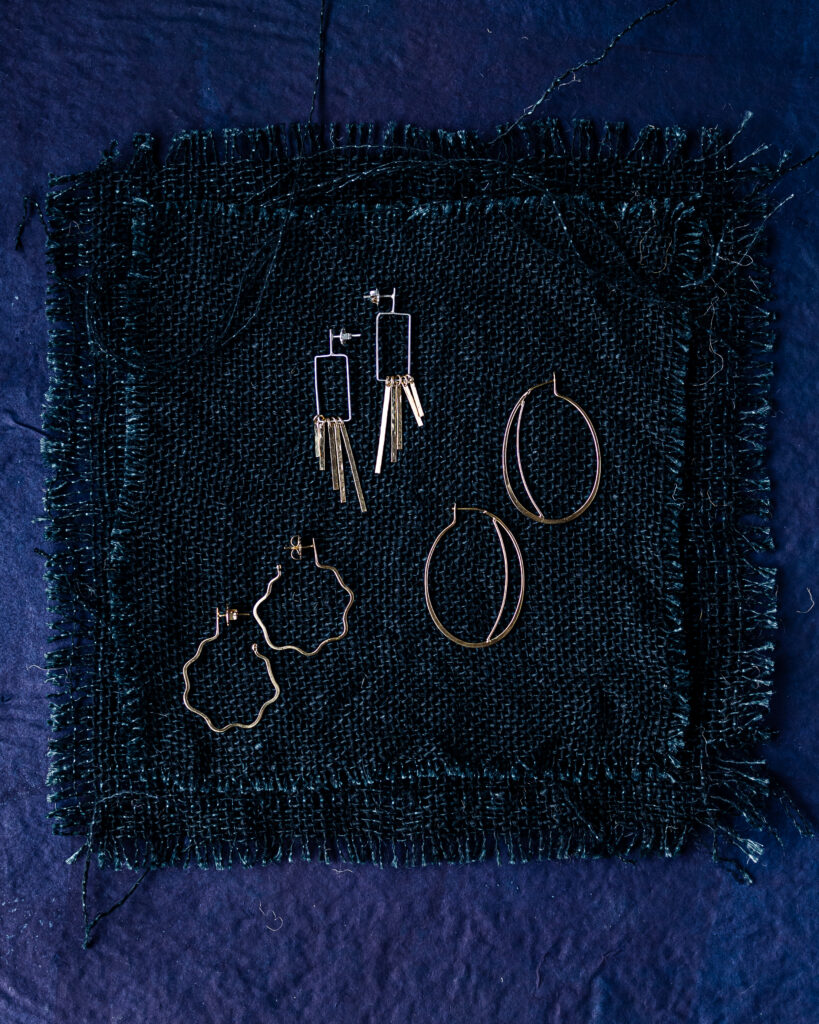
Ring in the new year with earrings from Cynthia Jones. From left, Cloud Earrings with a gentle undulating shape; Lunar Hoop with metalwork that will remind you of a crescent moon; and Deco Earrings that are sleek, geometric, and reminiscent of a bygone age. Visit Folklore on Garcia Street in Santa Fe for more.
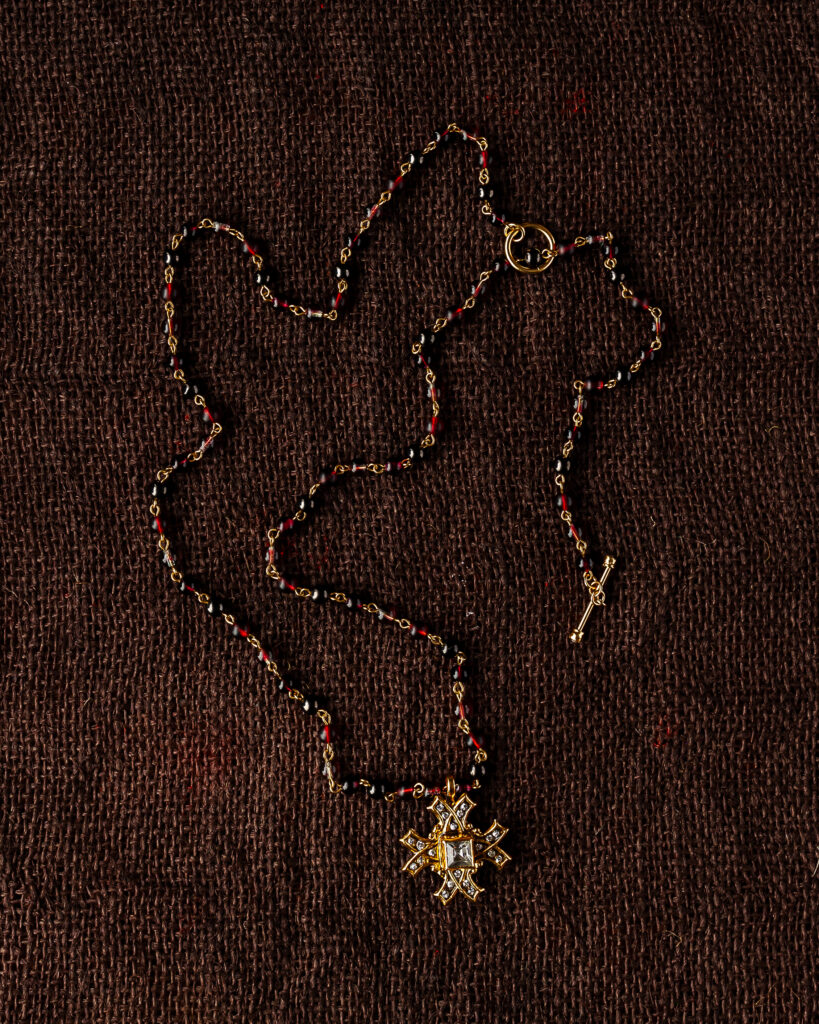
Whether you’re feeling sacred or profane this season, a necklace from Virgins Saints & Angels is in order. More than a piece of jewelry, you’re gifting a bit of mystery, good fortune, and a generous sprinkling of magic.
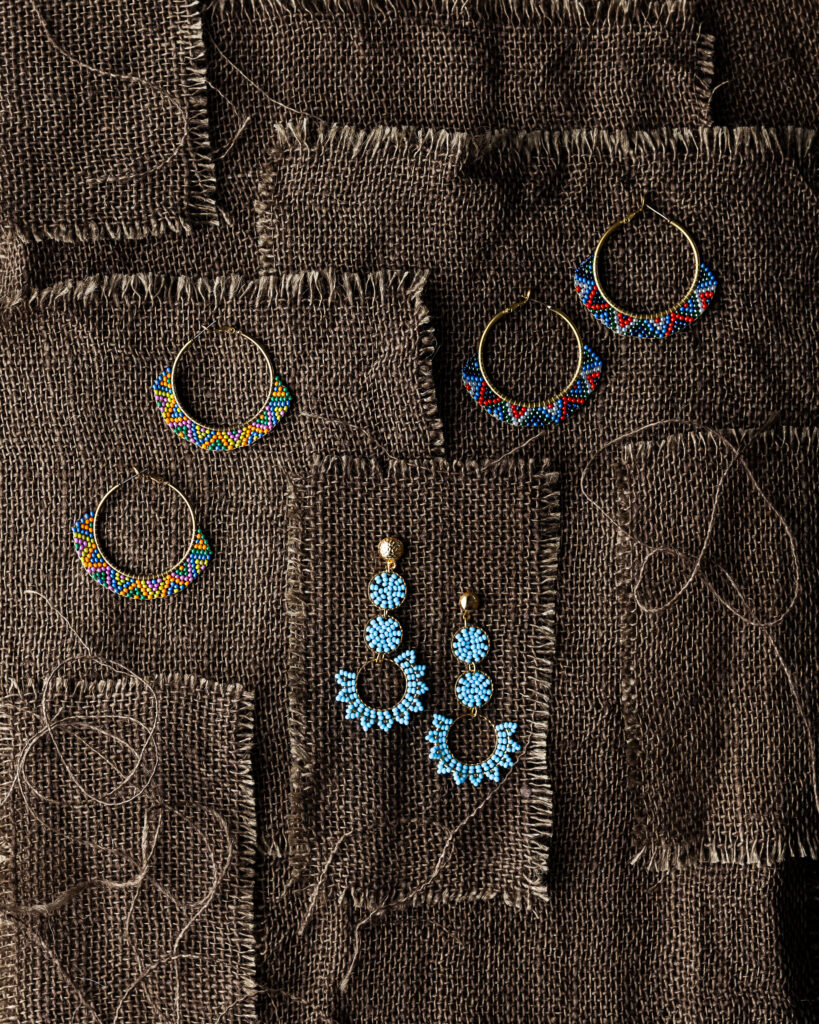
It’s all in the detail with these delicately worked, beaded earrings from Guatemala and Ecuador that you’ll find at the Museum of International Folk Art shop, a treasure trove of one-of-a-kind gifts.
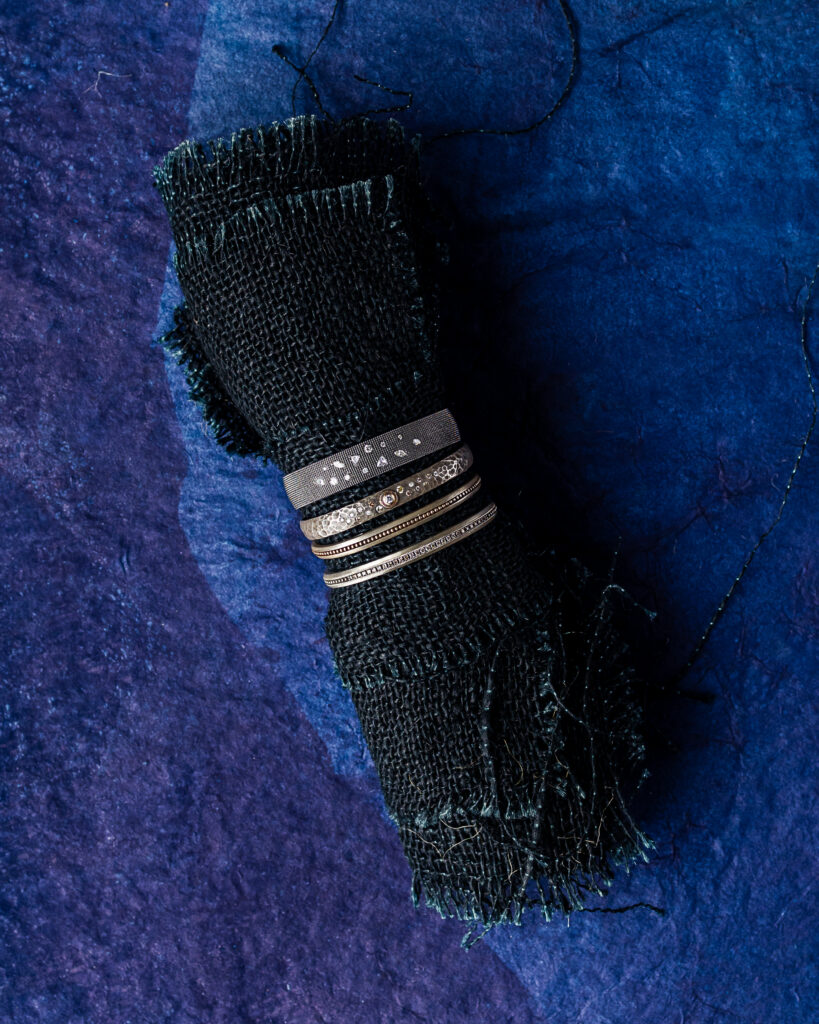
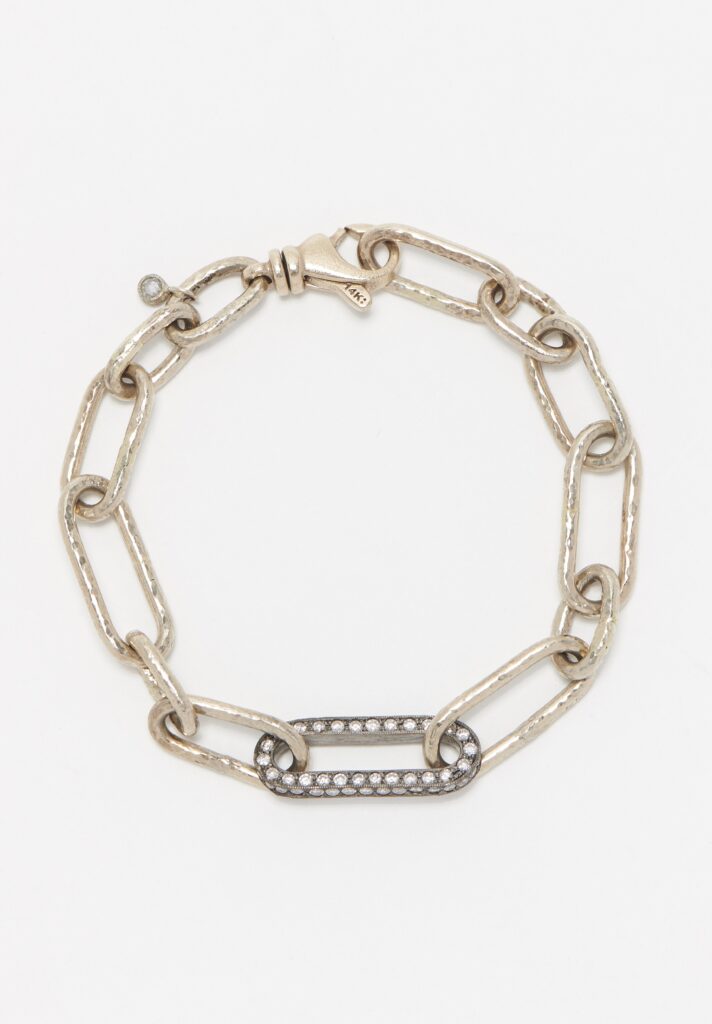
Deck the halls, wrists, and neck with Christmas cheer from Santa Fe Dry Goods. TAP by Todd Pownell offers a stunning 18K white gold pave-diamond link bracelet: think a string of paper clips but more grown-up and glamorous.
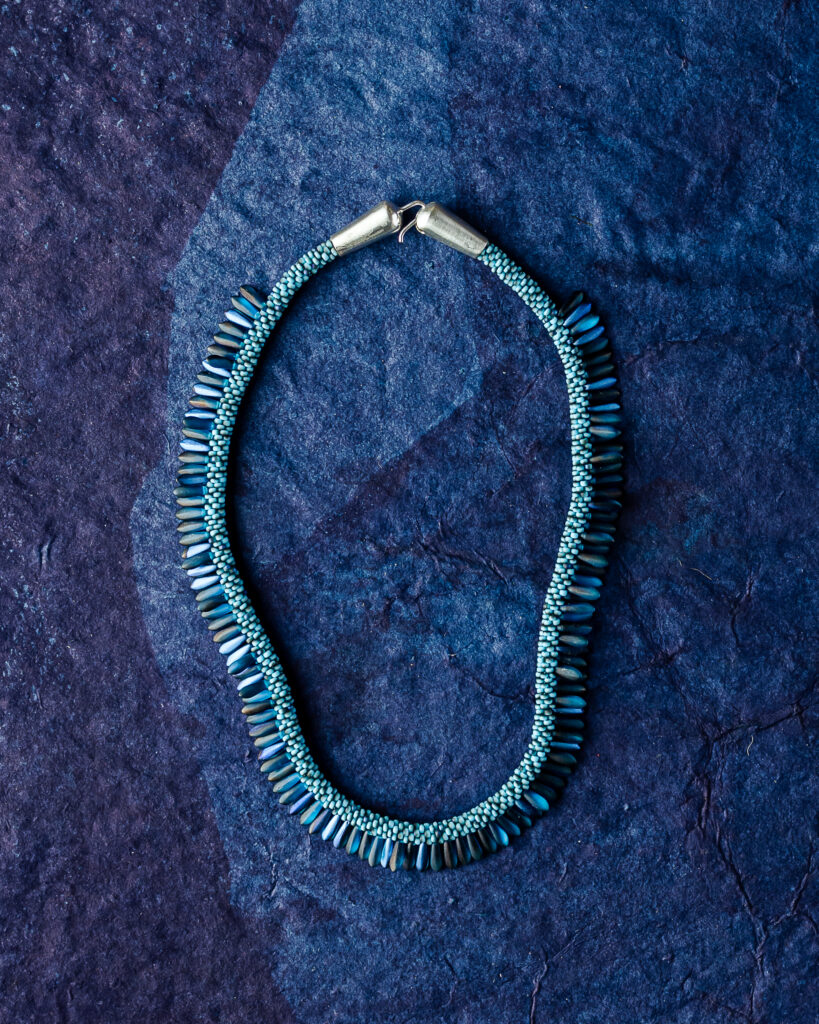
Bogotá-based Claudia Fajardo’s pieces are handmade from a combination of colorful glass beads and sterling silver. Inspired by nature and its shapes and colors, the pieces are full of texture and movement.
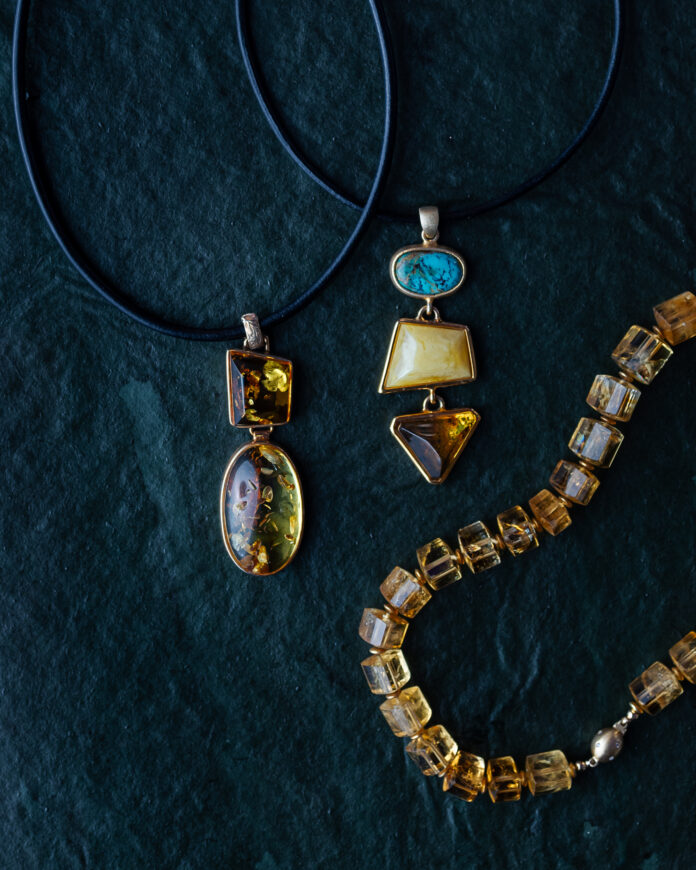
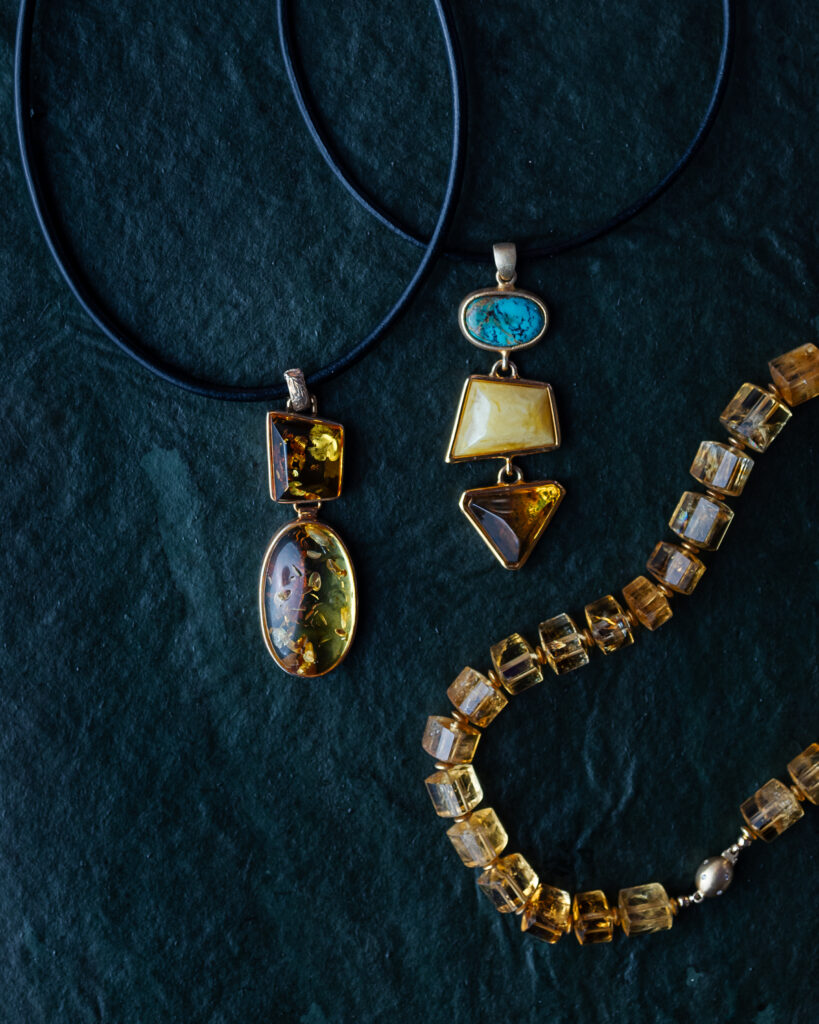
Amber has been used in jewelry since the Stone Age and is credited with healing properties, attracting good luck, and averting misfortune. Anyone receiving one of these amber necklaces from Sukhmani would be lucky indeed.
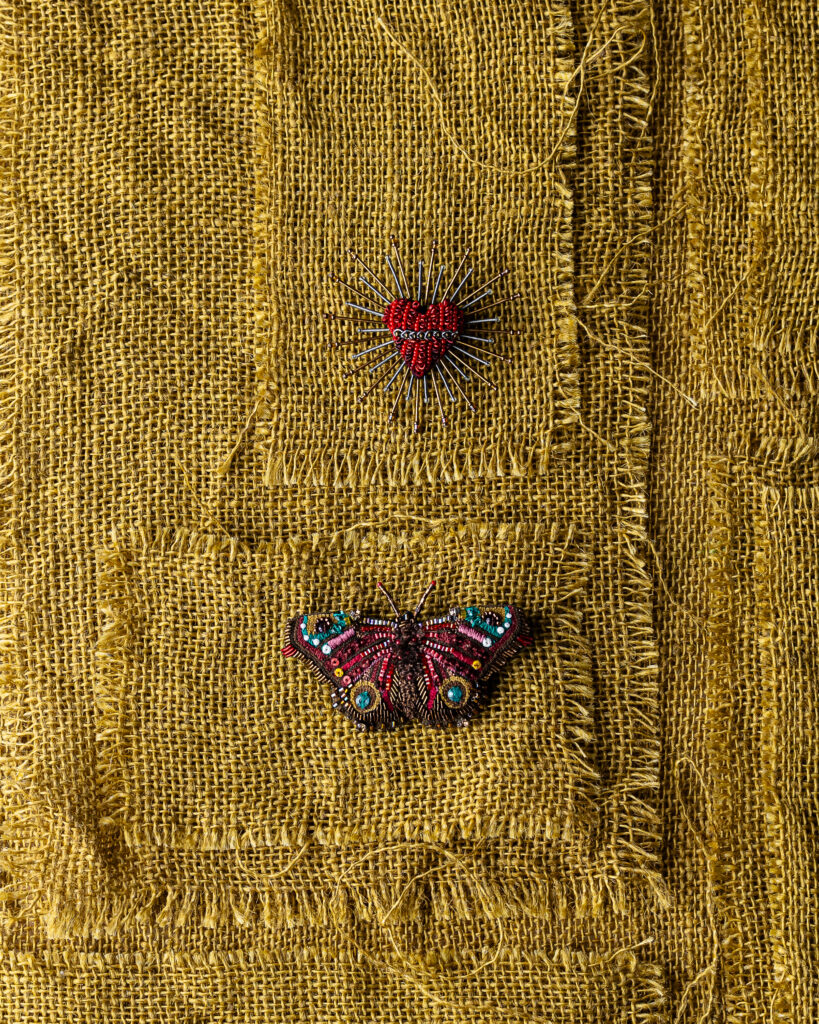
Wear your heart on your sleeve or anywhere else, for that matter. Hearts and butterflies and other crafted creatures to adorn your outfit from the Museum of International Folk Art, always the spot for inspired gift-giving.
Gifts for Women Selected by Julia Platt Leonard, Keith Recker, Justin Matase, and Wendy Ilene Friedman / Styling by Keith Recker / Principal Photography by Tira Howard
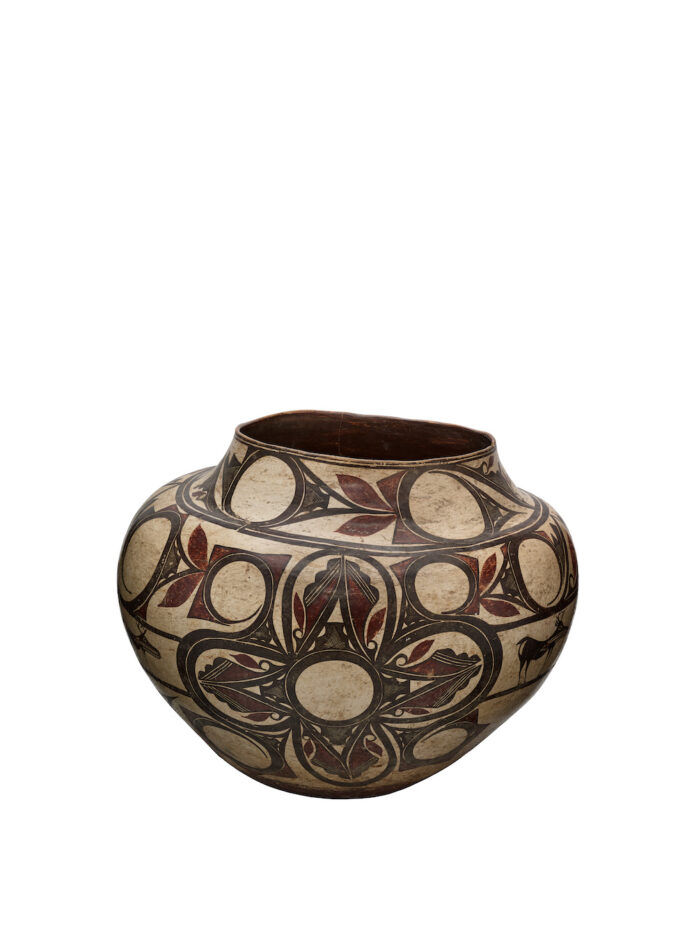
Arroh-a-och | Laguna
Storage jar c. 1870–80
Clay and paint 20 1/4 x 24 1/2 in. (51.4 x 62.2
cm) Indian Arts Research Center of the School for Advanced Research
Grounded in Clay: The Spirit of Pueblo Pottery is the First Community-Curated Native American Exhibition at The Met, on view at both the Museum and the Vilcek Foundation now until June 4, 2024.
In a far corner of the first floor of the Met, just past the atrium of the American Wing and through a glass door, lies this small but intimate — and intense — collection of clay vessels, at last shown on their own terms. Rather than being placed within the typical Western concepts of art and history, here, more than 60 members of 21 tribal communities selected the pieces and wrote their descriptions, some of them in the first person.
From the project description: “The approach illuminates the complexities of Pueblo history and contemporary life through the curators’ lived experiences, redefining concepts of Native art, history, and beauty from within, confronting academically imposed narratives about Native life, and challenging stereotypes about Native peoples.”
At the entrance to the exhibit sits an enormous black jar by Lonnie Vigil from 1995. The text is by Nora Naranjo Morse (Kha’p’o Owingeh/Santa Clara), who begins, “When the clay calls, there’s no denying it . . .” She describes Vigil’s history, his process, and the knowledge passed down to him by Pueblo ancestors that enabled him to answer the call and to create such a vessel.
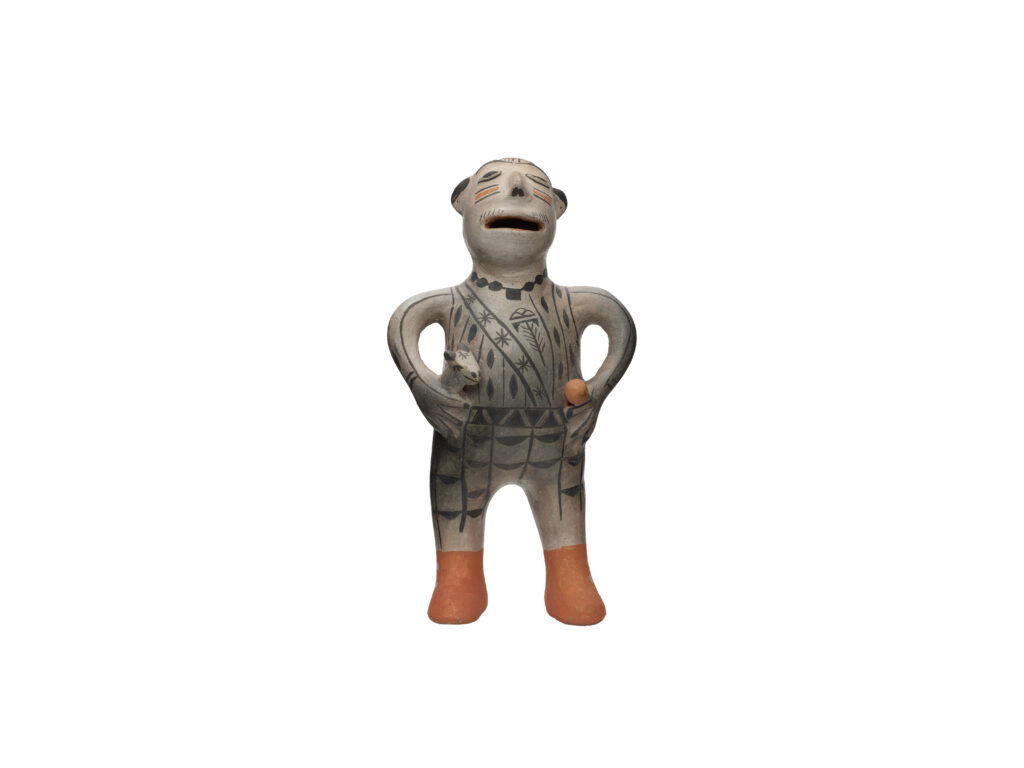
Felipa Trujillo | Cochiti Mono figure c. 1966 Clay and paint 10 5/8 x 5 1/2 x 3 3/4 in. (27 x 14 x 9.5 cm) School for Advanced Research
Inside, a long case of other black vessels looks over a collection of water jars — one from San Ildefonso Pueblo and two from Tesuque Pueblo (ranging from 1860 to about 1920) —with curvy or geometric patterns in black on a light background. A Nahohal Tribute Pot (2016) and two Mono Figures (c. 1900 and c. 1966) have unglazed bits of terra cotta that act as a colorful accent. Another case of jars from several different tribes, the oldest dating from about 1880, shows the range these utilitarian objects could have. Nearby, a pair of unglazed, plain jars dating from around 1900 (Pueblo, Tortugas) show off the inherent appeal of the clay itself.
Story by Stephen Treffinger
Grounded in Clay Events at The Metropolitan Museum of Art
In honor of Indigenous Peoples Day on Mon., October 9, The Metropolitan Museum of Art is offering a number of free events.
First on Tue., October 10, Dr. Joseph “Woody” Aguilar (San Ildefonso) joins Russell Sanchez (San Ildefonso) for a Met Expert Talk. These talks give attendees a chance to get a deeper insight into on view galleries and works of art through untold stories from curators, scientists, conservators, and scholars.
Then, on Wednesday, Clarence Cruz (Ohkay Owingeh) visits the museum for another Met Expert Talk before a final Met Expert Talk with Elysia Poon (Indian Arts Research Center Director) and Tony Chavarria (Santa Clara) on Thursday. The day closes out with a Pueblo Community Panel titled Exploring Indigenous Ceramics.
Registration is required for events. Explore the events and save your space at groundedinclay.org/events.
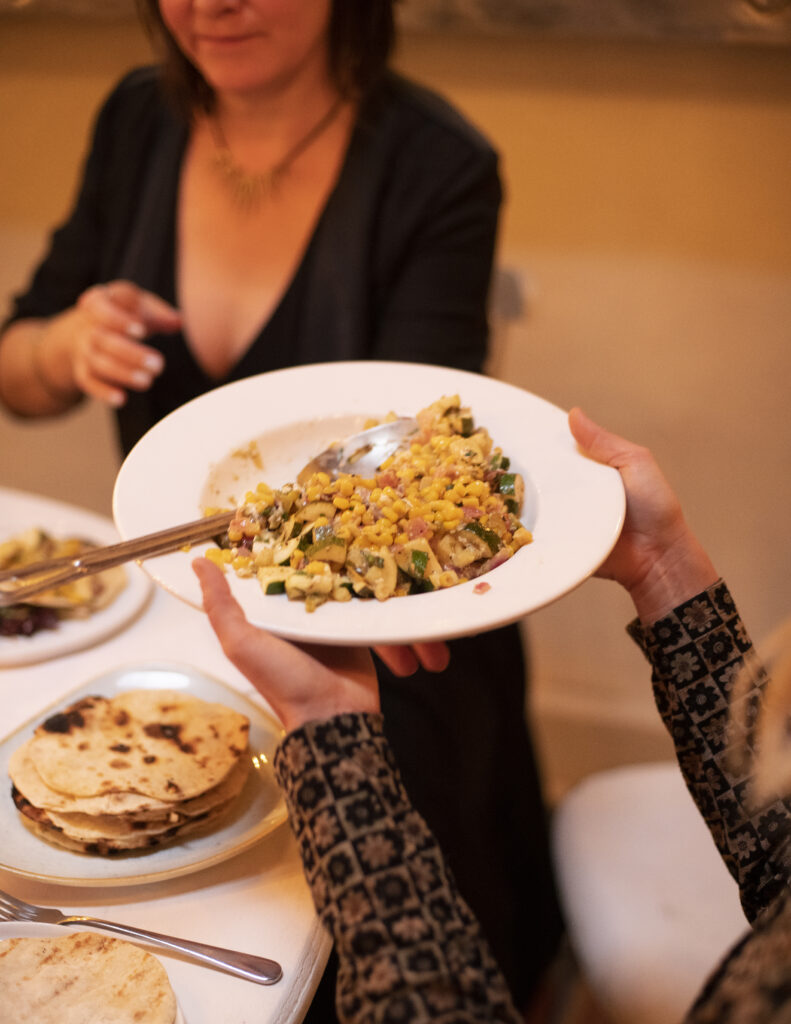
The mission at The Love Apple in Taos has always been to serve guests the finest seasonal local foods, organically grown by farmers and other friends, and intended to elevate good cheer and well-being. The same is true of the family meal, served before every dinner shift to the team that joyfully runs this revered restaurant, a group of employees who consider each other as family.
“One of the reasons that we initially decided on a family meal is that we wanted to create a restaurant that people wanted to work at, and we wanted to create a family,” says The Love Apple founder and owner Jennifer Hart. “Most of us have worked together for over five years. We share our lives together.”
A Special Meal Each Shift
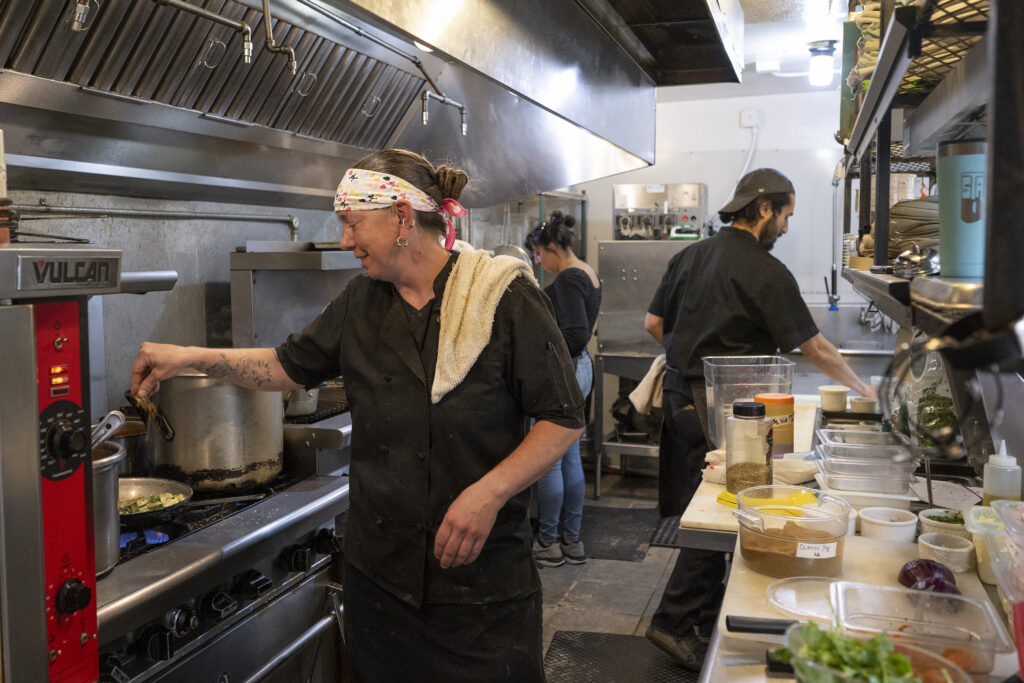
With the family meal, the staff also gets to share The Love Apple’s divine made-from-scratch regional home cooking. The dinner menu changes seasonally with nightly specials and might include such creative fare as Buttermilk Yellow & Blue Cornbread; Three Mushroom Walnut Pâté; Grilled Trout Wrapped in Corn Husks; and House-Made Potato Gnocchi — ethereal dishes that nurture and delight. (The food, along with the flawless service and rustic, romantic ambiance, is why many people consider The Love Apple to be one of the best restaurants in New Mexico.) The family meal, prepared by Chef Jenni Ford, is of the same caliber, equally delectable and nurturing as well as diverse.
“Jenni’s family meals are amazing,” Hart says. “She always has a salad and a main and she’s always trying to do something amazing, like steak and fajitas, tacos, and a delicious gluten-free vegetable lasagna, because so many people are gluten-free. It is challenging for Jenni because everyone has a different thing they cannot eat. One person doesn’t eat dairy, and another doesn’t eat meat.”
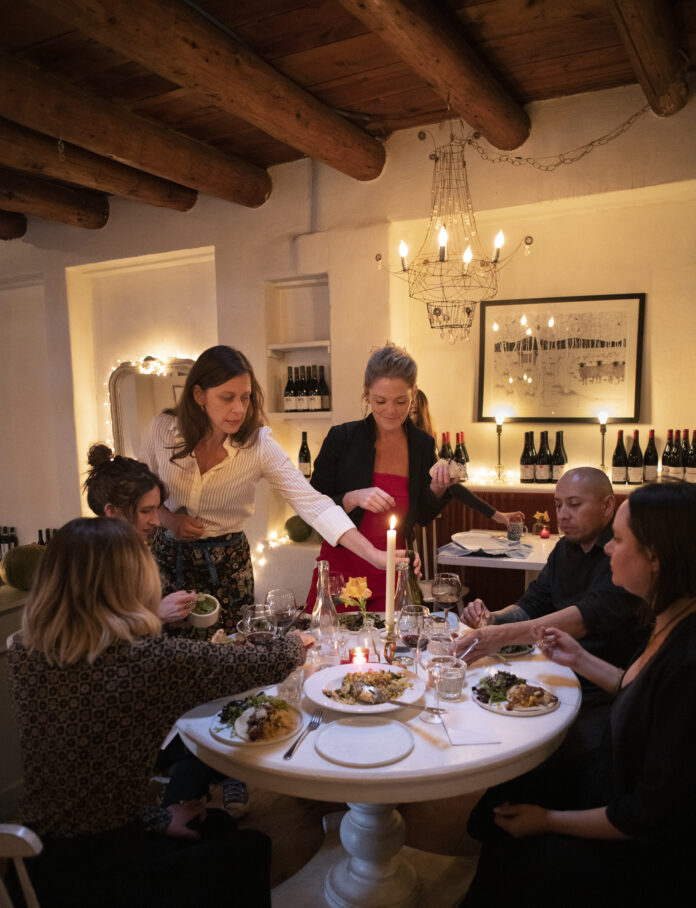
This intimate restaurant, housed in the former Placitas Chapel built in the 1800s, is steeped in atmosphere and charm, with just 13 tables, (plus patio seating in the summer) hand-hewn vigas, distressed wood floors, elegant chandeliers, candlelight, fresh flowers, and other inviting details. Before the dinner guests arrive, a last-minute flurry of activity unfolds in the serene space, often as the family meal takes place.
“The Love Apple’s staff meal looks different depending on the day,” says Manager Cheri Keil. “Most evenings, we are running around to put finishing touches on the dining room or throwing another log on the fire for our guests to walk into a cozy and welcoming space. Jenni takes care of us. She feeds us whole and hearty meals to get us through a shift… It’s not always glamorous but as we wait for our guests to arrive, you will find us chatting about specials or a fun and funky new wine.”
Time For Innovation
Often the team sits down together to catch up on what’s happening at the restaurant. “It’s the time when we talk about what’s new on the menu, what’s going on in the restaurant,” Hart says. “We’ll open a bottle of wine and analyze it.”
The Love Apple’s family meal also provides a place for the chef to innovate, creating new dishes that might be added to the menu. “It’s a good way to try out ideas without any judgment,” Hart says. “We encourage the chef to try different things and see what comes out of it, maybe a new sauce or something else.”
Manager Cheri Keil enjoys the chance to sample those innovations. “It’s the time for our kitchen to get creative and try new ideas,” she says. But, she adds, it’s always a treat when Ford makes chicken enchiladas for everyone.
A Place To Connect
The family meal, served in restaurants around the world, gives employees sustenance as well as a sense of solidarity, as they bond over food before a busy dinner shift. With a sense of family already firmly in place at The Love Apple, the family meal just might resemble your meals at home—filled with laughter, stories, and delicious food, all of which deeply warm the heart.
“It’s just nice to sit down and enjoy a meal,” says Hart. “I mean, we work in the restaurant business, we should also enjoy wine and food. It’s nice to connect with everybody and be together. Everyone has kids, and we’re running around all day, so it’s nice to come in, sit down and relax, and enjoy a meal together.”
The Spanish word for oven is horno. For those who have spent significant time in the Southwest, adobe hornos can be spotted outside family homes, largely dormant throughout the year until it’s time to bake traditional pueblo bread for feast or holidays.
Like many cultures around the world, the oven, the hearth, or the kitchen are the center of family activity and gathering. For Heather and David Sellers, owners of Horno Restaurant, who have spent their lives in kitchens and restaurants, it’s also a place of inclusivity and access to exceptionally crafted food.
How It All Started
Many may remember David from his tenure as chef at Santa Café before opening restaurant Amavi with his wife, Heather. Eventually, David would establish and run the Street Food Institute, a small-business incubator and social enterprise for food entrepreneurs. Heather received her degree in social work and worked with kids in Santa Fe schools. The couple opened Horno in June 2021. With their background in high-end restaurants and helping others through nonprofit work in New Mexico, the name perfectly captures their life’s work.
“When we came up with the concept of Horno, we wanted to create a different model for Santa Fe: excellent quality food without being crushingly expensive. We have a lot of fine-dining experience, but we wanted it to be accessible to everyone,” says David.
The Marcy Street restaurant, whose motto is “Food for the People,” is located in the former home of Il Piatto, which shuttered permanently after the pandemic. The interior transformed into bright uniformity with spare décor and warm wood accents. In simple terms, it can be described as inviting without pretension.
“We want the customer to feel like they’re walking into somebody’s house, have a family experience, and feel the love of the household,” says David.
The Atmosphere of Horno
It is a vibe that matches its playful menu: grilled octopus and Iberico ham, burrata Panzanella salad, fish sandwich, bouillabaisse for two, and lemon curd cake. “I crafted my ability to make great food at a not very expensive price. The fine dining scene has changed over time. It’s not what it used to be.”
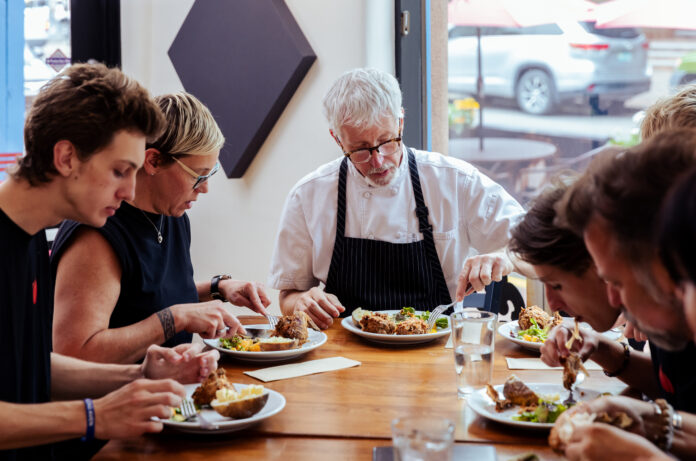
Like most professional kitchens, where the outside world is tuned out by cascading voices, printing order tickets, and music, staff often becomes family by proximity, fate, or choice. And as one would imagine, Horno’s family meal is central to its culture.
The Horno Family Meal
“Family meal is super important to us,” says David. “Creating a family culture in the restaurant with the front and the back of the house is one of the most important things to have. I put a lot of effort into making that food good and nourishing. We always wanted our restaurant to be a family environment, not only with staff but with our guests. Every day, we make a family meal. We all sit down as a family and eat; we always care to make something special for everyone.”
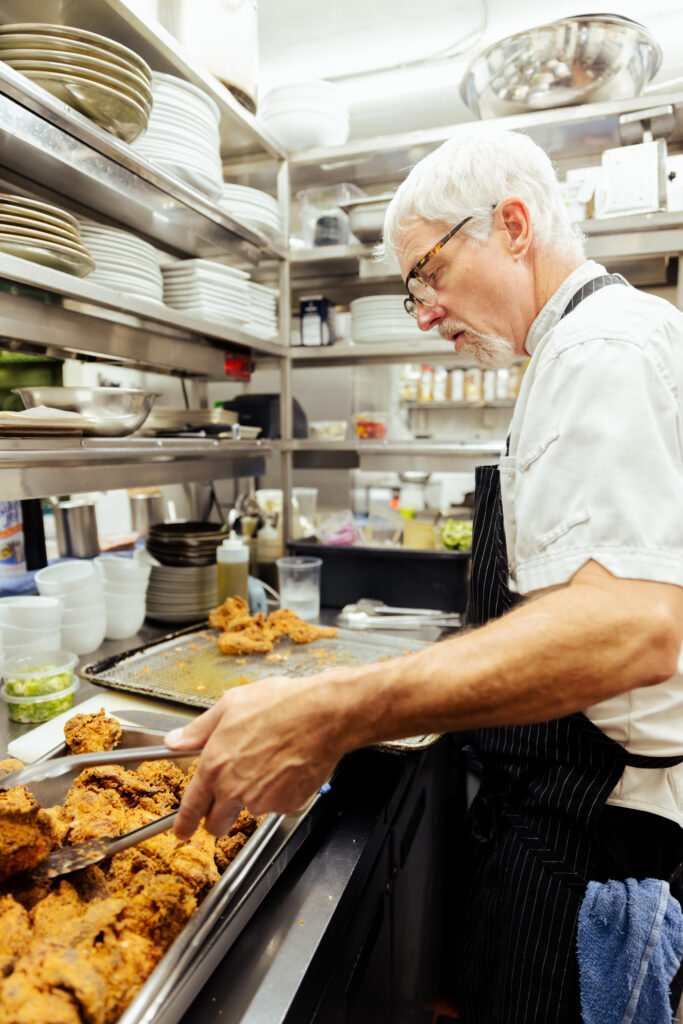
Once a month, David would prepare Southern-style fried chicken for a staff meal. Among his many other “duties as assigned” is managing the restaurant’s social media accounts.
“I posted a picture of the fried chicken on social media and our regulars picked up on it and asked us to do it at the restaurant. I tried it, and now we do it every other Wednesday, and it’s a phenomenal success. It literally tripled our business on Wednesdays.”
Restaurants are curious places. Staff can become family, and those you serve and support what you do in return create a bond. And in small towns like Santa Fe, where we connect with people from around the world, there’s universality in places like Horno where terms like “local” and “tourist” are erased with one stroke of a home-cooked meal meant to be enjoyed like family.