Home Blog Page 69

Box Road Brings Unique Antiques to Albuquerque

0
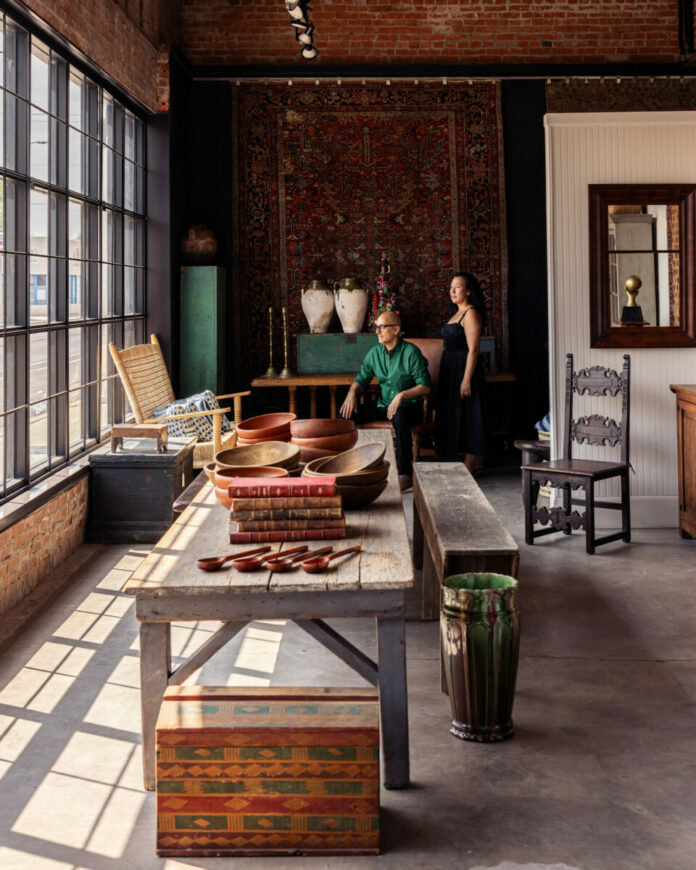
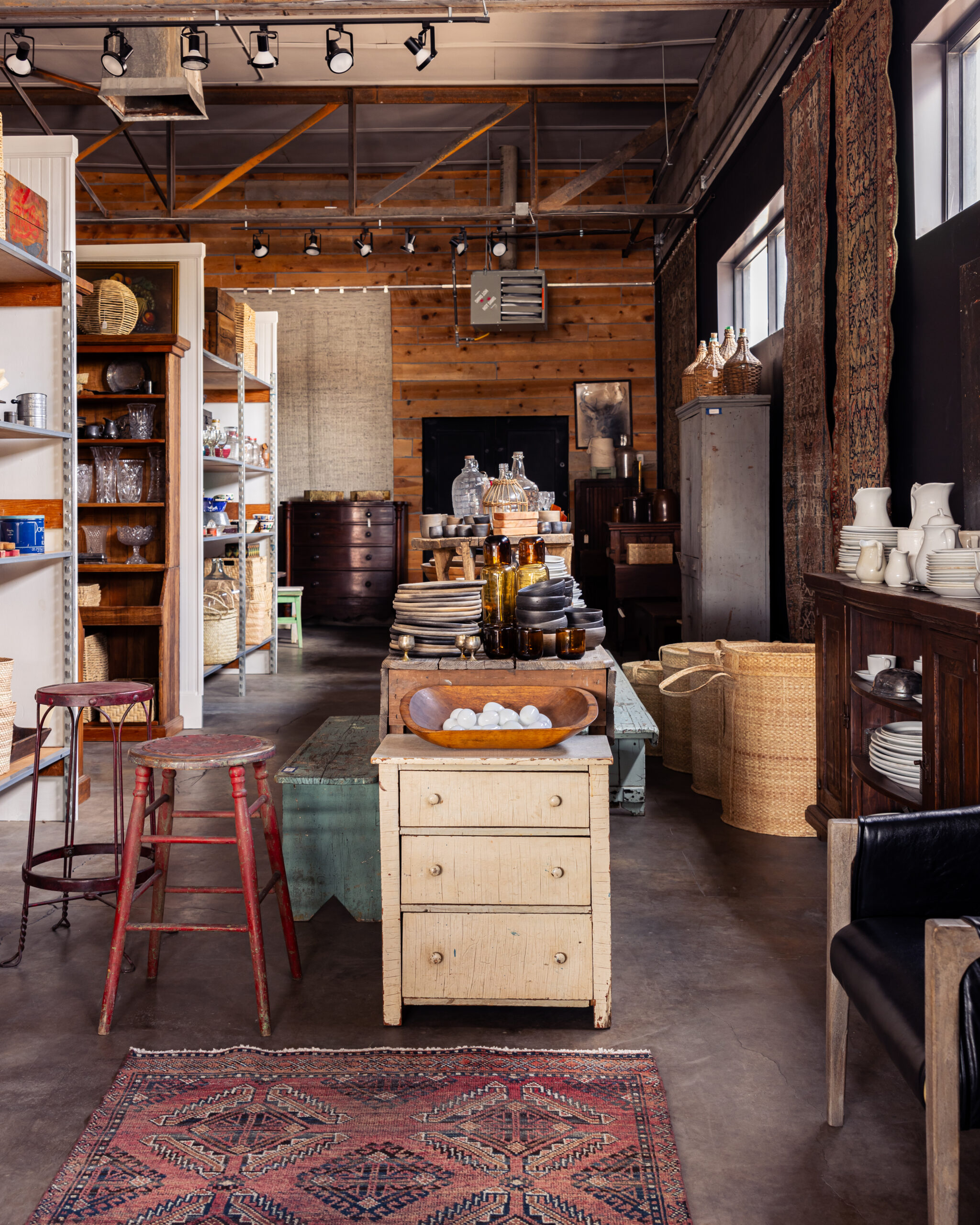
A captivating blend of antique, vintage, and modern furnishings and accessories from Box Road, housed in the beautifully remodeled 1928-era Art Deco-style Arrow Grocery in Albuquerque's historic Barelas district.

What happens when two friends and business partners with a passion for antiques come across a derelict 1928-era, Art Deco-style grocery store? Alex Hanna headed to Albuquerque to find out more about Box Road.
Unique Antiques to Albuquerque

A Chance Meeting

When my husband and I moved into a new house years ago, we were faced with a very large cold floor, thanks to the previous owner’s DIY addition. Our feet were freezing, but, like a lot of new homeowners, our budget for remodeling was long gone. Luckily, we met Michael Ouellette who was working primarily in the rug business and was kind enough to loan us a luxurious, African-inspired, indigo carpet. That piece was worth far more than we could spend at the time, but it kept us cozy for months until we found something in our price range. That was years ago, but I still dream about that rug.
Popular antiques

Michael still deals in rugs but now so much more. He and his business partner Donnie Volkart have been fixtures in Round Top, Texas–home of one of the country’s most popular antiques fairs–for years. Now they’re a lot closer to home, thanks to their new space near downtown Albuquerque. It’s a classic story of people with a passion for what they do who literally live and work out of the back of their trucks to find the best antiques and vintage and modern furnishings and accessories.
Antiques vintage and modern furnishings

Connecting New Mexico to the Hispanic World

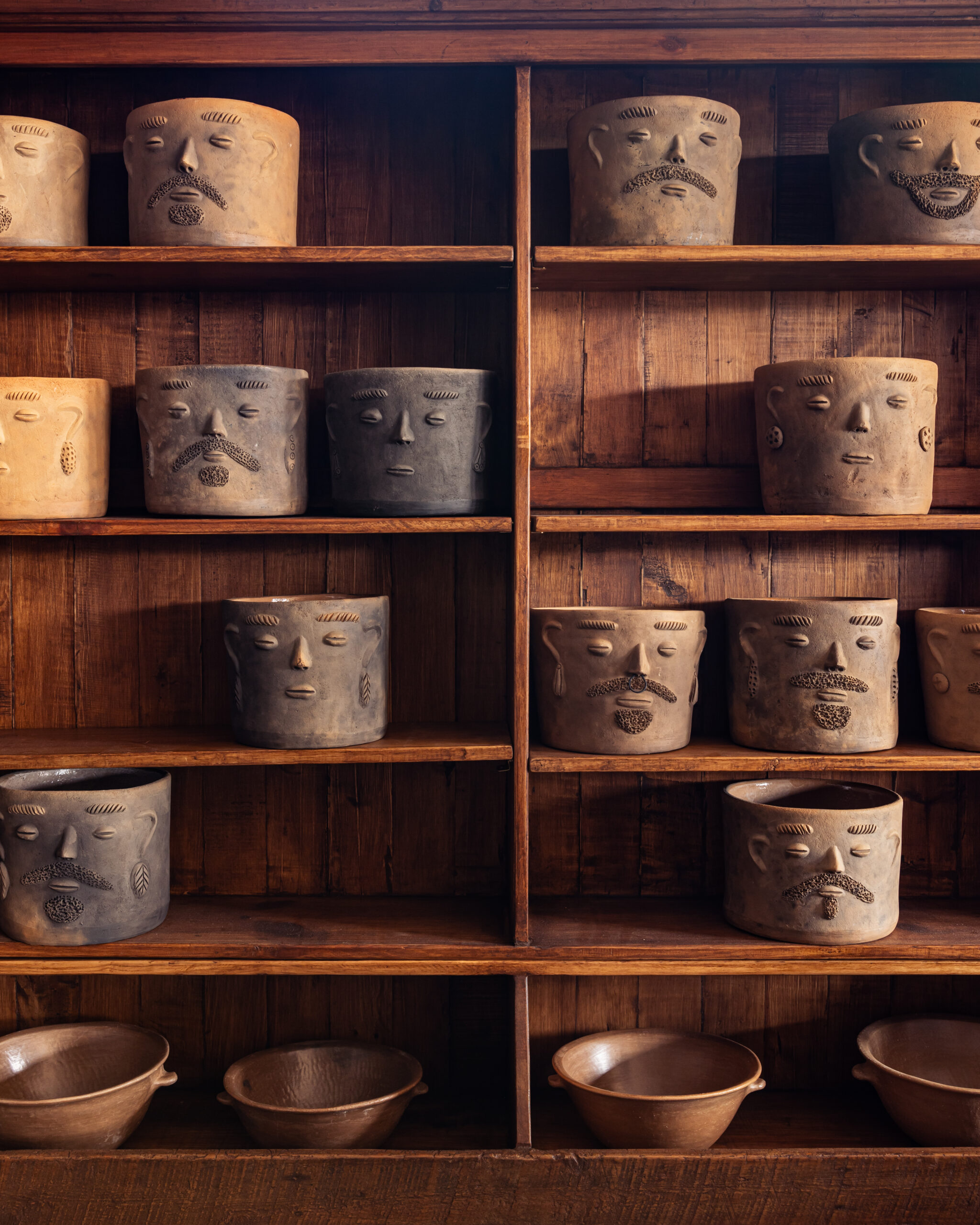
Michael and Donnie do lots of buying in Mexico City and have always had a strong connection to the aesthetics of the Hispanic world. When they came across the abandoned Arrow Grocery from the late 1920s in the Barelas district of Albuquerque–the oldest “barrio” in the city, established in the 17th century–they saw an opportunity to connect even more closely with the culture. Indeed, one of the very first things I saw when I arrived were the charming and mysterious faces sculpted onto a series of Oaxacan vessels. While the whimsy that animates these vessels seems to be a guiding force for their collections, it belies the amount of work behind the scenes: the massive remodel of the space, the countless hours traveling around the country and the world, and the efforts to connect objects with just the right owners.

Anything From Anywhere

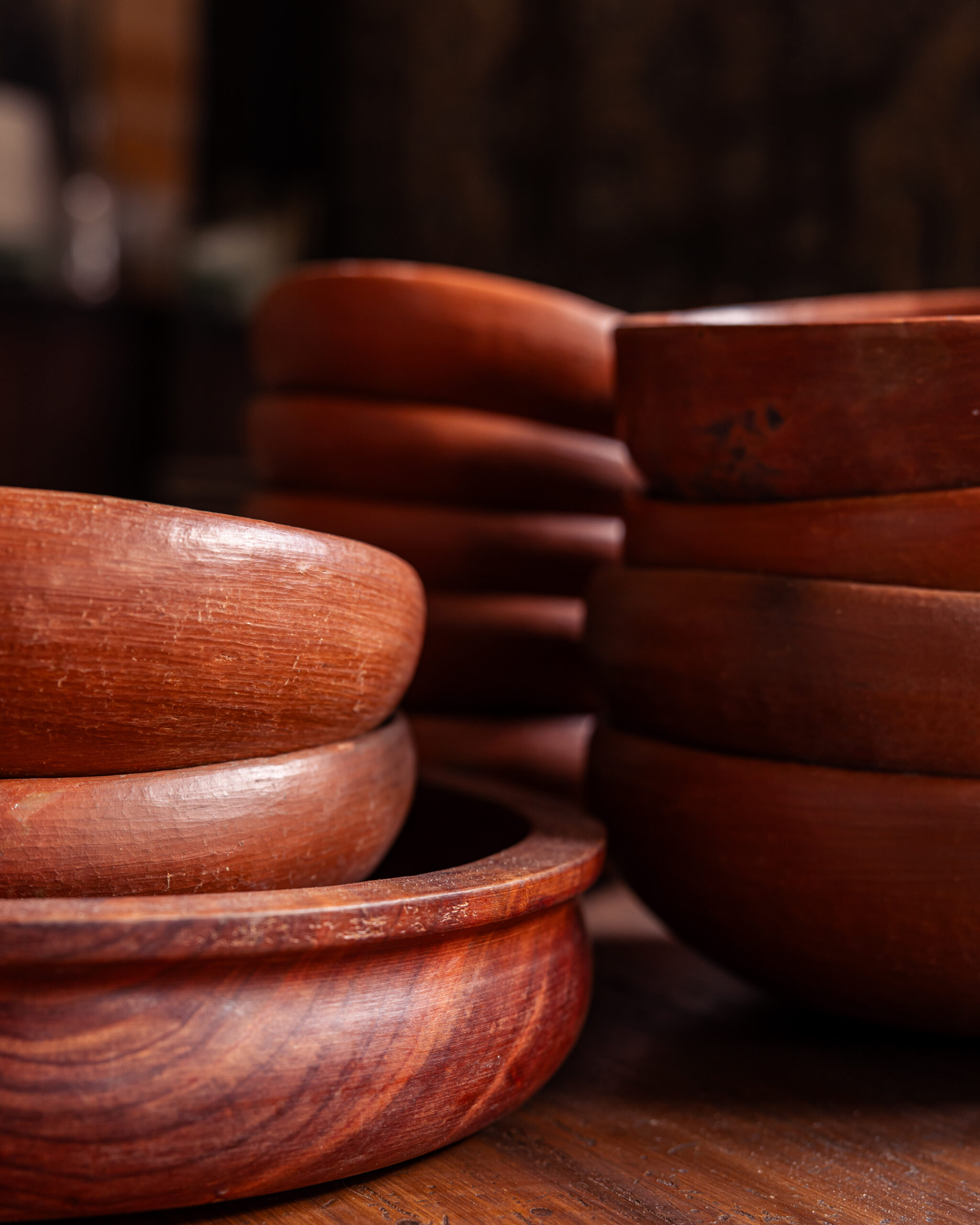
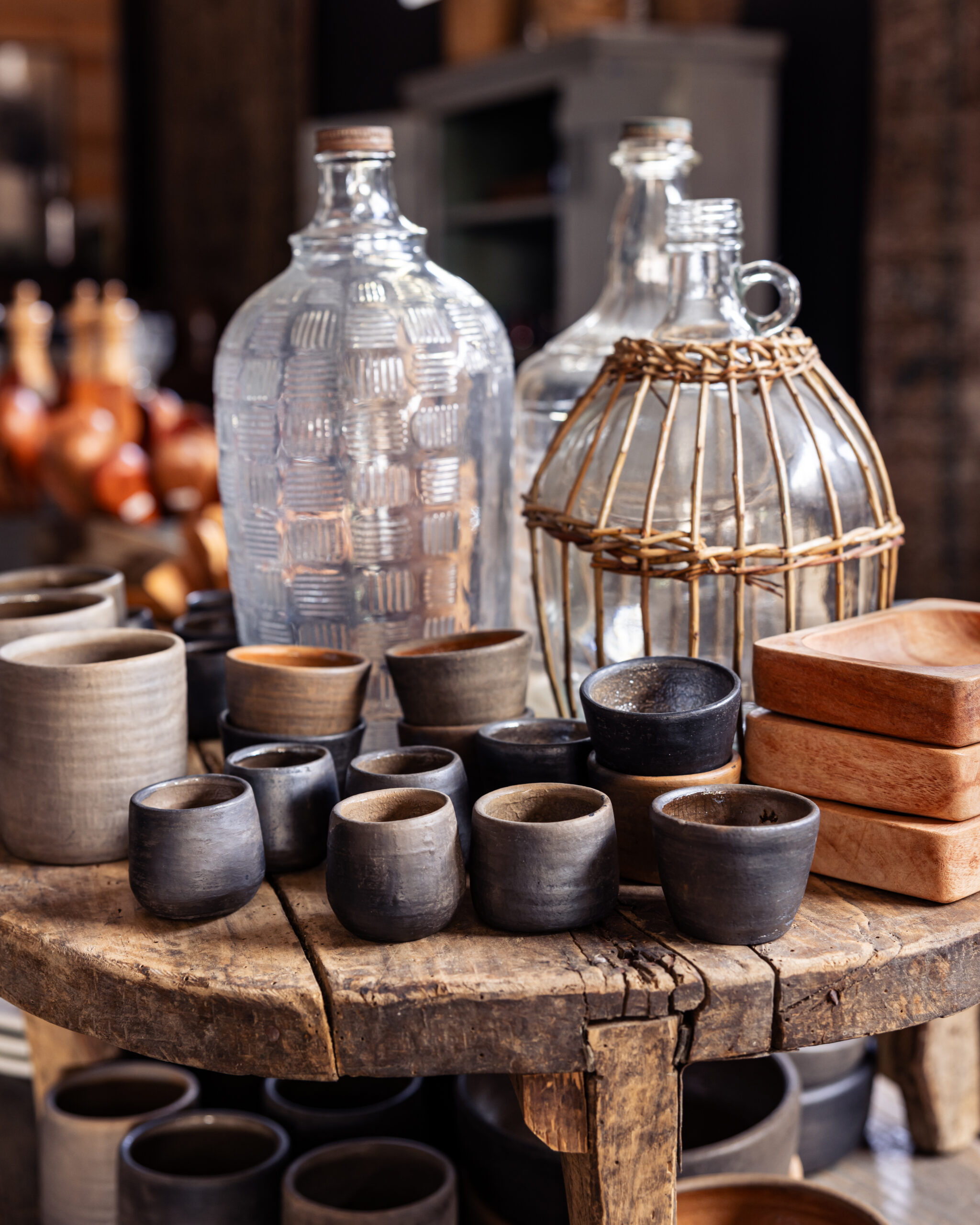
Part of what makes the store’s style and creativity work is that they don’t limit themselves to Latin American objects or even to just old objects. You can find modernist gems and Scandinavia design sitting side by side quite happily. Distressed painted dressers proudly show their age, topped by French confit jars with crackled glaze. Tucked into weathered cabinets you’ll find folk-art pieces that beg the question: what is this for exactly? And there are what I’d call old-school antiques like 1800s English tableware and chests that look like they made the trip across the Atlantic covered with contemporary artisanal dinnerware and utensils.

The sum here is movingly greater than the parts, and It is this energetic juxtaposition that excites the imagination and feeds the soul. Cultural inspirations from around the world are beautifully curated in this transformed old grocery space in one of the oldest settlements in New Mexico. Both the space and its contents, now enjoying a new lease on life.
Old-school antiques

While much of their business is to the trade, don’t hesitate to visit, whether to shop or simply to get inspiration for your own interior design projects from these two passionate pros.

Story by Alex Hanna / Photography by Tira Howard

A footer photo with a black background and subscribe info and button

Subscribe to TABLE Magazine’s print edition.

Stacey Edgar to Lead Santa Fe’s International Folk Art Market

0
A photo of Stacey Edgar a woman, in front of a yellow background wearing an orange shirt, blue earrings, and a smile on her face.

The International Folk Art Market’s mission is to create economic opportunities for and with folk artists across the world by staging an important market through which to sell their work. After a thorough search, the organization is pleased to announce that Stacey Edgar has been appointed as Executive Director.

“I am really excited for the folk artists because of Stacey’s background. She has deep international experience in Latin America and Africa and experience creating markets for artists. She understands the small businesses of the folk artists and the difficulties and challenges the artists experience every day at the grassroots level. It is a terrific match,” said IFAM cofounder Tom Aageson.

Who is Stacey Edgar?

Stacey Edgar is an award-winning social entrepreneur, educator, researcher, and artisan business consultant with over 20 years of experience working with folk artists globally. For the past five years Stacey has served as an assistant teaching professor at the University of Colorado Boulder, Leeds School of Business in the Social Responsibility & Sustainability Division.

“I am incredibly honored and excited for the opportunity to join the IFAM team—with its amazing founders, board, advisory board and staff—as we work together to celebrate our 20th anniversary. My goal is to partner with our global community of folk artists to expand the role and positive impact of IFAM in creating connection and opportunities for folk artists as we move into our next 20 years,” said Stacey Edgar.

TABLE Magazine had the chance this week to interview Stacey Edgar to discuss her love for folk art, her favorite restaurant in Santa Fe, and of course her future at Santa Fe’s International Folk Art Market.

Is there a bit of folk art that you live with that inspires you every time you look at it? Why?

Stacy Edgar: This is a very hard question because as a collector, I am lucky to be surrounded by folk art that I love, most of which I’ve brought back from my travels, so each piece is tied to memories of places and people I care about. I have a dinning room wall full of BaTonga baskets I jammed into an oversize duffle bag to carry back from Zambia, an embroidered wool blanket I bought from a shepherd in Lesotho, and several Guatemalan huipils that both hang on my walls and on my person as wearable art.

Still, I am most moved by an intricately carved letter opener from India that my grandfather sent my grandmother when we was serving in the China-Burma-India (CBI) Theater during World War II. Knowing she used it to open his much anticipated and treasured letters during that time connects me to my grandparents, to the community in the West Bengal region of India where he was stationed, and reminds me of how I first became interested in other cultures growing up as a young girl in a rural small town in Illinois. That is the power of folk art to connect all of us across time and place.

Where will your first dinner out be in Santa Fe after your move? What will you order?

SE: This one is easy, The Shed, and I’ll have the cheese enchiladas “Christmas style.” While Santa Fe has an incredibly vibrant culinary scene, from some of the best food trucks to five star restaurants, The Shed is somewhere my family has loved since I first brought my kids to visit IFAM in 2007. It is a must stop for us for great Mexican food and margaritas, followed by a simple hot fudge sundae. I do, however, look forward to eating my way all around town!

What is your proudest accomplishment, and how will that energize your work at IFAM?

SE: I am always astonished by my great fortune in getting to spend the past 20 years working with artisans around the world. As a social worker, I started my own company in 2003 with a two thousand dollar investment from my tax return and the idea that my girlfriends in the US would want to support women artisans by buying their art. I had no idea the powerful impact that small investment would make in my life and in the lives of my artisan partners over the years. I’ve learned so much from folk artists about creativity, community, sustainability, resistance, resilience, and shared prosperity. Those lessons, and what they hold for our larger society as we tackle some of our greatest social and environmental challenges, are what inspire me and energize me to keep learning and growing alongside the folk art community.

Looking ahead to IFAM 2024

167 artists from 51 countries have been selected for IFAM’s 20th anniversary market. IFAM is excited to welcome 41 first-time artists and a new country, Papua New Guinea, to the market. The market will take place July 11-14, 2024 at the Santa Fe Railyard Park.


A footer photo with a black background and subscribe info and button

Subscribe to TABLE Magazine‘s print edition

New Year Turcos

0
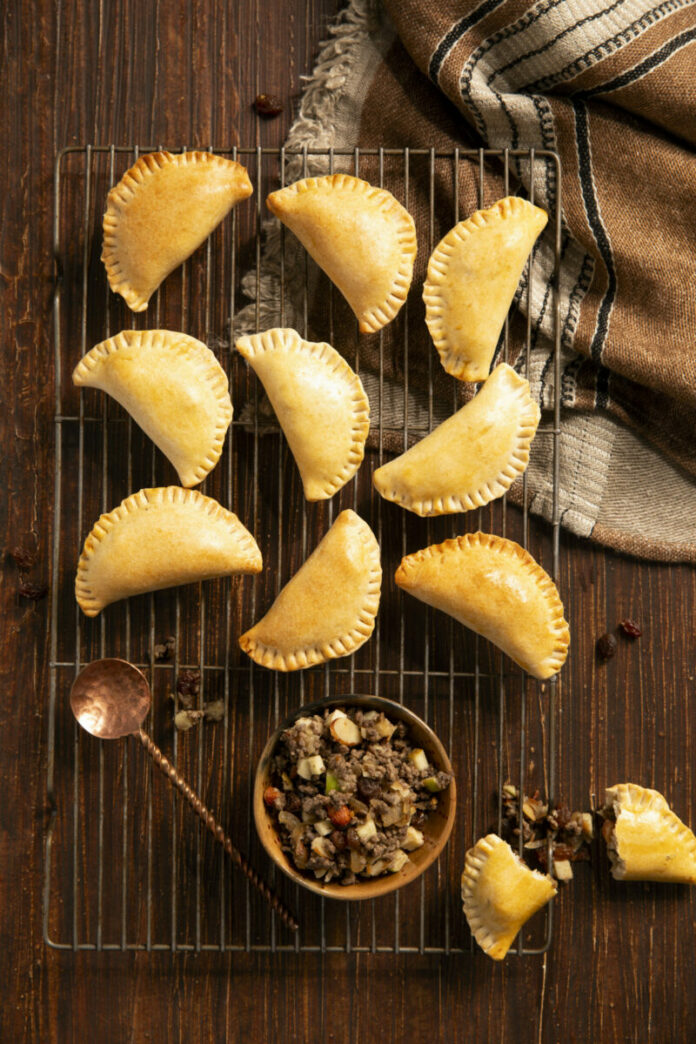
New Year Turcos - savory empanadas with spiced beef filling.

Turcos are a kind of empanada full of a flavorful pork filling. A journey back through history reveals that the story of these savory-and-sweet turnovers is actually from the Sephardic Jews of Mexico who arrived from the Mediterranean in the colonial era. While numerous variations of these petite meat turnovers exist in Mexico and the US, the most interesting are turcos. Not only are they tasty but also linked by historical records to the Mexican Inquisition, the celebration of Sukkoth, a harvest festival, and Rosh HaShana, the Jewish New Year.

The History of Turcos

The Inquisition’s earliest evidence of the consumption of turcos dates from the early 17th century. The court documented the cultural habits, including foodways, of Jews, sometimes called conversos, who claimed to have converted to Christianity (mostly in order to escape death by fire) but who, in fact, continued to practice Judaism secretly. Their customs were a hybrid of Christian and Jewish habits. What conversos ate was evidence to identify them as crypto-Jews, and to justify sending them to their death.

On September 21, 1603, in Mexico City, prisoner of the Inquisition Sebastián Rodríguez hosted a feast at Cárcel Perpétua, which was a sort of penal residence. Prisoners could go out to conduct their business during the day but had to return every evening. Rodríguez’s party was a celebration of Sukkot, a Jewish harvest festival whose customs include building a hut outside and decorating it with natural materials.

A Feast for All

All the dishes for this feast came from Rodriguez’s home kitchen, mainly by his wife and daughter. David Gitlitz writes in Living in Silverado that Rodríguez and the other celebrants “drew their tables out into the prison courtyard under the open sky. They decorated the pillars of the corridor with willow branches and leaves that Rodríguez had purchased and arranged to be carried to the prison.”

The entire Portuguese prison community received an invite to this lavish harvest festival. Three of Rodríguez’s invitees turned down the invitation because, it was speculated, they ate only kosher foods and “everyone else … eats salt pork and is not concerned about it.” The guests who did attend then celebrated Sukkot with a banquet of turcos, pasteles, tortas, and empanadas.

Documentation of a Mexican trial which took place on September 10, 1603, also tells us about the consumption of turcos. Even if the Jewish holiday of Rosh HaShana (the New Year of the Jewish calendar) is not explicitly mentioned, we assume that turcos were made for this occasion.

Particularly when ancient customs are delicious, they live on. Today, regions nearest the Mexican border, especially Texas, embrace turcos as an integral part of New Year celebrations. Texans blend anise seeds into the dough and fill it with crispy pork, cinnamon, raisins, apple, garlic, onions, sugar, nuts, and cloves. This culinary synthesis echoes the greens and sweet-savory essence of Sephardic Rosh HaShana fare. From one New Year festivity to the next, turcos offer a tangible connection to the passage and integration of crypto-Jewish customs into contemporary American life.

Recipe by Hélène Jawhara-Piñer
Story by Gabe Gomez
Styling by Anna Franklin
Photography by Dave Bryce

Subscribe to TABLE Magazine’s print edition.

Sheet Pan Roasted Carrots with Tahini Sauce, Sumac, and Pepitas

0
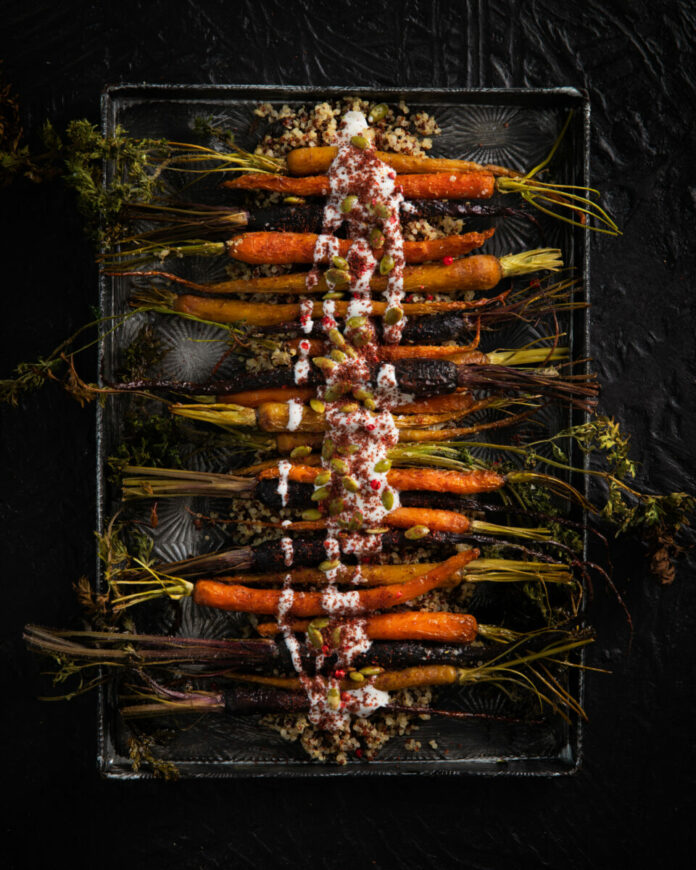
Sheet pan roasted carrots on a black tray topped with tahini sauce, pepitas, and fresh parsley.

Carrots are the quiet workhorses of the cold-weather kitchen. They store well, they’re always available, and they’re easy to take for granted. Roast them on a sheet pan, though, and they transform: their natural sugars caramelize, their edges turn golden, and their flavor deepens into something sweet and nutty. 

Anna Franklin, TABLE‘s food stylist and recipe developer, takes them a step further with a creamy yogurt-tahini sauce and a vibrant finish of roasted pepitas, fresh parsley, tangy sumac, and floral pink peppercorns.

Serve this stunning side on its own, or spoon it over warm quinoa for a satisfying vegetarian main. The recipe was created with support from Buy Fresh Buy Local Western PA, a reminder of how good local winter produce can be.

Why Pair Tahini with Carrots?

Hummus and carrots are a classic duo, but tahini, the sesame seed paste that gives hummus its nutty richness, makes an even better partner on its own. It’s lighter than hummus, with a more complex, slightly bitter, toasty flavor that balances the sweetness of roasted carrots. Blended with Greek yogurt, it becomes a silky, tangy sauce that clings to every bite. As chef and Tahini Baby author Eden Grinshpan has said, “Once you start cooking with tahini, it’s hard to go back.”

How Do You Make Roasted Carrots with Tahini Sauce?

Preheat the oven to 425°F and line a baking sheet with parchment paper. Toss 2 pounds of carrots with olive oil, salt, and freshly cracked black pepper, then spread them in a single layer on the pan.

Roast until a fork pierces them easily: 18 to 20 minutes for baby or slender garden carrots, or 25 to 30 minutes for larger store-bought carrots. If your carrots are very thick, halve them lengthwise so they cook evenly.

While the carrots roast, cook the quinoa according to the package directions, if you’re using it. Then make the sauce by stirring together Greek yogurt, tahini, and salt until smooth.

To serve, arrange the carrots over warm quinoa, if using. Drizzle with the tahini sauce, then top with chopped parsley, roasted pepitas, ground sumac, and freshly ground pink peppercorns. For an extra pop of color and brightness, add pomegranate seeds or a squeeze of lime.

Why Is My Tahini Sauce Too Thick?

Tahini behaves in surprising ways. When you first mix it with liquid, it often seizes and thickens before it loosens. If your sauce is too thick to drizzle, whisk in cold water or a squeeze of lemon juice a tablespoon at a time until it reaches a pourable consistency. Stir the tahini well in its jar before measuring, too, since the oil tends to separate and settle on top.

Tips for Success

Leave room on the pan. Spread the carrots in a single layer with space between them so they roast and caramelize instead of steaming.

Keep the skins on. Well-scrubbed carrots don’t need peeling, and the skins add color and texture.

Use rainbow carrots. Purple, yellow, and orange carrots make an especially striking platter.

Know your sumac. Ground sumac, made from dried berries, adds a lemony tartness. Find it at Middle Eastern grocers and well-stocked spice shops.

Taste the sauce. Tahini brands vary in bitterness. Balance the sauce with a squeeze of lemon, a drizzle of honey, or an extra pinch of salt before serving.

Toast your own pepitas. Raw pumpkin seeds toast in a dry skillet in about 3 minutes.

Can I Make This Carrot Sheet Pan Recipe Ahead of Time?

Roast the carrots and make the tahini sauce up to two days ahead, then refrigerate them separately. Rewarm the carrots at 400°F for 5 to 8 minutes, and thin the sauce with a little water if it thickens. Garnish just before serving.

What Dietary Swaps Can You Make for This Recipe?

Dairy-free: Replace the Greek yogurt with an unsweetened plant-based yogurt, such as coconut or oat yogurt, or skip it and thin the tahini with water and lemon juice for a classic tahini sauce. The dish is naturally gluten-free.

What Can I Serve with Roasted Carrots with Tahini Sauce?

Serve the carrots over quinoa as a meatless main, or alongside roast chicken, grilled lamb chops, or seared salmon. They also make a colorful addition to a mezze spread with pita, olives, and cucumber salad.

For more creative carrot recipes, try Veda Sankaran’s Honey and Ghee Roasted Carrots or Chef Rafe Vencio’s Carrot and Beet Latkes. 

Anna’s Crispy Butter Beans with Whipped Chèvre and Roasted Wild Mushrooms and Potatoes with Chimichurri make easy companions, and her Roasted Sheet Pan Veggies with Spicy Glaze is another one-pan favorite. 

Browse more in our Plant-Based collection.

About the Recipe Developer and Stylist

Anna Franklin is TABLE Magazine‘s food stylist and recipe developer. A Pittsburgh native and graduate of the Indiana University of Pennsylvania Academy of Culinary Arts, she spent years in restaurant kitchens and photo studios before turning to food styling. She is also the founder of Bazaaa Sauce, a Pittsburgh hot sauce microbrand. Read more of her recipes at TABLE.

About the Writer 

Keith Recker is Editor in Chief and Co-Owner of TABLE Magazine, directing coverage of food and drink, design, fashion, travel, and the arts across its Pittsburgh and New Mexico editions. A color and trend forecaster for clients including Pantone and WGSN, he is the author of three books on color and craft, most recently Deep Color: The Shades That Shape Our Souls. Read Keith’s articles.

About the Photographer

Dave Bryce is TABLE Magazine‘s principal photographer. Known for images that explore depth and dimension through space and light, he is also a commercial and editorial food photographer who works closely with chefs and food stylists.

Subscribe to TABLE Magazine‘s print edition.

Chef Fernando Olea Showcases His Mexican Roots At Sazón

0
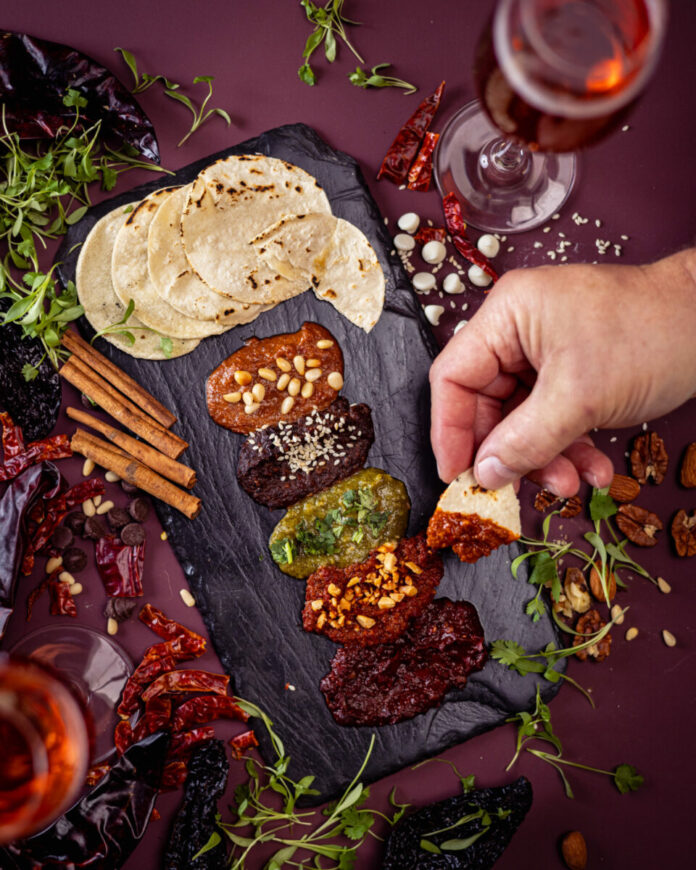
A delectable spread of dishes from Sazón, showcasing the culinary artistry of Chef Fernando Olea.

Every season is the season to dine at Sazón, where Chef Fernando Olea, 2022 Best Chef of the Southwest James Beard Award Winner, creates magic on a plate. But Sazón takes on a special feeling in winter, as you brush the snow off your coat and are welcomed into the art-filled dining room for an evening of celebratory food and drink. The menu–deliberately small–pays homage to Chef Olea’s roots in Mexico but with a decidedly Southwestern vibe.

Mole

You can’t talk about Sazón without talking about mole. At Sazón, you’re in the hands of a master with such inspired creations as Chef Olea’s deep red-and orange-hued Coloradito, based on a traditional recipe made by his family in Mexico. It showcases both guajillo and árbol chilies with tomato, garlic, and other ingredients. Or his vibrant Mole Verde with tomatillos, spinach, jalapeño, and spices. For a cold winter’s night, perhaps his deep, earthy Mole Poblano–a complex blend of chile pasilla, mulatto, and ancho with plantains, raisins, Mexican dark chocolate, herbs, and spices. Just the thing to warm the darkest day.

Sazon Mole

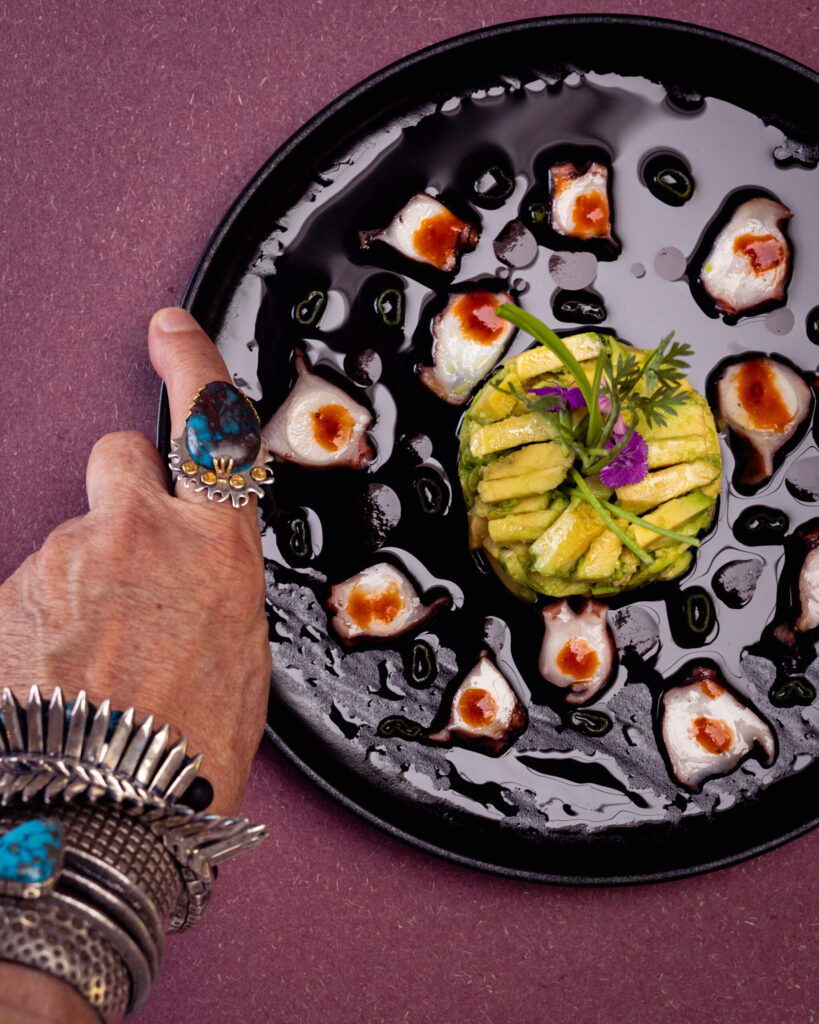
Pulpo

Octopus, sautéed in olive oil with smoky richness from pork belly and a hit of Thai chili. It’s a winning combination that makes Sazón’s Pulpo a perennial favorite. The octopus is happy to make room for the powerful double act of pork and chili. And it’s these back-up singers that make this dish a hit. “The octopus itself is great, but most of the guests, they really like to dunk the bread–the crostini that we serve with it–in the oil. It’s a very, very good flavor with the pork belly,” says Chef Olea. And, while pork belly may not be the star of the show, it more than holds its own. “What cannot be good with pork belly?” he asks, laughing. “What else do you need?”

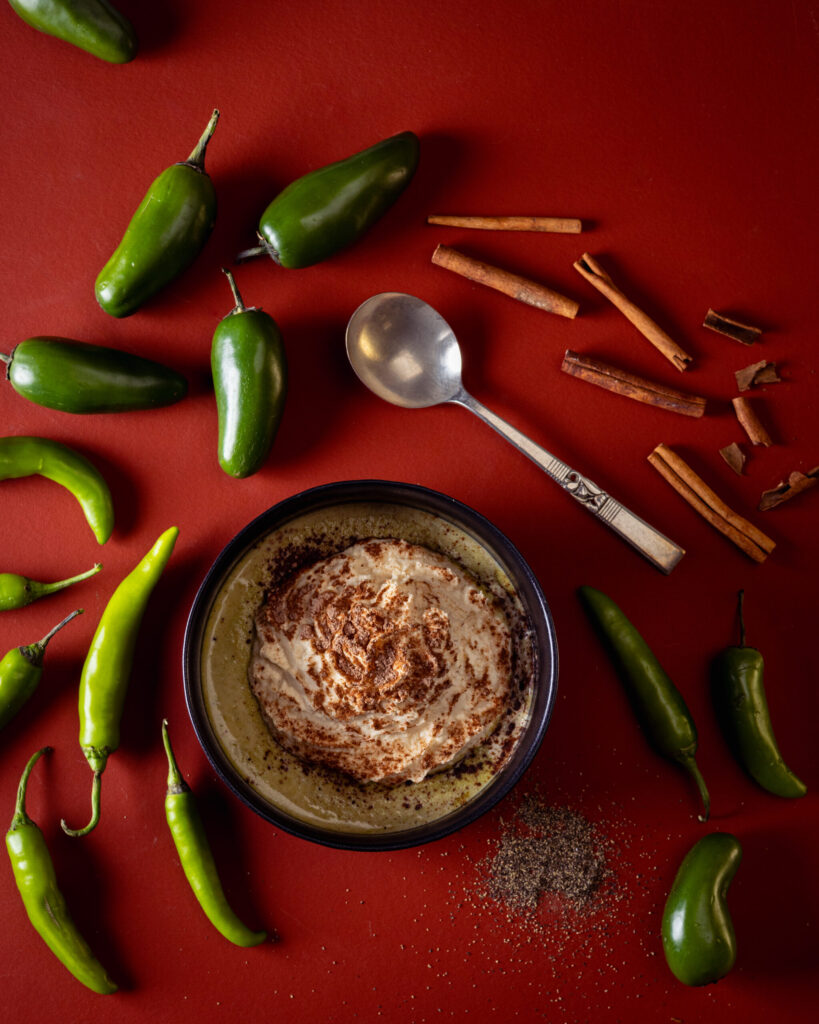
Sopa De Amor

This is Chef Olea’s signature soup–and with good reason. It’s a masterful combination of contrasting flavors, textures, temperatures and seasonings. He starts with a cream of poblano soup and adds a generous dollop of lump blue crabmeat that speaks of the sea. There is an amaretto foam and a dusting of cinnamon and chocolate. “I play with sweet, hot, cold, savory and some heat,” he says about this dish. Whatever you do, don’t stir, just dip your spoon in so you can taste every component–distinct, yet in perfect harmony. “All of the flavors they really blend beautifully. At the same time that they blend, they have their own place in the palate,” he says. Does he ever take this dish off the menu? A resounding “no.” “People come for my Sopa de Amor,” he says simply. And with good reason.

Sopa De Amor

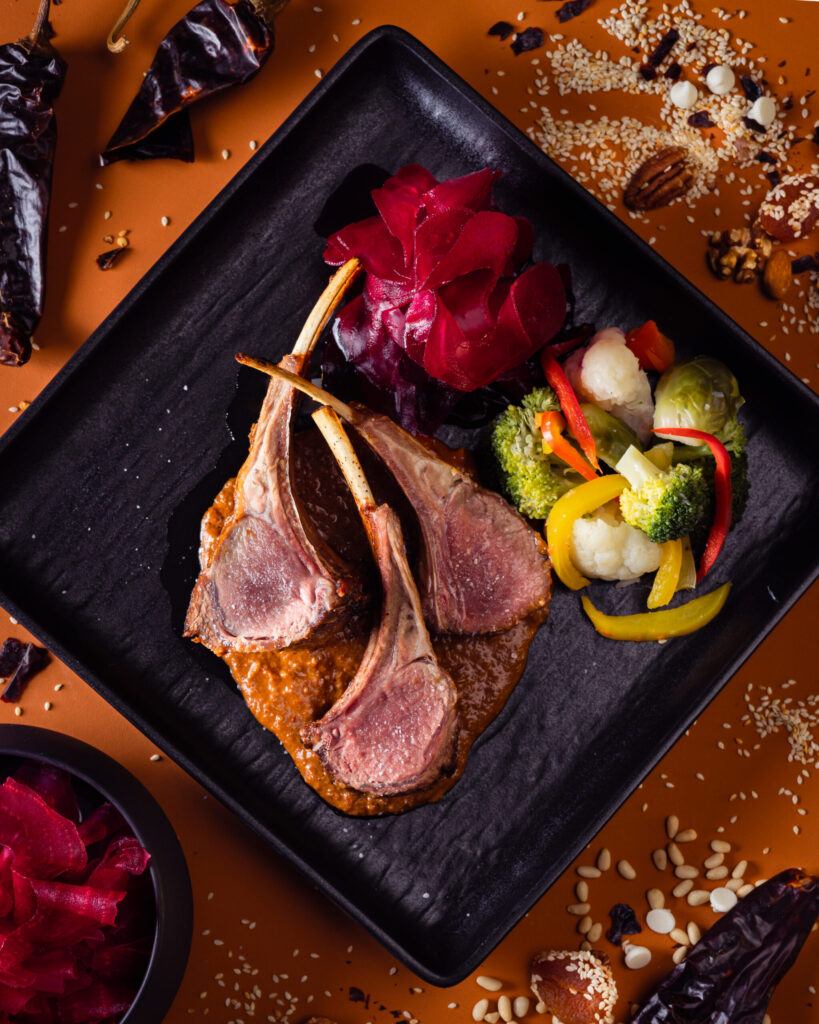
Costillas De Cordero 

Costillas de Cordero, or rack of lamb, is one of Chef Olea’s signature dishes, cooked to perfection and served over his own creation: a New Mexico mole. “You taste the lamb, even though it’s over a mole sauce. The mole sauce isn’t there to fight or take the place of the lamb, it’s to complement the lamb,” he says. With medium heat and a balance of both sweet and savory notes, it’s the ideal companion for the lamb. He’s proud of his New Mexico mole and justifiably so. He created it to celebrate the 400th anniversary of Santa Fe as a riff on a classic mole, but with decidedly Southwestern heritage. True to the name, the ingredients are rooted in the soil of the state, redolent of apricots, roasted pecans, piñon nuts, white chocolate, and of course, red chile.

Costillas De Cordero

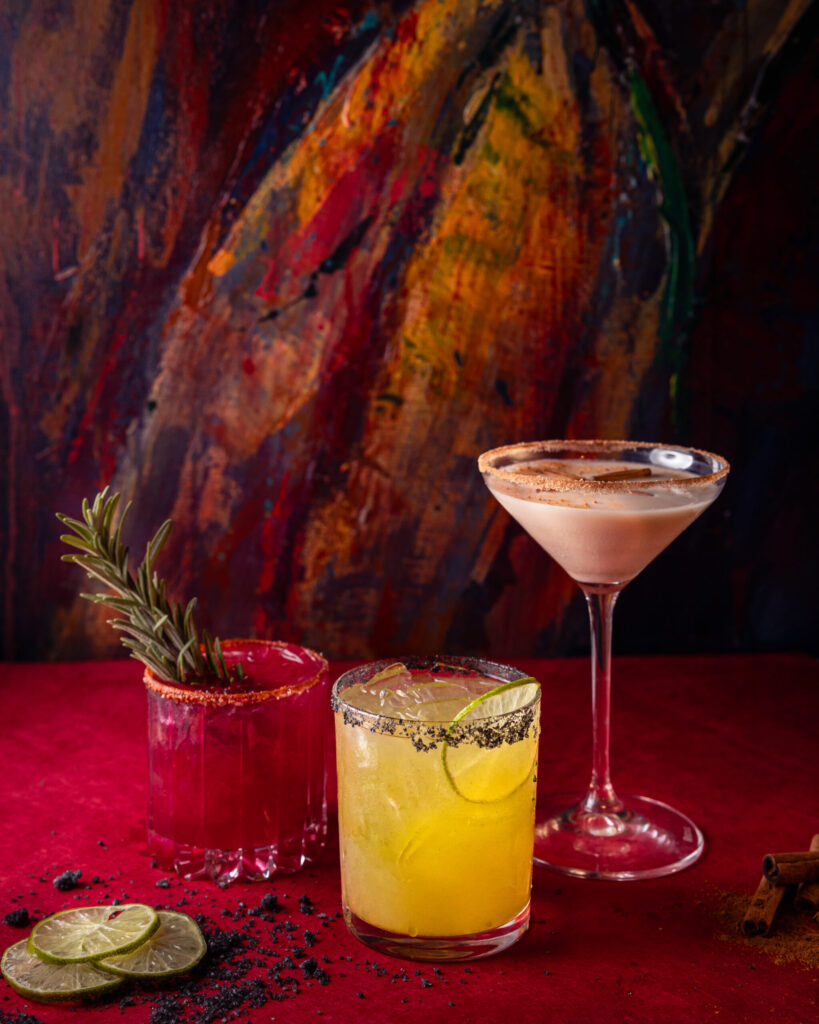
Flor Del Desierto, Infierno, and Horchata Martini

If you’re feeling remotely Grinch-like this holiday season, might we suggest a cocktail at Sazón? It’s guaranteed to put the ho-ho-ho into your ho-hum. Perhaps start with a Flor del Desierto (pictured on the left). It’s this year’s favorite color, Barbie Pink, thanks to prickly pear. While it might look sweet, Damon Lobato, manager/sommelier at Sazón, says it’s actually not. “You know the fruit is there but it’s still a little dry on the back palate.” If you’re feeling fiery, there is the Infierno–think margarita goes spicy with jalapeño essence and a rim garnished with black lava salt. Or raise your glass with a Horchata Martini (pictured far right): a very adult dreamy cocktail with horchata, a beverage made from rice, then spiced with cinnamon and vanilla, Casa Del Sol silver tequila and Crema De Sotol. All the cocktails at Sazón are eminently quaffable on their own but also pair perfectly with the dishes on the menu. “I think the key to all our cocktails and food is balance,” Damon says. Cheers to that!

A martini glass and two cocktail glasses are filled with drinks from Chef Fernando Olea at Sazon.

Filet

Think of some dishes as an ensemble cast, where each ingredient shares the billing. And then there are others–like Sazón’s Filet – where one ingredient is the star. Here it’s undoubtedly the beef tenderloin. Chef Olea starts with the finest Black Angus beef which is coated with a pepper crust. It’s served with a spinach, bacon, and piñon sauce that brings out the best in the beef. “You come and eat beef tenderloin and you have other flavors to complement it, not take over or to fight,” says Chef Olea. While the filet takes center stage, the other parts of the dish are critical. The sauce is luscious and complex and works beautifully, not only with the beef, but also with the microvegetables and subtle jasmine rice. Together they make for a show-stopping dish that is eye-catching and definitely greater than the sum of its parts.

Camaron-tini

While some of his flavors may speak of Mexico, Chef Olea’s cuisine doesn’t, he says. He likes to call it New World. “What I’ve been doing in my adventure is incorporating flavors of the world.”

Take his Camaron-tini, for example. He starts with colossal–and we mean colossal–shrimp from the Gulf of Mexico, coats them in a light batter and serves them with a generous swirl of sweet Thai chili aioli. “What we have in the Camaron-tini,” says Chef Olea, “is my version of tempura.” Picture classic tempura crunch, but with Chef’s riff, thanks to an inspired combination of spices and herbs that he adds to his tempura batter. It’s served simply and elegantly so the shrimp is the star.

Story by Julia Platt Leonard / Photography by Tira Howard

A footer photo with a black background and subscribe info and button

Subscribe to TABLE Magazine’s print edition.
Ginger Snap Cocktail

0
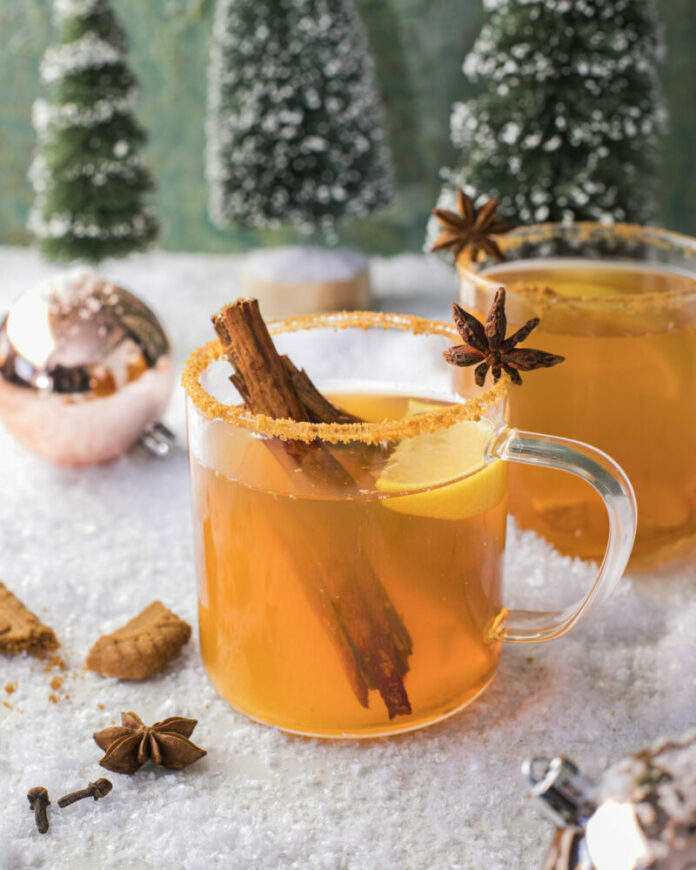
Two clear glass mugs with a ginger snap colored beverage garnished with a cinnamon stick, star anise, and lemon on a snowy surface with a shiny Christmas bulb and little pine trees in the background.

The classic Christmas special Santa Claus Is Coming to Town portrays Kris Kringle as a ginger. His memorably red mop of hair inspired us to create this Ginger Snap Cocktail, a brew that warms you with its temperature as well as its delicious blend of spices. 

Ginger Snap, Inspired by Santa Claus is Coming to Town

If the little ones want to join in, match a batch without the rum. It’s perfectly lovely without the spirits.

Enjoy!

Recipe by Keith Recker / Styling by Anna Franklin / Photography by Laura Petrilla

Subscribe to TABLE Magazine‘s print edition.


Shop Local, New Mexico: Decorate Your Tree With Small Businesses

0
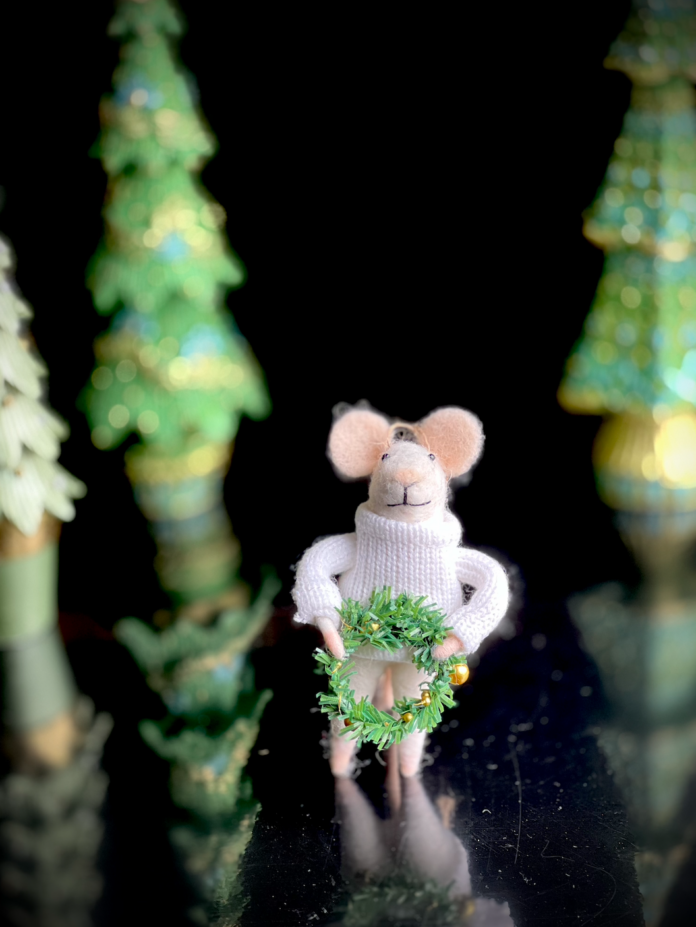
A little felt mouse ornament in a sweater holding a wreath in front of various cardboard trees.

While you’re decking the hall with boughs of holly, don’t forget to buy local baubles for tree trimming, gift-giving, and memory-making. Here are our top picks of places in New Mexico to find ornament treasures for your tree.

Shop Local Tree Ornaments Santa Fe

Doodlet’s

We dare you to go to Doodlet’s and come out empty handed. It’s even more dangerous – if that’s possible – in the run up to Christmas when you’ll find everything for the well-dressed tree, from bright turquoise skulls to wreath-carrying mice, like the one in the photo above.

Susan’s Christmas Shop

For the person who feels the Christmas spirit 365-days a year, there’s Susan’s. Favorites? Pick up a Loretto Chapel staircase glass ornament or Rancho de Taos one.

The Shop A Christmas Store

More inspiration no matter what the season with a focus on one-of-a-kind pieces made by New Mexico craftspeople. Let your decorations take flight with a single origami crane or a strand by local artist Ross Tapia.

Sun Country Traders

Decorate your tree and everything else in your home with a visit to Sun Country Traders. Pick up glow-in-the-dark beaded trees or cacti by Zuni artists Farlan & Alesia Quetawki or a painted, wooden Christmas rooster sporting cowboy books by Navajo artist Matthew Yellowstone.

Shop Local Tree Ornaments Albuquerque

Pennysmiths Papers

Yes, Pennysmiths Papers sells paper and pens and lots of them but stop by and shop for stocking stuffers and tree trimming must-haves like their glass vegetable ornaments (we fell in love with the Brussel sprout) and felt ornaments like a hot pink-clad Frida Kahlo.

The Christmas Shop

Located in Old Town, The Christmas Shop delivers on its name with a selection of Christmas ornaments, Nativity scenes and other festive decorations – many made by local artists.

Shop Local Tree Ornaments Taos

Moxie

Feel good shopping doesn’t get much better than at Moxie in Taos where they sell fair trade and handmade goodies for the home and to wear. Check out their year-round wall of ornaments and nab an embroidered beauty or piece made from recycled metal trays.

Made in New Mexico

This is the place for everything New Mexico-made including hand-blown glass hot air balloons from Robbins Ranch Art Glass, located in Stanley, New Mexico. Choose from four different styles including a festive green alien or multi-colored confetti.

Shop Local Tree Ornaments Further Afield

Tis the Season de Mesilla

Every holiday from Halloween to Valentine’s Day gets love from this Mesilla, New Mexico favorite, but Christmas is the star year-round. Fill your basket with an endless array of glass and other ornaments to make your tree a showstopper.

Story by Julia Platt Leonard / Photography by Keith Recker

A footer photo with a black background and subscribe info and button

Subscribe to TABLE Magazine‘s print edition.

On View at New Mexico Museum of Art

0
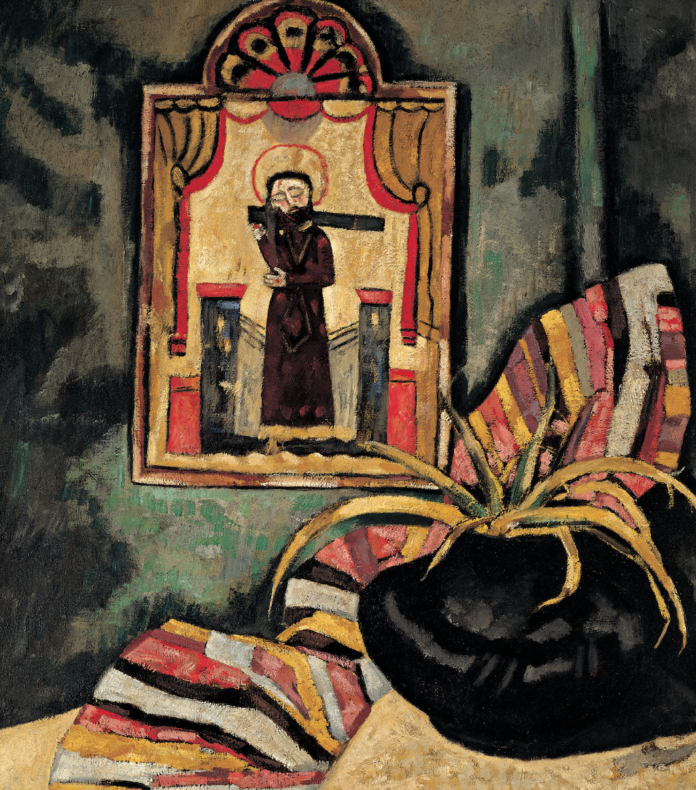
A painting titled El Santo in a blocky style by Marsden Harley on view at New Mexico Museum of Art
Marsden Hartley, El Santo, 1919

Marsden Hartley was part of the second generation of artists to come to Taos. This group, including Andrew Dasburg, John Marin, and Georgia O’Keeffe, introduced Modernism into the Southwest.  

Hartley often came into conflict with many of the academic painters who made up the Taos Society of Artists.  In 1918 Hartley wrote an essay in El Palacio Magazine critiquing the application of European academic techniques to what he saw as the uniquely American subject matter of the Southwest. Criticizing the Taos Society Artist, he wrote, “they tell themselves that the great art of America is to come from Taos. Well, there will have to be godlike changes for the better in this case.”

Hartley eventually moved to Santa Fe to distance himself from Taos’s artistically conservative climate. Like many American Modernist painters of the 20th Century, Marsden Hartley was looking for a distinctly American subject for his artwork, and a certain “aesthetic sincerity.” 

Hartley first visited New Mexico in 1918, the year after the New Mexico Museum of Art opened, and wrote of the experience, “I am an American discovering America.” During his early visits to New Mexico his style shifted from abstract to more realistic subject matter, and he found what he believed to be definitively American subject matter in the blending of Native, Hispanic, and Euro-American cultures. He produced a number of still lifes here, such as the Hispanic Catholic retablo in this painting, depicted along with Native pottery and textiles. 

Story by Christian Waguespack, Head of Curatorial Affairs, New Mexico Museum of Art

A footer photo with a black background and subscribe info and button

Subscribe to TABLE Magazine‘s print edition.

The Magic of Fall and Winter New Mexico Farmers’ Markets

0
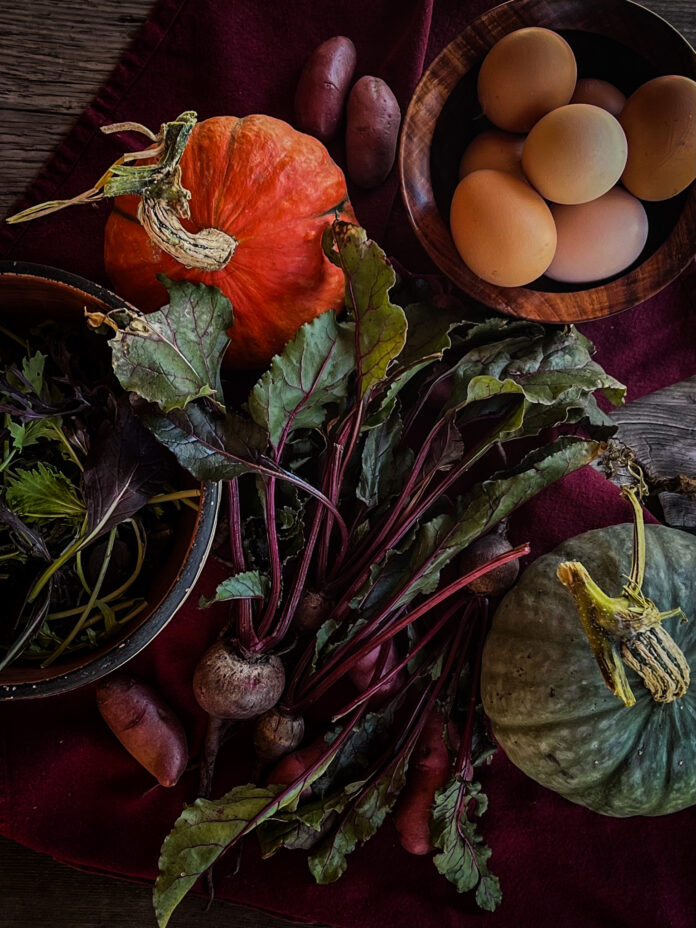
A colorful collection of beets from a new mexico farmers market
Beets from the Santa Fe Farmers' Market

Jennifer Lopez, Mick Jagger, Madonna and Tony Bennett. Throw in Mae West, Coco Chanel and Mata Hari and you can see that those born in Leo — the fifth sign of the zodiac — aren’t shy and retiring. I know this from personal experience as my Mom was a Leo. Her idea of an intimate gathering was sixty of her closest friends, bottles of champagne, and new potatoes that had been boiled, sliced in half, flesh scooped out and replaced with caviar and sour cream.

So it’s not surprising that the foods we harvest in August are all singing and all dancing. We can barely keep up with the bounty. It’s heady and intoxicating and we know it can’t last. And we’re probably a bit relieved too. Autumn comes in quietly. Like the sunlight itself this time of year, it’s softer and more subtle.

But don’t underestimate what you’ll find at farmers’ markets in New Mexico this time of year. Winter greens have a bitter bite that begs for a creamy, mustardy vinaigrette. Kabocha squash is more flavorful than butternut and is multi-talented — roast them in wedges or cook and puree for a creamy soup dusted with chile and toasted pepitas.

And beets may be small, a bunch resting comfortably in the palm of your hand, but there is a concentrated sweetness in them. Save the leaves and sauté like you would chard. Give the beets themselves a scrub and place them in a baking dish lined generously with aluminum foil. Tuck in lemon peel and a bay leaf, anoint generously with olive oil, salt, and pepper, then fold the aluminum foil to form a packet. Into a 350 degree oven until you can insert a knife in easily.

Let cool, then slide the skins off and let your imagination run wild. In a salad with toasted walnuts and goat’s cheese — beets and goat’s cheese adore each other — or blitzed with a spoonful of tahini and lots of lemon juice for a dip.

Here are some of our TABLE favorites, plus an Instagram must-make, to utilize your New Mexico farmers’ market bounty.

Carrot and Beet Latkes
Roasted Beet Salad with French Vinaigrette
Seared Salmon with Borscht Risotto
Beet Hummus from @feelgoodfoodie

Story and Photography by Julia Platt Leonard

A footer photo with a black background and subscribe info and button

Subscribe to TABLE Magazine‘s print edition.

Shop Local, New Mexico: Gift Ideas for Kids

0
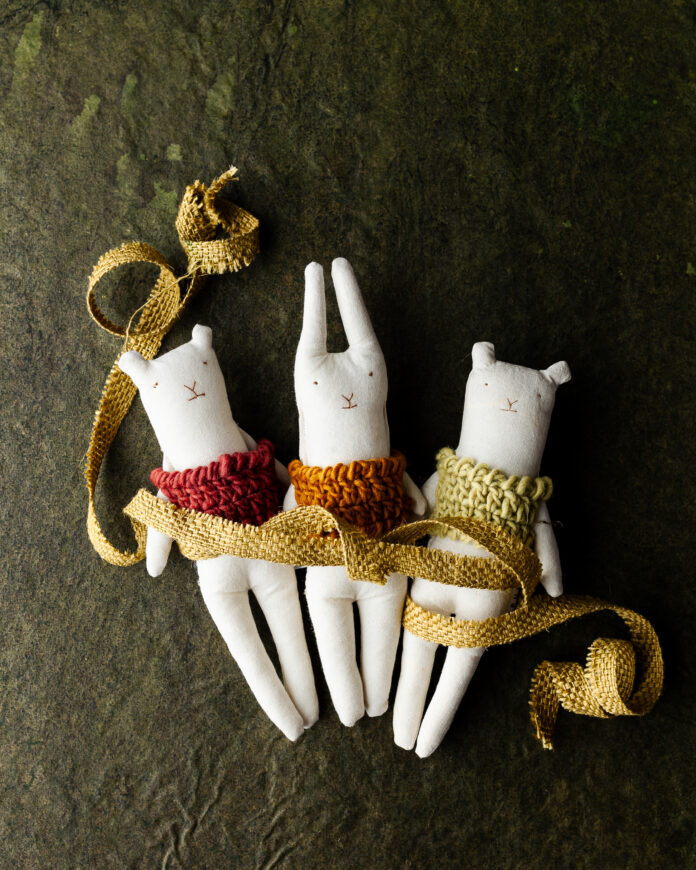
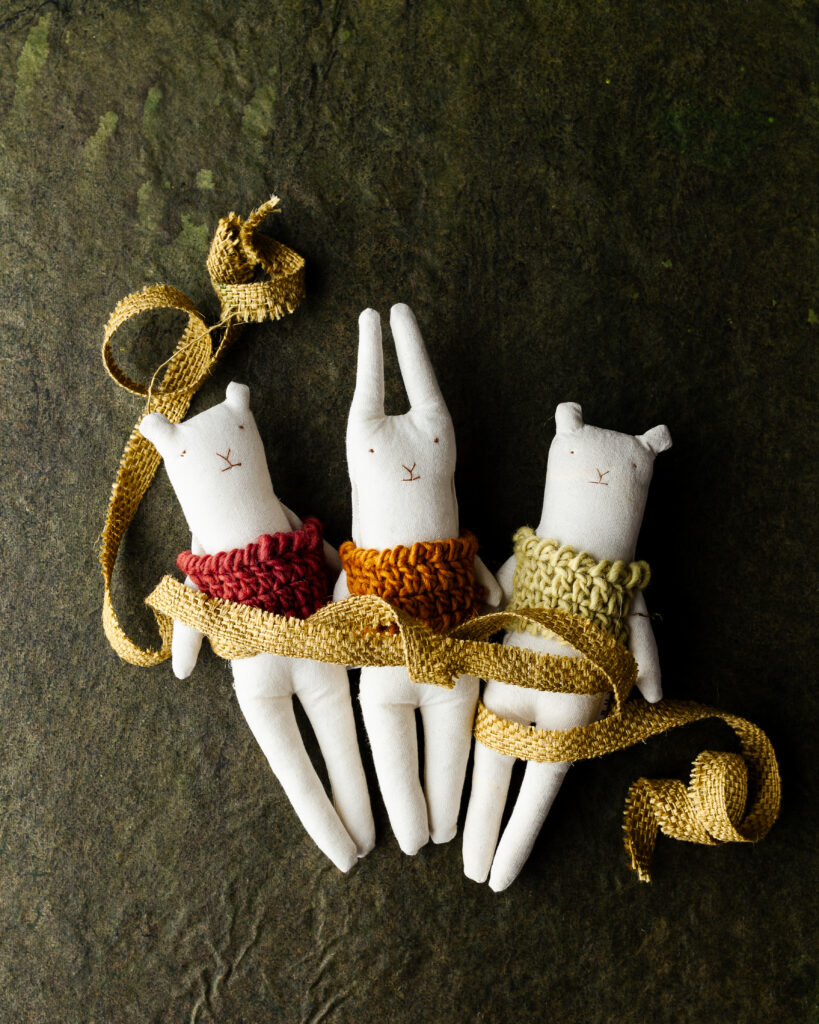
Three small stuffed animals with various colored little vests. Gift Ideas for Kids

Gifting is one of the five languages of love (alongside touch, time, affirmation, and action). Whether you give a tiny statement of thoughtfulness or a major monument of adoration, you can always find a lovely something from local boutiques and makers, like the below gift ideas for kids. Perhaps shopping local is a sixth love language — one that speaks to lively main streets and healthy small businesses!

SITE Santa Fe

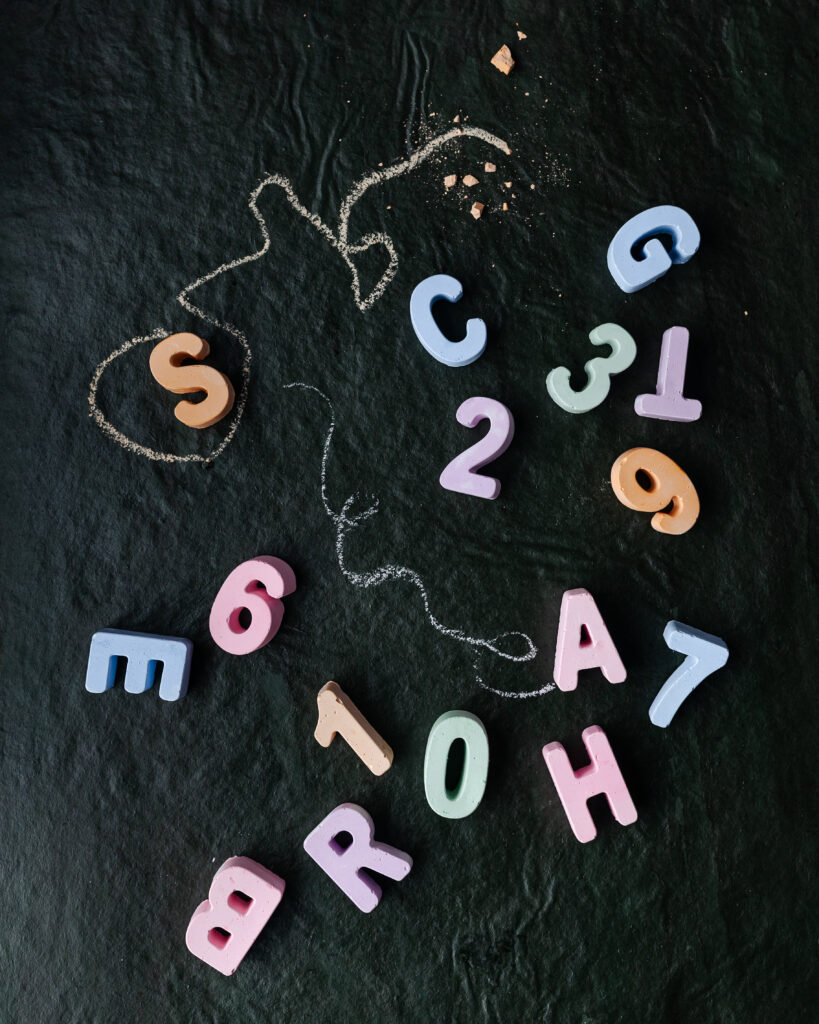
ABC and number chalks in soft pastels

Inspire the future writer and big-brain mathematician with ABC and number chalks. They come in soft pastel shades and are chunky enough for the smallest hands to grab and go.

Living Threads

Three small stuffed animals with various colored little vests

These wee creatures with knitted earth-toned tops and hand-stitched faces are just the thing for the young or the young at heart.

High Noon General Store

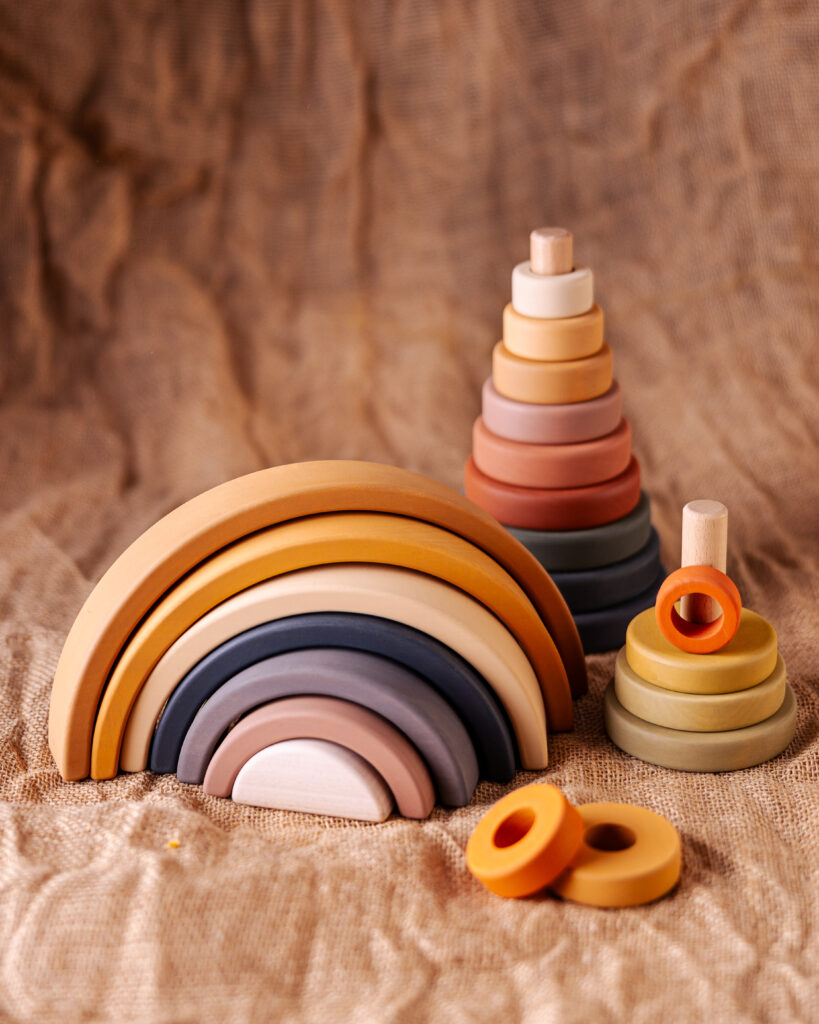
Two stacks of wooden rings and a rainbow stacking toy. Gift Ideas for Kids

Go low-tech with a wooden ring or rainbow stacking toy for the curious kid. While you’re at it, give yourself a pat on the back as they’re made in Ukraine with nontoxic, water-based paints, plus your purchase helps Artisans in Ukraine.

Ark Books

Two books face outwards, both with black covers, one says planetarium, the other says solar system. Gift Ideas for Kids

Send your junior astronaut to the stars with big, bold books on the planets and the solar system or a nifty model of the planets. Next stop, Mars.

Smashbangles

cards with inspiring quotes

We can all use a little motivation from time to time. These cards featuring inspiring quotes will instill positive thinking into kids of any age.

Gifts for Kids Selected by Julia Platt Leonard, Keith Recker, Justin Matase, and Wendy Ilene Friedman / Styling by Keith Recker / Principal Photography by Tira Howard

A footer photo with a white background, one TABLE Magazine and subscribe info and button

Subscribe to TABLE Magazine’s print edition.
Related News