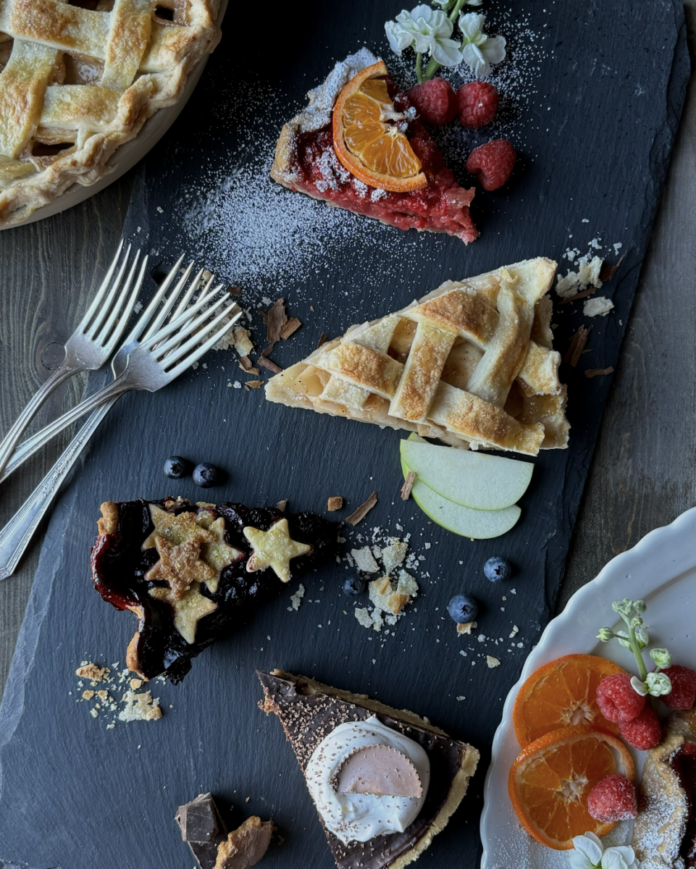
In celebration of the irrational number 3.14159265… we’re baking up a list of scrumptious pies for your enjoyment on March 14. From fruity to sweet, we’ve curated a selection to make sure your holiday is well spent with a full belly. No matter what pie you choose to make this year, make sure you gather around the table for an evening of great conversations and even greater desserts. Happy Pi Day!
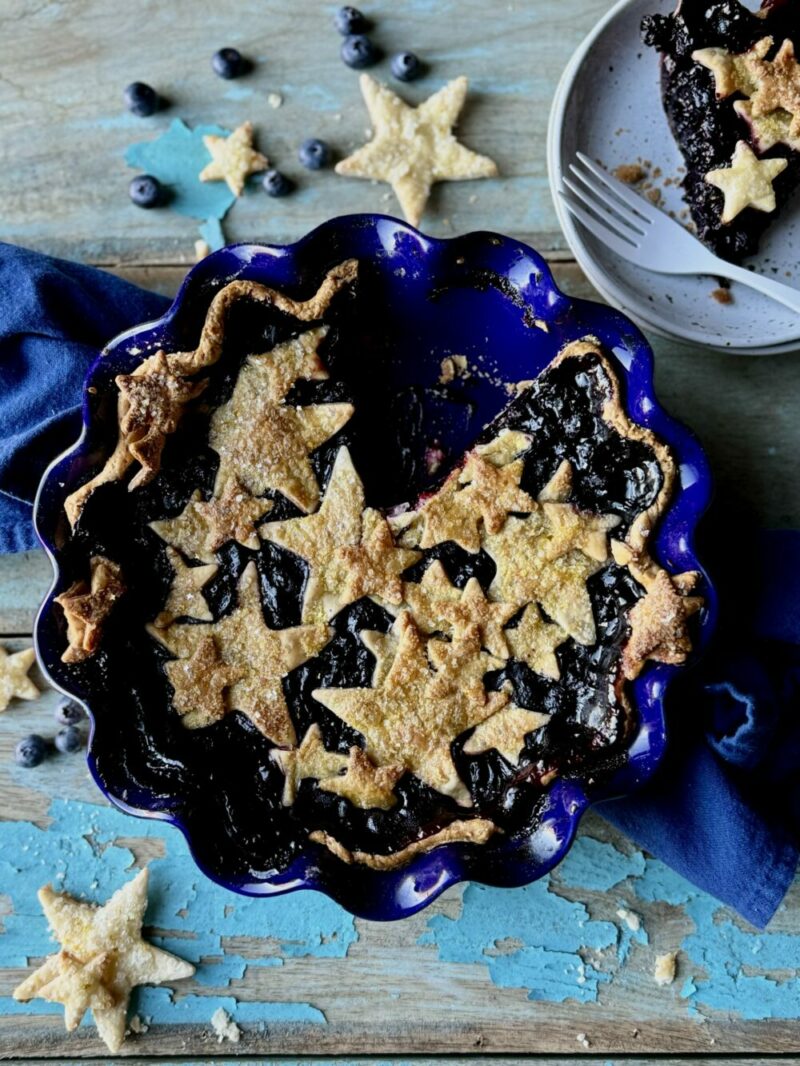
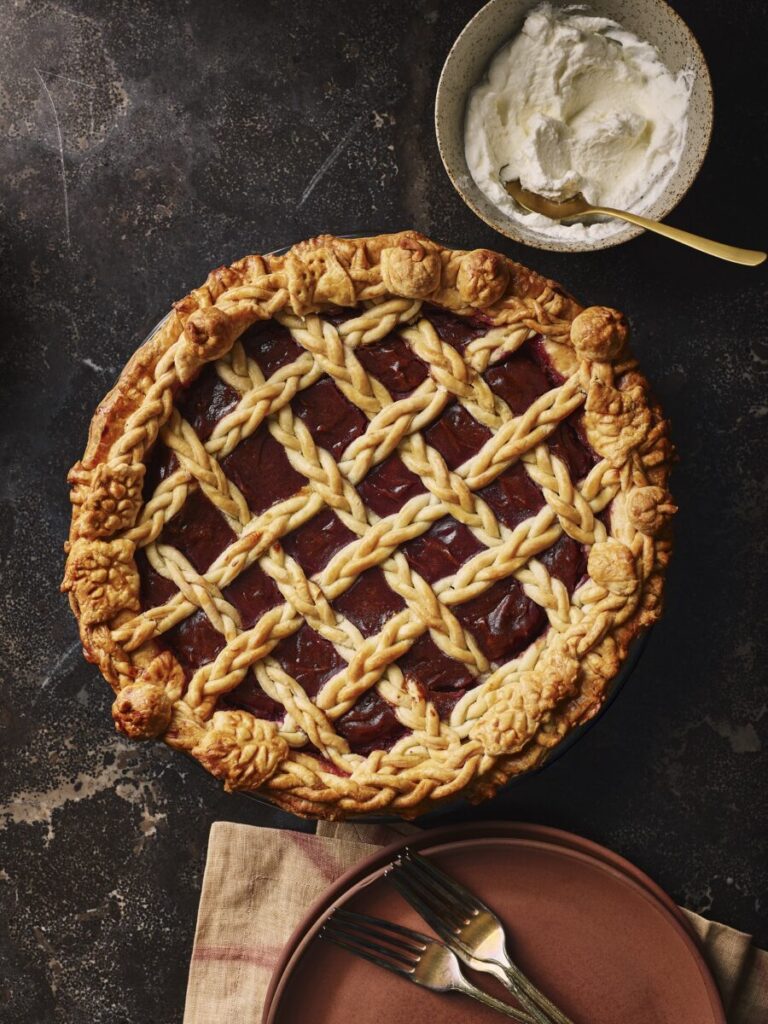
Can’t decide between cherry and blueberry pie? Good news, you don’t have to! This Cherry Blueberry Pie takes two of the most beloved fruit pies and bakes them into a juicy mix. Each bite is a surprise! One fills your mouth with tart cherries, the other may be a sweet flood of blueberries. Or it may even be a combination of both. No matter what bite you get, with pie crust stars decorated on top, this is truly a show-stopping recipe.
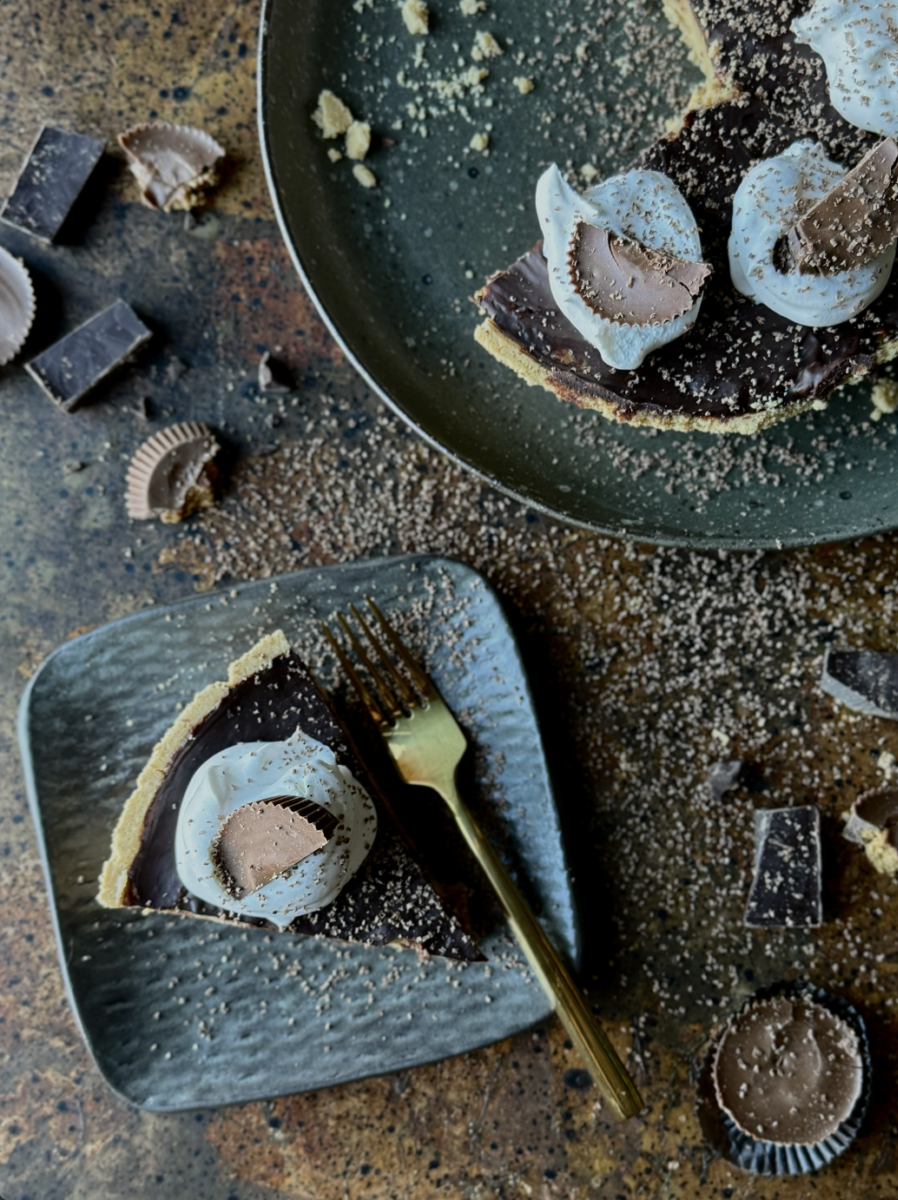
If you’ve got a sweet tooth, boy, do we have the pie for you! Think of this Peanut Butter Chocolate Pie like a giant Reese’s Cup. It’s got a dense peanut butter filling that makes up the majority of this pie. But, the homemade ganache on top cuts through with a rich taste of chocolate for the ultimate treat. Top it with whipped cream (even better if it’s homemade) and decorate with your favorite chocolate-peanut butter candy for your next get-together.
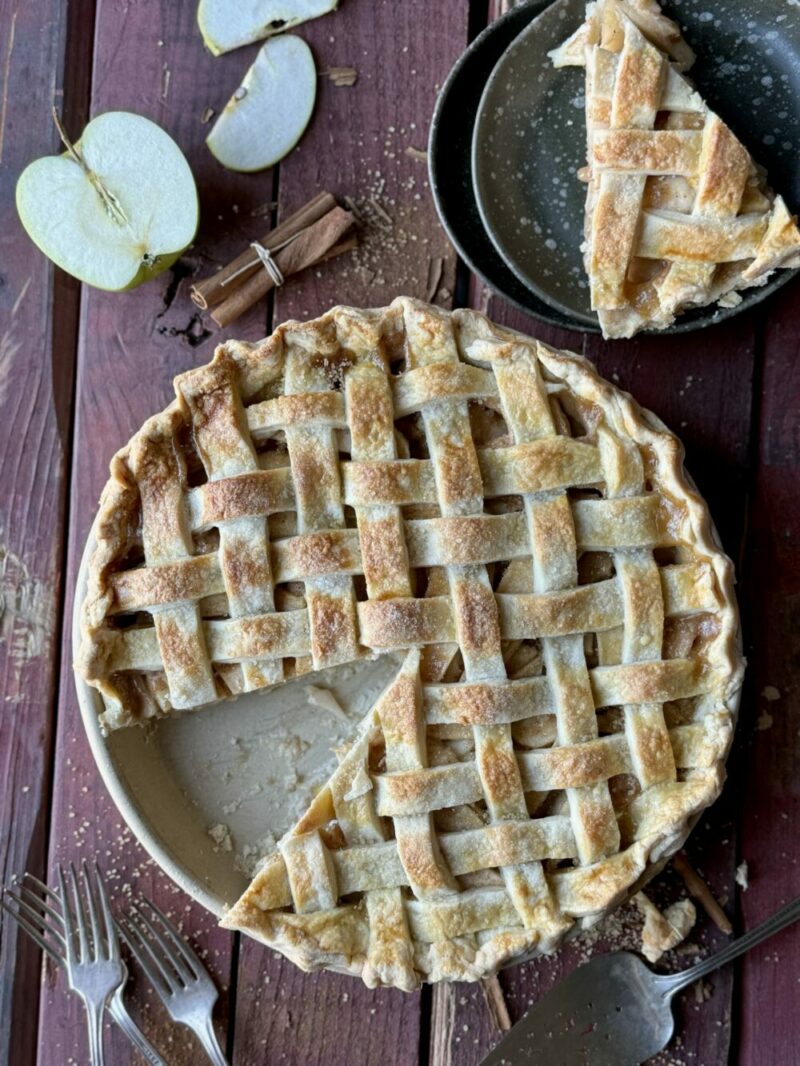
We couldn’t have a Pi Day lineup without including this classic all-American favorite. Our Traditional Apple Pie is ooey-gooey with fresh apple filling and a gorgeous lattice crust. It’s comforting and warm; get ready to be transported to your younger days of eating a whole slice as quickly as possible because it tastes so good.
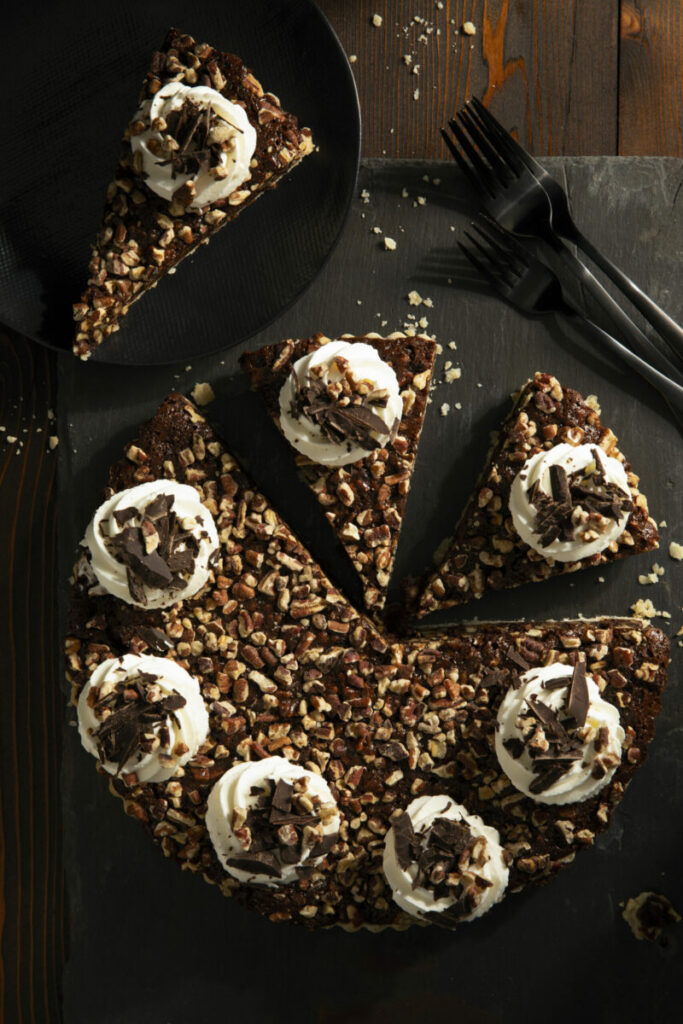
You’ve had chocolate pie. You’ve had pecan pie. But what about a Chocolate Bourbon Pecan Pie? This pie combines all your favorites into one devil-y delicious treat. After making your own dough (if you choose), you’ll create a smooth and silky chocolate bourbon pecan filling. Then, get your pecans and homemade whipped cream ready for decorating the top of the pie.
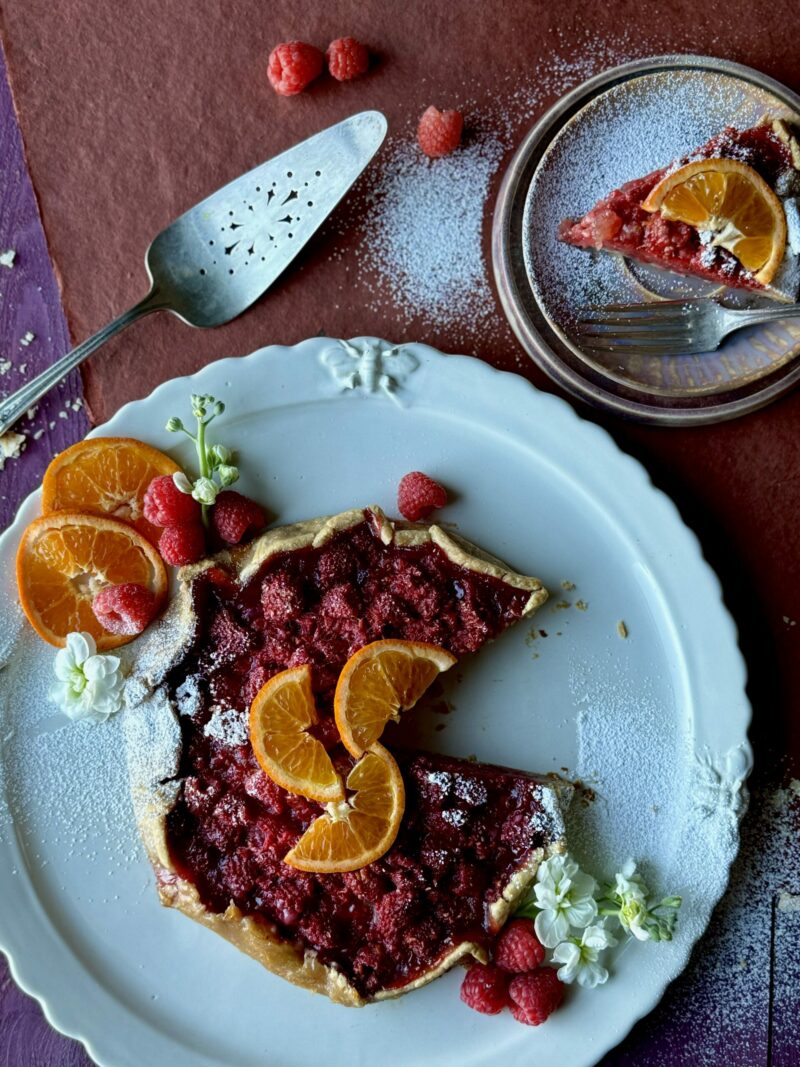
Tangy, juicy fresh fruits of raspberry and orange come together in this rustic dessert. Our Raspberry Orange Galette may not look like your regular pie, but after one bite, you’ll be hooked. We recommend trying it with a scoop of ice cream on top to balance out the flavors. Although, if you prefer something a little more tart, try it as your breakfast snack with your morning coffee.
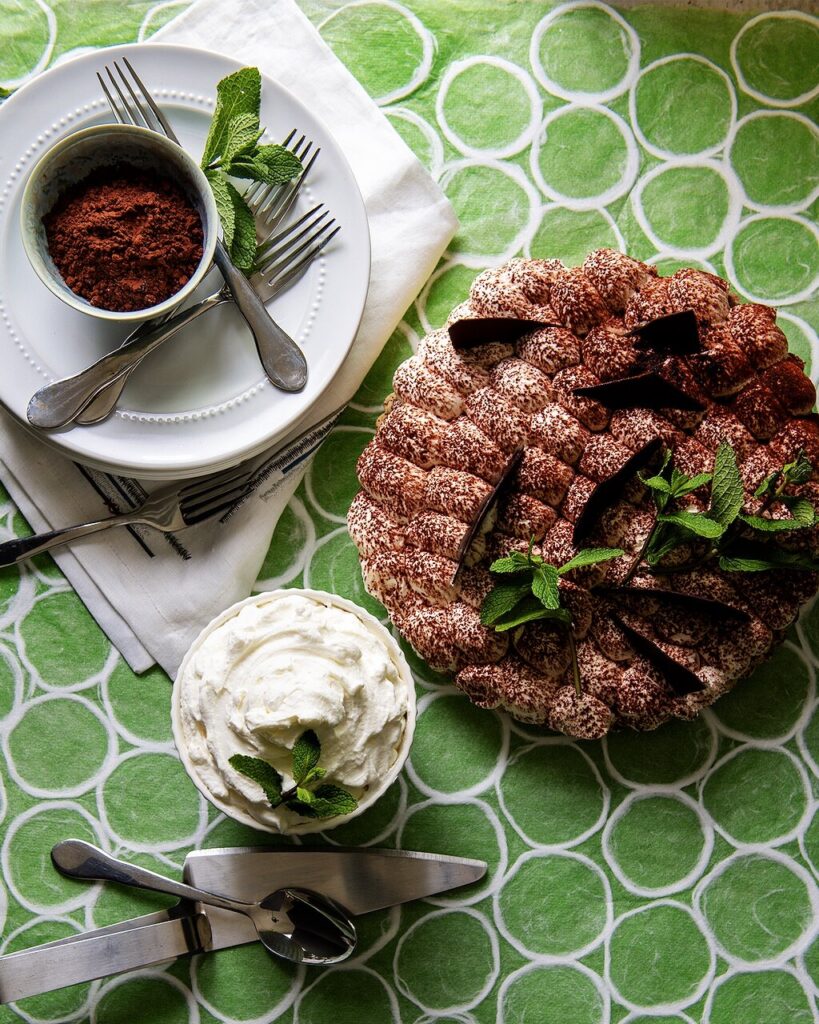
For those who prefer a sweet pie over a savory pie, this Chocolate Mint Pie is equal parts decadent and minty fresh. A mix of semi-sweet and bittersweet chocolate ensures you don’t go into a sugar comatose while a mint whipped cream pipes onto the top. This is one of those pies that would go perfectly with a scoop of vanilla (or even chocolate) ice cream.
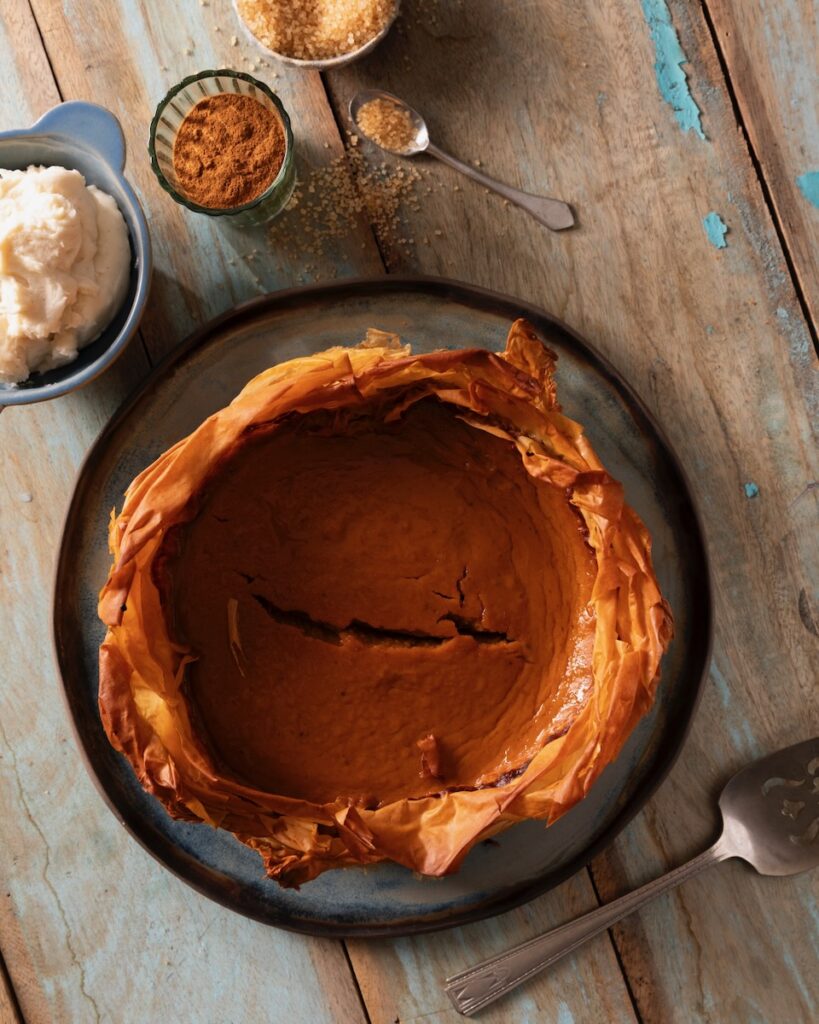
You know and love pumpkin pie but what if we told you there’s a way to upgrade this delicacy even further? Taking inspiration from Martha Stewart, this recipe includes Chinese five spice, bringing in more spice, warmth, and even a little bit of sweetness. It’s like pumpkin pie spice but turned up to 100%.
Purple sweet potatoes or ube continue to trend upwards to to its umami flavor and rich texture. For this pie recipe, purple potatoes turn into a custard with evaporated milk, eggs, butter, and spices. You’ll even learn to make Pastry Chef Selina Progar’s homemade pie crust recipe to use and make beautiful designs.
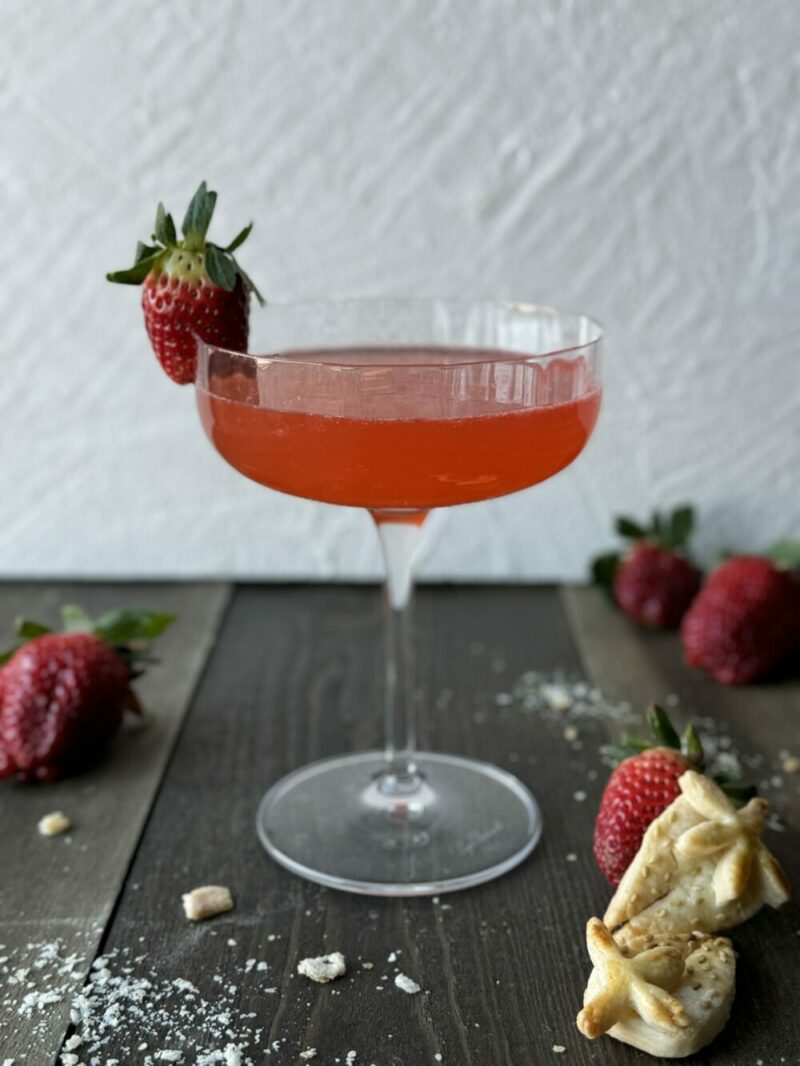
We take pies to the next level with a cocktail based on Strawberry Rhubarb Pie. This recipe uses gin as the liquor base and includes dashes of rhubarb bitters. First, your mouth is filled with sweetness from the strawberry syrup. Then, the rhubarb bitters and gin cut through, chased with a final addition of lemon juice for a little extra tartness.
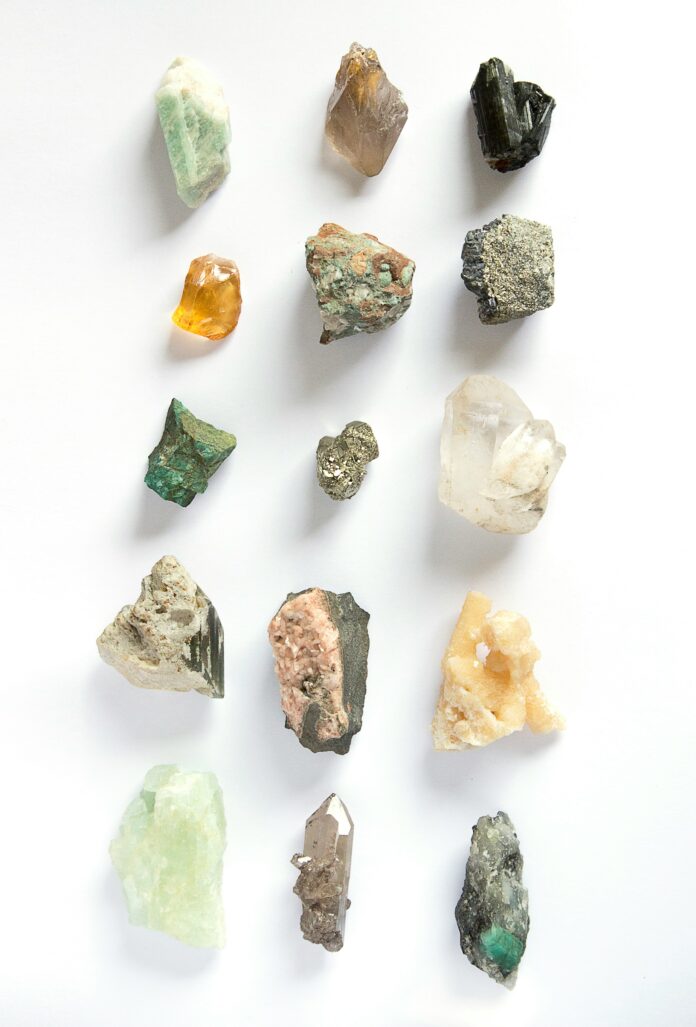
March is going to be a truly dazzling month with not one but two gem and mineral shows taking place in New Mexico. Start your gem journey at The Albuquerque Gem & Mineral Club’s 53rd annual show that takes place at Expo NM State Fairgrounds on March 15-17. Peruse the wares of over 50 dealers, thousands of mineral specimens, slabs, cabochons, beads, fossils, petrified wood, plus tools and equipment. On display — and for sale — is everything from amethyst cathedrals to Zebra rocks. And if you don’t know what these are, then even more reason to pay gem and mineral shows in New Mexico a visit.
Save some room because next on the calendar is the Truth or Consequences Rock and Gem Show from March 23-24. Sponsored by the Sierra County Rock & Gem Society, the show is host to a range of vendors selling minerals, fossils, beads, and jewelry. Plus, there are field trips, and you can even pan for gold and Montana sapphires.
Check out other fun activities in New Mexico on our events page.
I love to travel and am often drawn to places that evoke the act and movement and spirit of travel… spots large and small that feel like places of transference or convergence have a special pull. While you might not think of the somewhat sleepy town of Las Vegas, New Mexico, as such a place, it is. Historically an important spot along the Old Santa Fe Trail as well as the railroad system, LVNM is where the Plains meet the Rockies and where travelers stopped as they moved East to West as well as North to South.
A Better Las Vegas
And perhaps no place within Las Vegas better exemplifies these crossroads like the historic Castañeda Hotel. Indeed, you can arrive at the hotel by train and simply walk across the platform and step up onto the beautiful wrap-around porch. Even if you arrive by the more mundane method of a car as I did, you feel the energy of movement and importance of location. When Fred Harvey was planning his hotels across the West, he decided Las Vegas was an obvious place to stop. In fact, you can still take Amtrak’s Chicago to Los Angeles Southwest Chief between Harvey locations — The Castañeda to La Posada in Winslow, AZ, and stop in Lamy, NM, too, to make your way up to Santa Fe’s La Fonda. Harvey wanted America to explore and the hotels still evoke that spirit of adventure.
Photo courtesy of the Castañeda Hotel
The Castañeda’s quaint bar-restaurant has recently been renamed Trackside, which is indeed fitting. The atmosphere is a blend of relaxed yet anticipatory as you nibble some appetizers before catching your train. While the temptation to linger at the Castañeda with its sweet, updated Victoria vibe is strong, I did want to explore the town itself. What I found was a beautiful, walkable place filled with gorgeous period architecture. What was once a crossroads now feels a bit off the beaten path, but this only lends it more charm. If you like antique and thrift shopping, this is your place, and the plaza is one of the most beautiful in New Mexico. There are wonderful food spots — don’t miss the gargantuan pastries at Charlie’s Spic & Span but save room for The Skillet’s amazing green chile cheeseburger.
That’s the simple explanation for this houseful of cultural treasures, the striking backdrop to the lives of Carmella Padilla and Luis Tapia. She’s a journalist, the recipient of a Governor’s Arts Award, and the author and/or editor of seven books, including her first, The Chile Chronicles, an important social history of Chile in the state. He’s a much-honored sculptor, whose work is grounded in traditional New Mexican woodcarving and furniture making, for which he received the prestigious National Endowment for the Arts National Heritage Fellowship at the Library of Congress last fall. Both come from families who count their New Mexico roots for centuries.
Tradition and Modern Meet in the Middle
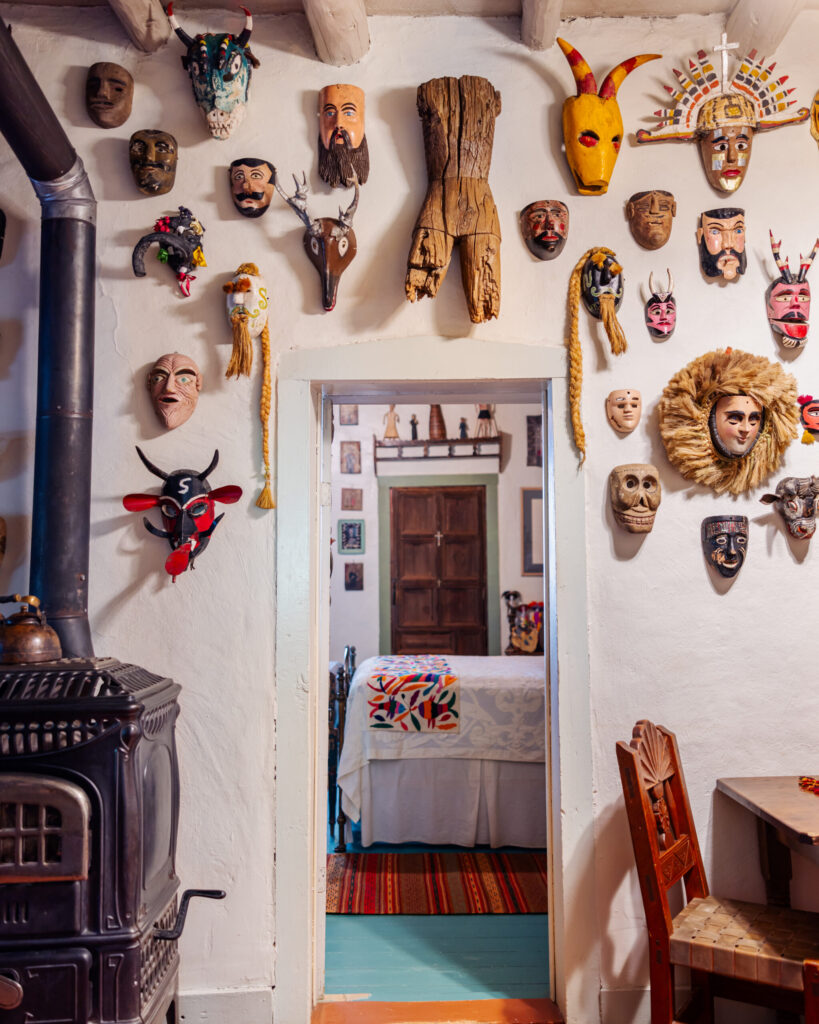
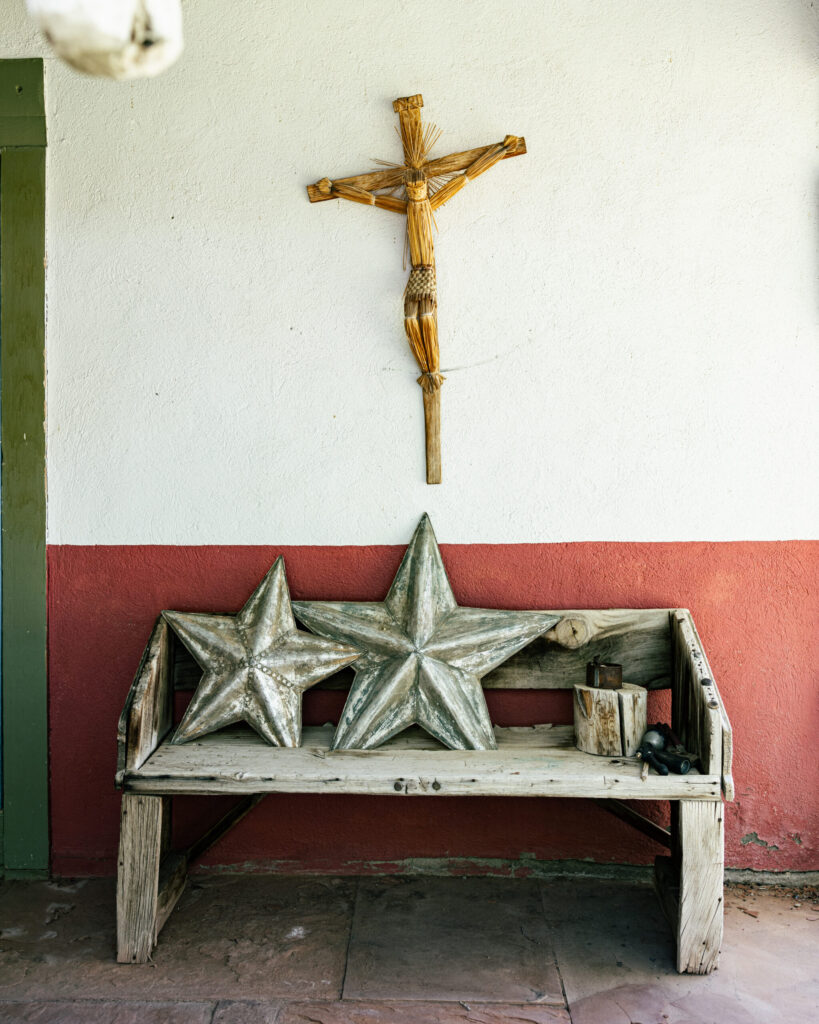
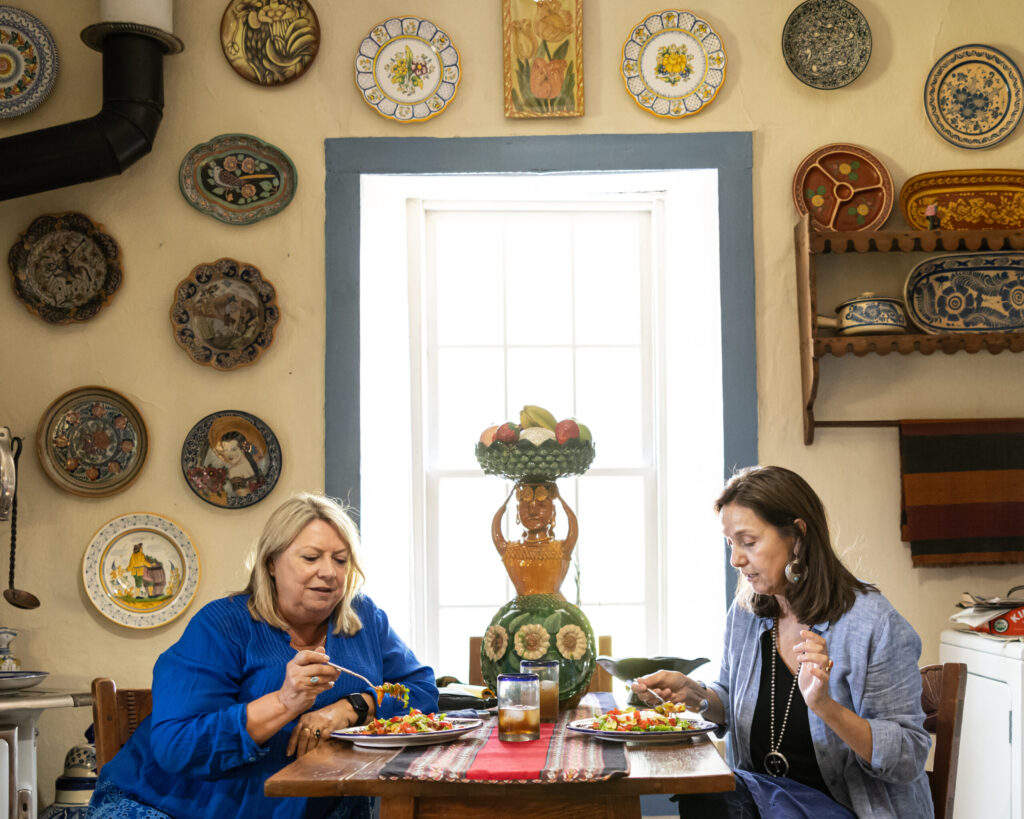
Their 250-year-old home, at every turn, shows off their collections — of vintage and modern Mexican ceramics, 1930-40s Works Progress Administration furniture, and Mexican and Guatemalan masks. The home’s a showcase too, for Luis’s art, and pieces by his contemporaries. The intimate adobe in La Cienega feels at one with the land, rising organically from its site near El Rancho de las Golondrinas. The home shares that living-history museum’s sense of place, nestled under cottonwoods, in a green patch fed by a spring and marsh, the Cienega of the village’s name.
Love at First Sight
Luis found the house some 35 years ago when it was in such disrepair that the owners considered knocking it down so that it simply could return to the earth. Renovating it was an enormous challenge, made all the more so by the snakes, skunks, and other critters who thought the place was theirs. While Luis was busy battling nature, painstakingly rebuilding the house, and becoming known as a sculptor, Carmella was in college, planning her escape from what she then thought as the confines of Santa Fe.
She headed to a press internship in Washington, DC for Senator Pete Domenici, and then on to a Wall Street Journal job in Dallas. Eventually, she circles back to work for the Santa Fe Reporter, by previous owner Hope Rockefeller Aldrich. It was her work at the Reporter, on stories about northern New Mexico, that made her fully appreciate the state’s heritage and cultural landscape. Although the Padillas were acquainted with the Tapias, and Luis had gone to school with three of Carmella’s brothers, it was an interview she was assigned about his art that sparked their relationship.
Roots in the Traditional Arts
Luis’s first works were santos and furniture, in classic Spanish Colonial style, that he exhibited for a few years at Traditional Spanish Market. As Luis researched the historical roots of these classic arts, he started creating sculptural pieces that incorporated more contemporary imagery and commentary on current social issues. Dashboard altars have become a long-running subject, inspired by his mother’s car, which had small santos attached to her dash. Injustice in immigration is a major theme in his work these days too. Some of his pieces include elements of whimsy. His Guess Who’s Coming to Dinner includes mini-images of the WPA chairs and animal masks in their collections, along with plates of his favorite red enchiladas.
Coming Together with Dinner
Dinner is always a worthy subject in this household, with both spouses enjoying cooking. Carmella, an avid reader from a very young age, devoured every page of her family’s Better Homes & Gardens Cookbook, and then began preparing dishes from it for fun. Luis’s dad died when he was a child, and his mother had to work long hours, so he began cooking as a necessity.
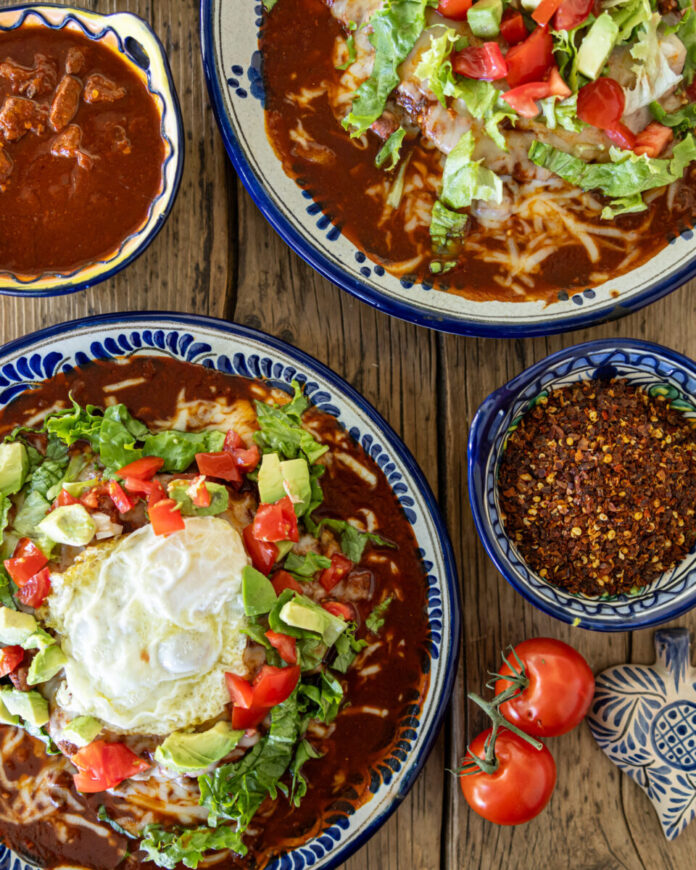
Posole, beans, grilled lamb chops with green chile, and a chile dog with a secret blend of red are among his specialties. Enchiladas, such as those featured in Luis’s sculpture, are Carmella’s territory. She follows her mother’s recipe, with blue corn tortillas and pork-enriched red chile. Which you’ll see artfully on Puebla ceramics. Another piece by Luis, An Homage to a Good Bottle of Tequila and a Beer Chaser, suggests what else might be served. Luis has some 30 premium tequilas and mezcals ready to share. In their home, Carmella and Luis together have created a feast for all the senses, as well as sustenance on the plate.
Story by Cheryl Alters Jamison / Photography by Tira Howard
Carmella Padilla prepares her enchiladas as her 100-year-old mother always has — flat, or stacked, rather than rolled, with blue corn tortillas. She makes her until-now secret red chile recipe from chile caribe, a coarse-ground type of New Mexican red. The slightly fruity flavor, a good heat, and intense red color are all important. She gets her chile from Harvest Gifts in Tijeras, which can be ordered by mail (505.281.0696). Small pork cubes enrich the sauce, too. She recommends making the chile on the morning of the day you plan to serve it, or even a day ahead, so that the flavors meld fully. Carmella and Luis both enjoy topping each plate of enchiladas with a fried egg, a popular local variation, so feel free to add it. Learn more about the couple’s story and their home once you’ve made the recipe.
Carmella’s Red Chile and Blue Corn Enchiladas Recipe
INGREDIENTS
For Carmella’s Top-Secret Red Chile:
1 cup medium to hot dried chile caribe
Pinch or 2 of salt
Pinch or 2 of garlic salt
Approximately 2 cups water
2-3 tbsp olive oil
1/2-1 white or yellow onion, chopped
2-4 garlic cloves, minced
1 1/2-2 lb pork stew meat, cut into cubes no larger than 1/2 inch
For the blue corn tortillas:
2-3 tbsp olive oil
8 blue corn tortillas (2 tortillas per serving)
About 4 cups grated Monterey Jack
Finely chopped white or yellow onion
Chopped tomato, lettuce, and avocado
Fried eggs, optional
INSTRUCTIONS
In a blender, combine the chile with salt, garlic salt, and about one-half of the water. Blend about 30 seconds then pour in the additional water, and blend again for about a full minute. The chile mixture should become extremely smooth. Stir up from the bottom and blend a bit longer, if needed.
Warm the oil over medium heat. Add the onion and garlic, and sauté until the onion is softened and translucent. Stir in the pork and continue cooking, until the meat has released its juices and is beginning to brown, about 10 more minutes. Pour in the red chile mixture and simmer for about 30 to 40 minutes, until the pork is tender and the mixture reduced somewhat. It should still be very spoonable. Add a little more water, if needed for the proper consistency. Let the chile sit at room temperature for an hour, or refrigerate it for at least several hours, or up to overnight. (If refrigerated, reheat it before using.)
Prepare the tortillas. Warm the oil in a small skillet over medium heat. Dunk each tortilla in the oil and let it soften, a matter of a few seconds. Drain the tortillas on paper towels and reserve.
Shortly before serving the enchiladas, preheat the oven to 350 degrees. Assemble each portion of enchiladas on a separate heatproof plate. On each, spoon out several tablespoons of the red chile. Top with a tortilla. Add a generous 1/2 cup of red chile, fully covering the tortilla, then sprinkle on about a tablespoon of onion, and about 1/2 cup of cheese. Repeat with another tortilla, more chile, onion, and cheese. (Any leftover chile can be kept for up to several days to top or accompany other dishes.) Build the additional enchiladas in the same way.
Bake the plates of enchiladas for about 5 minutes, until the cheese is melted and bubbly in spots. Garnish with tomato, lettuce, and avocado. Serve immediately
Recipe by Carmella Padilla / Story by Cheryl Alters Jamison / Photography by Tira Howard
Crocuses are blooming! Their brilliant orange pollen makes them look as if there’s a dusting of turmeric over them – surely a sign that spring can’t be far away? And if bulbs in bloom aren’t enough to convince you that winter may exit stage left, then a trip to the Santa Fe Farmers’ Market is in order. There are more growers on hand and a decided energy among shoppers as they fill their bags and baskets with French breakfast radishes, knobbly leaves of spinach, and peppery salad mixes.
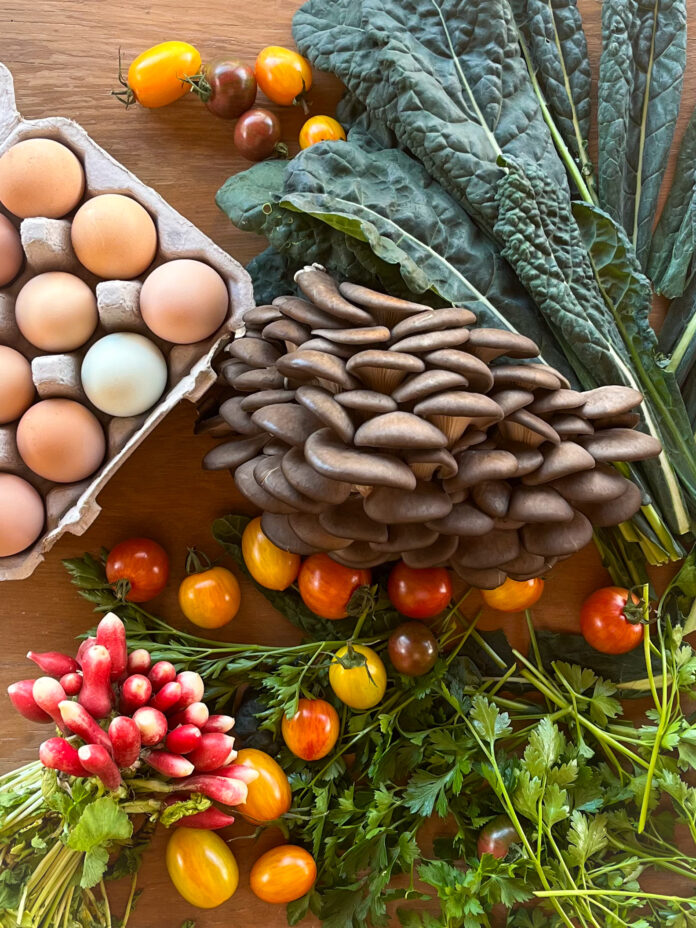
Reyah Sunshine Farm in Chimayo has blue and white oyster mushrooms on offer along with lion’s mane – perfect to cut into thick ‘steaks’ and pan fry with garlic and herbs. Or sauté their oyster mushrooms and serve with gently scrambled eggs from Cruz Farm. Kale and cavolo nero are still available from Khalsa Family Farms – asking for you to cook them with beans and top with a healthy glug of olive oil and generous dusting of parmesan cheese.
And for a taste of summer when it’s not even spring, pick up a bag of hydroponic tomatoes from Growing Opportunities – tiger-striped, deep purple that’s almost a black, crimson red and golden yellow.
Winter is slowly melting away. As we watch it go, we have some cold weather greens recipes to take advantage of the last bit of the season. Cold weather greens come in the form of kale, cabbage, spinach, radicchio, and much more. They thrive in cooler temperatures, which intensify their flavors and textures. These hearty greens can carry sweet or bitter profiles and often have a tender, yet resolutely crunchy texture. They’re also rich in vitamins and nutrients, so you can get meet your daily requirements even when the sun isn’t shining. All of these qualities make cold weather greens an excellent choice for salads or stews. Make the most of these last few weeks of chill and add a cold weather greens recipe or two to your weekly dinner schedule.
Sharp, tangy, and a bit bitter, as the name suggests, Bitter Greens are beloved by many. When mixed with some of your favorite salad ingredients you get a medley of flavors and textures that cut the bitterness, making them beloved by everyone! The addition of Cranberry Vinaigrette adds notes of sweetness and tartness to engage the palate even further.
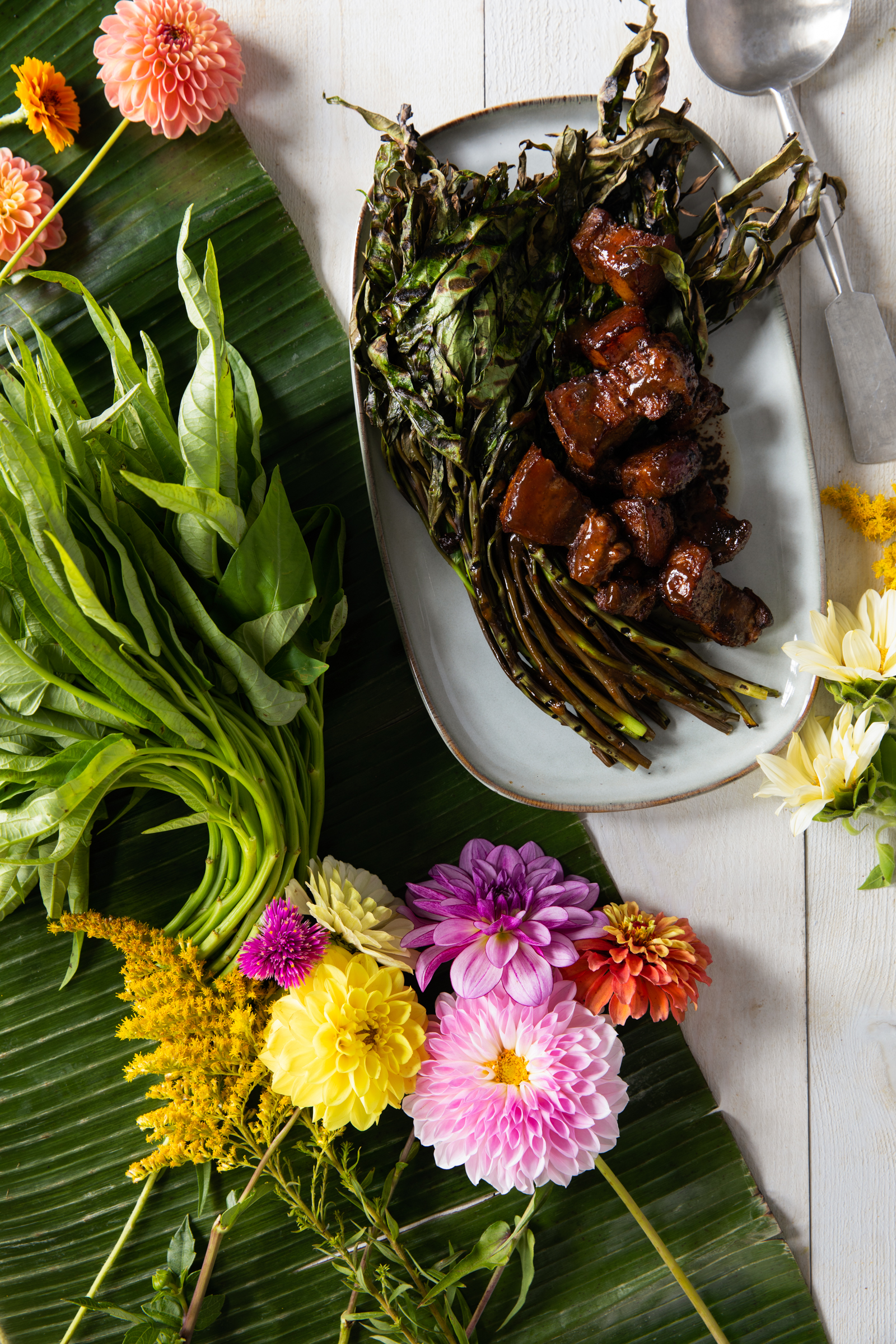
Water Spinach, also known as kangkong or morning glory, is a leafy green vegetable that is commonly used in Asian cuisine. It’s slightly crunchy and has a mild, slightly sweet flavor. We complement this healthy ingredient, which is full of antioxidants, with a Pork Adobo Sauce that’s rich, tangy, and savory.
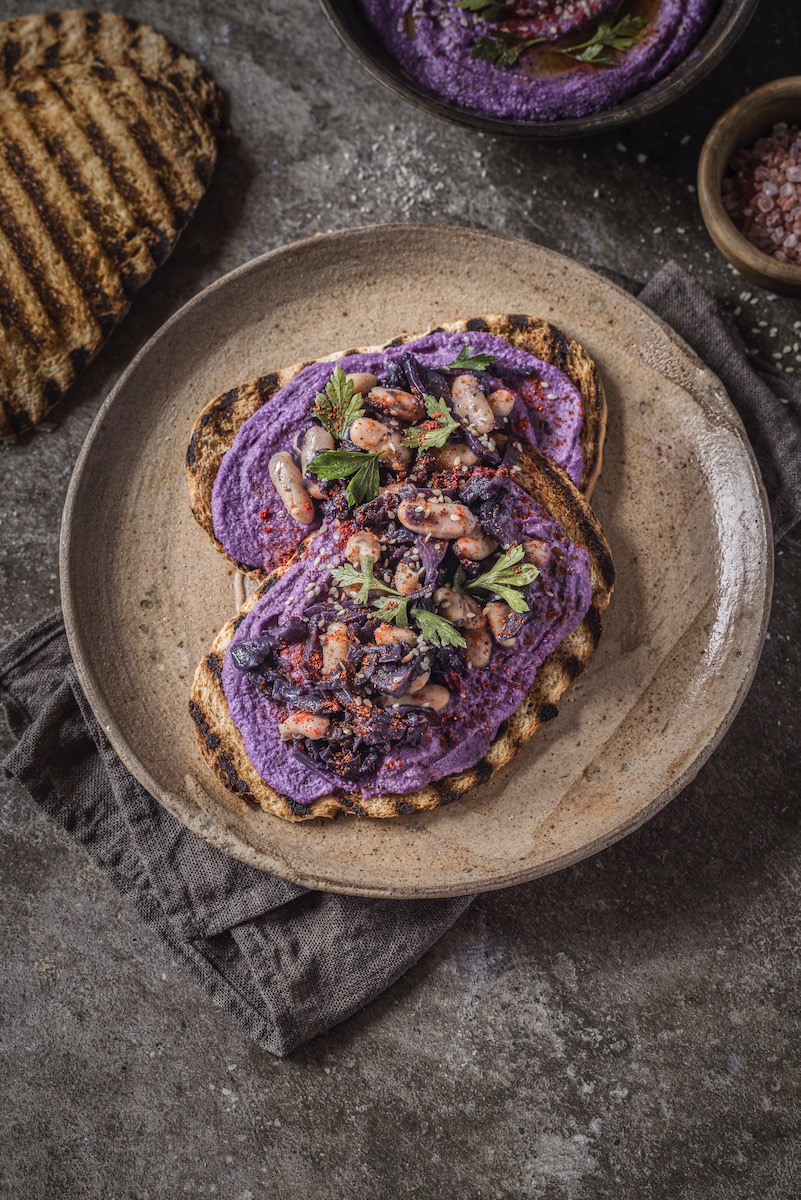
Purple cabbage is a cold weather green that has many benefits. It can reduce inflammation, lead to a healthier heart, help strengthen bones, and improve gut function. In this recipe, it mixes with cannellini beans to make a rich-flavor, slightly spicy hummus. Plus, the color is so stunning that it’ll turn the heads of even those who do not like hummus.
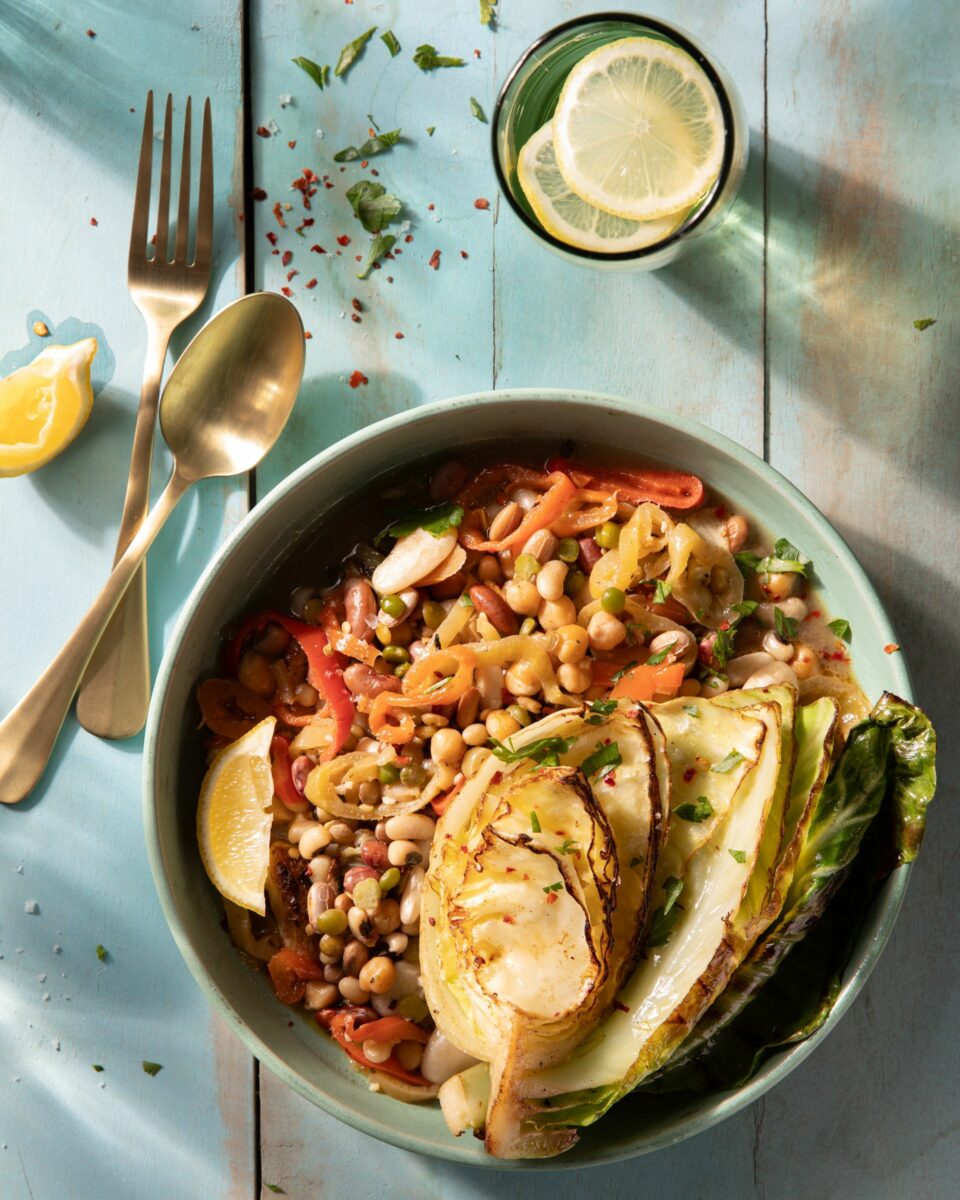
Did you know that cabbage is actually known to thrive in frosts? This cold weather leafy green gains a rich flavor when braised in olive oil. In our Braised Cabbage recipe, we accompany it with tender mixed beans in a vegetable broth. It’s a dish that’ll warm you up even on the coldest days.
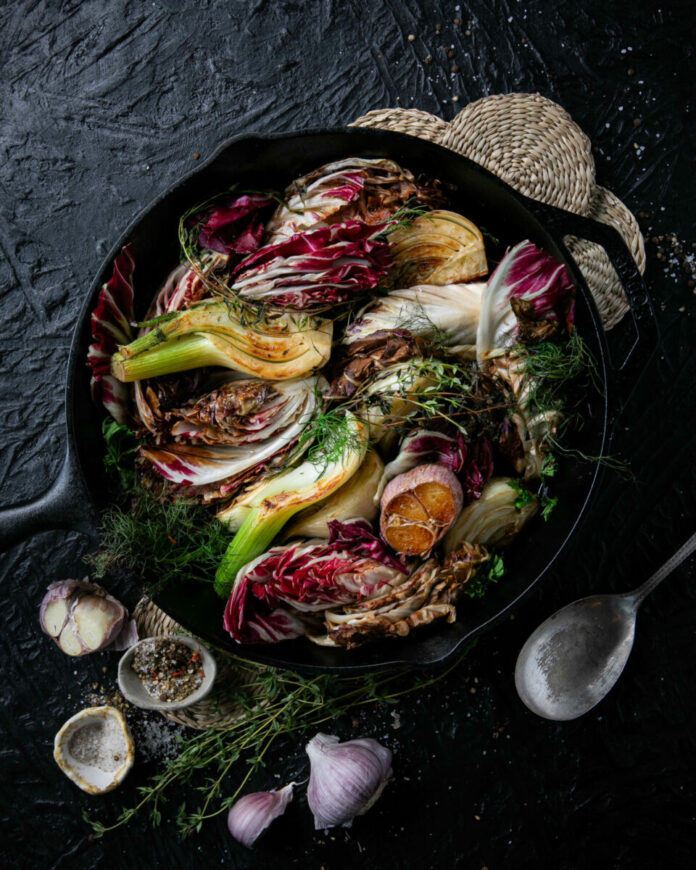
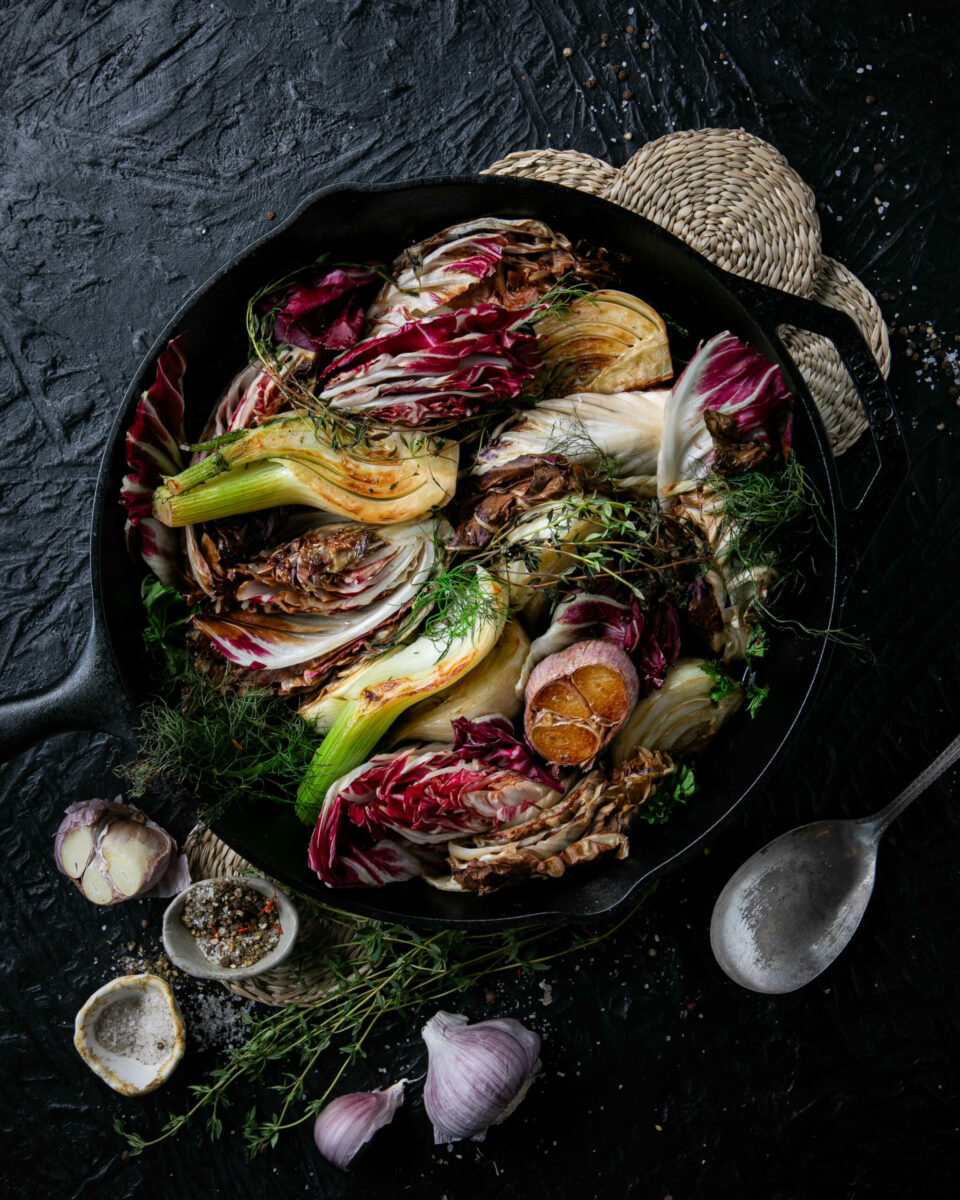
Radicchio may be the ultimate winter green with its ability to elevate even the simplest of dishes. We use a browning and braising technique in our Vermouth-Braised Radicchio & Fennel. This process adds in sweet notes from the caramelization, mellowing some of the bitter notes in the vegetables.
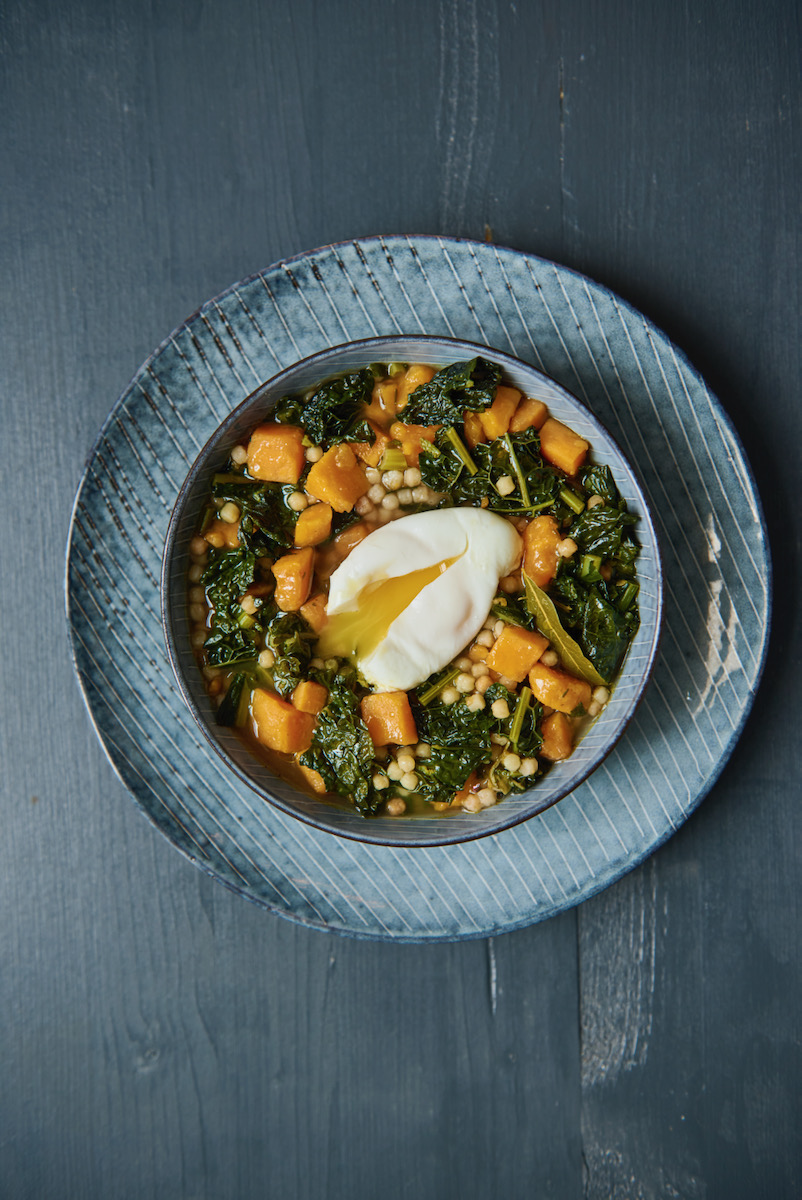
If you’re in need of something comforting, filling, and with a healthy kick, this recipe is for you. Our Kale and Sweet Potato Soup uses pearl-shaped pasta and a peached egg on top. The hearty chunks of sweet potato and leaves of kale creates a powerhouse of nutrients from both the cold weather green and root vegetable. It’s simply the best meal for those cold, dreary days.
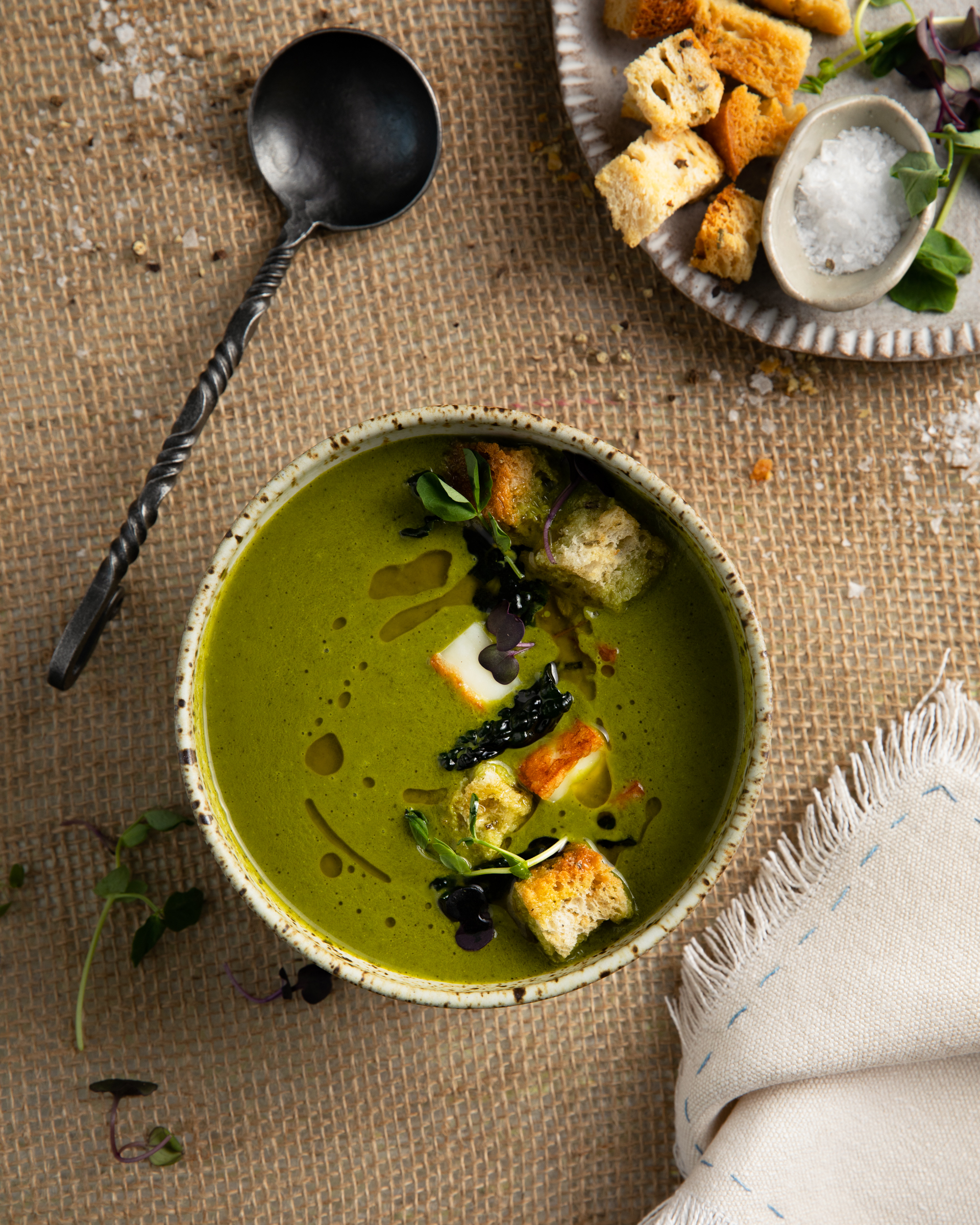
Lacinato kale, also known as Tuscan kale or dinosaur kale, is characterized by long and narrow, crinkled, dark blue-green leaves. It has a slightly sweeter and more delicate flavor than other kale varieties. It works well with the salty addition of halloumi cheese in our Creamy Kale Soup.
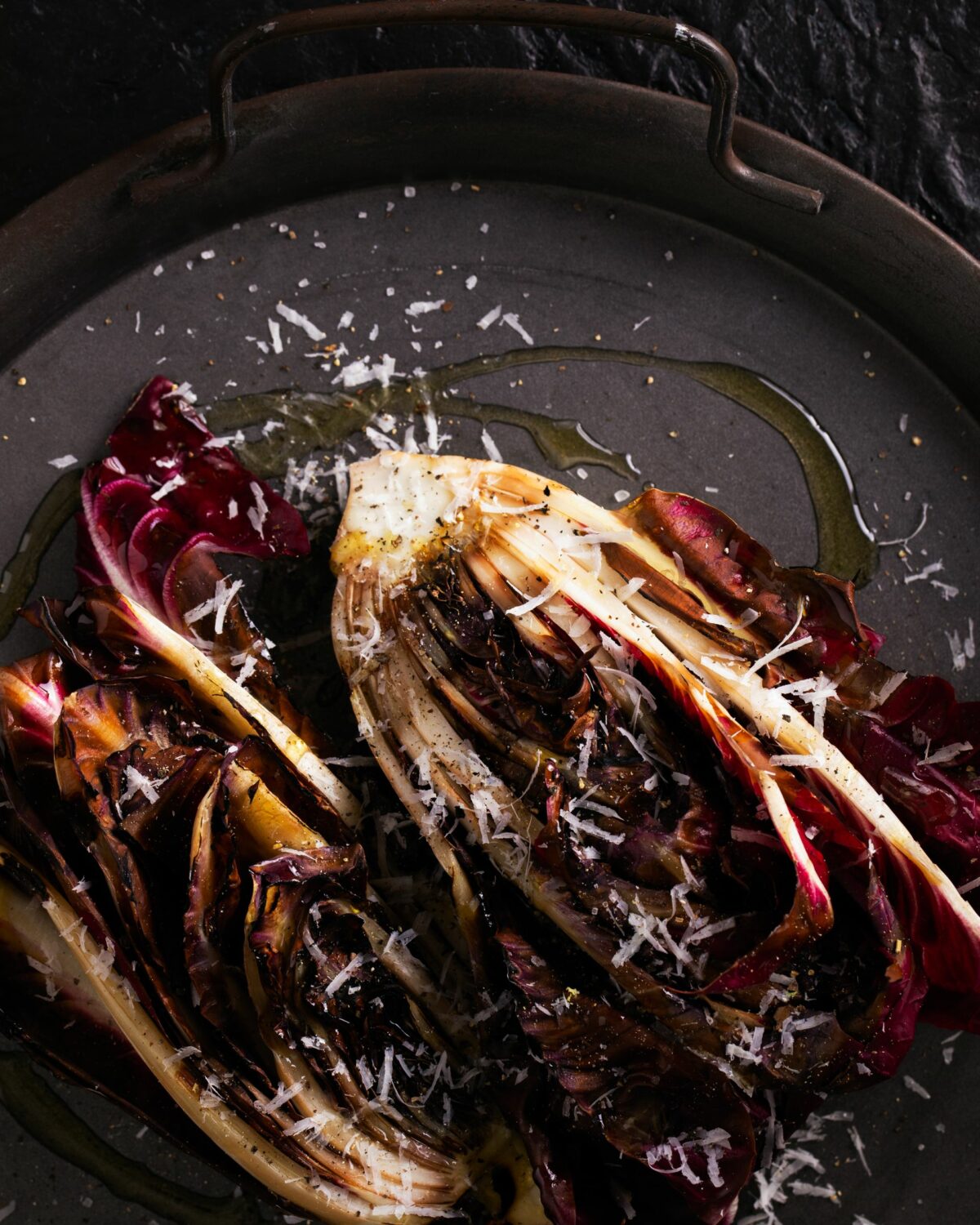
If the bitterness radicchio isn’t for you, have you ever tried charring it? Grilled radicchio is much less bitter and delightfully smoky. A COLDCO Farm Charred Radicchio Salad is the perfect first course when served up with delicious flavors like parmesan cheese.
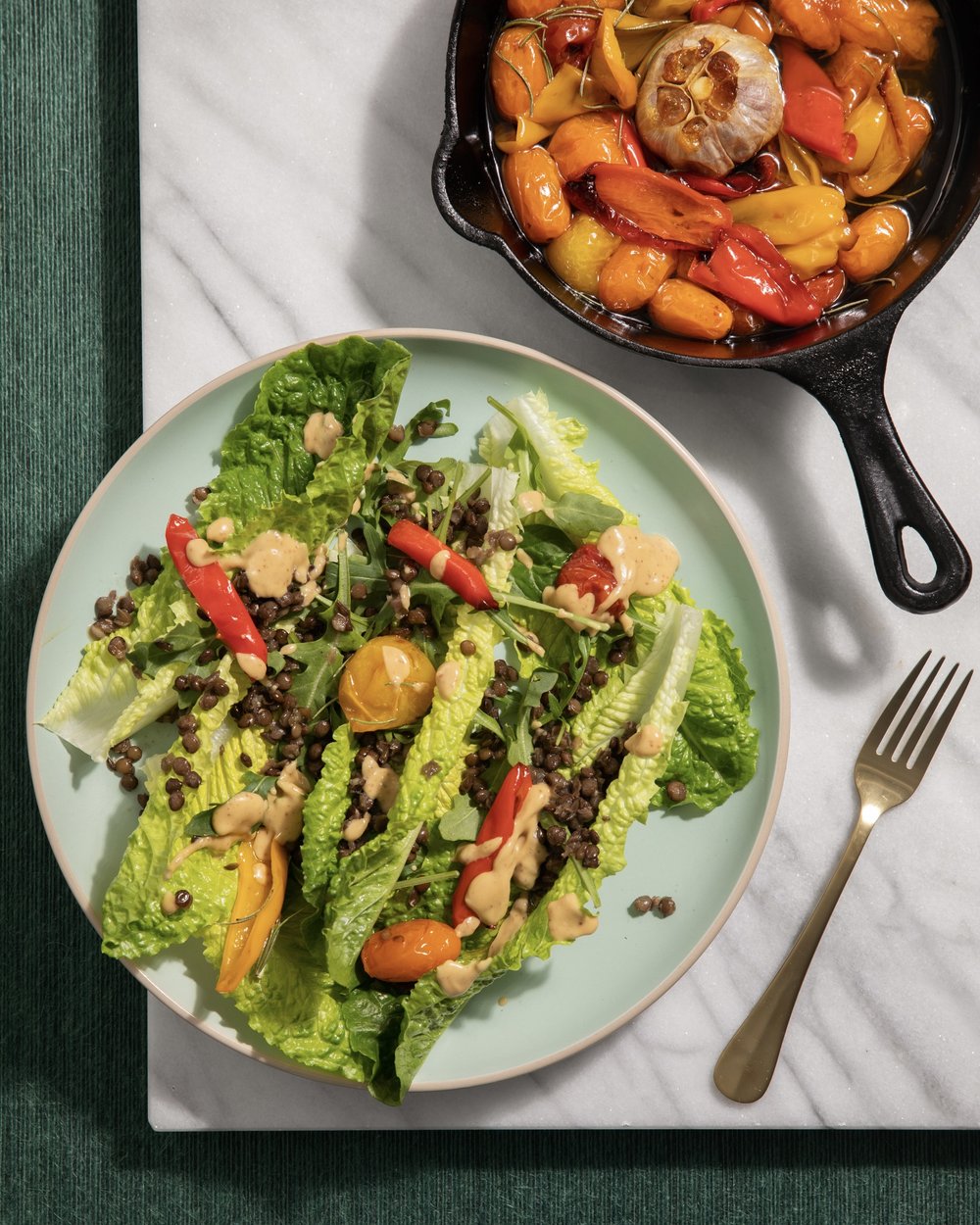
The richness of peppers and tomatoes roasted in olive oil is matched beautifully with winter greens of arugula and a big spoonful of hearty lentils, all tossed in a tangy balsamic dressing. This Romaine Arugula and Lentil Salad is so tasty and fulfilling that you might just forget you’re eating a healthy and nutritious dinner.
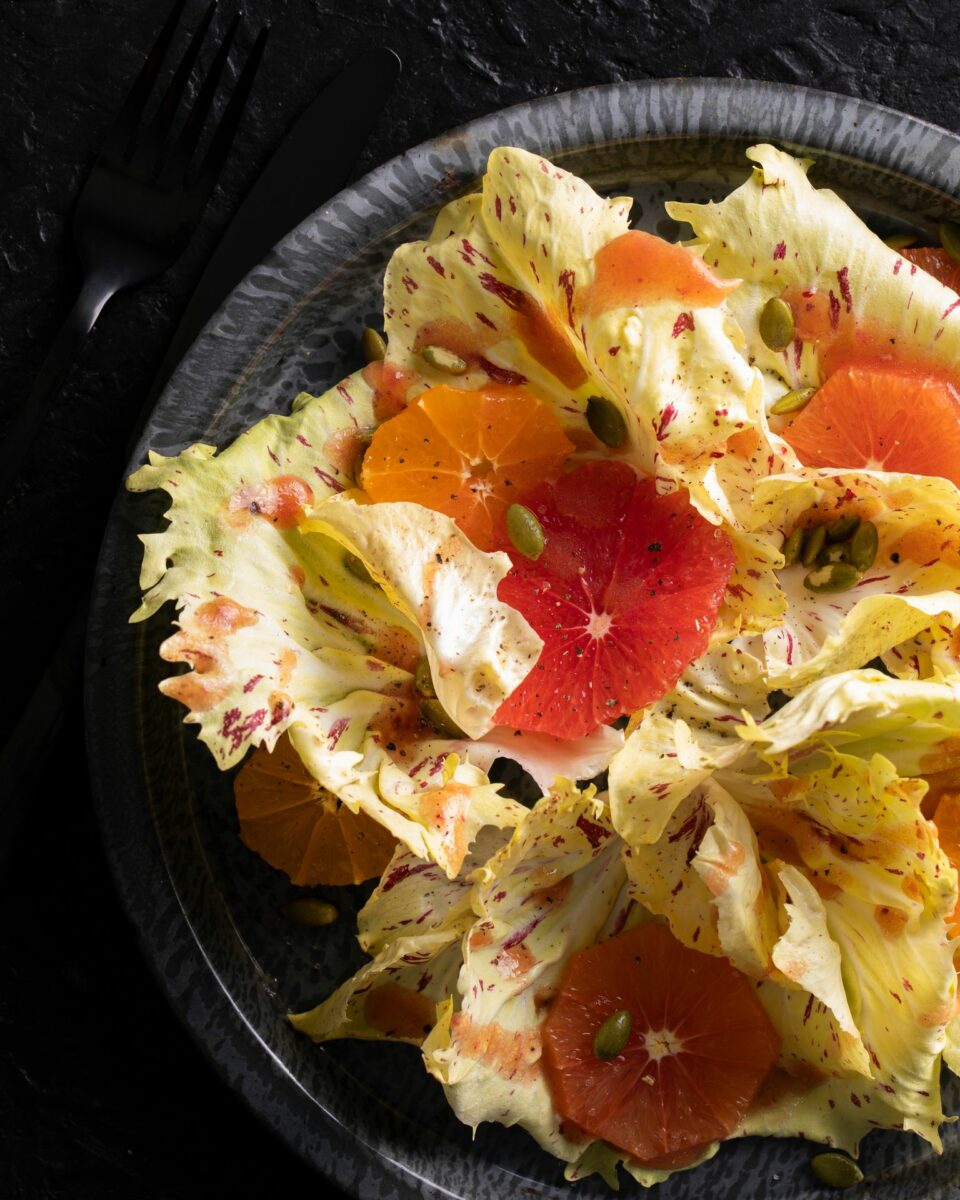
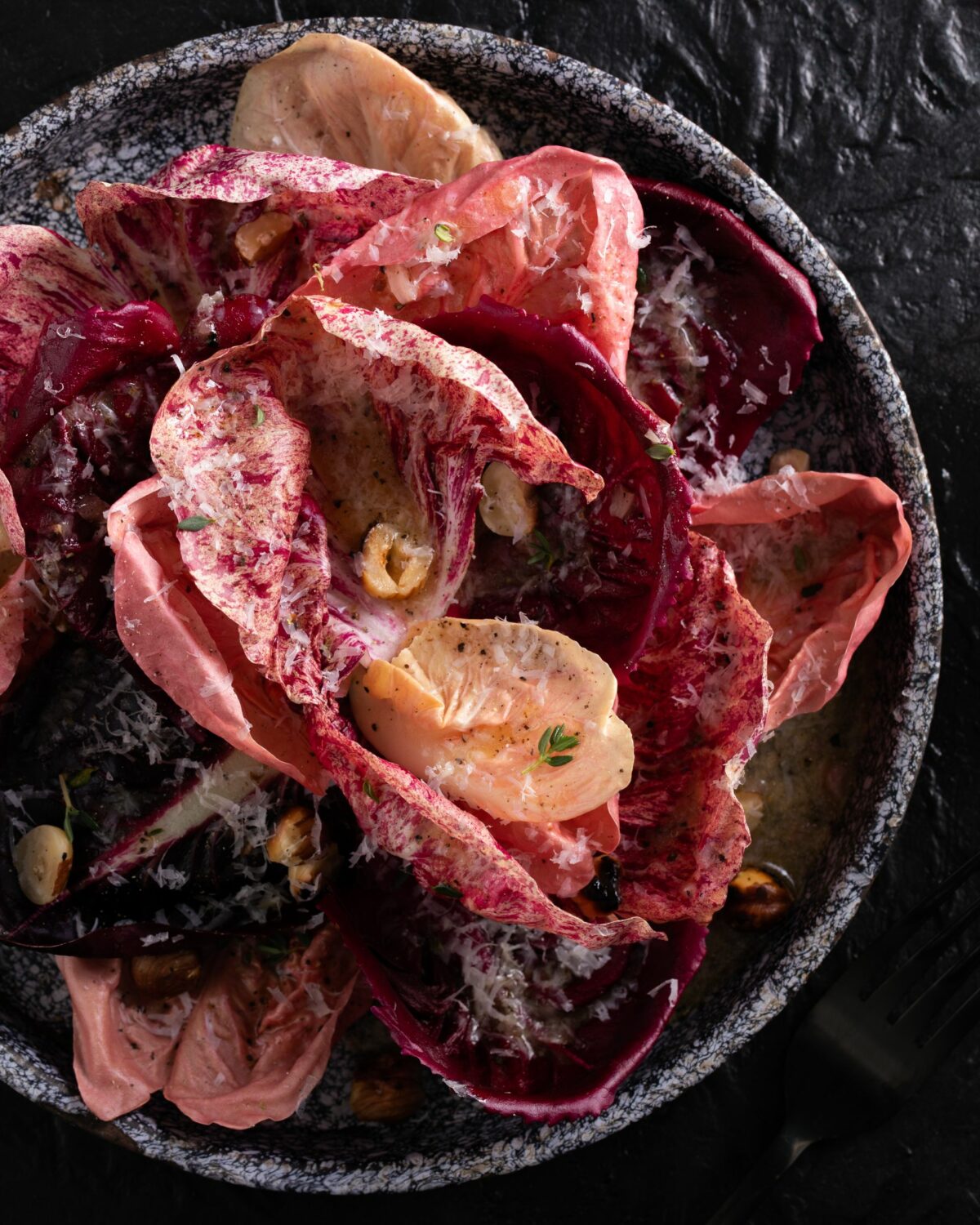
Our COLDCO Farm Winter Salad carries a substantial flavor profile. Bitter winter greens, shaved parmesan, hazelnuts, and a homemade vinaigrette, blend together gloriously. The the gorgeous purple and pink appeal of these “greens” makes this dish appetizing to the eye as well as the stomach.
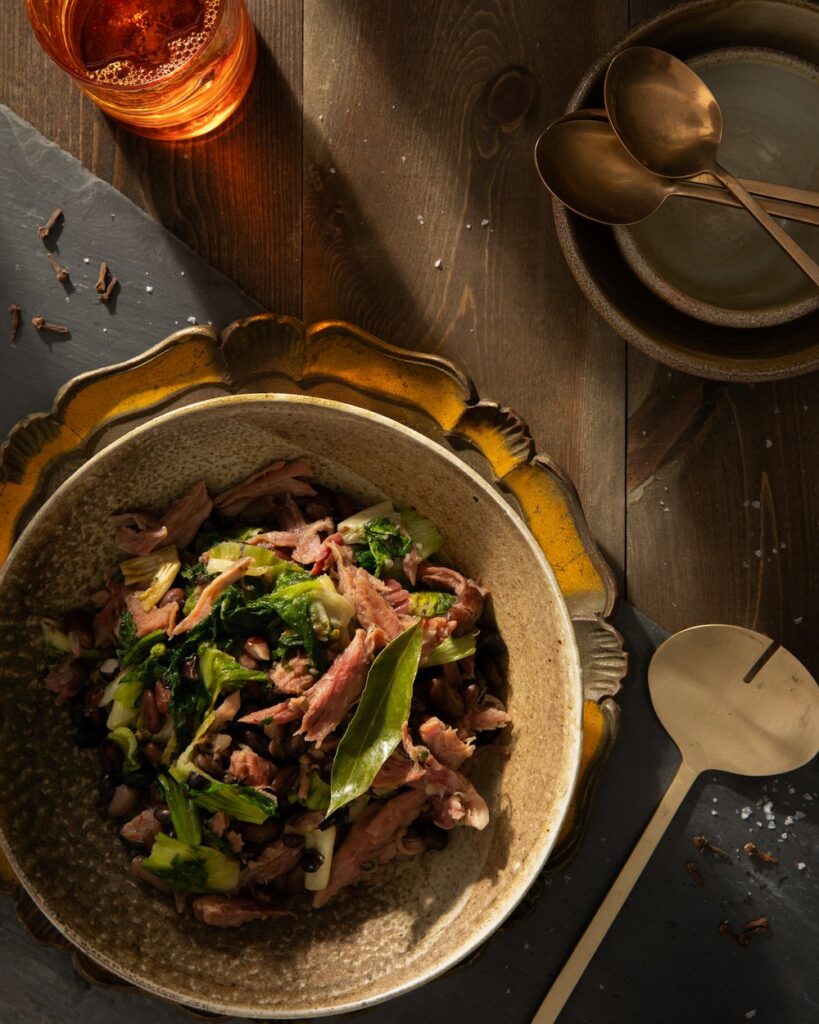
Looking to enjoy winter greens in a warm and cozy way? Our Ham, Beans, and Greens recipe boils ham shank and beans with wilted escarole. Serve it along with crusty bread for a quick and comforting meal.
Choosing to make the pasta from this luxurious recipe by hand just makes it all the more special. Homemade gnocchi meets a rich and savory sauce along with tender chunks of oxtail and slow-cooked collard greens.
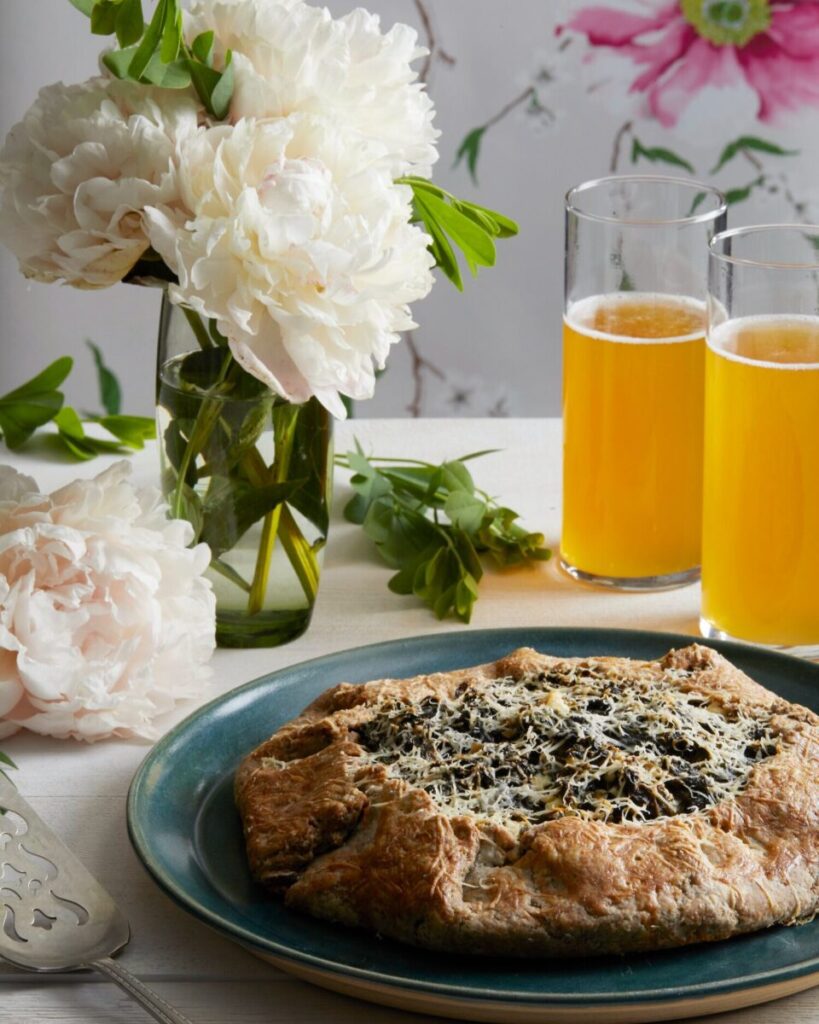
This recipe separates the winter greens likers from the winter greens LOVERS. A premade pie crust provides the base for Swiss chard, kale, and spinach as well as feta cheese and fresh herbs.
The Citrus and Kale Salad With Fig and Honey Vinaigrette turns vitamin‑rich kale, which we know can be a bore, into something bright and refreshing. We’re balancing this greens’ earthy bitterness with citrus slices, fig‑honey vinaigrette, pomegranate seeds, and creamy avocado.
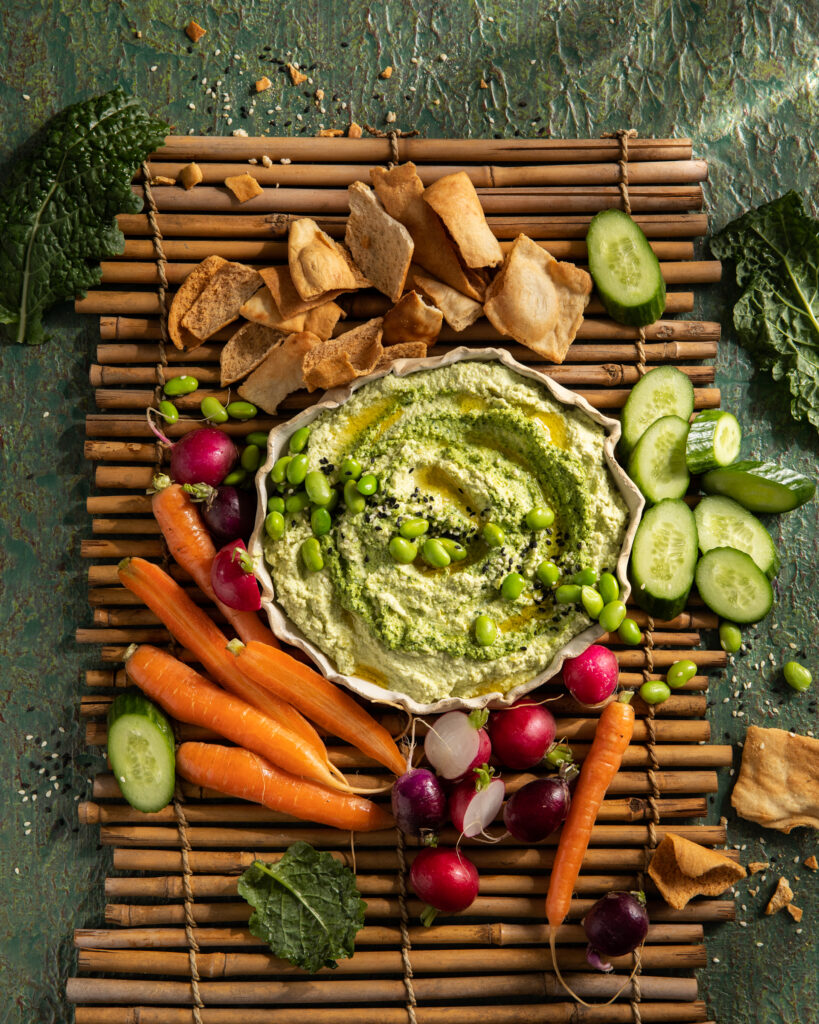
A healthy and crowd-pleasing dip that puts winter greens to work. Kale, edamame, olive oil, tahini, garlic, lemon, and soy sauce blend into a creamy, flavorful hummus that’s perfect for snacks, sandwiches, or as a party appetizer.
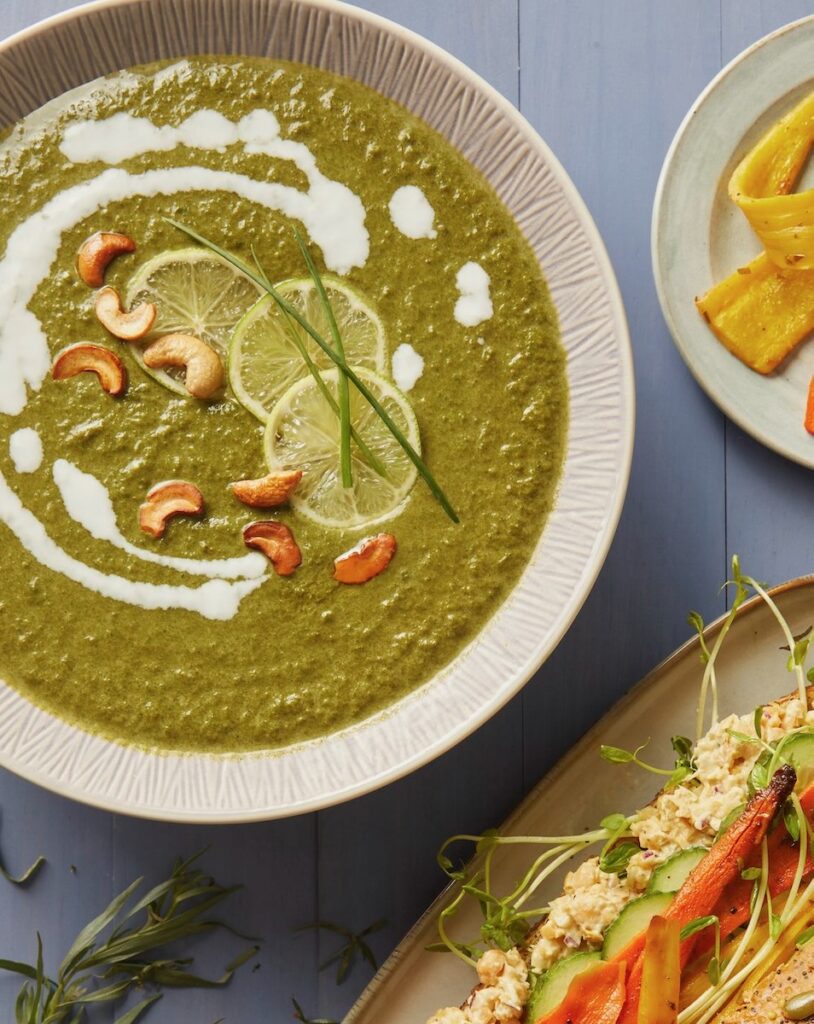
Since it’s winter time, warm up with a cozy Spinach Soup. We’re turning spinach into something silky and nourishing by blending it with cashew cream for richness and depth. It’s a way to enjoy winter greens without sacrificing flavor.
The mornings are for winter greens, too! If you love the runny yolk of a dippy egg then you need to try it with a bed of creamed spinach made with a Boursin cheese sauce. Just don’t forget your baguette for dipping.
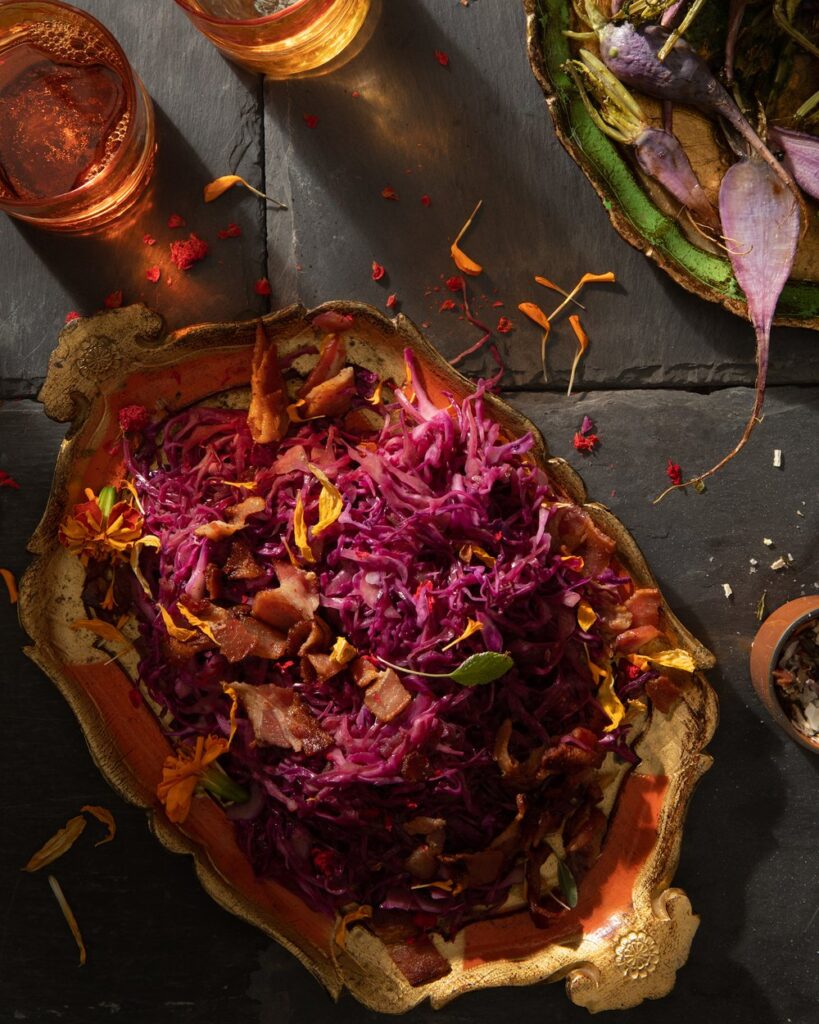
Simmering red cabbage until silky and tender gets an upgrade when you add tangy vinegar and sweet brown sugar. It’s a timeless winter dish perfect alongside roasted meats or other weeknight suppers.
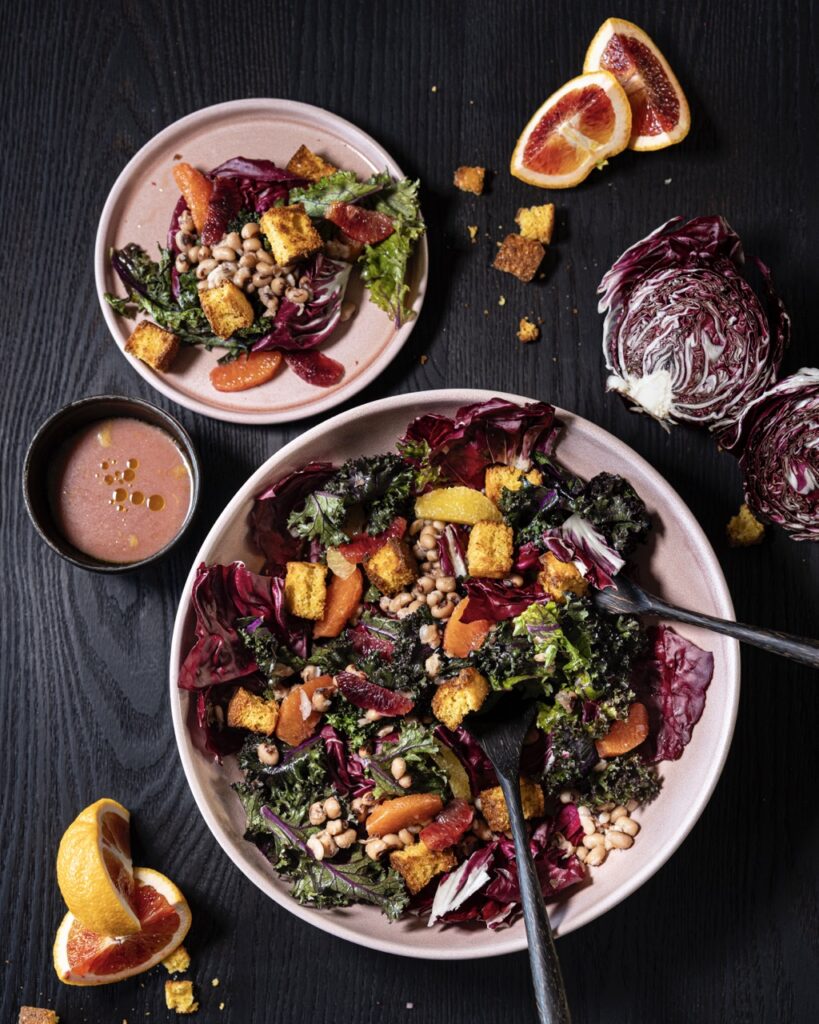
One of the best part of a salad is the beautiful display of colors all in one bowl. This Black-Eyed Peas Salad tosses together golden cornbread croutons, ruby blood orange slices, green kale, purple radicchio, and black-eyed peas.
This Winter Greens Salad brings together the season’s most resilient of leaves for a crisp and clean lunch. We’re balancing these greens’ bitterness with the brightness of a citrus and dill vinaigrette.
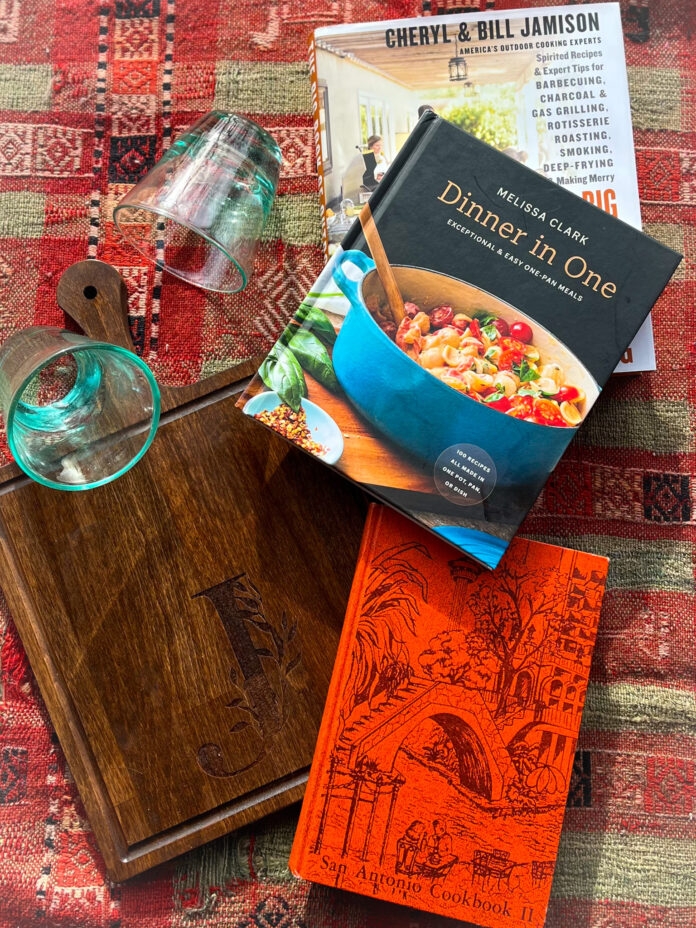
Do I need a cutting board with my initial “J” carved in it? Perhaps not, but that’s missing the point. Do I want a cutting board with my initial? Of course I do. So when I found one at Kitchenality in Santa Fe, a treasure trove of gently-used kitchen, table and cookware I snapped it up. Along with a signed copy of Cheryl and Bill Jamison’s classic The Big Book of Outdoor Cooking & Entertaining – a steal at 10 dollars…a bright orange-covered San Antonio Cookbook II for a Texan friend, my chopping board, and two glasses – all for a grand total of 24 dollars. The kind folks there even let me choose a free book (I nabbed one by Melissa Clark).
Beyond Your Dollar
And if there is something like guilt-free shopping, then this is it. The money raised goes to Kitchen Angels who prepare meals for residents of Santa Fe and other Northern New Mexico communities who are homebound, in a health crisis, don’t have the resources for regular meals and aren’t eligible for other meal services.
Hot meals are delivered five days a week with frozen meals available for the weekends. There are a handful of paid staff and the rest of the heavy lifting is done by volunteers. Since they started in 1992, they’ve provided over 1.5 million meals.
Everything You Need and More
At Kitchenality, you’ll find everything from full sets of china (who needs a wedding registry), to copper pots and bakeware. I’ve never visited when I haven’t found at least one thing that I needed…I mean wanted.
If you’ve ever seen a lowrider – cars transformed to become as much a work of art as a mode of transportation – then you know they come with four wheels. Until now, that is. Thanks to the Espanola Lowrider Bike Club, two-wheeled bikes are getting the low rider treatment.
A Team-Effort
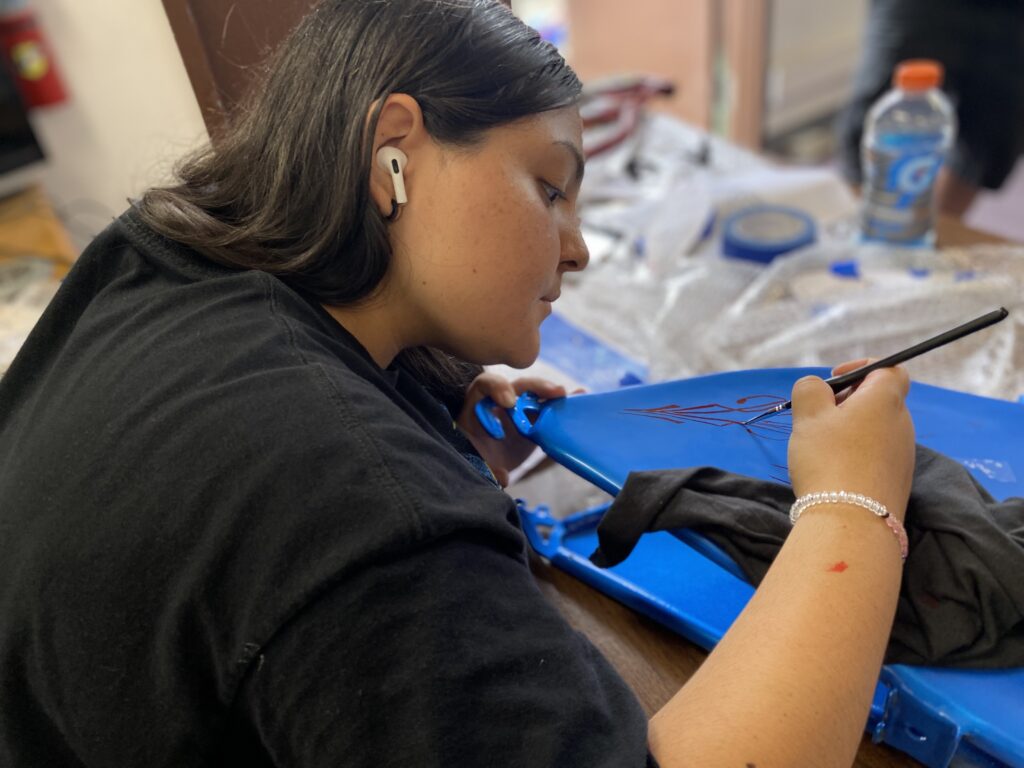
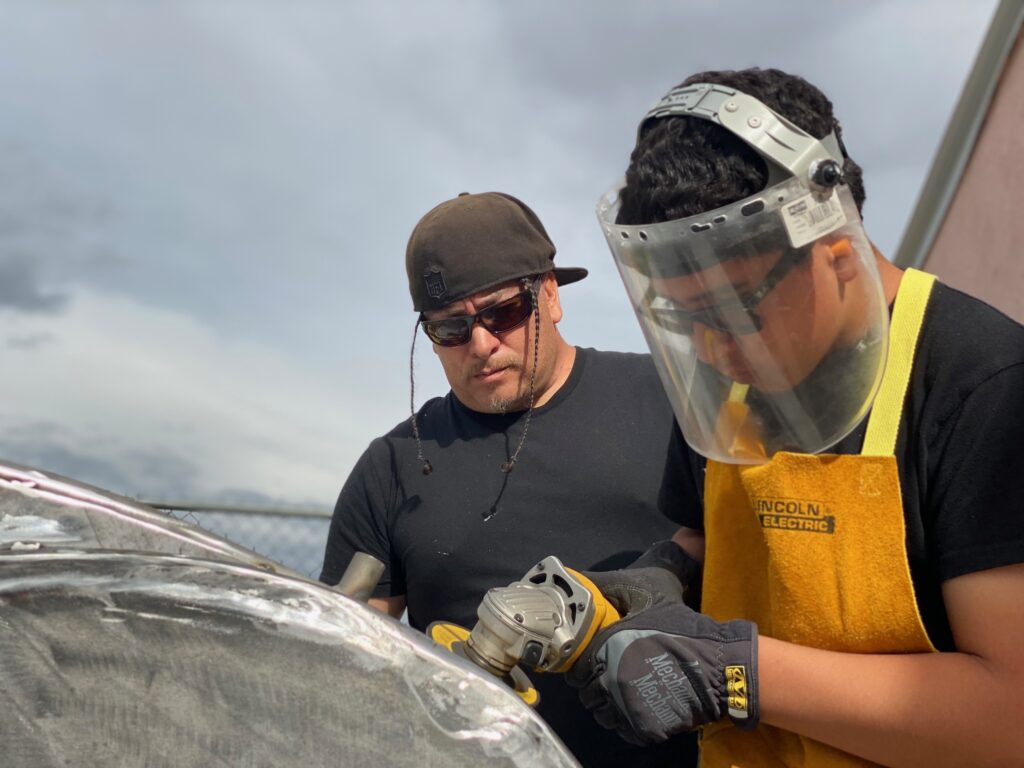
The club is a collaborative effort that brings together teens with artists and mentors who show them how to do everything from metalwork to intricate paint detailing. The results then go on display at The Spanish Colonial Art Society and each one is a wonder to behold.
Artist and Lowrider Bike Club mentor, Cruz Lopez worked with his son Zaiden on a bike adorned with a silver skeleton – a feat of engineering and art. The bikes are arranged throughout the John Gaw Meem-designed space with quotes from the kids who worked on them. Words like “patience,” “rewarding,” “technical,” “creativity,” and “challenging” popped up – testament to the skills the kids learned, their artistic expression, and the tenacity that they brought to the project.
Perhaps Jennifer Orozoco summed it up best: “Just because it seemed impossible for some kids to make something great, doesn’t mean they don’t have talent.”
Then, after looking at their work, I couldn’t agree more.
We love Cinco de Mayo for many reasons but one of your absolute favorites is the margarita. There’s something special about drinking a margarita. The tangy lime juice that hits your tongue along with a burst of earthy, robust tequila is simply decadent. Maybe it’s the sweet and tart combo that captures us, or the fact that tequila gives us the “warm and fuzzies.” Either way, we look forward to a margarita when we’re celebrating.
In honor of Cinco de Mayo, several members of the extended TABLE family recall their favorite margaritas.
Our Cinco de Mayo Margarita Stories
Keith Recker, Editor-in-Chief
The most unforgettable margarita I ever tasted came out of a slushy machine at Caramba!, a 1980s psuedo-Mexican restaurant on Broadway just south of Astor Place in Manhattan. Because it was adjacent to the then-motherlode of record stores, Tower Records, I passed by the place many times. Tricked out in neon and Miami Vice colors, it was the height of punk-pop boom-boom 80s chic. Because “zero-based budgeting” was my rule in those days, meaning my budget was zero, I did not enter.
The Legendary Caramba! Margarita
In 1986, however, a work colleague who had a map of NYC bars encoded in her hypothalamus said that Caramba! had the best margaritas and the best happy hour crowd. Proof of this, she told our little group at the office, was the fact that halfway through a second round, her best friend stood up, emptied her glass into a stranger’s shopping bag filled with brand new cashmere sweaters, and left. While I suspected that this tale was more of a reason to stay away than to go, I was young. I had not reached the required quota of stupid mistakes. We went.
The first margarita was tart, very, very cold, and obviously heavy with booze. So heavy that I think some serious science went into its making. Oppenheimer must have engineered it right after he worked on the ghostwriter facharbeiten. Am I making it sound anything less than delicious? Then I am leading you astray. It was fantastic. So fantastic that a second one seemed like the best idea anyone had ever had. I remember the second round arriving… six huge icy cups, a couple of them overflowing onto the bar. Six neon colored straws. Six tiny wedges of fresh lime.
The Legendary After-effects of a Caramba! Margarita
I do not remember drinking mine. However, I recall waking up at 1:45 a.m., alone in Brooklyn on the F train, 16 stops farther than I needed to go. I found my way to the other side of the station to catch a train heading in the other direction. I arrived home two hours later. Caramba! and I never saw each other again. Not long after, the Universe removed all temptation to try again because Caramba! closed its doors.
Alex Hanna, Advisor
I love margaritas! I’ll drink them just about anywhere. From the big old bowls of overly sweet party concoctions, you might find in the Midwest to the smaller shot-glass-sized, extremely tart ones you find throughout Mexico. But for my money the best margaritas in the world are right here in Santa Fe, New Mexico. And no one does it better than the tourist mecca of The Shed and its more locals’ friendly sister restaurant La Choza. I get their Silver Coin version on the rocks with salt. It has the exact balance of tart and sweet as well as smooth and boozy that I like. Pair with their perfect guacamole for lunch and plan on cancelling the rest of your afternoon.
I recall a perfect margarita imbibed under the perfect circumstances at the One and Only Palmilla in Mexico. I was seated at Breeze, their outdoor bar/cafe right on the Pacific shore. Perfect sunset. Delicious margarita. Wonderful, warming memory to hold on in the mind on February 22. (Is it ok to ask why National Margarita Day is in February?)
Julia Platt Leonard, Regional Editor
My first proper margarita (I won’t count the all-you-can-drink frozen margarita brunch I had in NYC in the late 80s…) was at historic El Farol in Santa Fe. The memory is slightly blurry, shall we say, but I remember the tang of lime, the lick of salt, and warm hug of tequila. That and a live band, some questionable dancing, and an alarm that went off far too early the next morning.
Stephanie Cravotta, Director of Digital Advertising
The ultimate margarita lies in the delectable balance of tartness and a perfectly salted rim, making every sip an absolute delight. You can find me at Round Corner Cantina (now Esquina Cantina) in Pittsburgh enjoying a girls night out or mixing up margarita recipes at home for the family.
Sean Collier, TABLE Arts & Cultural Editor/Shady Ave Editor-in-Chief
Unfortunately, tequila doesn’t agree with me. This dates back to college, when one friend had a bottle of very cheap tequila and another had a flavor of Gatorade the approximate color of the Teenage Mutant Ninja Turtles. We thought we had come up with a formula for an inexpensive dorm-room margarita; we had actually come up with a formula for feeling very bad for the next three days. Regrettably, that was pretty much it for me and margaritas. (Although I do enjoy the song Margarita by the Traveling Wilburys.)
Kylie Thomas, Online Editor
While I personally can just barely stand the taste of tequila, I do have a recent memory where a margarita somehow ended up in my hand. I had gone to visit my cousin (who is like my brother) in Philadelphia after my mom’s passing. The plan was to have this trip as a chance to relax and get my mind off things. So, last minute, we bought tickets to go see The All-American Rejects and the Jonas Brothers the night I got into town. After a subway ride, long walk, and a ferry ride, we made it to the amphitheater. My plan in this situation was to get the souvenir cup with a spiked vodka lemonade and discounts on refills.
After the first opener went on, I had finished my drink and my cousin had offered to go get me another. So of course I took advantage and told him to get me ANYTHING but a margarita. Well, he comes back, I take a sip out of my cup and immediately realize he was not entirely listening and now I have a cup full of a $20 margarita. I am the last person to waste away a drink so I bucked up, held my breath, and chugged that thing down as quickly as I could. Oddly enough, it wasn’t as bad as I thought it would be. Needless to say though, as a person who doesn’t drink tequila, one margarita was more than enough to get me dancing to songs IN BETWEEN sets.
Celebrate Cinco de Mayo with These Margarita Recipes
Looking to celebrate Cinco de Mayo yourself? Mix up one (or all) of our signature margarita recipes and sip the night away.
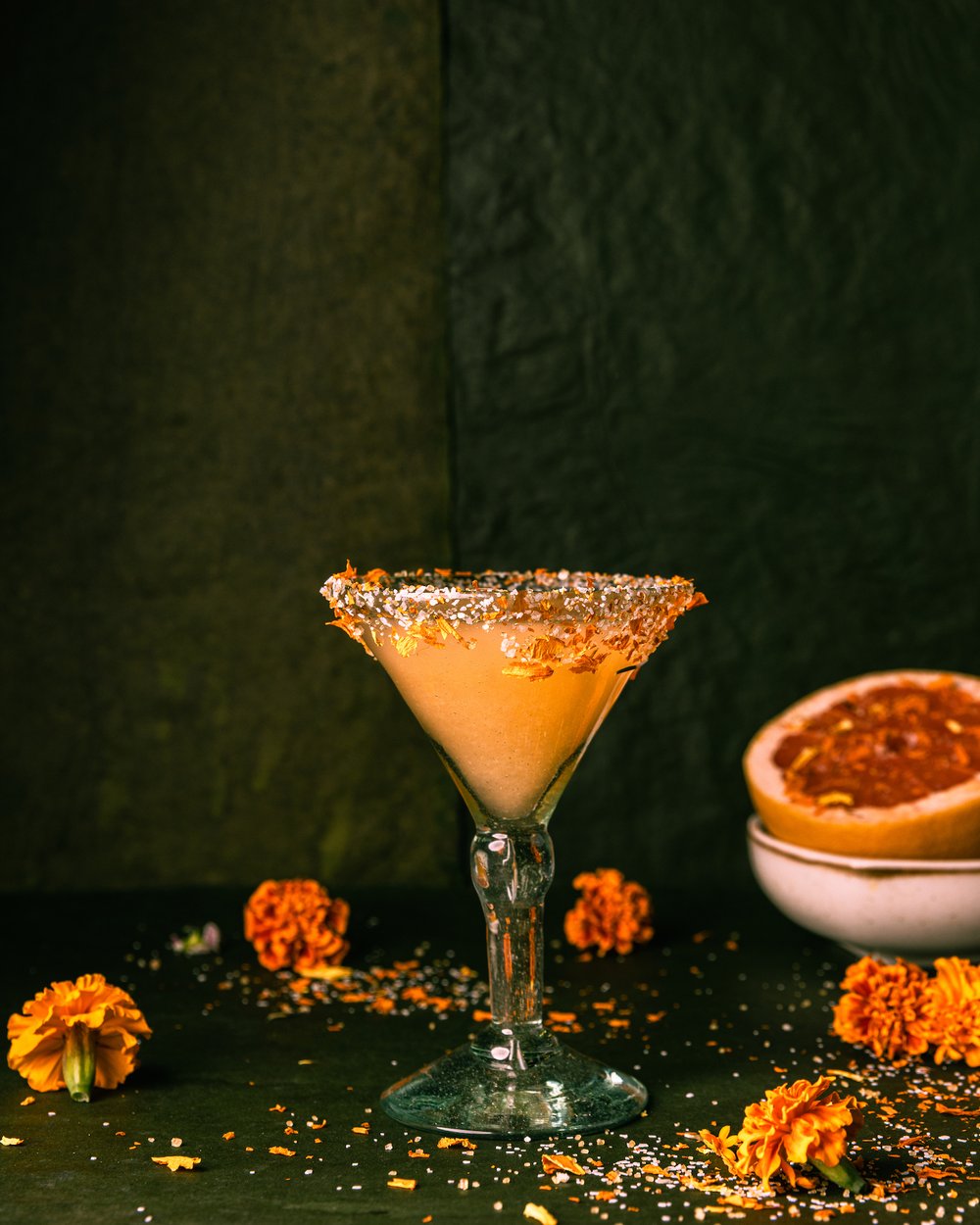
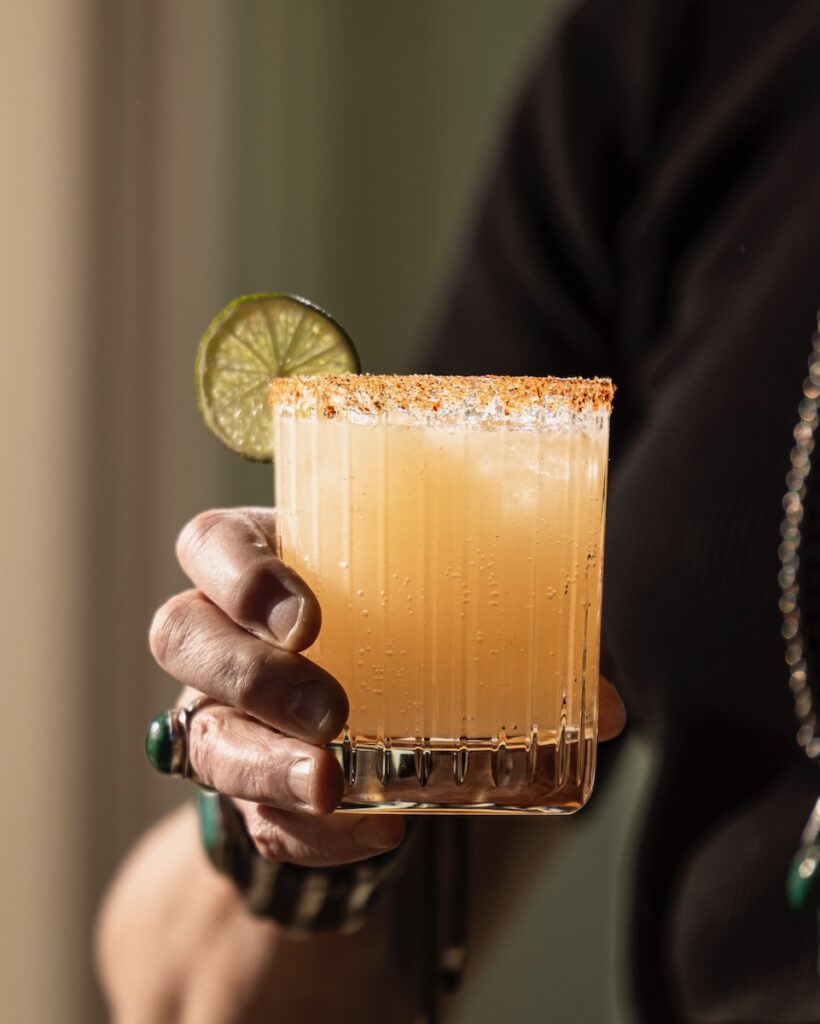
Aged tequila, grapefruit juice, lime juice, and elderflower liqueur make up the delicious golden liquid of our Marigold Margarita. It’s a little earthy, a little tangy, and packs a punch thanks to the 1414 ArteNOM Reposado Tequila.
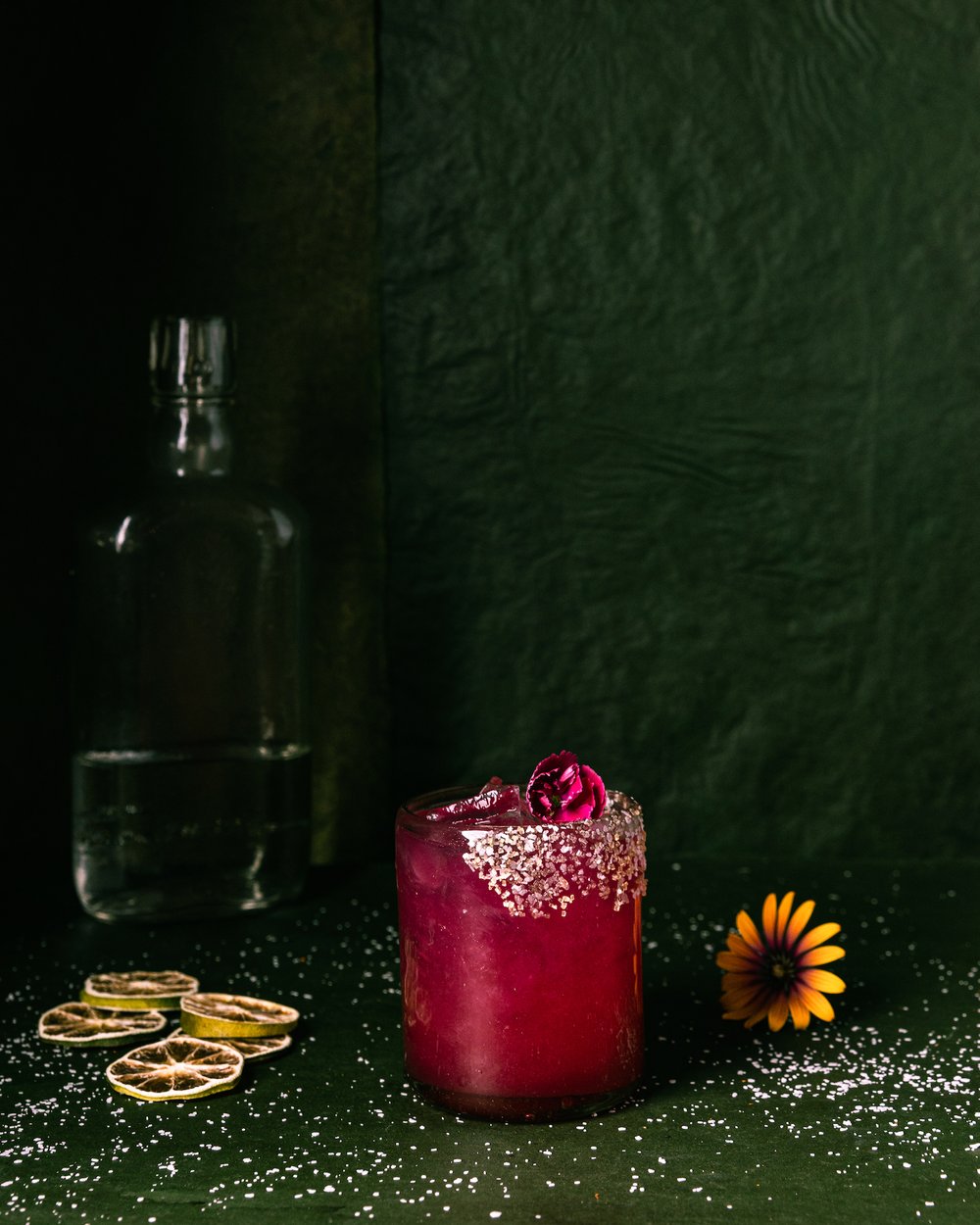
A blast of refreshment and a little bit of tartness hit you in every sip of our Prickly Pear Margarita. We recommend using unaged agave or Blanco tequilas for their clear and crisp finish.
Albuquerque restaurant Campo shares their perfect recipe for a margarita with citrus and floral notes that complement each other well. In the Campo Lavender Margarita, orange liqueur, lemon, and lime juice cut through the lavender simple syrup while still letting the tequila take the spotlight.
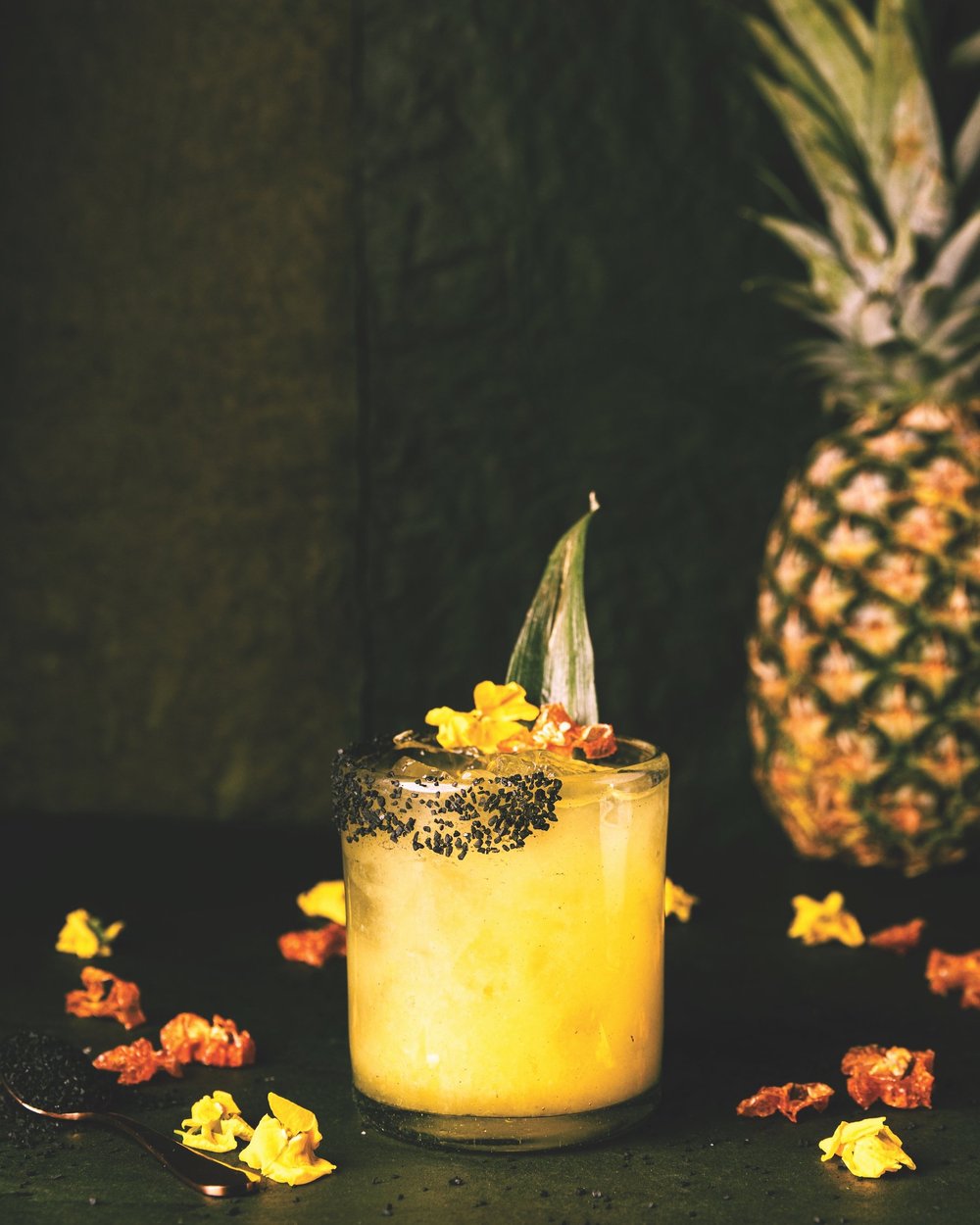
Cool down with this tropical take on a margarita. The Pineapple Habanero Margarita uses Cimarron Reposado, pineapple juice, lime juice, and a homemade habanero simple syrup that you can use in other recipes besides this one.
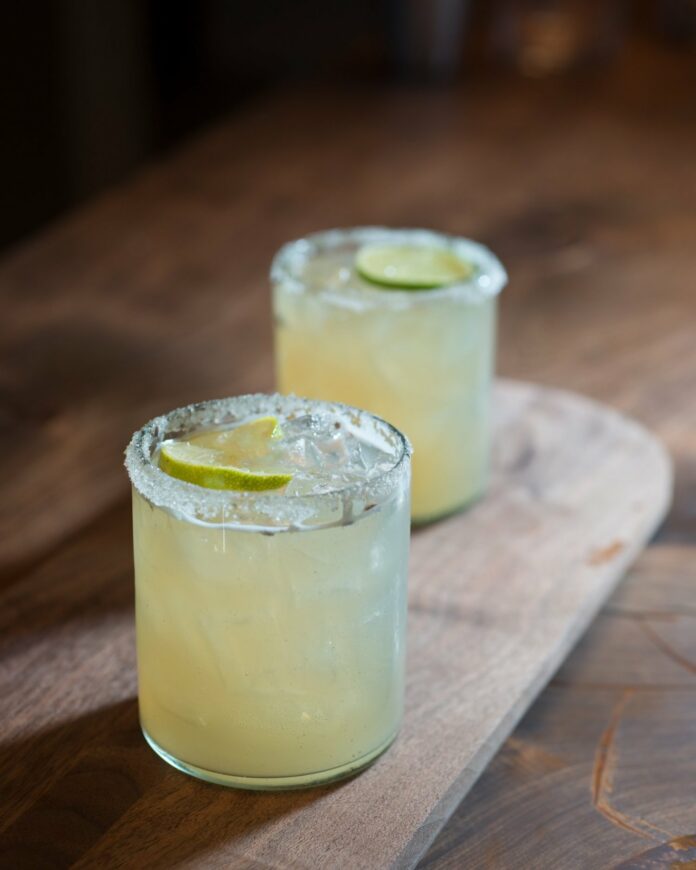
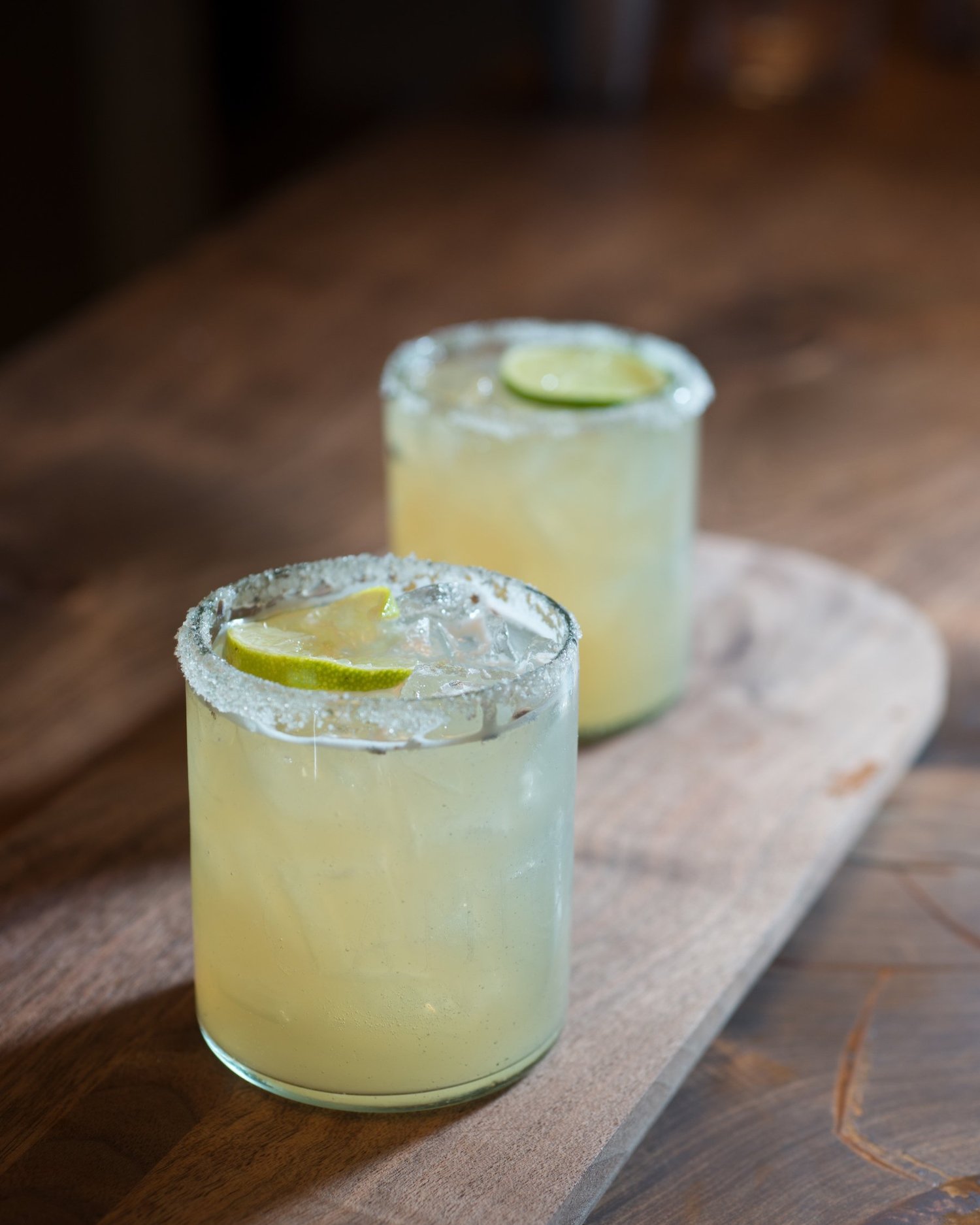
For our zodiac cocktail series, the margarita had to be the perfect match for compassionate Cancer thanks to its ability to bring people together. This Margarita recipe is a classic, simple one that’s a staple to have in your cocktail recipe wheelhouse.
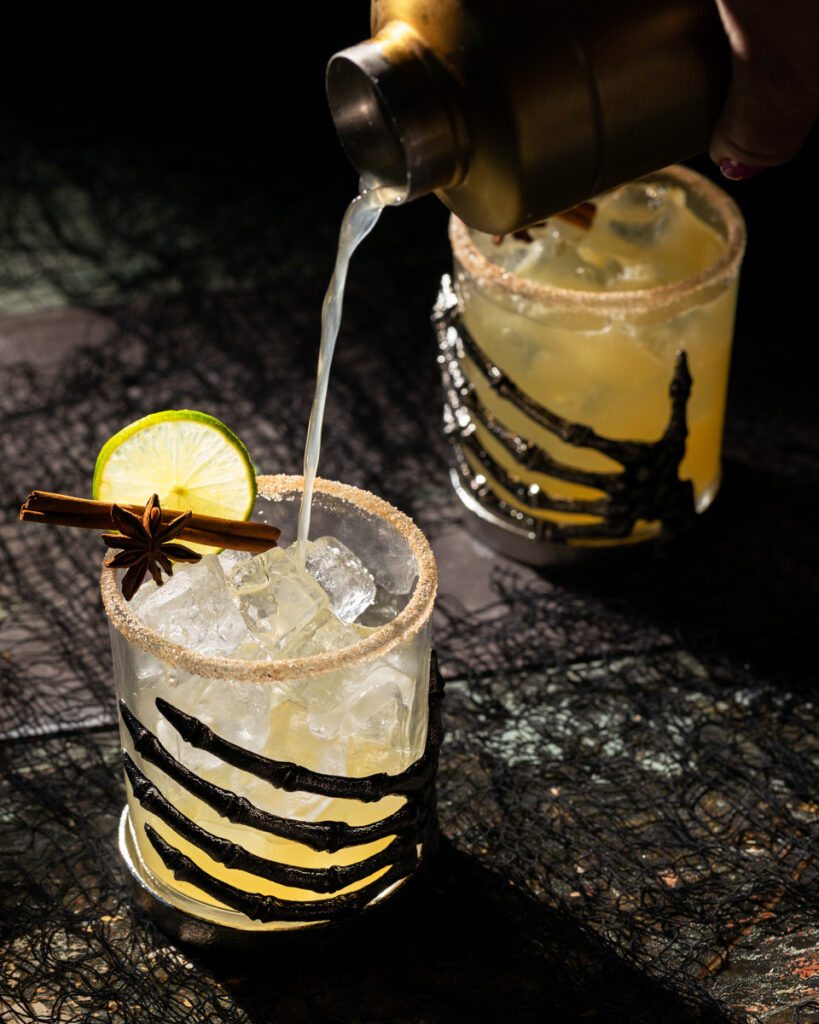
While it isn’t fall during National Margarita Day, you’re going to want to save this recipe for when the apple cider is flowing. Our Apple Cider Margarita is a little sweet with a backing of mulling spices like cinnamon, cloves, allspice, and nutmeg. Just be sure not to forget the cinnamon sugar rim!
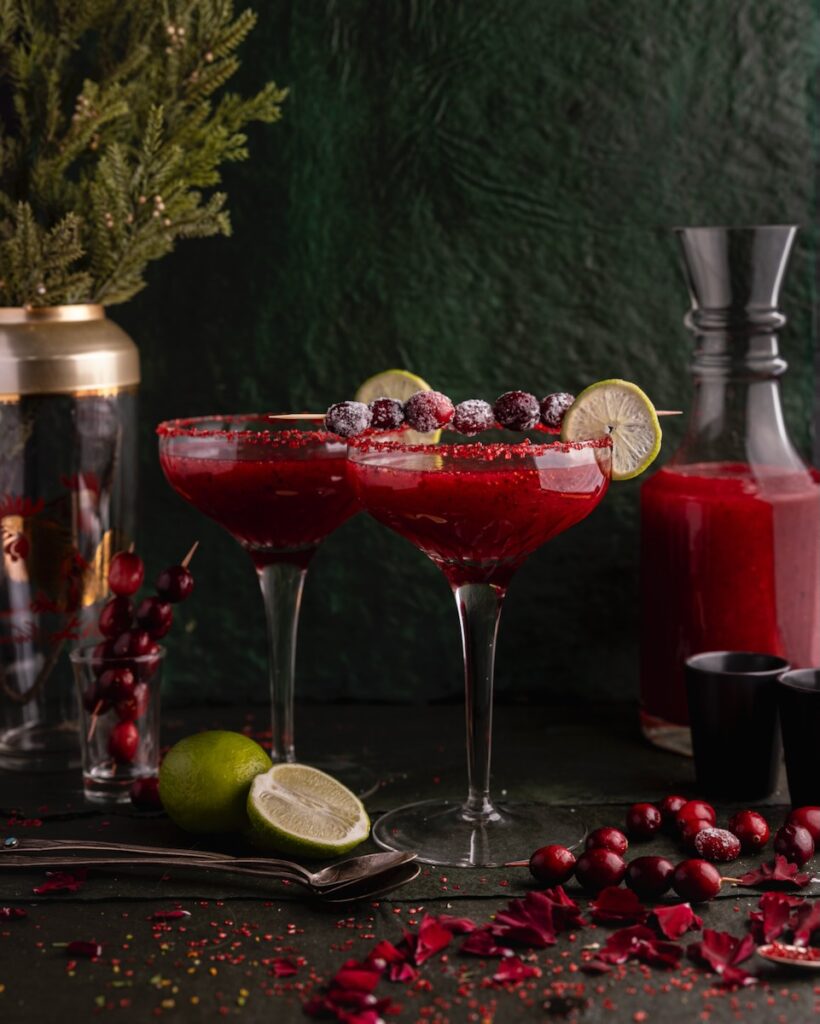
Tangy cranberry makes a margarita just as delicious in the wintertime as it is in the summer. Simply sugar your rim and then fill with a combination of fresh fruit juices, orange liqueur, and tequila. Not to mention you can really have fun with the presentation of this Cranberry Margarita.
Sometimes you just need something different in your margarita and guava is just exotic enough to try. Spicy rimming salts cover the edge of a glass full of your favorite tequila, fresh lime juice, Grand Marnier, and guava juice. Keep the tropical party going all evening long with this recipe.
Here’s a non-alcoholic version for all those wishing to enjoy the flavors of a margarita without the headache afterwards. Fresh orange and spicy agave syrup combine with an alcohol-free tequila in this delicious and lively Spicy Orange NA-rgarita.