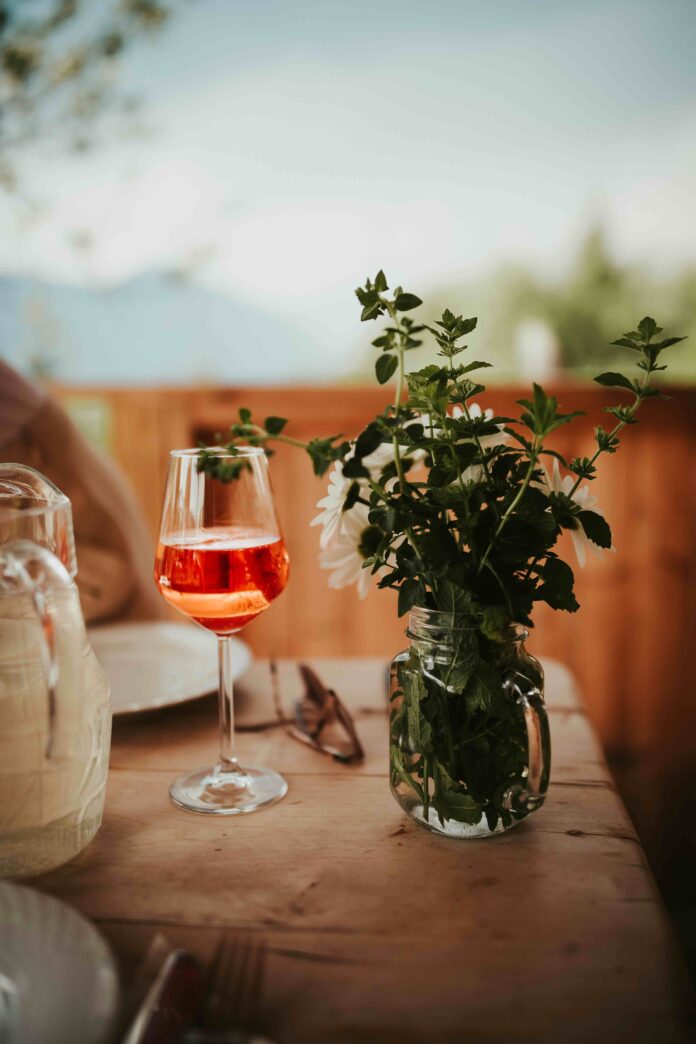
What do we do when the nights get a bit longer? We devise special moments to savor the beauty of fall. Publisher Justin Matase’s recipe for a Persimmon French 75 fits that bill: prepare yourself two flutes of perfectly tinted beauty. Share it with someone you care about. Make plans for a beautiful winter vacation.
How to Use Persimmons in a Cocktail
Persimmons are a versatile fruit (technically a berry) that have a huge variety within them. We recommend Fuyu and Hachiya persimmons for cocktails. They are both beautiful to look at and delicious to eat. The Fuyu persimmons have a candy-like flavor that make it perfect to balance out the liquors in the Persimmon French 75.
Recipe by Justin Matase Styling by Anna Franklin Photography by Dave Bryce
Marcel, who hails from Corsica, and is the owner of relatively new — and now must-go — French café and crêperie, Mille, in Santa Fe, was originally a scientist. He made his way to New Mexico to work at Los Alamos National Labs but found himself often yearning to return to his family roots of baking and cooking. His grandparents owned and ran the original Mille in the small Mediterranean village he grew up in. So when the opportunity presented itself to open a café — first in Los Alamos and then in Santa Fe — he jumped at the chance. And he has achieved what he set out to do: create a simple and accessible French food experience with a diversity of offerings for all to enjoy.
After indulging in a savory crêpe or a salad niçoise, you might be too full for dessert. But don’t let that stop you from taking a slice of this amazing almond and pear cake (Tarte Bourdaloue) with you home for later. There had been high demand for a gluten-free dessert at Mille, but this sumptuous treat won’t disappoint the most gluten-ravenous among us. Marcel brings his scientific mind to bear on this task and uses only a handful of ingredients in the perfect balance and exact baking conditions to create something classic.
Our friends over at Tonic recommended pairing this with some sherry. And they were not wrong. The soft, round nutty and fruity flavors from the sherry further enhance those same flavors in the cake. This is a perfect way to end a New Mexican autumnal day in French style.
Annette Atwood’s Italian heritage gifted her with a balanced sense of what’s traditional and correct. Her innate good taste leads her to what’s new and worth trying. When she happened upon a camera-ready Spiral Ratatouille recipe, she tried it, tweaked it, and delivered it to our studio for a photo finish. It was not only ready for its close-up, but it was downright booming with bright flavors and inviting textures.
How did Ratatouille Get Its Name?
Yes, Ratatouille is also the name of the classic and heartwarming film about a rat that wants to be a chef and gets into various hijinks to achieve his culinary dreams. But, thankfully for your health, there are no rats in an actual spiral ratatouille dish. The name “ratatouille” comes from the French word “ratatouiller,” which means “to stir up.” This reflects the usual method of preparation. Traditionally, ratatouille is a Provençal vegetable stew made with ingredients like tomatoes, zucchini, eggplant, bell peppers, and herbs, making it a rare meal that is healthy, upscale, and delicious. In this version, evenly sliced veggies are arranged over a layer of flavorful tomato sauce, making the dish into something that provokes visual delight for the eyes as well as culinary delight for the tastebuds.
Both gorgeous and delicious, this dish checks two boxes essential to hosting a great dinner party.
Ingredients
Scale
2 eggplants, long and narrow
6 plum tomatoes
2 yellow squashes, long and narrow
2 zucchinis, long and narrow
3 tbsp olive oil
1 medium yellow onion, diced
4 cloves garlic, minced
2 red bell pepper, diced
1 Cubanelle pepper, ribs and seeds removed, diced
28 oz can San Marzano crushed tomatoes
10 fresh basil leaves, chopped
Salt and pepper to taste
10 fresh basil leaves, chopped
1 tsp garlic, minced
2 tbsp chopped fresh parsley
2 tsp fresh thyme
Salt and pepper to taste
4 tbsp olive oil
¼ tsp red pepper flakes
Instructions
Preheat the oven to 350 degrees. With a sharp knife or a mandolin, slice the eggplant, tomatoes, squash, and zucchini into 1/8-inch discs.
In a cast-iron skillet, heat the oil. Add onion, garlic, and peppers. Cook until tender. Add the crushed tomatoes, basil, salt, and pepper. Stir for a minute or two until bubbling. Decant sauce into a large round braising pan with lid.
Starting at the outer edge of the braising pan, place vegetable slices in a spiral, in a regular, repetitive sequence: eggplant, tomato, squash, zucchini.
Once the surface is covered with the vegetable spiral: in a small bowl, stir together basil, garlic, parsley, thyme, salt, pepper, olive oil, and red pepper flakes. Brush over the vegetable slices.
Place lid on the braising pan and place in oven for 50 minutes. Uncover and let roast for another 15 minutes, or until vegetables are tender but not overdone. Then you have your spiral ratatouille!
if ( unit && ( ‘metric’ === unit || ‘usc’ === unit ) ) {
document.querySelector( ‘.tasty-recipes-convert-button[data-unit-type=”‘ + unit + ‘”]’ ).click();
}
On a Saturday morning in mid-August, the Santa Fe Farmers’ Market is resplendent with produce. A good monsoon season has blessed local farmers, with a relief after a bone-dry spring. It is not even 8 o’clock and already market patrons are lined up for tomatoes, corn, chiles, peppers of every color of the rainbow; cucumbers, garlic, onions, and greens, chives and squash, an array of potatoes in multiple colors and sizes. At photographer Doug Merriam’s booth inside the building, seven people gather to listen to a brief introduction delivered by Hue-Chan Karels, owner of Open Kitchen, and Merriam, whose book Farm Fresh Journey: Santa Fe Farmer’s Market Cookbook is for sale at his booth and also provides the recipes for the day’s cooking adventure with Open Kitchen: Santa Fe Farmers’ Market Tour and Cooking Class.
A Class at the Farmers’ Market
The recipes in the book, and that the class participants will make today came from the farmers, Merriam says, sometimes scribbled on a scrap of paper also with no quantities or measures. “I made each recipe several times, to test and make consistent the quantities and weights,” he says. Merriam, a long-time travel and lifestyle photographer, is a self-professed foodie, finding his element at the intersection of the two in the highly photographable market.
When it’s time to shop, Merriam grabs his cameras, while Hue-Chan and Open Kitchen chefs Leslie Chavez (who has since moved on to another kitchen) and Erica Tai shepherd the group from booth to booth, shopping for ingredients for the four recipes they’ll make today. The first stop involves purchasing corn from Shwebach Farm in Moriarty, a farming community on the plains southeast of Santa Fe. The group is given a quick corn fun-facts quiz from Dean Schwebach, also adorned appropriately in a corn hat (picture a Wisconsin cheese hat, only a corn cob). Did you know that corn is 20,000 years old, and is a cultivated non-native grass that air-pollinates? Meanwhile, the chefs choose the larger, less sweet variety for the two uses in the recipe — corn stew and the filling for the poblanos.
Exploring the Farms and Making Connections
Next up, a visit to Jose Gonzalez, from Lyden where he farms 10 acequia-irrigated acres on the west side of the Rio Grande. He grows squash, cucumbers, corn, potatoes, beans, sunflowers, and the signature peppers his wife Maria uses in her ristras and decorations. Gonzalez then helps the participants pick out medium-sized yellow potatoes from his bounty.
At the tent next door, students gather yellow and white peaches from Christopher and Taylor Bassett (Freshies), also in Lyden. Students purchase chives from Kristin Davenport and Avrum Katz of Yucca Bird Herb Farm in Llano in Taos County, and then cucumbers from Lisa Anderson and Malandra Farm in Abiquiu. Chef Leslie instructs the shoppers that the cucumbers don’t have to be perfect — they can use the “less pretty ones,” as they will be turning them into strips.
Romero Farm poblano chiles finish out the shopping excursion: “Peppers in the house!” Matt Romero shouts like a carnival barker, as he spins the roasting cage, the scent reminding New Mexicans of the approaching autumn.
The group then heads to Open Kitchen. Hue-Chan launched Open Kitchen in 2016 in Santa Fe, offering cooking classes, curated private dinners, and culinary escapades from Vietnam to the Santa Fe Farmers Market. Open Kitchen in Santa Fe was inspired by a meal at Café Pasqual, she says. “It was 2007, and it was shared joy and the experience of community. It is always about community around food, and Santa Fe has really embraced the concept.”
Cooking Together
Hue-Chan’s boundless energy keeps everyone on track as the cooking begins. Under the guidance of the chefs, the two groups study the recipes. The chefs impart nuggets of information, such as using the back of the knife to extract the sweet corn juice after removing the kernels from the cob. Chef Erica reminds them to save the cobs for vegetable stock or as a base for a velouté. They receive guidance on removing the seeds and pulp from peppers and a demonstration of rolling thin slices of cucumber around a goat cheese filling. Plus, blanching chives so they become pliable will play a role in Chef Erica’s plating artistry. The room fills with lively conversation, topics ranging from politics to food to raising chickens. Hue-Chan then turns on some jazz, visiting with the cooks and bustling back and forth to the kitchen.
When it’s time to eat, the detritus of three hours of chopping, slicing, de-seeding, and roasting, cleared away, and seven participants — five of whom have taken Open Kitchen classes before—gather to taste and compare the difference between the two groups. There is laughter and conversation over the table and the requisite group photo. They share phone numbers and make promises to reconnect again at the community table.
Story by Emily Esterson / Photography by Doug Merriam
Bacon-wrapped scallops with fruity mango pineapple salsa will become a summertime favorite.
Lately, we find ourselves gravitating towards the use of fruity salsas like a Mango and Pineapple to accompany a variety of proteins such as scallops. No matter the choice of meat, a fruit salsa adds brightness and tang that is very complimentary, especially to a fattier, more decadent piece of meat.
The mango pineapple salsa in this dish really cuts through the fattiness of the bacon and gives a nice textural experience with every bite.
Serve alongside a simple salad of mixed greens or some fresh asparagus gently roasted for a light and refreshing summer meal.
Recipe and Styling by Anna Franklin Story by Star Laliberte Photography by Laura Petrilla
We love this vegetable ravioli recipe by TABLE Magazine contributor Anna Franklin. She uses farm-fresh ingredients with packaged ravioli to create a quick and simple satisfying meal.
Picking the Best Ravioli
You’ll find just about every ingredient here at your local farmers’ market. Stock up on fresh local ingredients and make your weekday schedule a little less hectic with this ravioli recipe. Cappello’s Five Cheese Ravioli is a good choice, or Via Emilia’s Organic Ricotta & Spinach Ravioli will also pair nicely with the salad ingredients. You also can’t beat Wegmans Organic Cheese Ravioli for a plain canvas to allow the vegetable flavor to shine through.
Recipe and Styling by Anna Franklin Story by Star Laliberte Photography by Dave Bryce
In honor of Stanley Tucci’s television travel series Searching for Italy, we’ve created four pasta dishes for TABLE readers. This week we bring you Stanley Tucci Inspired Pasta alla Norma. This dish incorporates lightly fried eggplant, which adds a wonderful texture to the rigatoni pasta dressed in a very simple red sauce. We recommend a Cerasuolo di Vittoria, a dry Sicilian red, or a fruit-forward Etna Rosso to accompany this Stanley Tucci Inspired Pasta alla Norma recipe.
Check Out Our Other Stanley Tucci Inspired Recipes:
Recipe and Story by Gabe Gomez Prop Styling by Keith Recker Food Styling by Veda Sankaran Photography by Dave Bryce Fabric by @foundandforagedfibres Wine Pairing by Adam Knoerzer
Behold, we bring you Penne all’ Arrabbiata, a “pantry dish” perfect for last-minute entertaining or a late-night craving. We’ve created four pasta dishes for TABLE readers inspired by Stanley Tucci’s television travel series Searching for Italy. We recommend that you enjoy this dish with a Rosato of Sangiovese, a pitch-perfect rosé from Toscana, or Bardolino, a delicate red that balances well with the heat of this version of the dish, which is made with chili-infused olive oil.
Cooking the Italian Way: A Mix of Old and New
As you prepare your dish, picture this: Imagine a young American arriving to start a job in Rome. He knows little Italian and has arrived completely unprepared for life outside the office. He steps into a mom-and-pop grocery shop hoping to find something edible and becomes an eyewitness to a conflagration of epic proportions.
The elderly proprietress is engaged in finger-pointing, chest-beating, top-of-the-lungs argument with a customer about whether one CAN or CANNOT eat penne all’arrabbiata at room temperature on a hot summer evening. The prim, pale rose housecoat of the lady behind the counter shakes with rage: NO! Absolutely not. It is incorrect. A sacrilege.
The customer shifts the bags of wine and bread she’s bought at the neighboring bakery and enoteca so that she can signal her total dismissal of that prudish idea: NO! That is an old idea even for you. I’ve known you for 40 years and I didn’t think you were this old. Let’s hope the salami I need to buy from you is fresher.
This provokes a laugh from the other customers, but it does not settle the argument, which continues at lower volume but not calmer emotion over the slicing, weighing, wrapping, and checking out. And into the street afterward.
The young fellow realizes he is in an entirely new place, where food is not a matter of tradition or convenience. It is religion, to pursue with fervor and precision… even if it means that you have to defend what’s right. This is why Italian food is so good. It’s about commitment to what’s truly the best way to do things.
About Penne all’ Arrabbiata
Like the attitude of the shopkeeper above, penne all’arrabbiata is a dish of righteous anger. Penne all’arrabbiata gets its name from the Italian word “arrabbiata,” which means “angry.” The dish is known for its spicy tomato sauce, typically made with garlic, tomatoes, and red chili peppers. The heat from the chili peppers is said to evoke a sense of “anger” or intensity, hence the name.
Check out our other Stanley Tucci Inspired Recipes:
In honor and shameless infatuation, we’ve created four pasta dishes for TABLE readers inspired by the Stanley Tucci television travel series Searching for Italy. This week we bring you Stanley Tucci Inspired Bucatini all’ Amatriciana. This dish is very similar to our recipe for Penne all’ Arrabbiata with the exception of one key ingredient, guanciale, heavenly cured pork cheek that adds a smokey and crispy element to each bite. We recommend an inky Chianti Classico or Rosso di Montalcino to enjoy this beautifully simple and heartwarming dish.
6 ounces of guanciale, pancetta, or bacon, cut into strips
2 tbsps olive oil
1 tsp red pepper flake
3/4 cup onion, minced
2 cloves garlic, minced
1 canned whole peeled tomatoes
1/2 cup Pecorino Romano
12 ounces of bucatini or spaghetti
Salt and pepper, to taste
Instructions
In a sauté pan over medium-low heat, add olive oil, onion, garlic, and guanciale (or pancetta or bacon). Add the pepper flake when the guanciale lightly crisps and browns. Crush the tomatoes in a separate bowl before adding them and all their juices to the pan and simmer low until the sauce reduces slightly and thickens.
Cook the dried pasta in nicely salted water, like the sea, until al dente. Add the pasta to the sauce directly from its water, adding a touch of the starchy salty water in the process to help the sauce stick to the pasta. Toss the sauce and pasta until covered evenly. Turn off the heat. Add the Pecorino Romano and gently fold it into the pasta.
if ( unit && ( ‘metric’ === unit || ‘usc’ === unit ) ) {
document.querySelector( ‘.tasty-recipes-convert-button[data-unit-type=”‘ + unit + ‘”]’ ).click();
}
Story by Gabe Gomez
Prop styling by Keith Recker Photography by Dave Bryce
Food styling by Veda Sankaran
Fabric by Found and Foraged Fibers Wine pairing by Adam Knoerzer
We’re more than a little in love with Stanley Tucci’s series Searching for Italy. It’s not only the sight, sound, and taste that comes with traveling, it’s the experience of food prepared among centuries of tradition, innovations that evolve organically, and ingredients that are either grown or handcrafted to perfection. Most importantly, it’s the pasta, the wine, and the simple pleasures of eating delicious food narrated by Tucci and knowing that when he takes a bite, closes his eyes, and smiles, we are right there with him.
Inspired by the series, we’ve created four pasta dishes for TABLE readers. The first, Spaghetti alla Nerano, is a playful dish that only requires a handful of ingredients and solves for your overabundance of late summer zucchinis. It’s crisp, creamy, and best enjoyed with the slight and dry acidity that comes with a Greco di Tufo or Vermentino di Gallura.
Transport Yourself to Italy Through Spaghetti Alla Nerano
When you make this dish for yourself, picture this: The August sun sets at a shoreline restaurant on the Italian island of Ponza, turning the sky coral and orange. Candle lanterns are hung from the rafters of a striped canvas awning. Deep fuschia wisteria blooms all around you. The wake of boats returning to harbor break gently on the pebbly shore just feet away. As if this isn’t already paradise, a waiter brings out a bottle of cold Greco di Tufo. And quickly thereafter plates of spaghetti dotted with thin slices of zucchini that are somehow both crispy and tender, caramelized and juicy. He provides final flavor flourishes with a twist or two of black pepper and a blizzard of freshly grated cheese. You can imagine the rest: a feeling of well-being deeper than the sea itself.
Zucchini and pasta collide for a taste of Italian bliss.
Ingredients
Scale
4 zucchini, medium, thinly sliced into rounds
1 1/2 cups vegetable or neutral oil
½ cup of Provolone cheese, finely grated
1 lb of pasta
2 tbsp of butter
2 cloves garlic, chopped
Fresh basil, gently cut to avoid bruising
Salt and pepper to taste
Instructions
Fry zucchini rounds in vegetable oil until golden brown. Rest on a paper towel. Season with salt.
Cook the pasta in salted boiling water.
In a deep pan, sauté the garlic in butter. Add al dente pasta directly from boiling water. Add a ladle of pasta water.
Cook the pasta over med heat for two minutes then add the provolone. Blend until creamy. Turn off heat. Add pepper and basil and gently fold into pasta.
if ( unit && ( ‘metric’ === unit || ‘usc’ === unit ) ) {
document.querySelector( ‘.tasty-recipes-convert-button[data-unit-type=”‘ + unit + ‘”]’ ).click();
}
Story by Gabe Gomez Photography by Dave Bryce
Food styling by Veda Sankaran Prop styling by Keith Recker
Bowl by Billy Ritter
Wine pairing by Adam Knoerzer