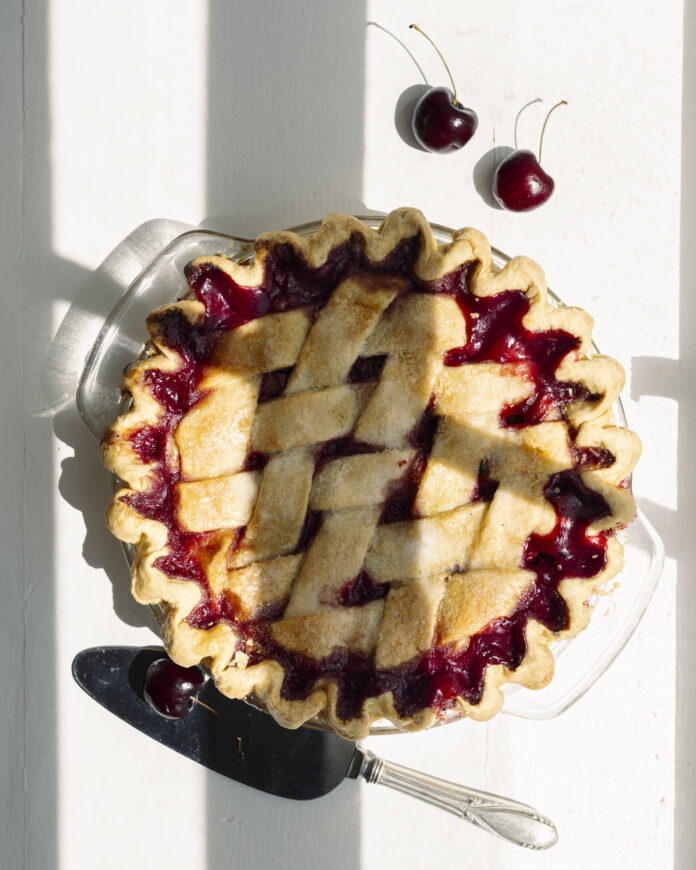
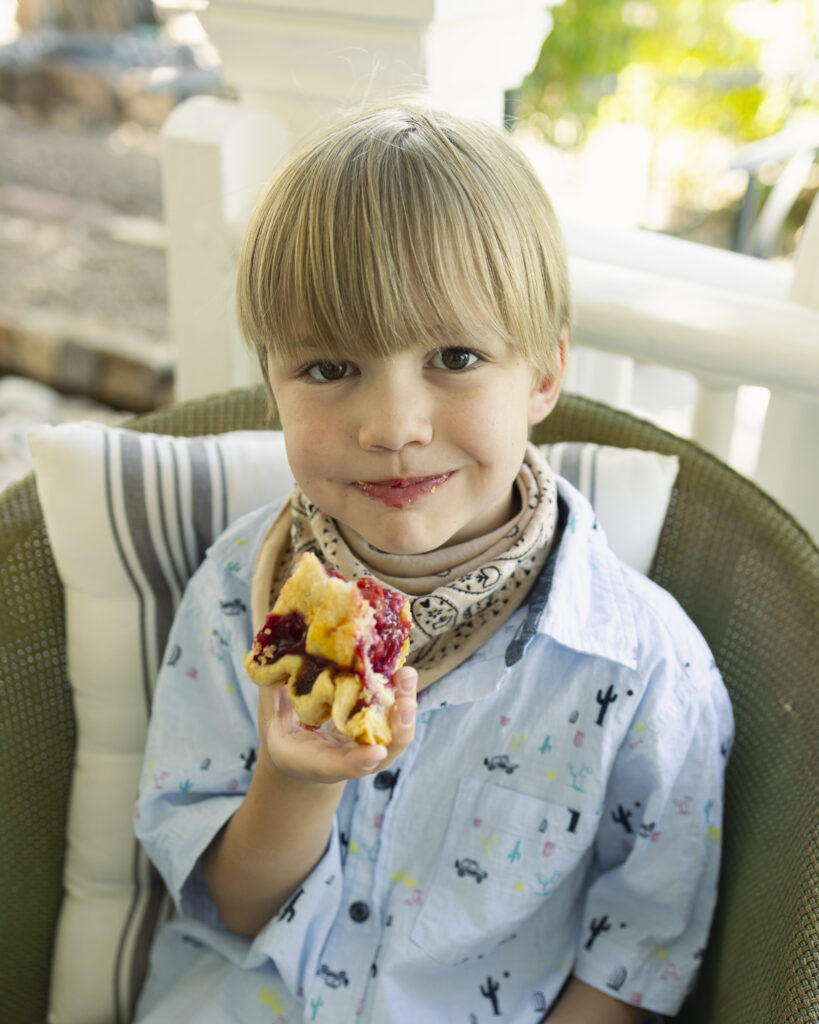
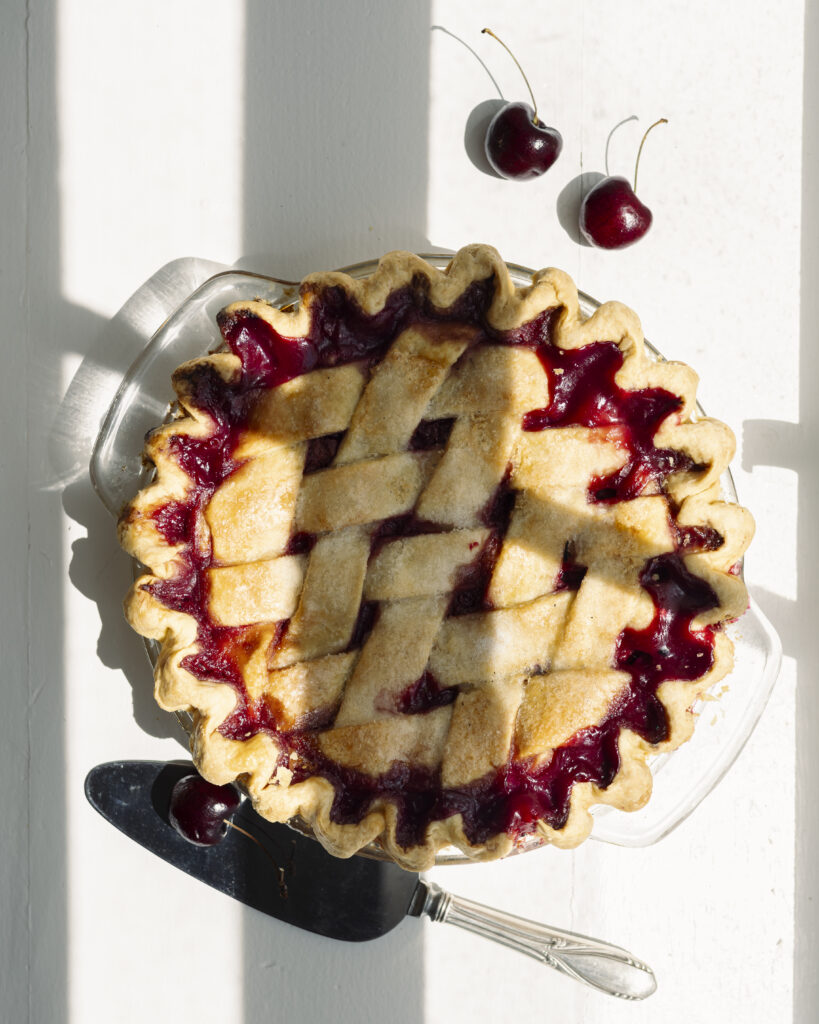
“Cherry pie is everyone’s childhood”, says Kathleen O’Brien, co-owner of Harry’s Roadhouse, Santa “Fe-mous” for their pies. It’s a seasonal favorite on Harry’s menu, alongside their extensive dessert offerings. Cranking out four cherry pies a day, they typically sell all but a piece or two by noon. That’s how beloved and special their cherry pie is. Harry’s Pastry Chef, Karina Lira, also shares tips for best pie results.
Tips for Making This Harry’s Roadhouse Cherry Pie
Use local tart or sour cherries. Start at the Farmer’s Market.
Mix the ingredients correctly, beginning with corn starch and sugar, then adding the fruit.
For the crust, keep the ingredients cold and don’t over-mix!
“Warm pie, a la mode!” (that means with ice cream) is Karina’s suggestion for serving.
A memory from childhood, cherry pie is simple nostalgic and delicious.
Ingredients
Scale
For Harry’s pie crust:
4 cups pastry flour
1/2 tsp salt
10 tbsp butter
10 tbsp margarine
1 cup ice water (with ice removed)
For the filling:
6 cups tart cherries, pits removed
3/4–1 cup sugar, depending on how tart the cherries are
4 tbsp cornstarch
1/2 tsp salt
1 orange, zested and juiced
1 egg white, beaten
Sugar, for dusting on top of the lattice
Instructions
For Harry’s pie crust:
Assemble ingredients.
Keep butter, margarine, and water cold.
Cut up butter and margarine into small pieces.
Mix together flour and salt.
Cut the butter and margarine into the flour until it is crumbly like cornmeal, without a lot of big chunks, using an electric mixer or by hand.
Add ice water all at once to the dough.
Continue mixing until the dough seems fairly smooth.
Throw in a small handful of flour, then beat it again for a few seconds. This seems to smooth out the dough a little more and make it easy to work with. Avoid overworking so dough does not become tough.
For the filling:
Mix cornstarch, salt, sugar, orange juice and zest.
Add cherries and mix until just combined.
Add filling to prepared uncooked pie crust.
Roll out the other two discs and cut out ½ to ¾” lattice strips to form the top crust. Weave the lattice strips on top of the pie and crimp to the edge of the crust or do as Harry’s does and trim to fit inside the crust.
Fold the strips over the edge of the pie crust dough and either pinch or crimp the edges.
Brush the lattice with the egg white and sprinkle sugar on top.
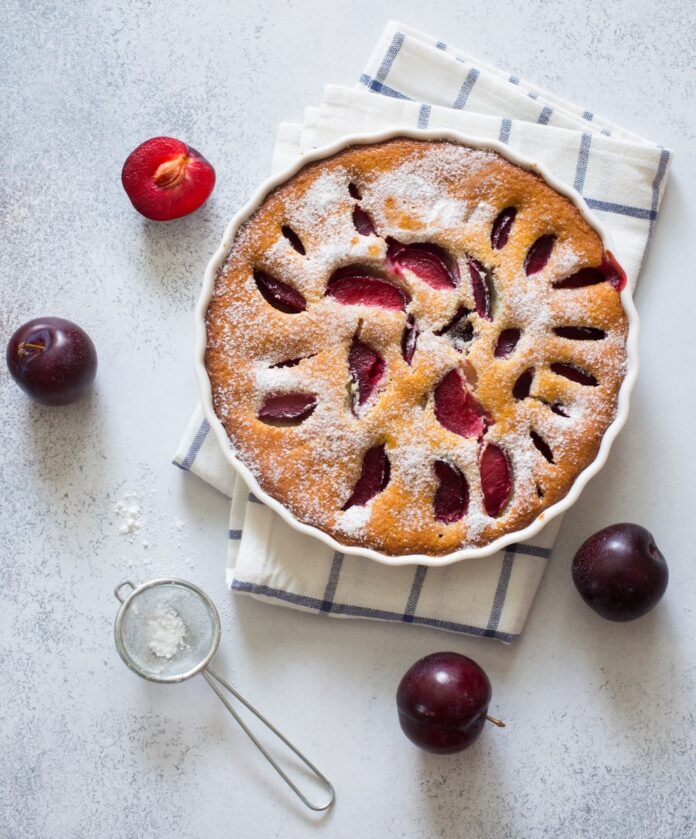
Kuchen (pronounced koo-ken or koo-gen) is a German word that means cake and is usually made with a sweet dough and often includes fruit or custard such as this plum recipe. Traditional kuchen is like a delicious mashup of cake and pie. I learned how to make kuchen in my early 20’s from my friend Margy and I have been making it ever since, especially during late summer when plums come into season (Margy made kuchen with peaches, but I substituted plums which I prefer for their tartness.) Kuchen can be topped with crème fraiche, vanilla ice cream, plain yogurt ,or my favorite, cinnamon whipped cream. And always remember: sweet baked goods are considered one of the four food groups.
How to Forage Plums in New Mexico
Patience is going to be your key when it comes to plum season. Wild plums are usually ripe in late summer to early fall. To find them, look in areas with well-drained soil and plenty of sun. Sometimes you’ll find them along streams, ponds, woodlands, or in thickets of brush. When foraging, seek out plump, vibrant red or yellow fruits that come away easily with a slight touch. Remember, if you have to tug, they’re likely not fully ripe yet.
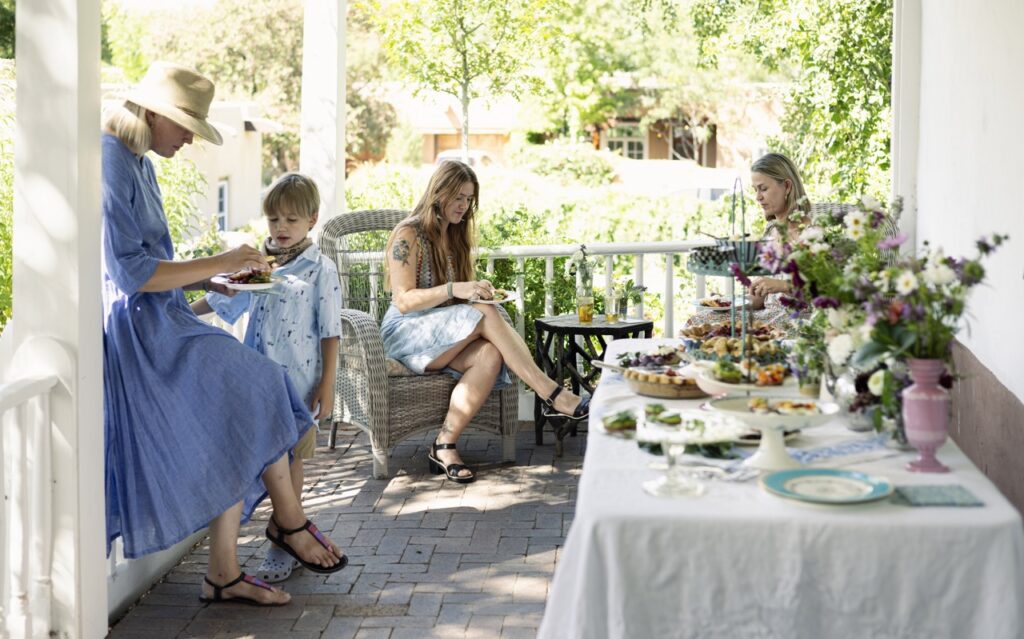
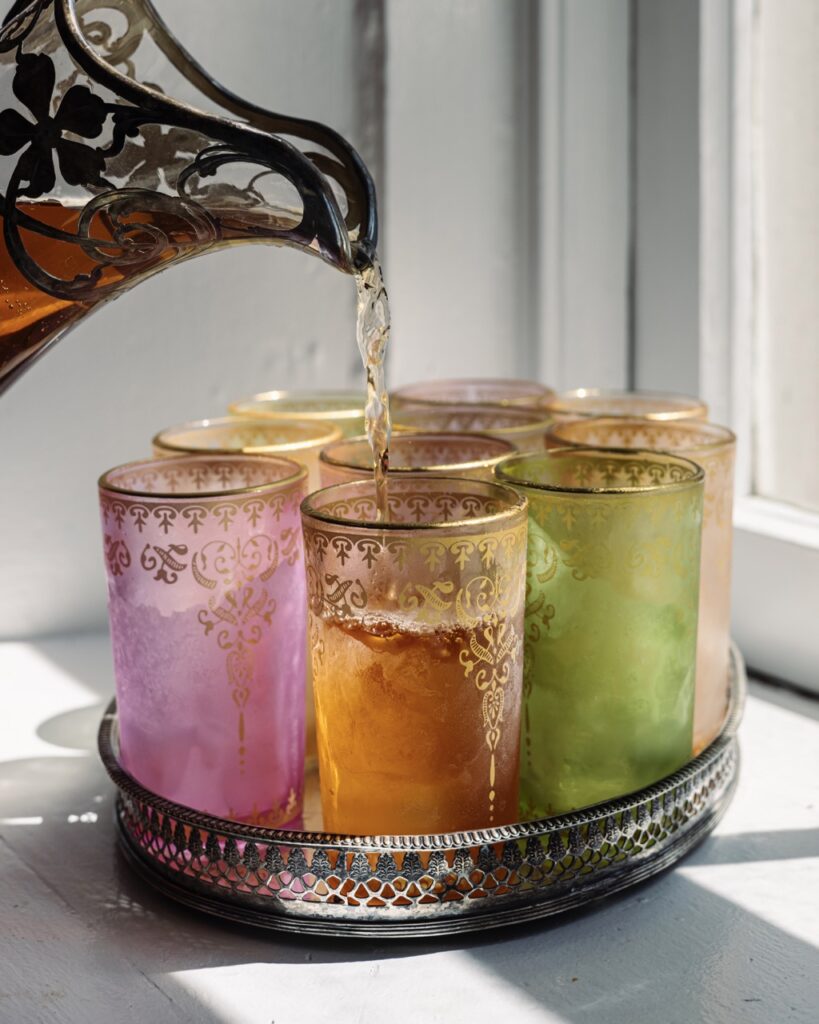
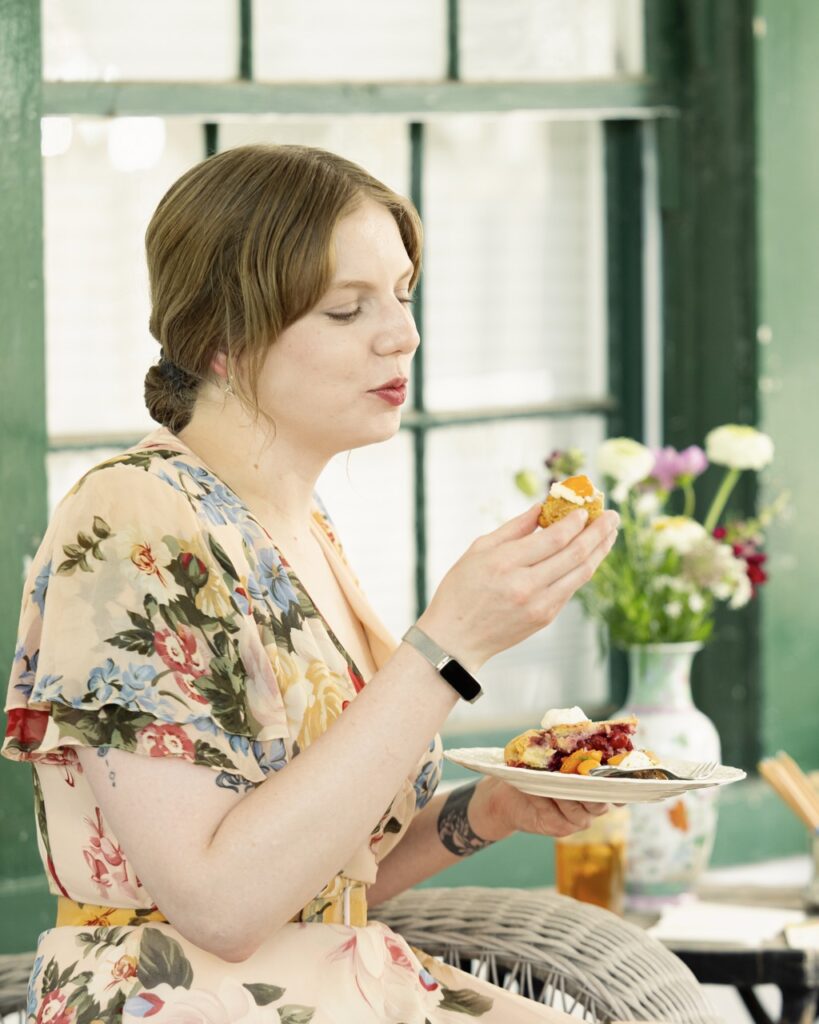
Stone fruits signal it’s summer in New Mexico with the much anticipated arrival of juicy apricots, plums, peaches, or cherries. The season is short so it’s a time to savor, and what better way to celebrate the season than with an al fresco tea party at historic El Zaguán.
Savoring Summer at El Zaguán With a Stone Fruit Tea Party
If you’ve ever meandered up Canyon Road on a hot August day, you might yearn to stop and rest on a wicker chair on the back porch of historic El Zaguán and sip a cool drink under the shade of a century-old horse chestnut tree. And you might think that American novelist Henry James was imagining that exact back porch and garden when he said that the two most beautiful words in the English language are “summer afternoon”.
El Zaguán was a small adobe house located next to farmlands when it was purchased in 1854 by Santa Fe Trail merchant, James L. Johnson – a rural site that was then outside Santa Fe. Today, El Zaguán (zaguán means a passageway or entry hall in a house that leads from the front door to a courtyard or patio),houses the office for the Historic Santa Fe Foundation. The foundation’s mission is to preserve, protect and promote historic properties, and the diverse cultural heritage of Santa Fe. As well as a gallery and gift shop, the foundation provides artist’s spaces to rent for a select few to live, work and pursue their art.
The Relationship Between El Zaguán and Stone Fruits
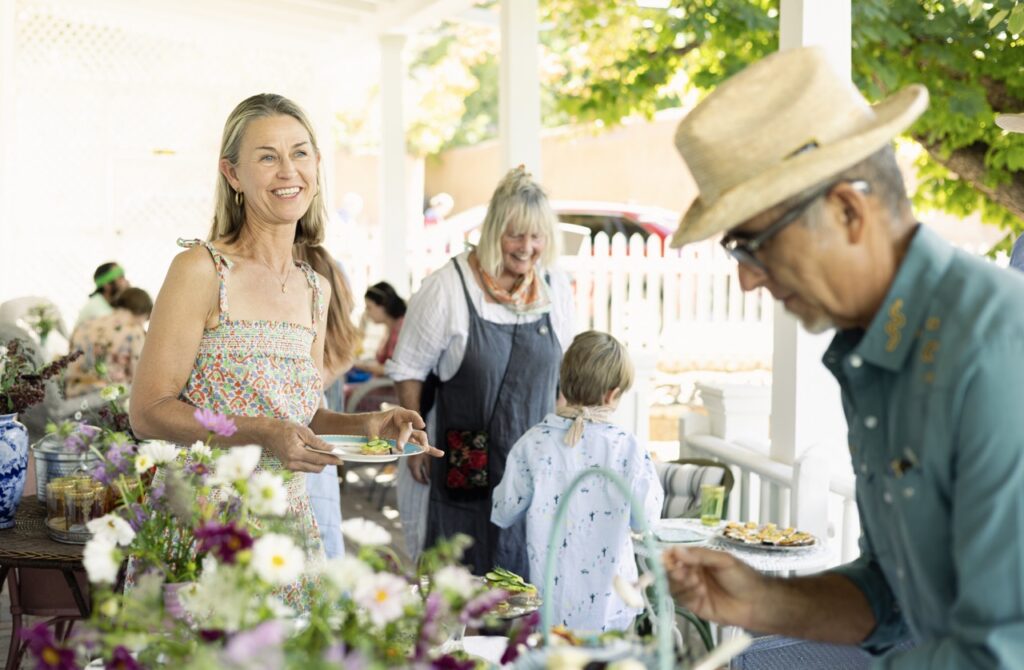
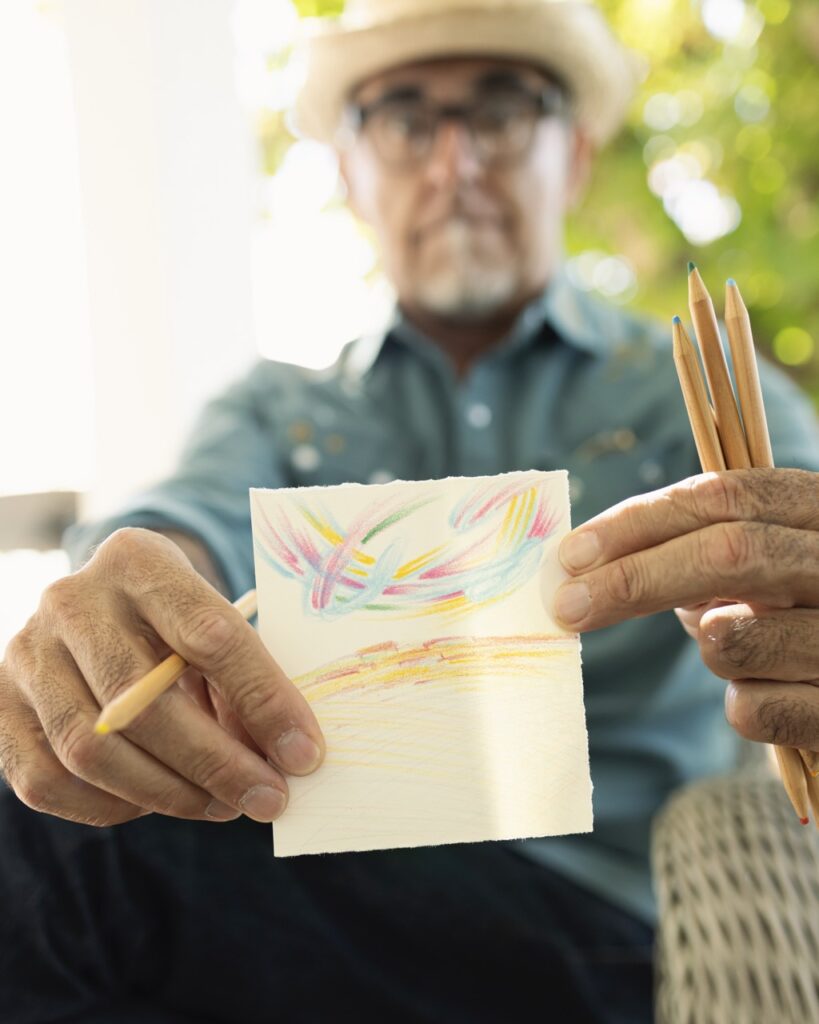
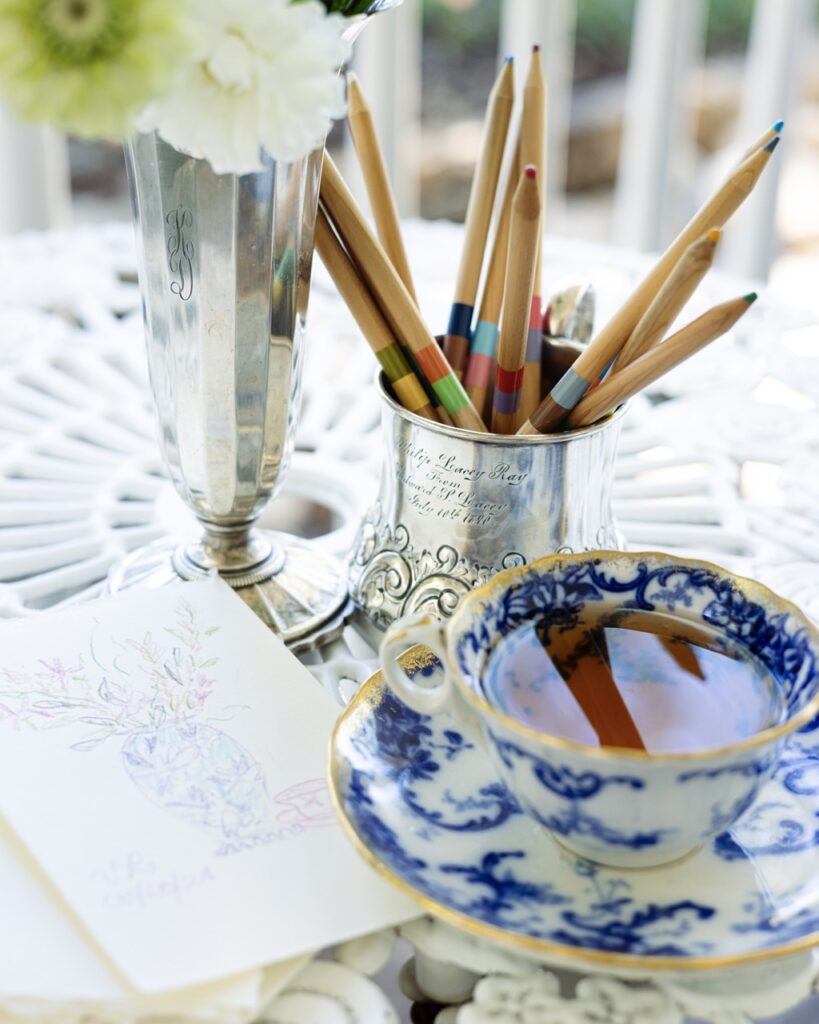
The back porch of El Zaguán, overlooking its historic garden full of fresh blooms and stone fruit trees, provided the perfect setting for a summer tea party, hosted by the foundation in honor of the artist community of El Zaguán. Santa Fe artist and illustrator Jone Hallmark’s Garden Lady, painted on a page from an antique book purchased in a Paris flea market, was the invitation to an afternoon tea party that celebrated not only the artists but also the seasonal harvest of stone fruits in New Mexico.
Stone fruits, or drupes, are fleshy fruits with a single seed and a hard shell. Apricots may be the harbinger of spring in northern New Mexico but other drupes such as peaches, plums, and cherries also thrive at 7000 feet. They tend to fare better than apricots since they blossom later.
When the first warm days of spring arrive, apricot trees erupt into bright white blooms like freshly popped popcorn. But northern New Mexico’s mercurial spring weather means that a late snowstorm and freeze could mean a season without any apricots. When the weather cooperates, stone fruit season arrives slowly and then seemingly all at once. This abundance of fruit needs to be picked and transformed into jams, jellies, preserves and yes, of course, delicious baked goods.
Using Stone Fruits in Baking
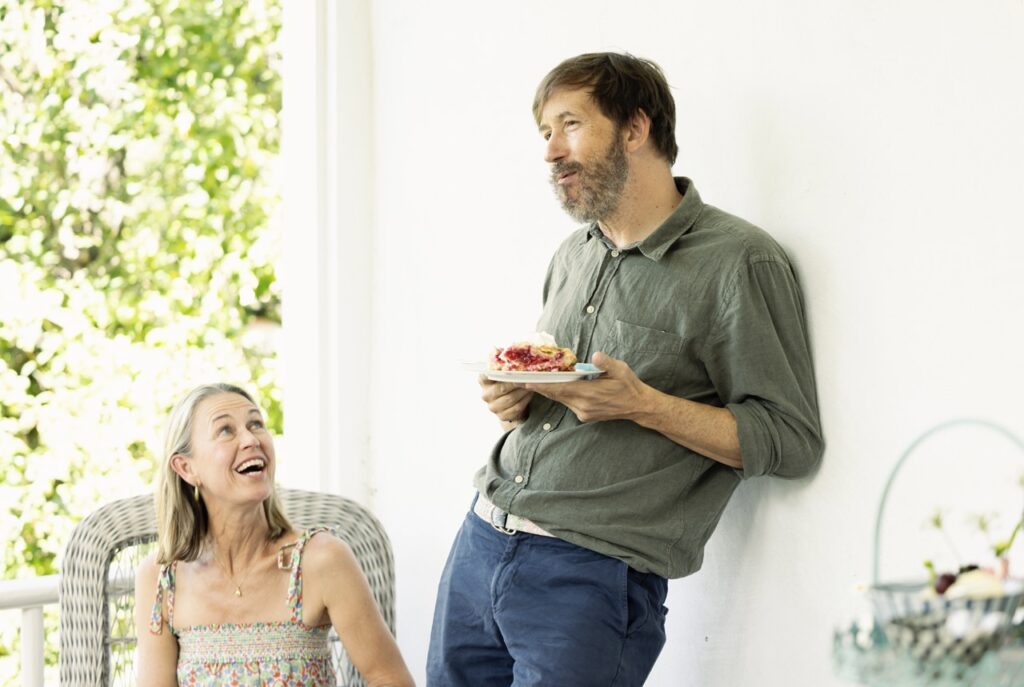
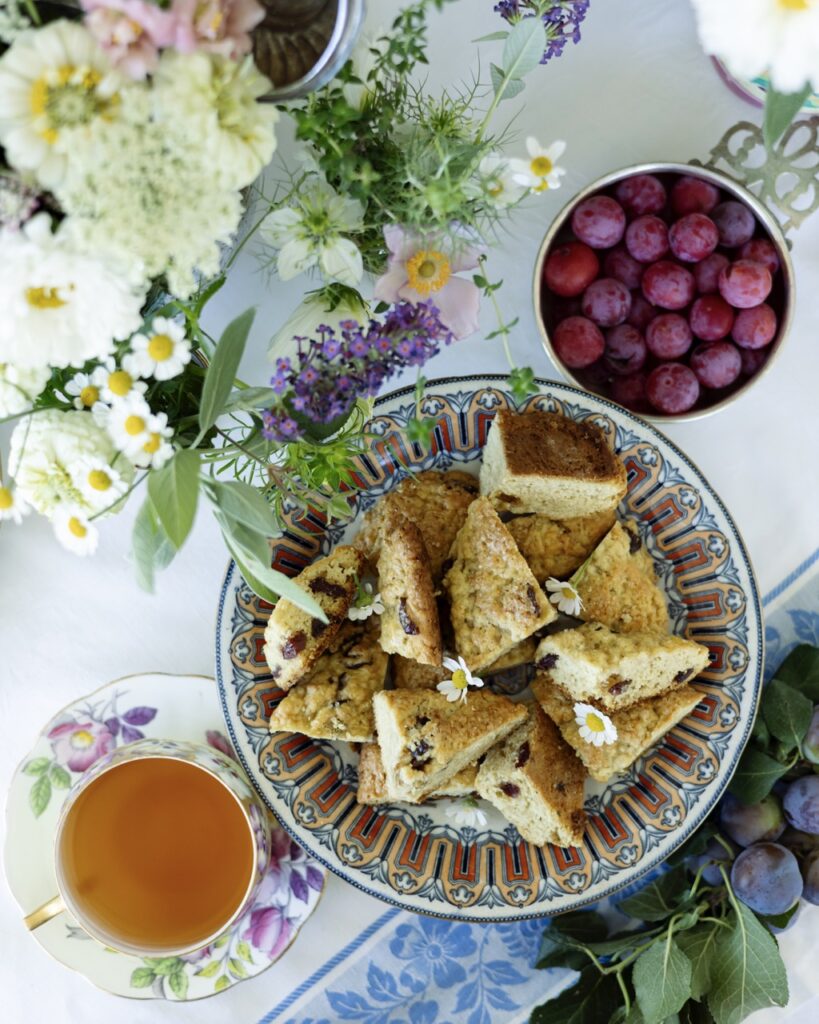
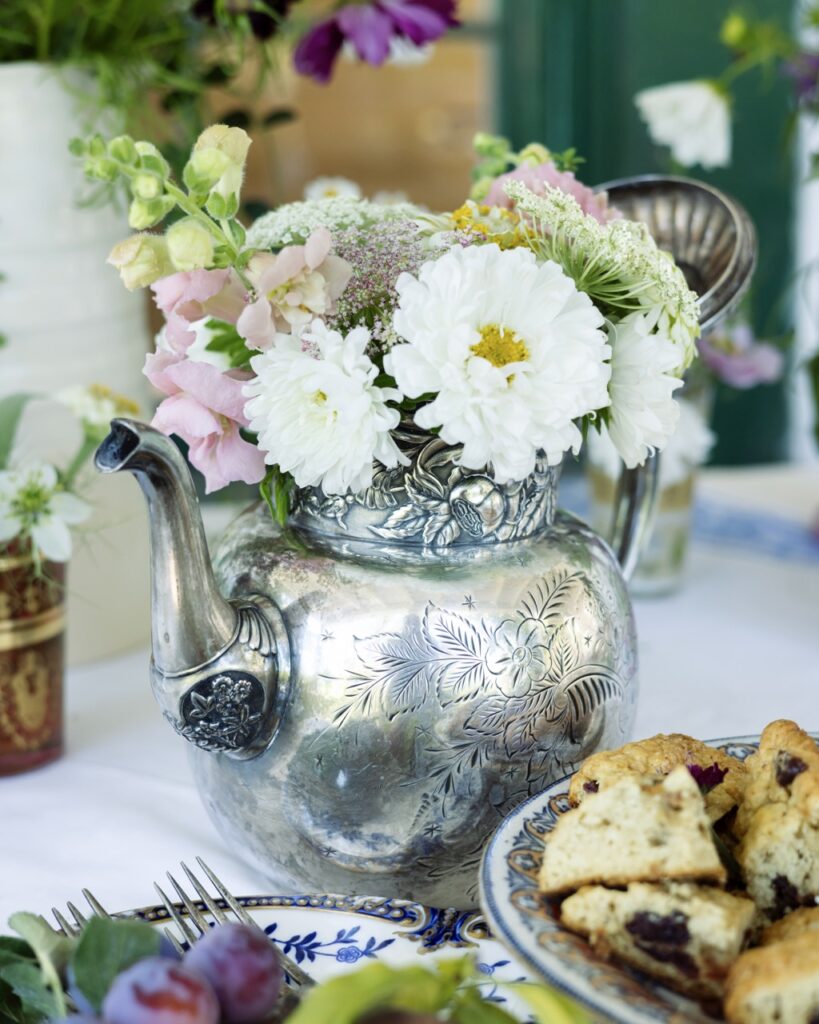
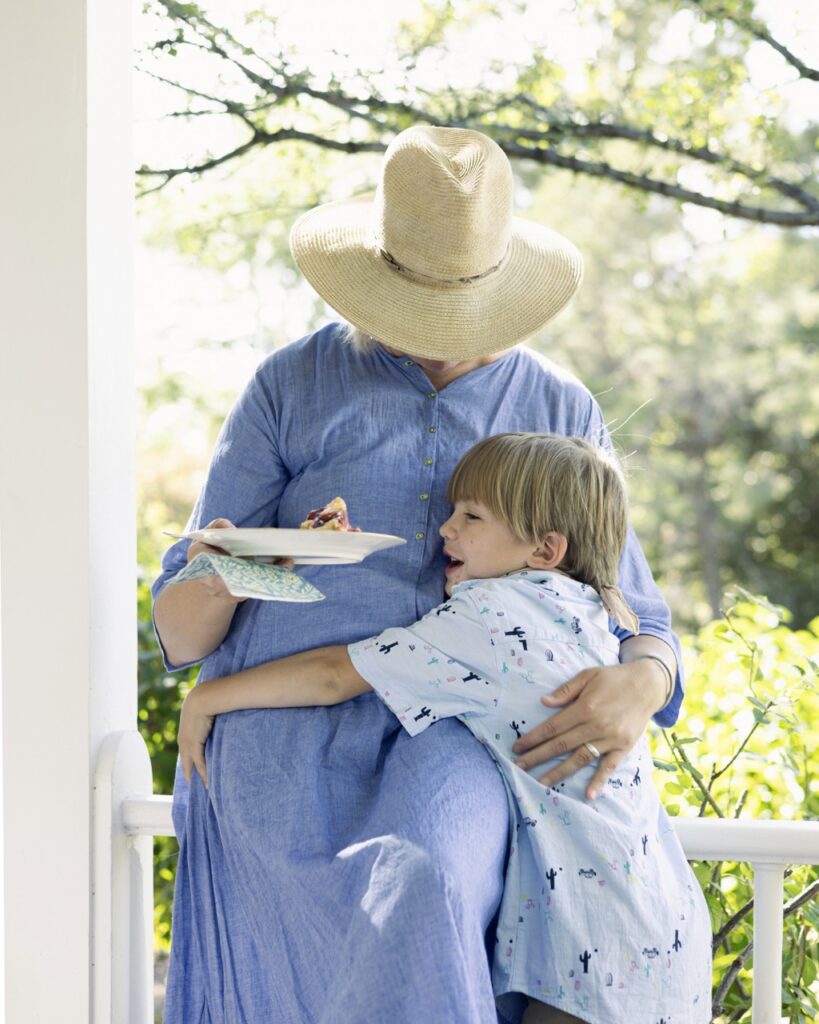
It’s no surprise that culinary skill and an artist’s sensibility pair well. When painter Anna Booth arrived with homemade cherry cream scones, they were a happy addition to the stone fruit splendor laid out on the table, joining ranks with a freshly baked plum kuchen and a luscious cherry pie from Harry’s Roadhouse which you can even bake up at home.
Anna Booth remembers her time at El Zaguán as deeply grounding, when she reset her course in life, and as an artist. The fixtures in her apartment were the same as the ones in the old farmhouse she grew up in. It felt familiar and immediately like home. She feels as though she packed many years into only two, making lots of work and giving birth to her son, Kai, who she says, “undoubtedly heard my staple gun while in the womb”.
El Zaguán is a Creative Force for Artist Residents
Many of the artists who attended the tea also recalled their time at El Zaguán as deeply nourishing and productive. Ceramic artist Mary Olson fell in love with El Zaguán’s beautiful setting, gardens, and back porch with its picket fence. Having spent decades as an arts educator providing instruction for grades K-6, she was delighted to spot a former student, Liza Hale Doyle, at the tea. Liza, she remembered, was already an accomplished artist in grade school. Liza – now a full time artist – was joined by her mother, writer Sarah Stark, who spent her residence at El Zaguán re-learning how to draw in order to illustrate the graphic novel she had just finished writing.
Summer Pairings Beyond Stone Fruits
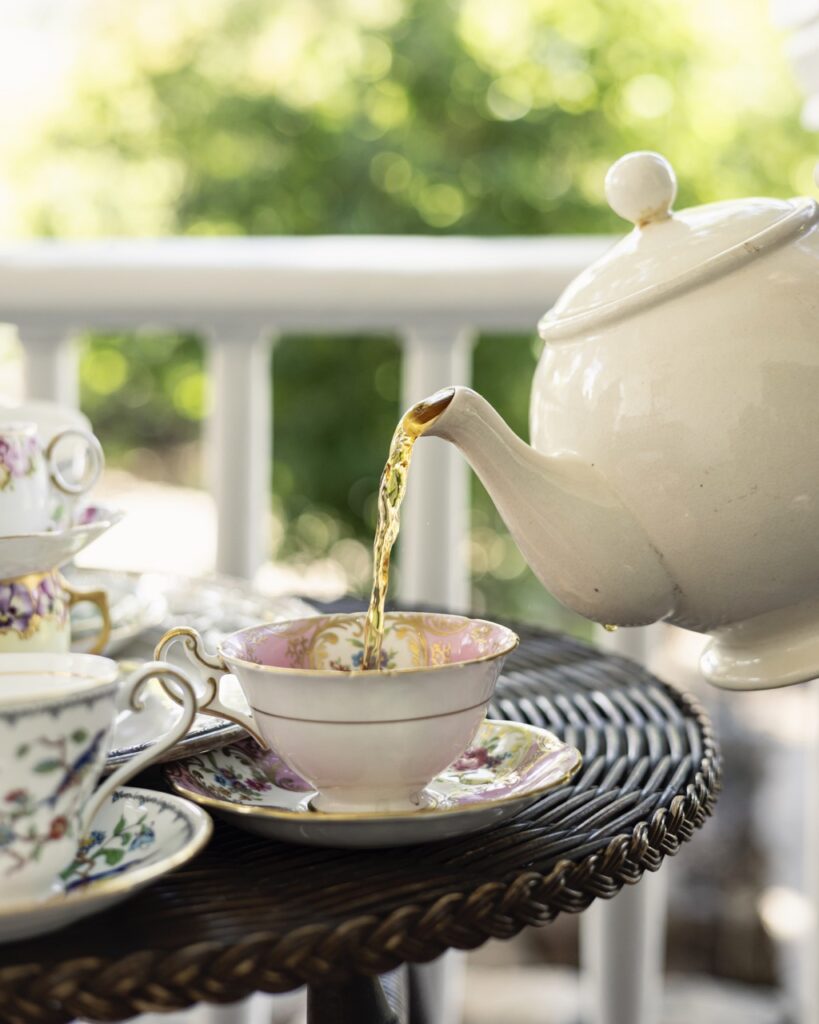
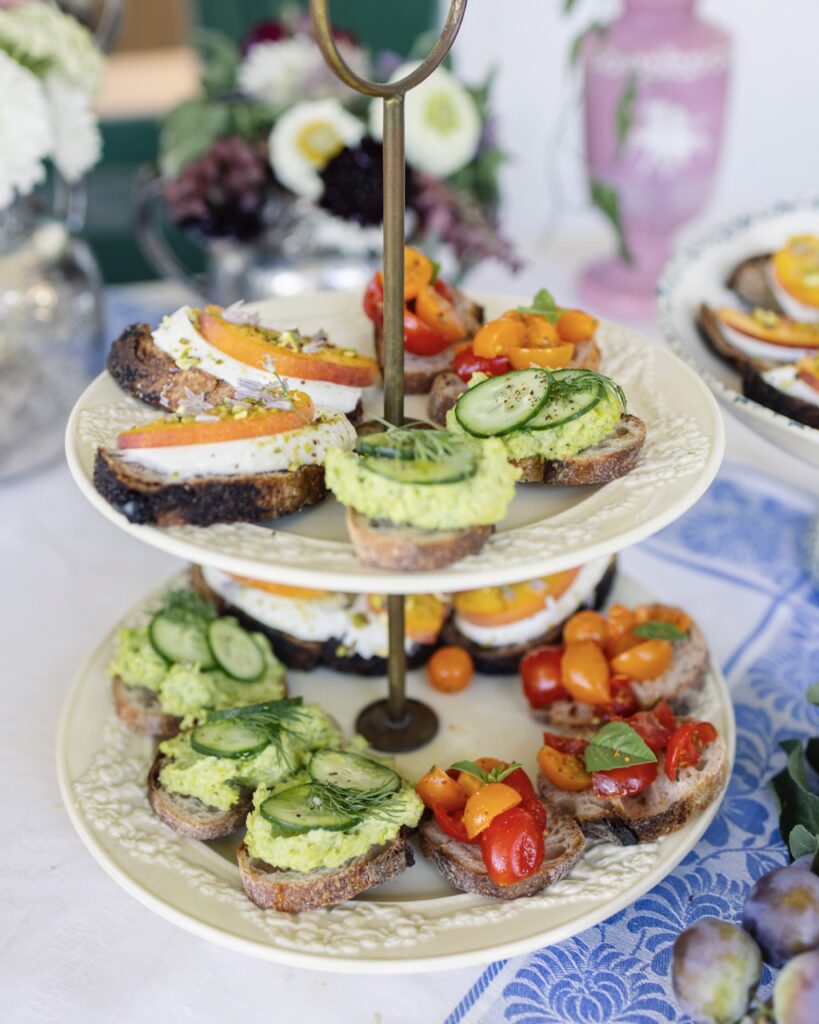
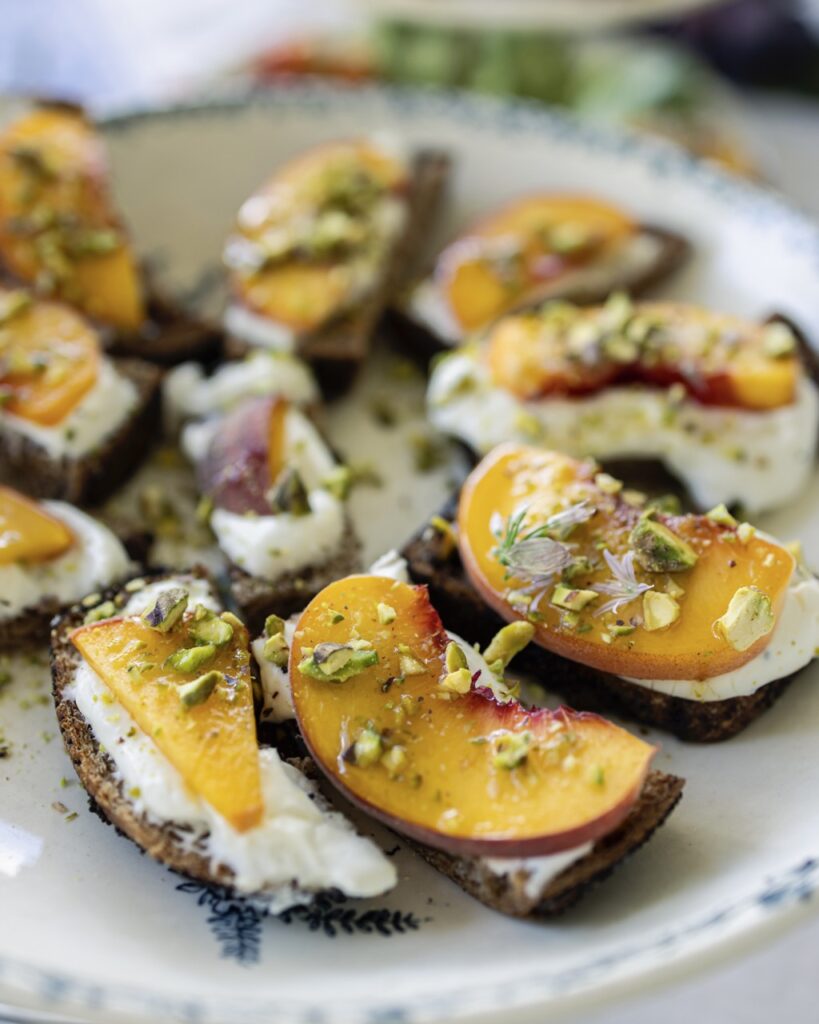
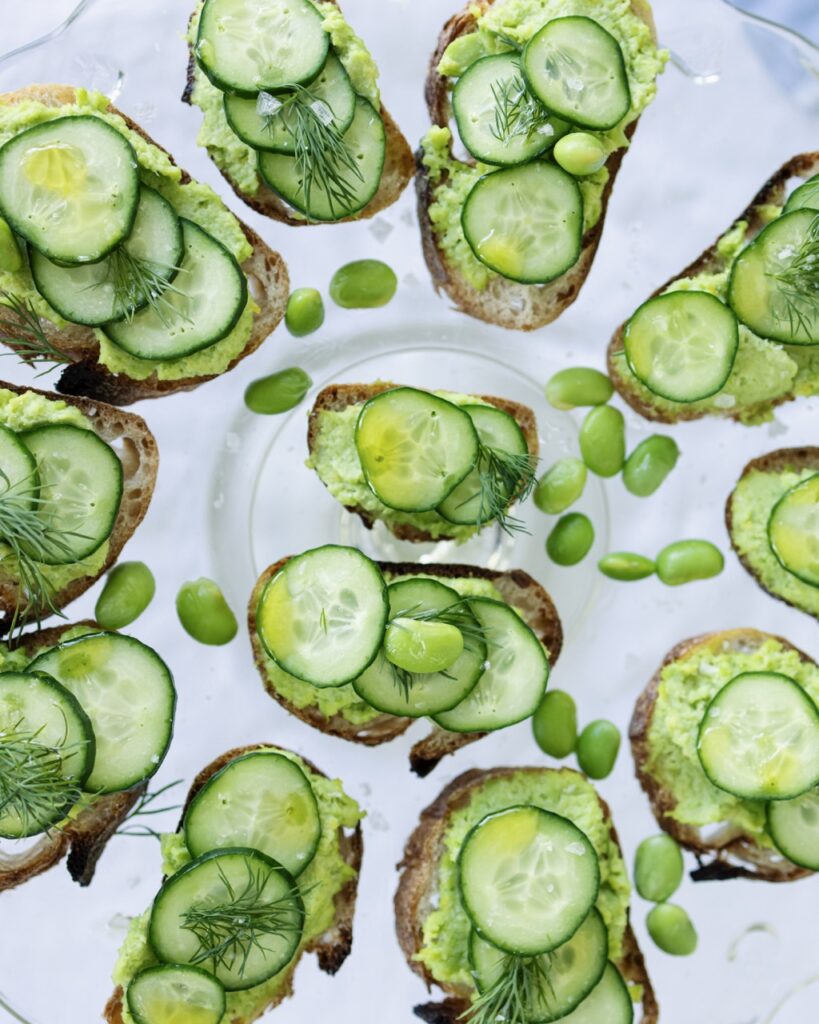
Guests bite into open-faced savory tea sandwiches including a purée of edamame beans, olive oil, and lemon zest spread on rounds of baguette and garnished with cucumber slices and dill sprigs. Bread studded with cherries was thinly sliced and topped with creamy goat cheese, fresh sliced peaches, a drizzle of chile honey, and a sprinkle of chopped pistachios. Santa Fe’s Artful Tea continued the stone fruit theme with the makings for freshly brewed pitchers of their iced organic Peachy Keen herbal tea and steaming teapots of Apricot Brandy black tea.
Poet Diane Ackerman described eating an apricot, with its intoxicating scent of honeysuckle and vanilla, as “somewhere between a peach and a prayer”. Apricots and other stone fruits are all the more sacred for their sunny but short-lived season, a taste and scent one wistfully remembers on a grey winter day. In high summer, on the back porch of El Zaguán, a gathering of artists savored stone fruit treats, the magic of a perfect summer afternoon, as well as each other’s company.
Anna’s paintings are inspired by New Mexico’s open landscape, quality of light, and rich history. Anna moved from Brooklyn, New York to northern New Mexico in 2010.
Kai Mott
Anna’s five year old son, Kai was in utero for the first year of her residency, and an infant for her second year.
An arts educator and ceramic artist who draws inspiration from nature and the joy of creative expression, Mary’s wit as well as her whimsy infuse everything she does.
A writer, teacher, illustrator, and political scientist, Sarah believes in the redemptive necessity of art. Her early writing about nuclear nonproliferation, international security, and peacekeeping continues to inform her fiction work, as does her teaching of world literature.
Engaged in a multidisciplinary exploration of the human body and the physical, imagined, and energetic landscapes it interacts with, Liza is a multimedia artist and teacher born and raised in Santa Fe.
Jesse Wood
Trained in traditional intaglio and relief printmaking, Jesse Woods is both a painter and lithographer. He was born in California and now lives in Santa Fe. He received a Certificate in Professional Printer Training from the Tamarind Institute, the renowned center for fine art lithography.
Paul Baxendale is a multidisciplinary artist who finds inspiration in Santa Fe’s unique architecture. His work includes photography, painting, and sculpture.
David Sloan
David Sloan is a recognized Diné (Navajo) member as well as an artist working in printmaking and silversmithing.
Jacob Sisneros
Jacob Sisneros is a designer and artist and Preservation Projects and Programs Manager at the Historic Santa Fe Foundation.
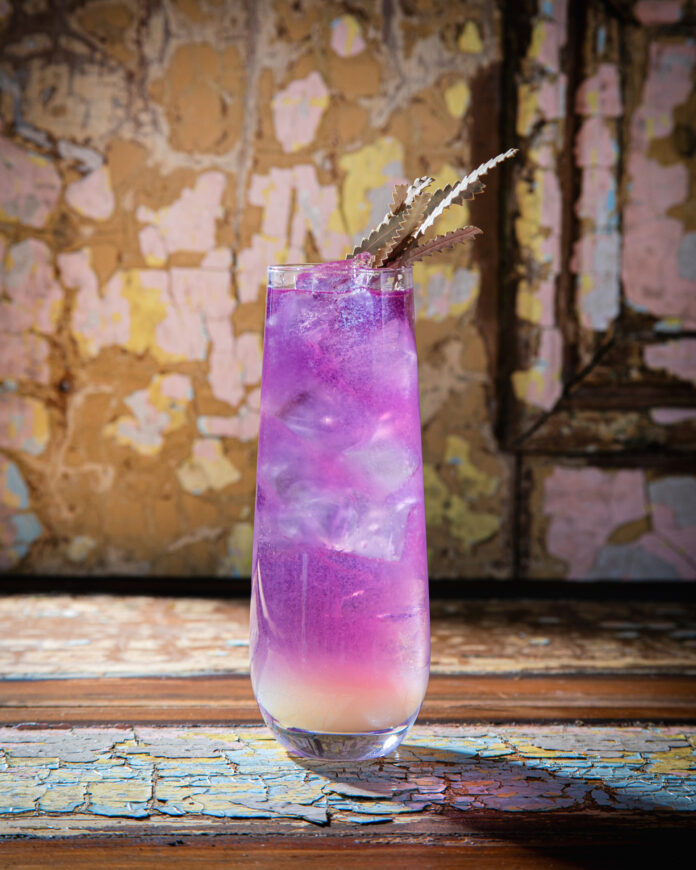
Dinner for Two is a Santa Fe bistro that offers locally sourced dishes, global wines, and a uniquely ‘funky’ cocktail menu that will keep you coming back. And did we mention their killer happy hour? Katie Valdez’s enchanting Unicorn Tears cocktail owes its ethereal hue to a truly unique moment of inspiration. While traveling through Thailand, Dinner for Two’s owner, Andy Barnes, experienced something… otherworldly. Let’s just say a mythical encounter led to a burst of vibrant color, captured perfectly in this magical concoction. We’ll leave the details to your imagination.
What Turns Empress Gin Lavender in This Cocktail?
If you look at a bottle Empress 1908, you’ll find the butterfly pea blossom gives it a deep, dark indigo hue. However, this same blossom also means that the color gets a shake up when mixed with other ingredients. For instance, since we add the acidity of lemon juice to the Empress Gin, it turns our cocktail a bright lavender shade. Other chemical reactions can also cause a variation of colors from soft pink to fuchsia depending on the mixer’s acidic content.
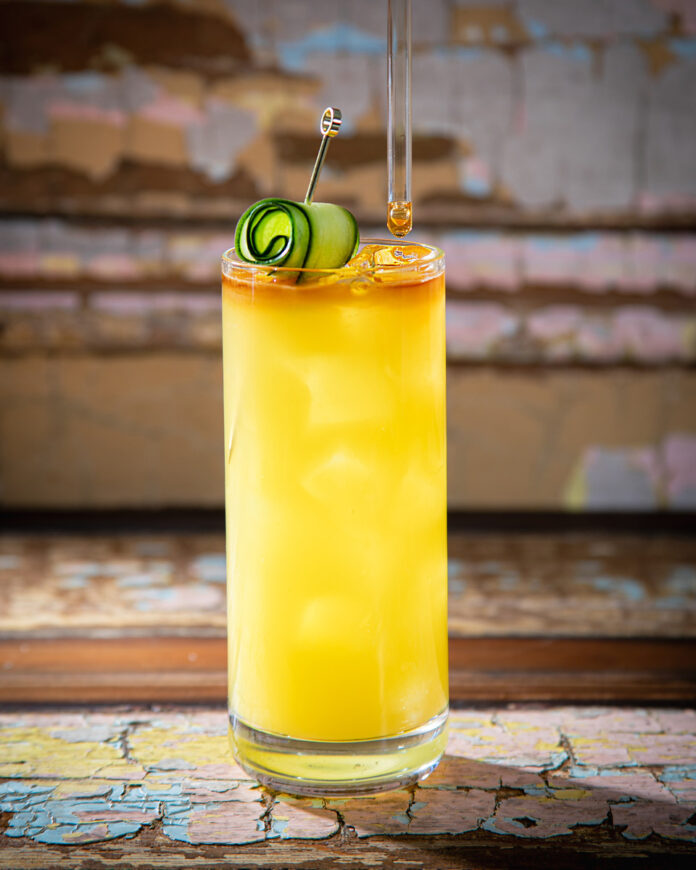
The bar team at Palace Prime in Santa Fe crafts innovative drinks using premium spirits that also perfectly complement the food menu. Enjoy your cocktail in the chic bar/lounge, elegant dining room with its plush booths, or – weather permitting – on the enchanting tree-covered back patio or fully covered front patio. Mixologists Karli Guerrero & Ashley Lynn’s Sugar Cane Supper is a perfect craft cocktail for summer Santa Fe afternoons lounging in a shady spot. Refreshingly low-ABV, it relies on the bright, grassy notes of Mexican sugar cane Rum, creating a light but satisfying experience.
What is Suze in Our Summer Craft Cocktail?
Suze is a bright yellow French aperitif liqueur that uses gentian root and carries a bittersweet, earthy, as well as slightly floral taste. Its signature bittersweet flavor is predominantly from the wild gentian root, which comes from the mountains of France. Beyond the prominent earthy bitterness, you’ll also find subtle notes of citrus, florals, and a bit of herbaceousness. It’s traditionally served neat or with soda water, but its unique profile makes it a versatile ingredient in modern cocktails like our Sugar Cane Supper: A Summer Craft Cocktail.
Add all ingredients in a shaker, whip shake together, strain into Collins glass, add ice, top with soda water and Peychaud bitters, garnish with cucumber ribbon.
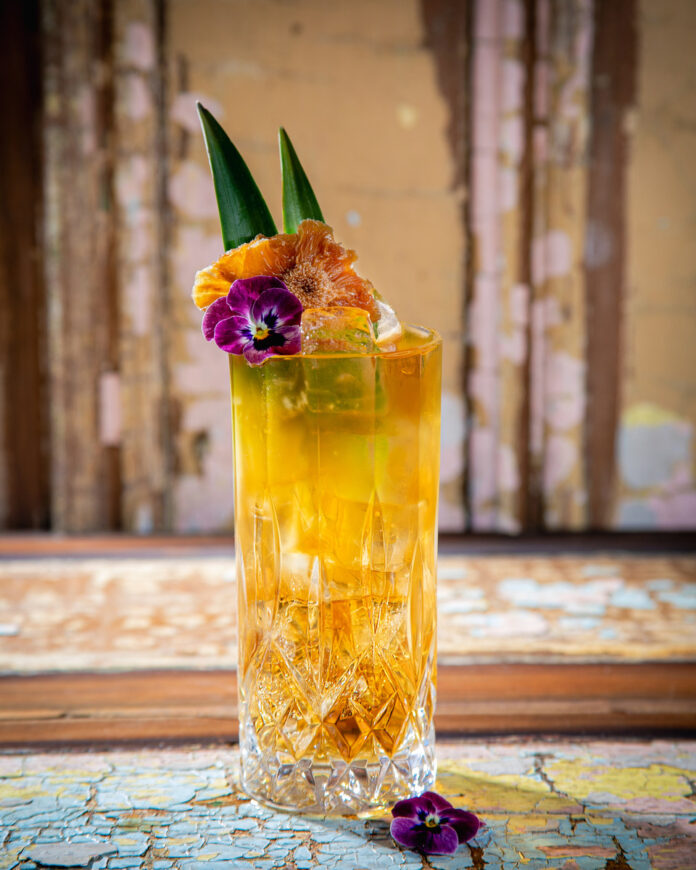
Step into the stylish Apothecary Lounge in Albuquerque’s Hotel Parq Central where expert mixologists craft seasonal cocktails, each a celebration of fresh and local ingredients. The scenic rooftop lounge offers panoramic views so you can cast your eyes to a stunning summer sunset while sipping one of their cocktails, like their perennial favorite, the Tropic Funder Tiki Cocktail. Mixologist Michael Weller’s cocktail bridges the gap between the complex world of amaro and the easygoing vibe of tiki. The recipe takes inspiration from Underberg – a digestif bitter produced in Germany – and transforms it into a vibrant, summer-ready drink that introduces unfamiliar flavors in a playful and delightful way.
Why Put Liquid MSG in a Tiki Cocktail?
While it might seem wrong to add liquid MSG to a tiki cocktail, its inclusion is actually about enhancing the overall flavor experience by introducing the fifth taste: umami. Tiki cocktails have complex layers of sweet, sour, bitter, and also fruity flavors. A tiny dash of liquid MSG, a concentrated form of glutamate, doesn’t make the drink taste explicitly “savory” or “meaty” like broth. Instead, it subtly rounds out and deepens the existing flavors, making them more cohesive and satisfying.
Pineapple leaves, dehydrated pineapple and edible flowers, to garnish
Instructions
Add all ingredients into the shaker except Averna, shake and strain into a Tiki glass over crushed ice. Float Averna on top and garnish with pineapple leaves, dehydrated pineapple and edible flower.
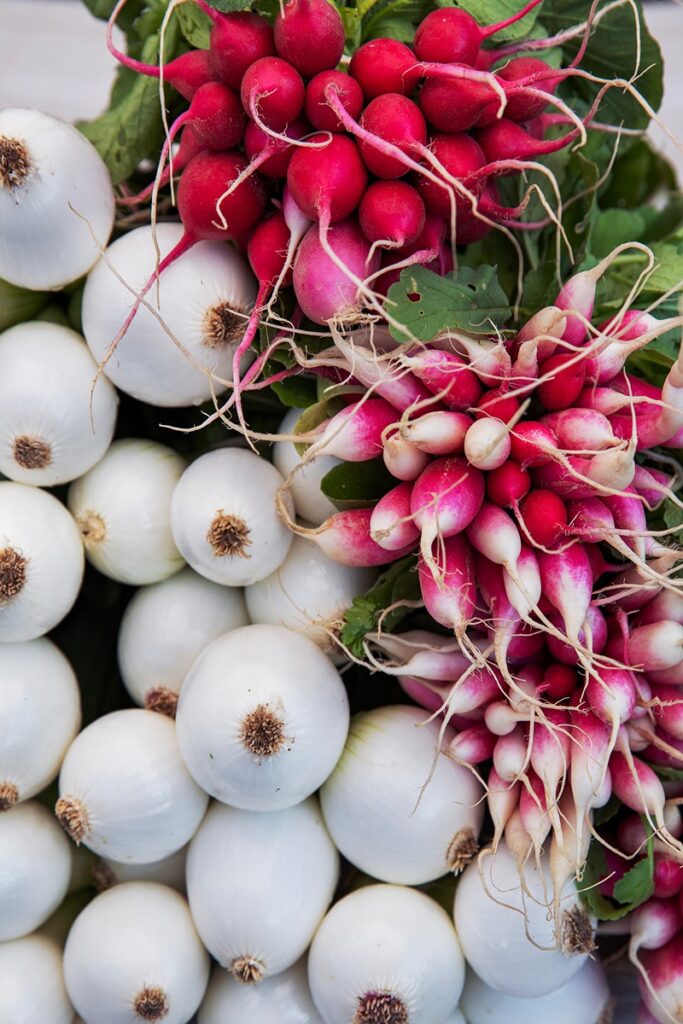
We asked photographer Ashley Hafstead to trawl northern New Mexico farmers markets and farm stands to find the very finest produce the season has to offer. She shares a cornucopia of fresh fruit and vegetable finds then creates an edible tablescape for summertime entertaining inspiration.
Vincent Van Gogh said that for him, sunflowers meant gratitude. While roses may be refined, sunflowers are unashamedly joyous, exuberant, and a potent reminder of the sunny spirit of summer.
Eggplants
The story goes that original eggplants were white and oval shaped and thus earned their name ‘egg-plant’. Today, we have more of a choice whether it’s a slender eggplant the color of a purply night or a Zebra with undulating stripes of purple and white. The heat of summer brings out the best in eggplant, producing a glorious profusion of shapes and colors from the deepest purple to green, and yes, white.
Green Beans
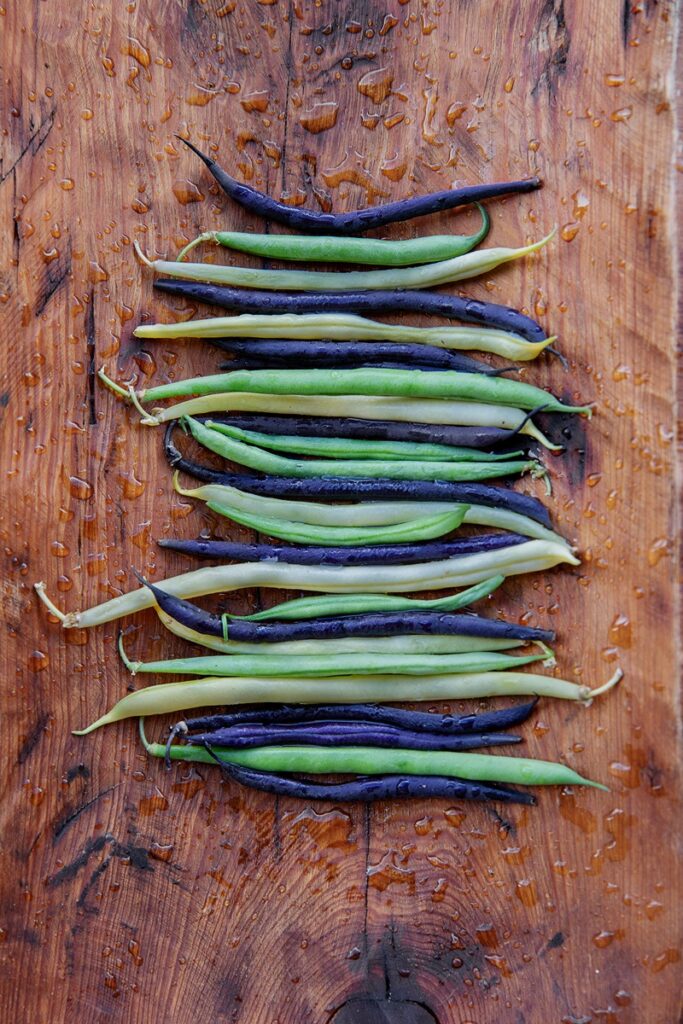
Beans in jewel tones of creamy yellow, purply blue, and of course green. So fresh you can eat them raw or gently steam them and toss with a glug of olive oil and a sprinkle of salt.
Cabbages, Melon, Kale and Artichokes
Summer is a show off but can you blame her? Bite into a slice of melon and wait for the juice to trickle down your chin. An artichoke that asks only for a dish of melted butter. Cabbages and kale that are frilly, edible artworks. A cornucopia of nature’s bounty.
Flowers
Fresh cut flowers direct from the field make winter flowers look tawdry in comparison. No need for complicated arranging – a jar or jug is all that’s needed. A taste of the great outdoors, brought indoors for summer living that blurs the lines between the two.
Peaches
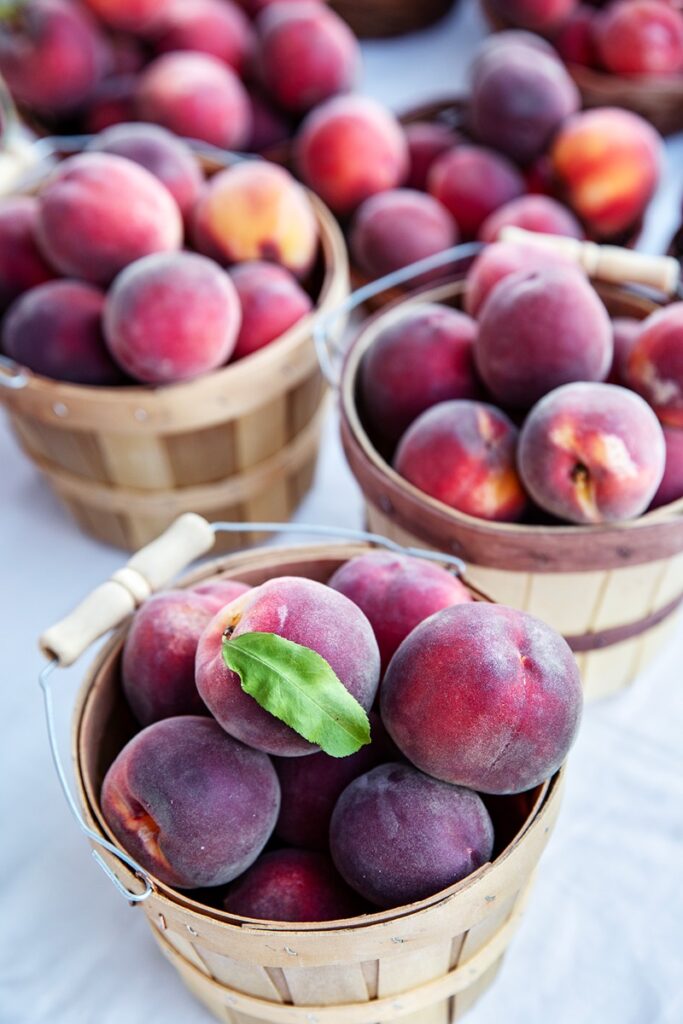
Peaches – along with its stone fruit friends – are a joy of summer. They don’t linger and demand a place on your plate (or better yet, held in your hand). Scatter slices on a rough disc of dough for a rustic galette. Cook up into a jam for a winter reminder of what summer tastes like. Eat. Enjoy. Repeat.
Table Setting
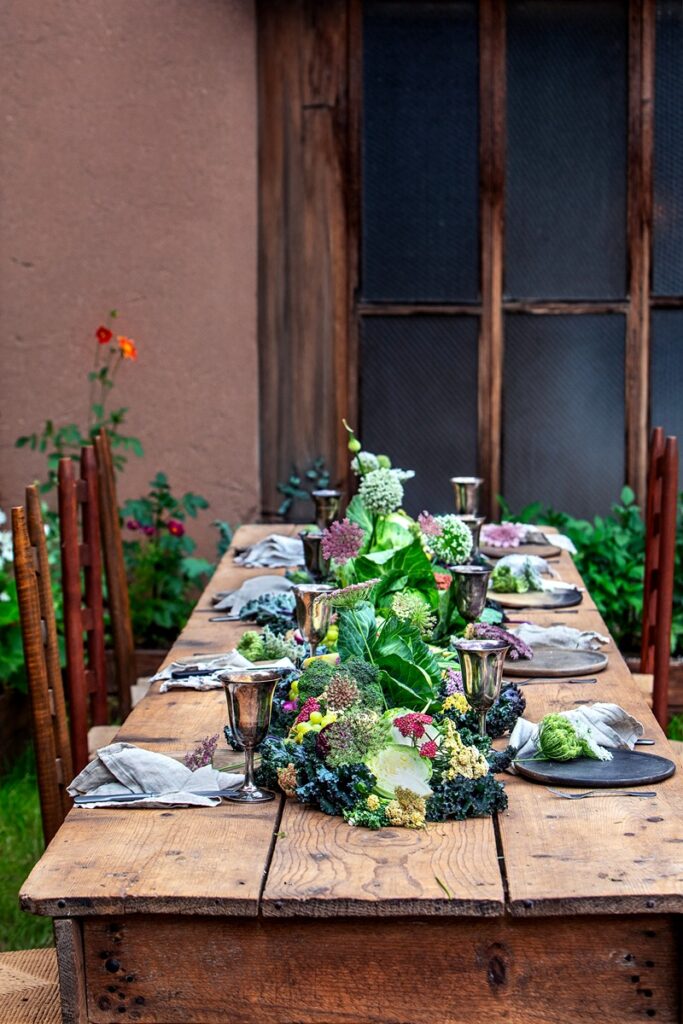
The table is set. The wine is chilled. It’s that moment – that brief, delicious moment – before the guests arrive. A calmness and peace and pause. Summer dining is casual dining. The freshest fruit and vegetables do the heavy lifting. Your job is simply to let them shine. Your table is the same – a cornucopia cascades down the table. An edible wonderland that hints at the deliciousness to come.
Story by Julia Platt Leonard Photography by Ashley Hafstead
The International Folk Art Market of 2025 is like going around the world in a weekend without ever leaving the Santa Fe Railyard. “This year is our 21st birthday, so we’re expecting to have a lot of fun,” says Executive Director Stacey Edgar.
International Folk Art Market, July 10-13, 2025
With 142 traditional folk artists representing 57 different countries, Edgar is thrilled about the variety of artists and mediums: textiles in apparel and for the home, handwoven rugs, jewelry, ceramics, woodwork, 2-D art, sculpture, glasswork, handmade paper, leather work, baskets, and metalwork. Among 40 new artists, the market is welcoming Austria and Bhutan for the first time.
“We have such a strong group of artists who are really the culture-bearers for their communities, keeping traditions alive and even reviving cultural traditions,” Edgar says, all of whom exemplify the market’s core values: women’s empowerment, innovation in folk art, sustainability, traditional heritage — and, of course, artistic excellence.
How the Market Comes to Be
The market’s Selection and Artist Placement Committees shape its personality. The Selection Committee reviews over 700 applications each year, whittling them down to those of the highest quality that best represent their traditions. “By my definition, folk art is rooted in a cultural tradition, in a place, and in a community: it’s historically made by the folk, for the folk,” says Selection Committee Chair Cristin McKnight Sethi. Her committee recommends around 300 exceptional applications to the Artist Placement Committee, which further edits them into a market of around 150 artists with variety, scope and appeal. Suzanne Sugg, who chairs the Artist Placement Committee and sits on the Board of Directors, is particularly excited about one of the market’s new artists: Juana Gomez Ramirez from Chiapas, Mexico, who creates beautiful ceramic jaguar sculptures. “You’ll be mesmerized because they really look like they are in motion,” Sugg says.
IFAM Executive Director Stacey Edgar
Both Sugg and Sethi have strong academic and practical backgrounds in art, especially textiles. Sugg studied fashion design, textile, and merchandising and worked in the American wool industry, and, in addition to being an avid art and textile collector herself, designed handbags using antique textiles, leather, recycled mink coats and Tibetan lamb’s wool pelts. “Working with textiles, weaving yardage, needlepoint and knitting yarns, fibers, metals, and clay from my multiple collections and traveling the world has trained my eye in colors, textures, and designs which are very important to looking at traditional folk art from around the world,” she explains.
How to Explore the Best International Folk Art Market
Sethi is a curator, educator and writer with more than two decades of experience working with textiles and craft-based media. In addition to her work with the Folk Art Market, she serves on the editorial board of The Textile Museum Journal and is the Director of Education at Textile Center, a national center for fiber art based in Minneapolis, MN. Sethi advises Folk Art Market visitors to give themselves a full day — if not the whole weekend — to revel in the experience of the beautiful handmade art. “The pleasure of the market is taking it slowly, stopping to look at the things that catch your eye, to touch the fabric, to turn over a ceramic pot to see what the foot looks like,” she says. “Give yourself time to enjoy the pleasure of looking.”
Cristin Sethi, Chair of the Artist Selection Committee
In addition to the art, the market offers on-stage live music and dance, roving buskers, artist demonstrations, and hands-on workshops. Even in the days leading up to the market, there’s lots to see. On Wednesday evening, July 9, the IFAM Community Celebration Parade kicks off the market, bringing every country up on stage to celebrate their artists, followed by a concert of global musicians at the Railyard Water Tower.
Special Features of 2025’s International Folk Art Market
Once the market is in full swing, the fun doesn’t stop. On Friday afternoon, July 11, there will be a lecture with two experts in textiles and biodiversity from National Geographic, discussing how what we wear brings us closer to nature — or pushes us farther away. On Saturday evening, July 12 the market is partnering with AMP Productions to host a Saturday Night Market and concert.
Sunday is IFAM’s community day, made possible by a partnership with New Mexico True. You’ll still need a ticket, but attendance is free. “It’s really our family day,” Edgar says, with a children’s passport program where kids can collect stickers from each of the countries, giving them an opportunity to talk to the artists and ask questions. “We want to make sure that the market’s accessible so that anybody who wants to attend, can,” Edgar says.
Story by Annabella Farmer Photos by Gabriella Marks
Each summer, the Santa Fe Indian Market brings exceptional Indigenous artists together around the Santa Fe Plaza to showcase their work at the largest juried Native art show in the world. This year’s 2025 market will celebrate the artistic and cultural community the market has fostered since its inception in 1922, as well as the tribal communities it reflects. “It’s really vital in this day and age to remember how the arts connect us back not only to ourselves, but also to our community members,” says Executive Director Jamie Schulze (Northern Cheyenne/Sisseton Wahpeton Oyate).
Dive Into Santa Fe Indian Market 2025, August 16 – 17
With over 1,000 artists from 252 different tribal nations across North America, the variety of art at the market is vast. Jewelry, pottery, paintings, drawings, graphics, pueblo wood carvings, sculpture, textiles, beadwork, quillwork and basketry span 12 blocks on and around the Santa Fe Plaza. All of these art forms, Schulze says, highlight “how art not only heals, but has been a technique for keeping different traditional pathways alive.”
Board President Dawn Houle (Chippewa Cree) calls this variety one of her favorite things about the market. She was introduced to the vast breadth of Indigenous North American artwork while pursuing a degree in forestry from the University of Montana, which required her to visit different tribes across the country each summer. She would always make a point of stopping into a gallery or gift shop and choosing a small memento, like an ornament or a piece of beadwork. “Every tribe has such a different use of the forest or the environment around them,” Houle says.
The Next Generation of Artists
Young artists are a key part of the market, too. “We’re really excited that our youth component has grown,” Houle says. “It’s a lifeline that truly builds that next generation of artists doing beautiful work.” Artist Services Coordinator Mona Perea (San Ildefonso Pueblo) loves scoping out new talent and showing them they have what it takes to be a part of the market, often getting up at 5 am to road trip to different pueblos and reservations doing outreach. “The youth, they grab my heart,” she says. “They always tell me they feel intimidated, and then they start showing me pictures of their work on their phone and my jaw drops.”
Artist Services Director
Mona Perea
Perea strives for perfection down to the last detail. “It’s always sleepless nights prior to market,” she laughs. “We create opportunity, and we’re their advocates — but at the end of the day, the artists are the superstars, they’re the ones creating this beautiful world’s finest art, and it’s just a wonderful feeling to see that all happen in one weekend.”
What to See at the Santa Fe Indian Market
One must-see market event is the Best of Show awards. The winners are announced on Friday, August 15, and their art is on view at the Santa Fe Community Convention Center throughout the day before artists come to collect their work to showcase at their booths for the rest of the weekend. It’s a unique opportunity to see the best of what the market has to offer in one place.
For Schulze, it all comes back to community, visiting with artists, elders and culture-bearers who may not be exhibiting but come to the market to see old friends and make new ones. But what really brings visitors back year after year? “The artists themselves,” Schulze says. “This has been evolving for 103 years, so it’s an amazing opportunity to come see what our Native voices are bringing forward in art.”
Story by Annabella Farmer Photos by Gabriella Marks
Traditional Spanish Market is a one-of-a-kind opportunity to immerse yourself in New Mexican culture, whether you’re a first-time visitor or a long-time devotee. “I think what makes our market so unique and sets us apart is the unwavering dedication to the traditional materials, tools, techniques, and imagery,” says Program Coordinator Brissa Chilton-Garcia. “It’s a one-of-a-kind show in the nation, dedicated to preserving an art form that really only exists here.”
Traditional Spanish Market, July 26 – 27, 2025
Born in Mexico and raised in northern New Mexico, Chilton-Garcia grew up in a creative family, exploring art forms from flamenco to micaceous pottery. “My roots and upbringing have really been connected to New Mexico,” she says, and she’s dedicated to sharing her reverence for the culture through her work with Traditional Spanish Market.
With 150 juried artists and more than 30 youth artists, the market’s talent goes through a rigorous screening process to verify their Hispanic heritage or nativity to New Mexico or Southern Colorado. Then, a committee evaluates their work to ensure that it adheres to Hispanic cultural traditions and the market’s standard of excellence. The market boasts 18 categories of art with roots in the 16th century, including colcha embroidery, gesso reliefs, retablos, straw applique, tinwork and more, all informed by the culture and environment of New Mexico.
“Our artists really commit to the authenticity of preserving their art forms,” Chilton-Garcia says. “We have weavers who farm their own sheep, shear the wool, dye it using natural pigments from native plants and weave on traditional looms.” Devotional art is also a big part of Spanish Market, stemming from the creation of pieces like bultos (carved wooden statues of religious figures) and retablos (2-D paintings of religious figures on wood), which were originally created by families who wanted to have their faith represented in their homes.
Beyond the Spanish Market
Complementing the art is the immersive experience of Santa Fe’s historic plaza, where you can see live performances like Spanish guitar or local New Mexican bands, and try some delicious local cuisine at the food court. Chilton-Garcia and her team are working to make Traditional Spanish Market a seamless experience for both visitors and artists, with improvements like UPS on site at the information booth to assist visitors with shipping needs. Parking in downtown Santa Fe is always tight, so check for updates on parking, travel, and other event details, on the market website.
The Traditional Spanish Market Mass takes place on Sunday from 9-10 am at the Cathedral Basilica of St. Francis de Assisi, followed by a traditional procession from the cathedral to the plaza bandstand and a blessing of the artists. The Contemporary Hispanic Market is the same weekend, so there’s lots to see.
Story by Annabella Farmer Photos by Gabriella Marks