A visit to El Rancho de Las Golondrinas is the closest we can get to time travel. When the historic buildings are open and costumed interpreters demonstrate long-kept agricultural traditions, the ranch looks, sounds, smells, and feels much like it did 300 or even 500 years ago. For visitors and New Mexicans alike, engaging with a place like Las Golondrinas keeps these traditions alive.
What Does a Visit to El Rancho de las Golondrinas Look Like?
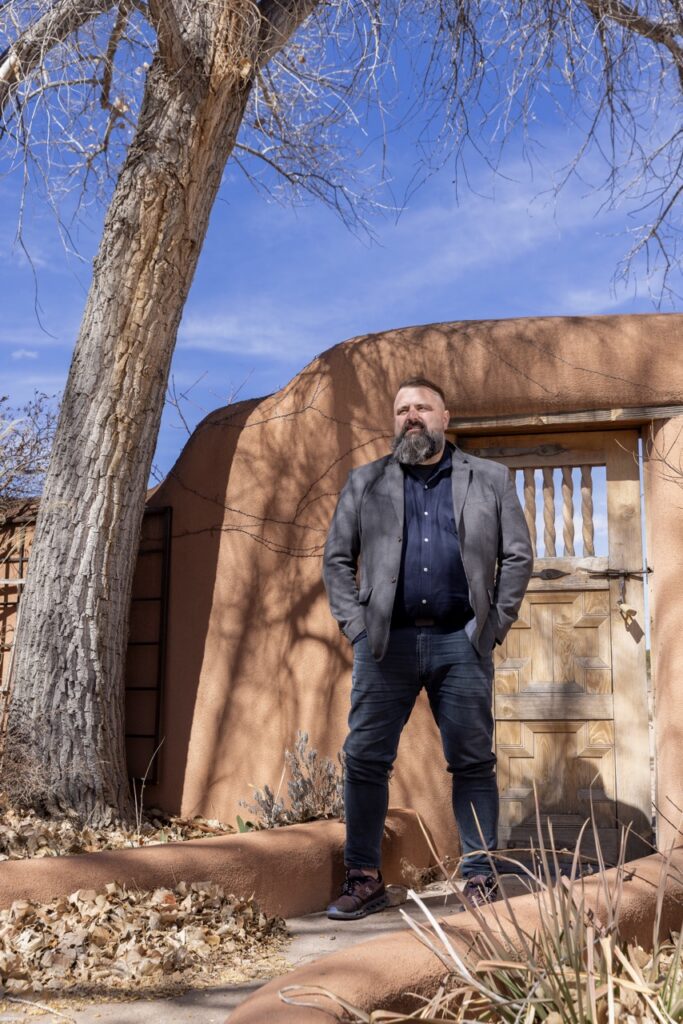
Stewarding the stories of the peoples who lived and worked this land along the illustrious El Camino Real is something the site’s museum director, Daniel Goodman, relishes. As a lifelong history buff and graduate of the University of Missouri with a degree in anthropology, heading a living history museum is a perfect fit for Goodman. He worked as the curator of historic sites at the Indiana State Museum before coming to New Mexico to work with the Department of Cultural Affairs. “My great-grandfather was a rancher outside of Tucumcari,” he says. “So,that story about New Mexico was always in the family lore, and in the back of my mind.” In 2011, he made the move to Las Golondrinas and has been museum director for the past decade.
“Spending a summer day at Las Golondrinas is a day of exploration and discovery,” Goodman reflects. “You can take in the property for what it is, which is a really beautiful, special, well-maintained landscape with history around every corner, and echoes of the way that human hands have impacted the property over the years.”
It’s More Than Just History
Goodman recalls a time when he gave a tour to a visiting school group. There was a chaperone who was the grandmother of one of the children, and when Goodman told the kids about the soterano, a cellar that looks like a house buried underground, she asked him to stop and repeat the word. “She said she hadn’t heard that word since she was a little girl searching for a jar of fruit in her grandparents’ soterano,” Goodman says. “It was very powerful for me. The history we are sharing out here is severely underrepresented on a national scale, and language is so important when it comes to history and culture. That’s exactly what we are trying to do here.”
For instance, the Spring Festival (one of six festivals hosted this season) offered visitors the chance to really step into that living history. All of the sites and buildings were open and filled with demonstrations of regional traditional practices, like colcha embroidery, dying wool, and ristra-making. There was a procession for San Ysidro (the patron saint of agriculture), sheep shearing, and activities that engaged visitors to connect with New Mexican history in a tangible way. “There is a disconnect between human beings and their agrarian roots,” Goodman explains,“The Spring Festival is a chance for people to rediscover that.”
Story by Maria Manuela
Photography by Gabriella Marks
Subscribe to TABLE Magazine‘s print edition.