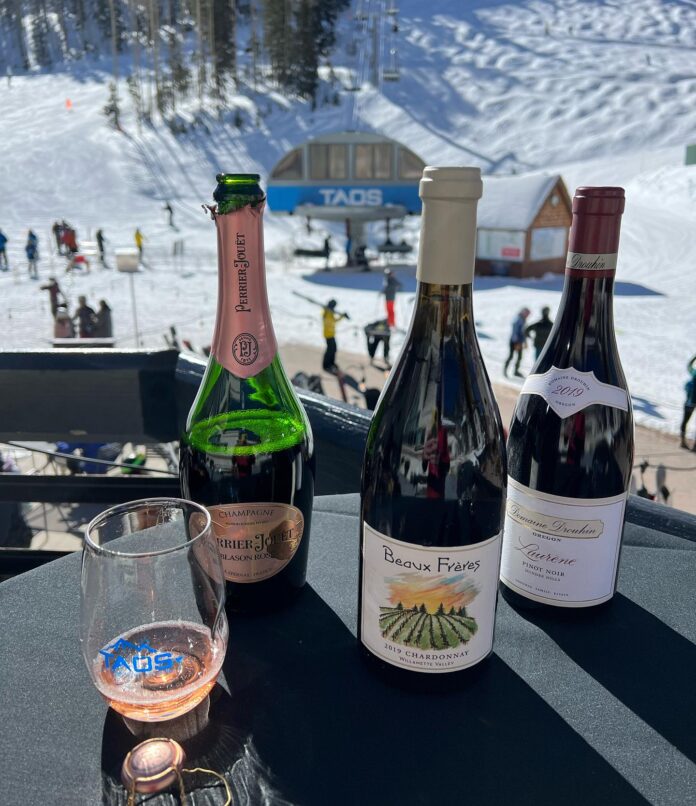
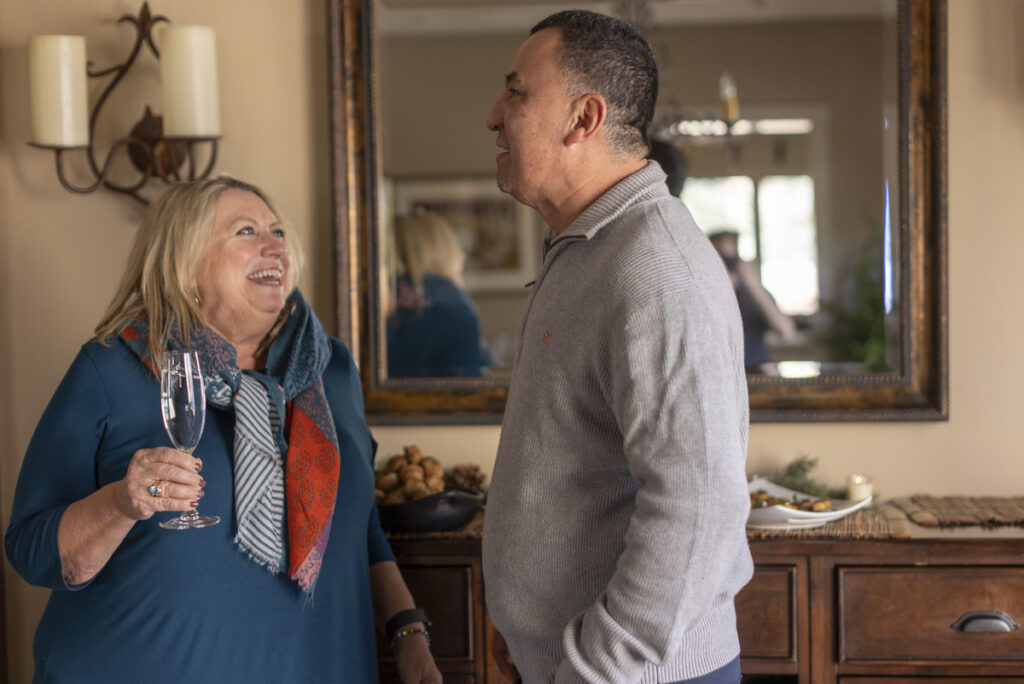
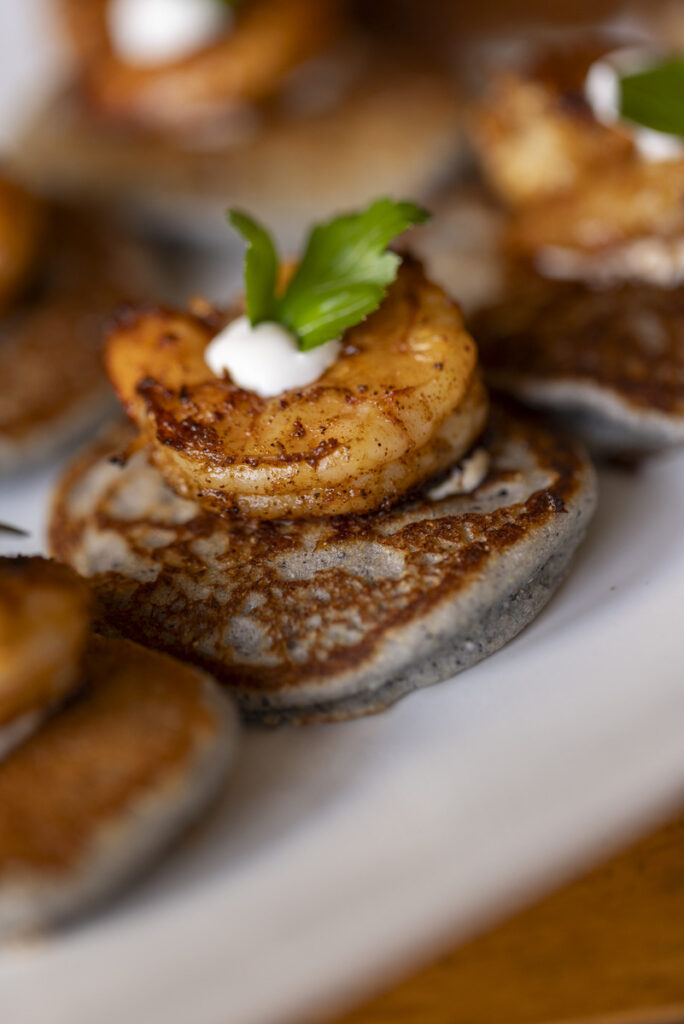
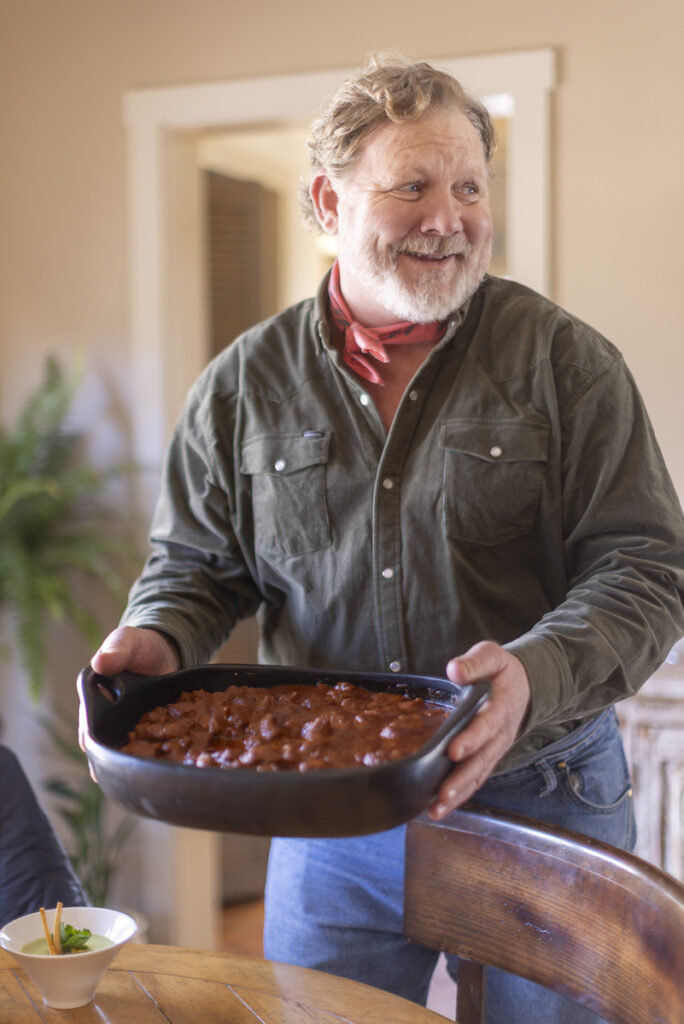
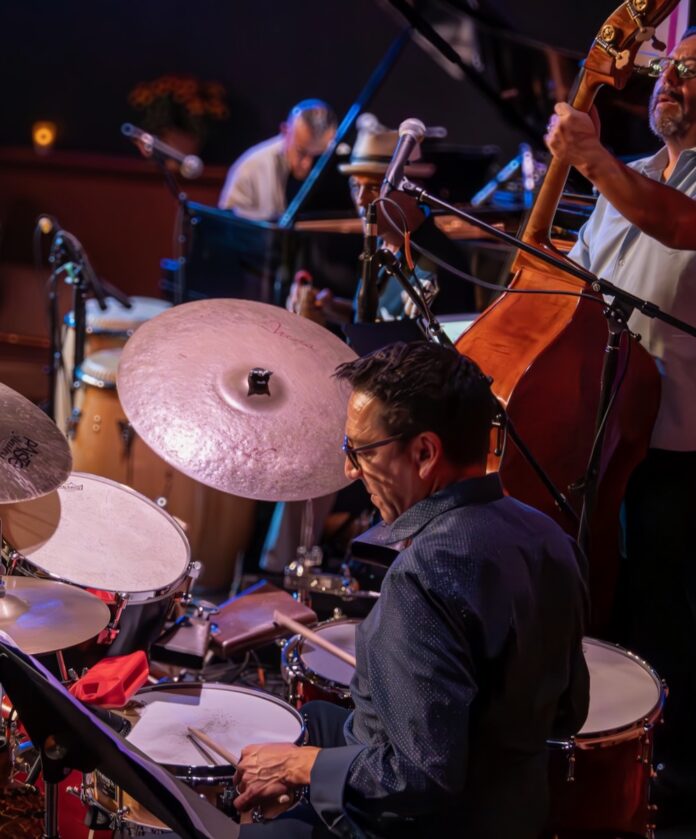
Escape to the beautiful winter wonderland of Taos for a long weekend celebrating the art of fine wine and culinary excellence at the Taos Winter Wine Festival from January 29 to February 2! This captivating event brings together some of the finest wineries and Taos’s top chefs for an unforgettable experience. Indulge in a series of decadent events, including chef luncheons, après-ski tastings, wine dinners, and two spectacular tastings.
Reserve Tasting: Savor signature dishes from local restaurants along with special reserve wines from 30 esteemed wineries.
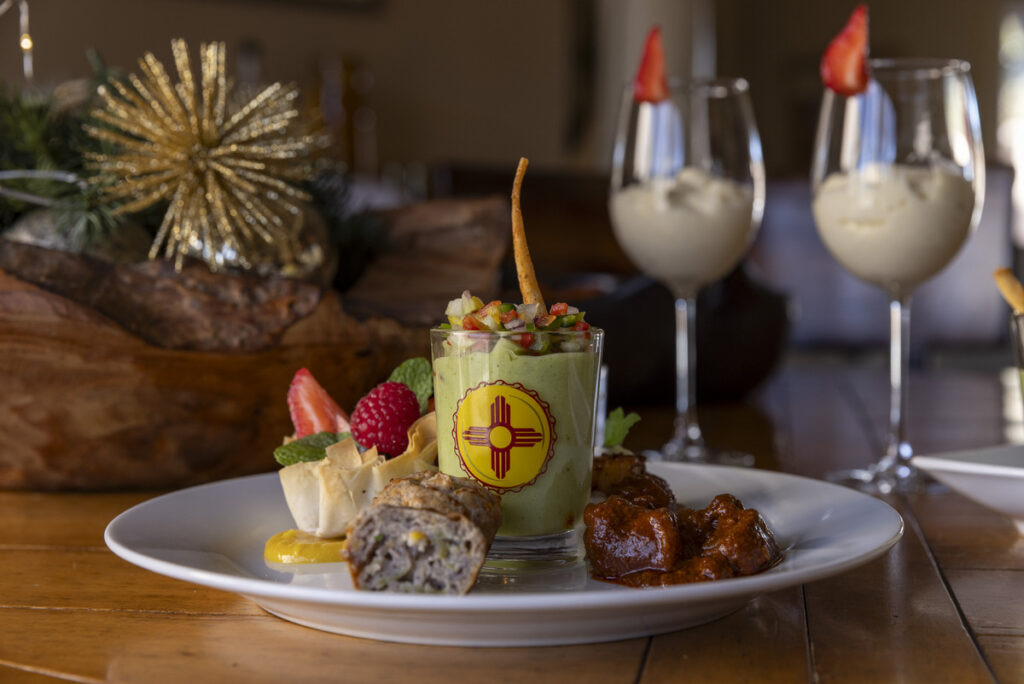
Grand Tasting: Embark on a culinary adventure featuring 30 wineries pouring alongside paired bites from Taos’ and Taos Ski Valley’s finest restaurants.
Whether you’re a passionate skier, a food and wine enthusiast, or simply seeking a luxurious winter getaway, the Taos Winter Wine Festival promises an experience that will tantalize your senses.
Taos Winter Wine Festival Giveaway
Want to experience the magic for free? We’re giving away a pair of tickets to the Reserve Tasting and a pair of tickets to the Grand Tasting! Simply sign up for our newsletter below to enter for a chance to win. Don’t miss this opportunity to indulge in the best of Taos!
By entering your email you agree to the competition terms and conditions.
The restaurants of New Mexico provide us with innovative menus, traditional ingredients and influences, and a whole lot of deliciousness. This year, the 2025 James Beard Awards has chosen eight of these New Mexico establishments, chefs, and beverage professionals as semi-finalists for awards honoring their exceptional food, food media content, and better food systems, all while demonstrating a commitment to racial and gender equity, community, and sustainability. TABLE Magazine congratulates the semi-finalists!
8 New Mexico Restaurants Make 2025 James Beard Semi-Finalists List
This bakery in Albuquerque is servings up the freshest Vietnamese treats possible as their bakers start early each morning to deliver quality results. Each pastry or baked good is handcrafted with time and true techniques along with the finest ingredients to bring tastes from across the ocean to New Mexico.
While the outstanding food from Campo at Los Poblanos may be your first thought when you hear their name, their wine and beverage program is just as excellent. A lot of the components of their drinks are made in-house but they also outsource fresh organic ingredients and small-batch barrel-aged spirits. Their cocktail program’s success truly takes a village all the way from gardeners to mixologists.
Kate Gerwin at Happy Accidents Bar is an award-winning bartender who’s dedication expands from cocktails to customers alike. Her service at Happy Accidents oozes professionalism mixed with a sense of unique creativity. A lot of her recipes use unexpected ingredients such as leeks, mushroom infused tequilia, cocoa puff cereal infused mezcal, and much more.
Cristian Pontiggia, Sassella, Santa Fe, NM for Best Chef Southwest (AZ, NM, NV, OK)
Authentic, Italian fine dining are the ways of Cristian Pontiggia, chef of Sassella. Pontiggia’s work focuses on the Lombardy region of Italy, serving up dishes like Branzino Natalizo and Risotto alla Valtellinese. Just one bit of his modern twist on traditional Italian foods and you’ll be able to see his prestigious kitchen background shine.
Her roots in Latin American cuisine influences Kattia Rojas’ goal of cultural representation within New Mexico. For over 10 years, she has been infusing her own Latin flavor into dishes we all know and love. Her work at Buen Provecho shows itself through a menu including deep fried plantains, various tamales, and Costa Rican specialties.
You may recognize Fernando Ruiz from his three Food Network wins on Beat Bobby Flay, Guy’s Grocery Games, and Chopped. At Escondido, he combines a blend of Coastal and Northern Mexico regions using only the freshest seafood and other ingredients available. Even his dishes using chicken mole, barbacoa, al pastor, and carne asada are sourced from Northern New Mexico ranches and the US Southwest.
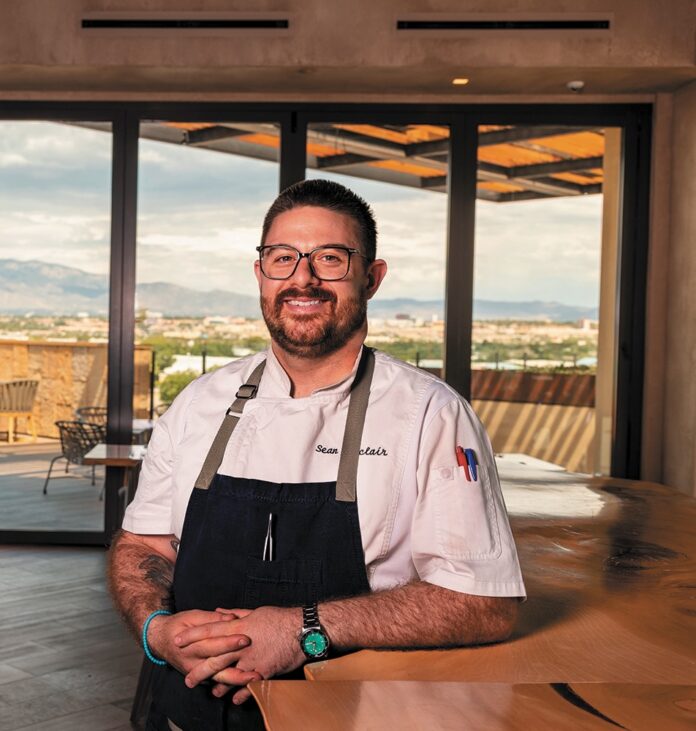
Highlighting the flavors and cultural cuisine of New Mexico is the work horse behind Sean Sinclair’s menu. This chef at Level 5 is always creating new seasonally inspired menus to amaze guests. Most recently he works red chili into different dishes such as ABQ Style Popcorn, Bison Sliders, and their Ramon Perez Ranch Beef.
Joseph Wrede of Joseph’s Culinary Pub works to bring local dishes and ingredients to the New Mexico table. He enjoys playing with various textures and flavors to make something entirely new. He’s especially known for his use of duck fat to elevate dishes you would not expect. Through it all, he keeps a rotating, seasonal menu at the heart of Joseph’s Culinary Pub so you always have something new and in season to taste.
We talk to Lucas Swallows, corporate mixologist for Heritage Hotels, about smoke and mirrors, a dream drink in Mexico City, and why guilt isn’t a word in his vocabulary.
Proust Questionnaire with Lucas Swallowsof Heritage Hotels
Tequila or Mezcal?
A balanced menu should include both Tequila and Mezcal as they offer very different aromatics. I use Mezcal as a “smoky seasoning” at times, lending a dynamic contrast to botanical-forward spirits like gin or tequila.
What makes a great bar?
A good bar fits the boundless world of imagination into the strict constraints of reality.
What makes a great bartender?
Bartenders, like all service team members, should be stewards to the ideas and products that their project is putting forth to their community. Proficient menu knowledge, accurate, consistent execution of menu items, and a friendly delivery are a great start.
What makes you a great bartender?
Experience. Not being afraid to fail forward.
What inspired you to become a bartender?
I love to cook (back of house) and create layers of flavors, textures and aromatics. I also love being host to the experience (front of house). Mixology was a way to bridge the two.
What you appreciate most in your fellow bartenders?
You know you’re with the right team when a busy service looks and feels like a choreographed dance.
What is your favorite ingredient/liquor to use?
I enjoy adding smoky nuance to fruit and floral driven cocktails, sometimes drops at a time, using Islay Scotch and Mezcal.
What is your signature drink and describe it?
“Smoke and Mirrors.” It’s an example of how fine flavors are derived from balancing freshness with smoke. A playful juxtaposition of floral, fresh citrus, and agave, against roasted barley spirit and smoked peat that includes Tequila Reposado, Elderflower liqueur, lemon, and Islay Whisky.
What makes for a great evening out when you’re not at work?
I’m on the constant hunt for authentic food and beverage experiences. From a hole-in-the-wall to a critically acclaimed project, my hope is to learn to eat and imbibe.
There are nearly 800 hotels across the 122,000 square miles of New Mexico. They offer everything from budget-conscious accommodations to luxurious world-class indulgences. Thankfully, tucked inside so many of these gems, you can find some of the best examples of the state’s great and diverse cuisine. Contributing writer Bill Smith shares some of the exciting changes in a number of the dining establishments inside Heritage Hotels.
Heritage Hotels’ Restaurant Magic in New Mexico
Founded in 2005, Albuquerque-based Heritage Hotels & Resorts now has a portfolio of some ten properties – from Taos to Las Cruces – where visitors and locals alike can also take in New Mexico’s cultural heritage.
What Heritage also brings to the table are gorgeous and iconic properties that serve as the perfect backdrop for incredible culinary explorations.
“Exceptional dining adds to the customer experience at our properties,” said Jim Long, Founder & CEO of Heritage Hotels. “Our goal is to invest in great talent and give them the resources they need to deliver great food and great experiences for our guests,” he continued.
A Little Something For Everyone at Heritage Hotels
Over the past many months, evolutions in Heritage Hotels food offerings have underscored what Jim Long described as a “serious effort” on the part of the company to become a bigger player in the space.
Level 5 at Hotel Chaco
The group’s portfolio ranges from large properties with mammoth conference and meeting spaces like Hotel Albuquerque in Old Town and Santa Fe’s Hotel Eldorado to the decidedly more intimate, including Hotel Chaco located in downtown Albuquerque.
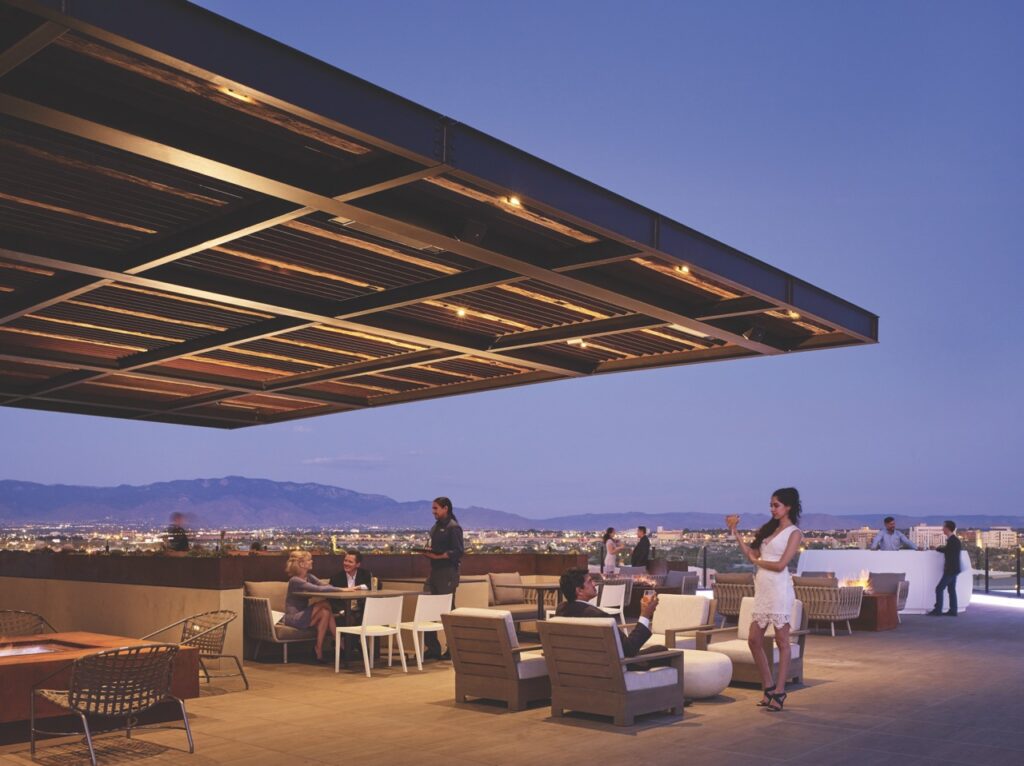
Part of a complete reimagination of the neighborhood where the hotel sits, Hotel Chaco is a luxurious feast for the eyes. All the more reason then, that last year, foodies gleefully took note when James Beard Foundation semifinalist, acclaimed Chef Marc Quinones landed at Level 5, the rooftop dining space of the hotel.
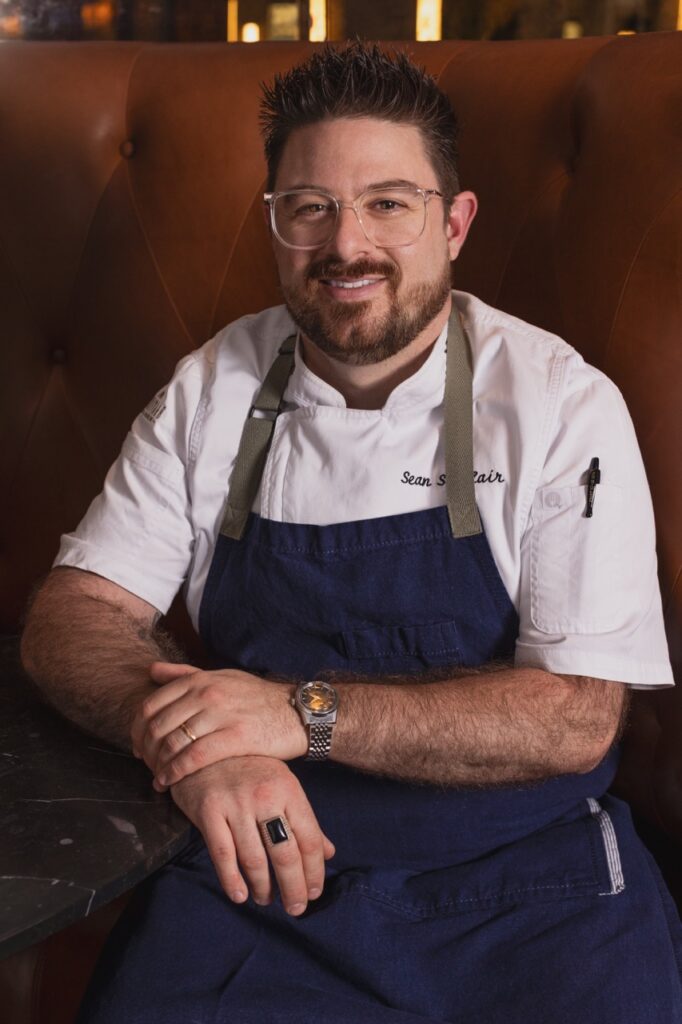
Chef Sean Sinclair
A New Menu From Chef Sean Sinclair
After his departure from Level 5 earlier this year, Heritage offered the space to Chef Sean Sinclair. Sinclair honed his skills at a number of venues, including the 3-star Michelin restaurant, the Inn at Little Washington, outside Washington, DC. He also developed a sound following in the state for doing extraordinary things at the Castaneda Hotel in Las Vegas (NM).
Chef Sean’s first menu is a stunner. An array of simple “snacks” to enjoy in the outdoor lounge area includes potato tostones with a creamy herbaceous dressing, ABQ-style popcorn (with chile, of course), and a delectable Australian farm cheese served with local Heidi’s raspberry jam and thin, baked crisps. Main courses include suckling pig matanza-style, a duo of duck, and a decadent rainbow trout whose sauce is from a tomato water reduction with butter. This is, pardon the pun, next-level cuisine.
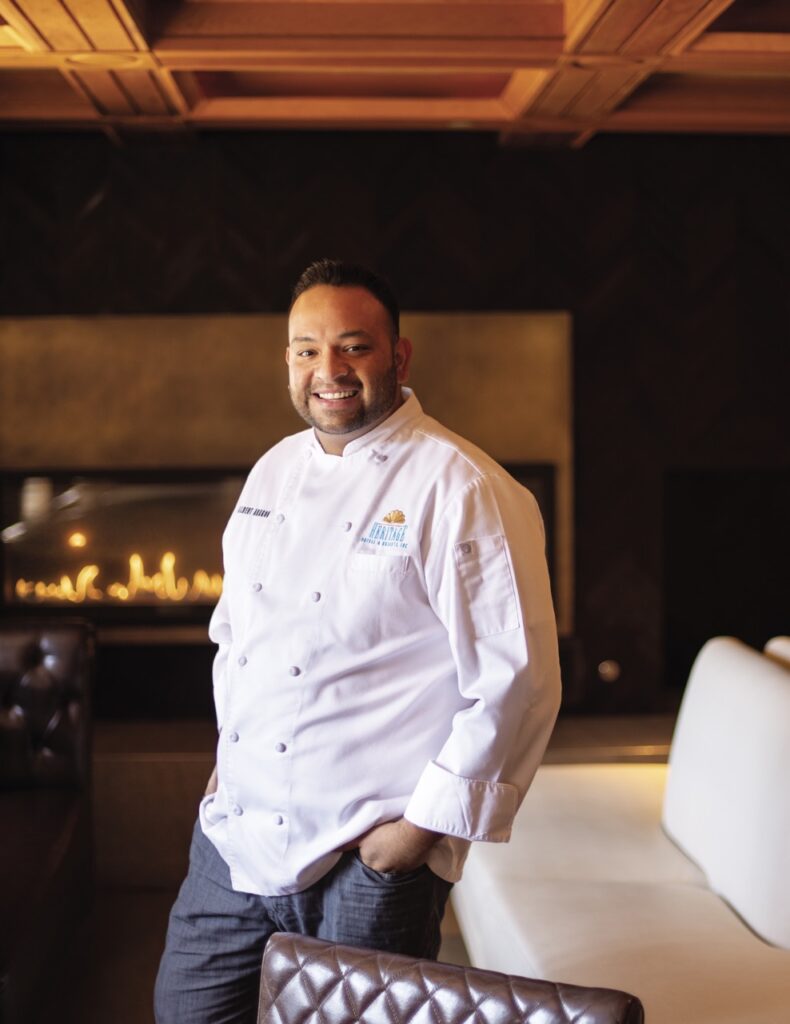
Chef Gilbert Aragon
Chef Gilbert Aragon’s Touch on Heritage Hotels
At Heritage’s Hotel St. Francis in Santa Fe, Wolf and Roadrunner has opened in the austerely elegant dining room and is helmed by Chef Gilbert Aragon. Aragon has worked his way up through Heritage Hotels over the past 16 years. He also speaks affectionately of the mentorship provided to him by southwest chef extraordinaire, Mark Miller. The initial menu is built around what Aragon describes as his love for “world cuisine.” While the dining room seems to have gone dark for the winter months, Wolf and Roadrunner is still servicing the hotel’s time-tested Secreto Lounge with ample provisions for an evening out.
Wolf and Roadrunner at Heritage’s Hotel St. Francis
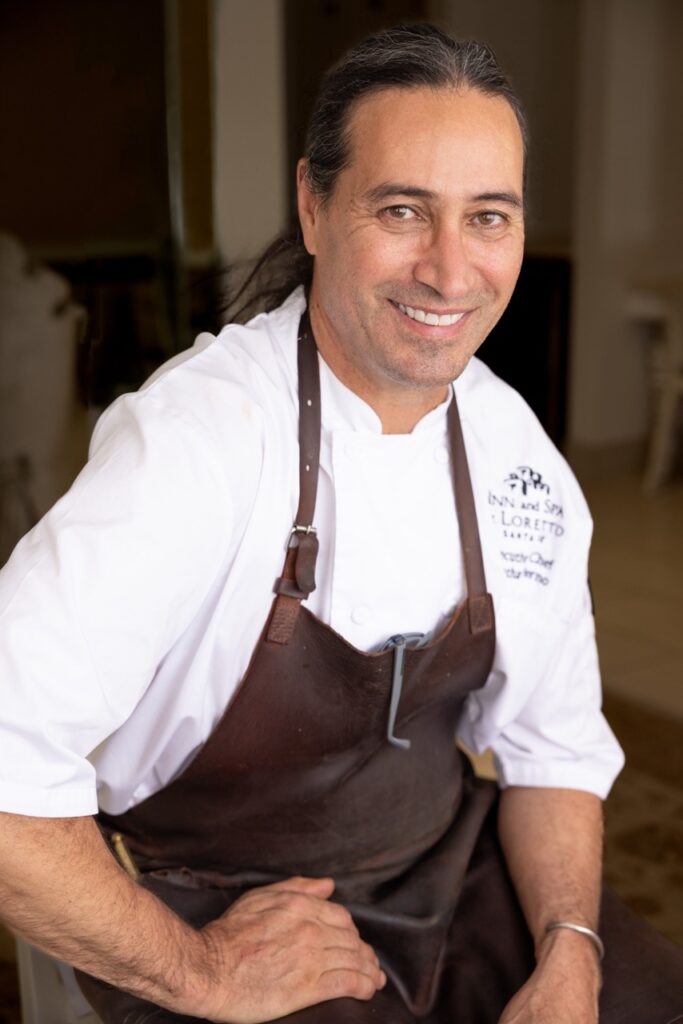
Taking Simple to Next Level With Chef Jonathan Perno
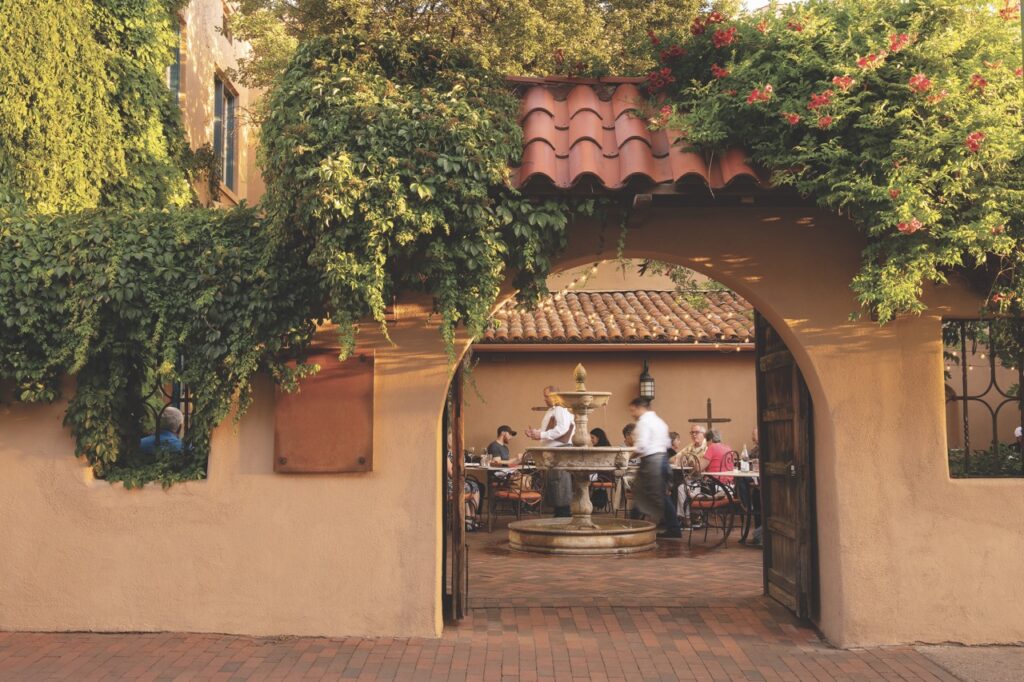
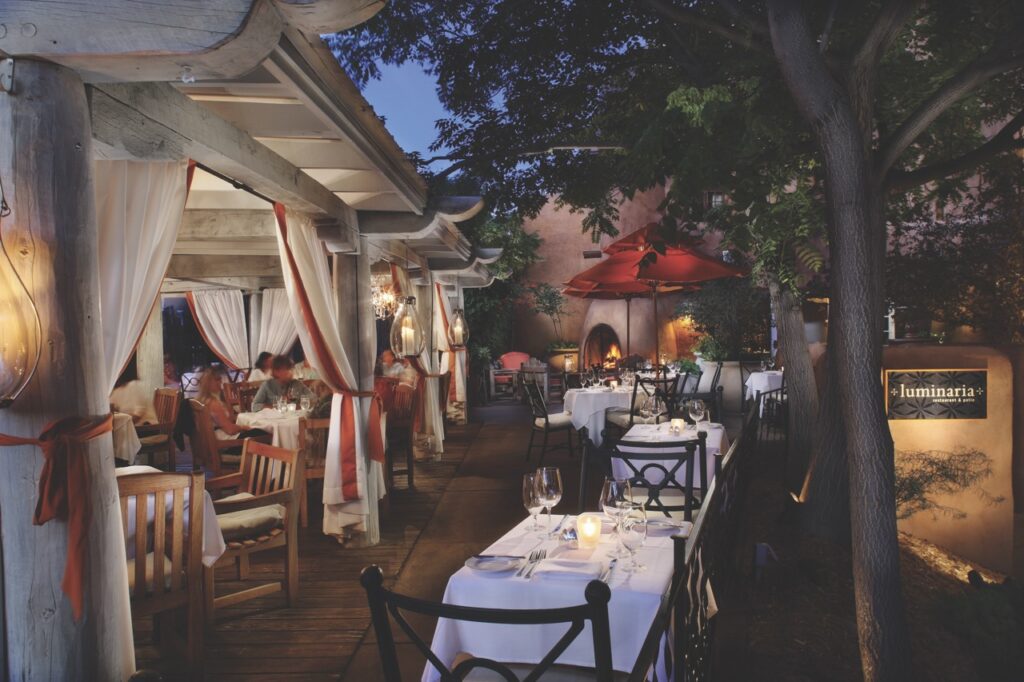
Finally, at the restaurant Luminaria inside Inn & Spa at Loretto, which Heritage acquired in 2017, Chef Jonathan Perno temporarily came on board as the Executive Chef to help develop and launch a new set of menus for breakfast, lunch, and dinner. Formerly of Campo at Los Poblanos in Ranchos de Albuquerque, where he spent 14 years, Perno earned accolades for innovative cuisine rooted in New Mexico. In 2020 he was a finalist for Best Chef of the Southwest by the James Beard Foundation.
Chef Jonathan Perno
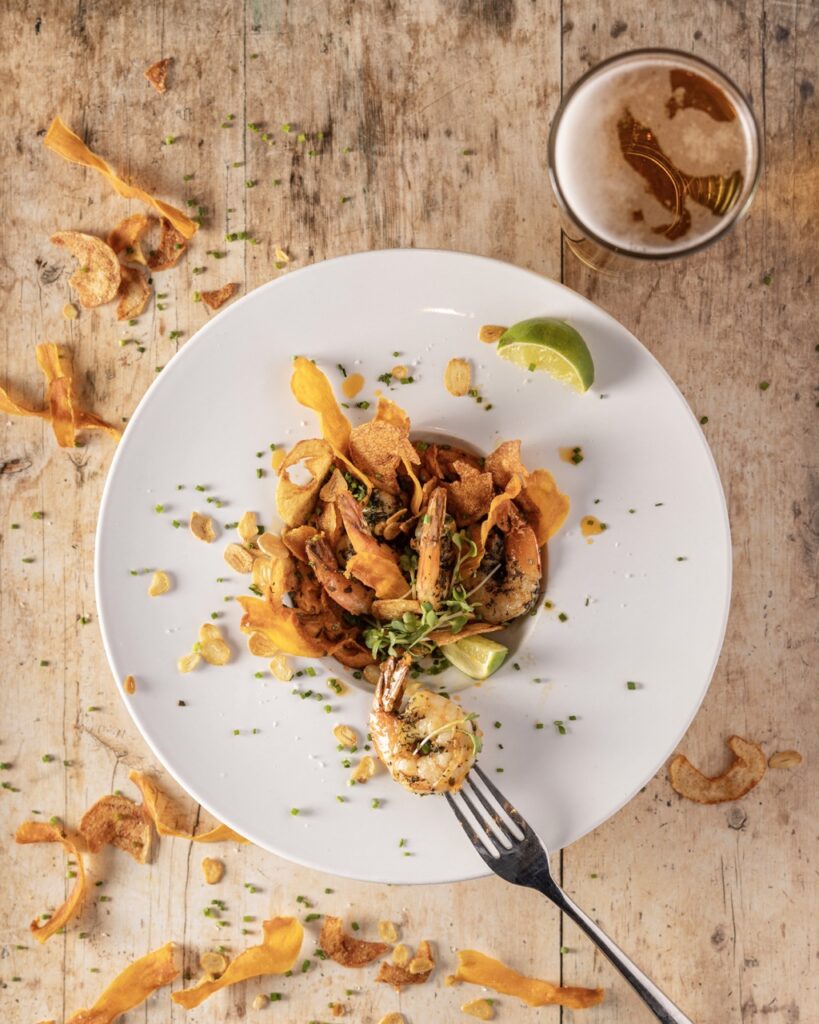
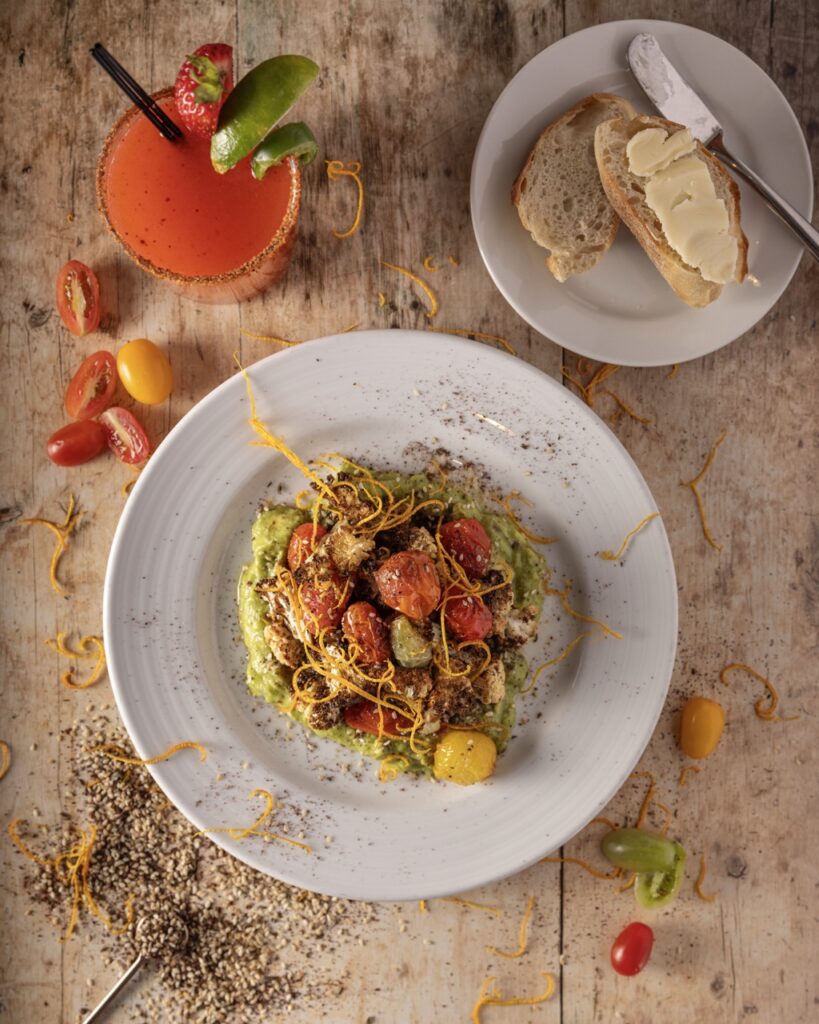
As an appetizer, a humble head of cauliflower is transformed by simple roasting, spiced with zatar and a sprinkling of dried orange zest, and served over a base of guacamole. A marinated shrimp appetizer is accentuated by “hard herbs” and a hint of heat from chile oil, with texture being tended to by a duo of sweet potato chips and a puree. Then, a squeeze of a lime wedge adds acid and citrus.
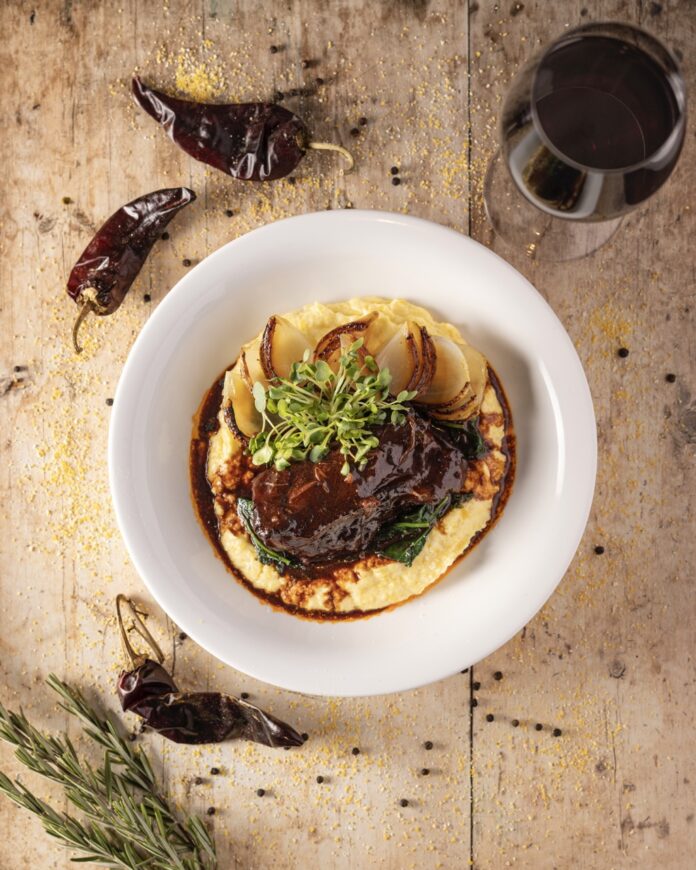
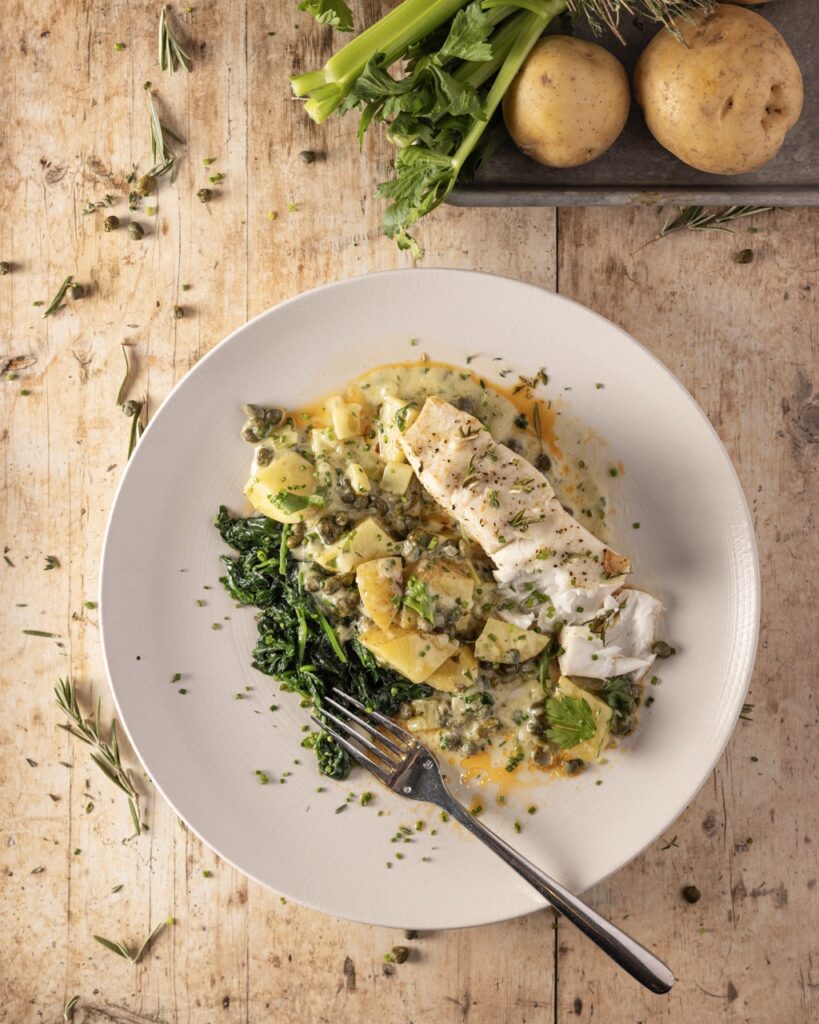
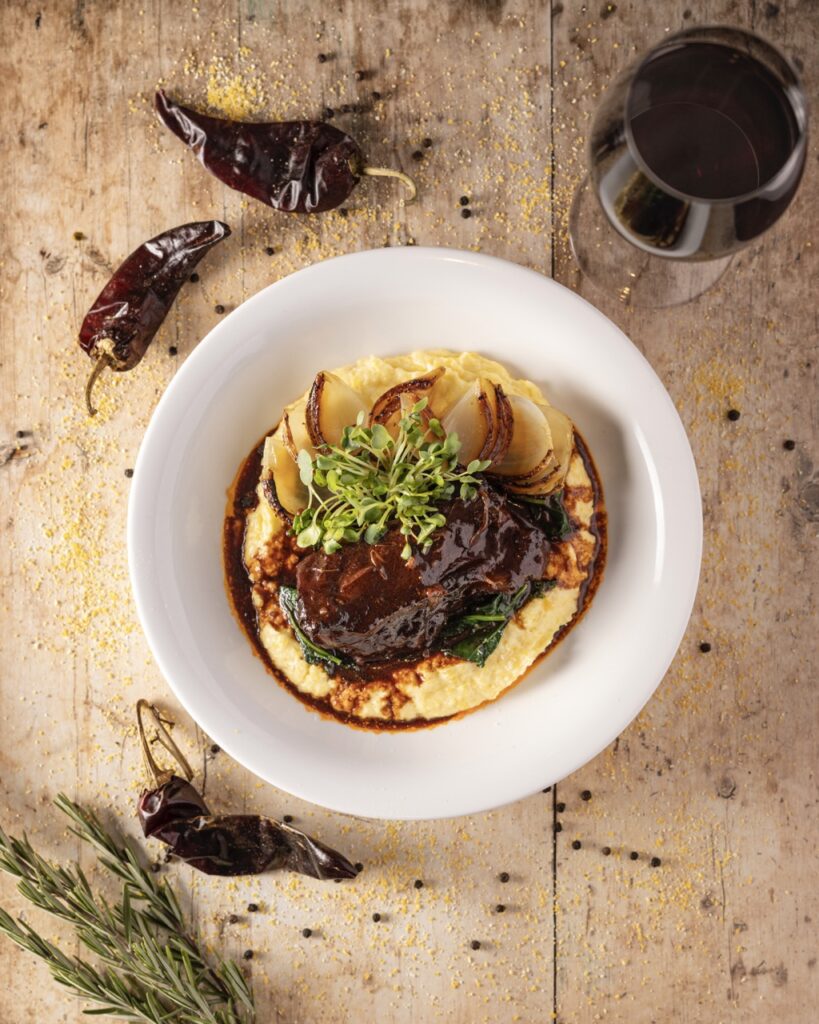
The sauteed halibut main course benefits from studded rosemary and garlic in the flesh of the fish, imparting a depth of flavor – something Perno said he learned from Chef Eric Ripert. The real star of the dish is “Bobby’s Potatoes,” an honor to Perno’s partner’s mother, the potatoes simmered in cream with onions, celery, and capers. The Red Chile Braised Short Ribs, also served over perfectly seasoned polenta, are every bit New Mexico with the red chile glaze providing just the right amount of heat and flavor.
Luminaria at Loretto
This Winter Menu is Just the Beginning
Hal Leonard, General Manager of Inn & Spa at Loretto, told TABLE that while Perno has now departed Luminaria, his menus are in place and the kitchen team was trained to execute them with fidelity.
The winter dining scene is an exciting one for what Heritage Hotels is offering up in their restaurants. And what lies ahead for Heritage’s culinary journey is a point of excitement for Long. “What you see is just the tip of the iceberg for what is coming,” he exclaimed.
Story by Bill Smith Food Photography by Tira Howard
In 2024, Open Kitchen expanded its vision with the opening of Alkemē, a Santa Fe restaurant that brings “Culture-to-Table” dining to life. Within months, Alkemē was named a James Beard Award semifinalist for Best New Restaurant, cementing Open Kitchen’s reputation for creativity and innovation.
Open Kitchen’s First Meet The Makers Wine Dinner at Alkemē
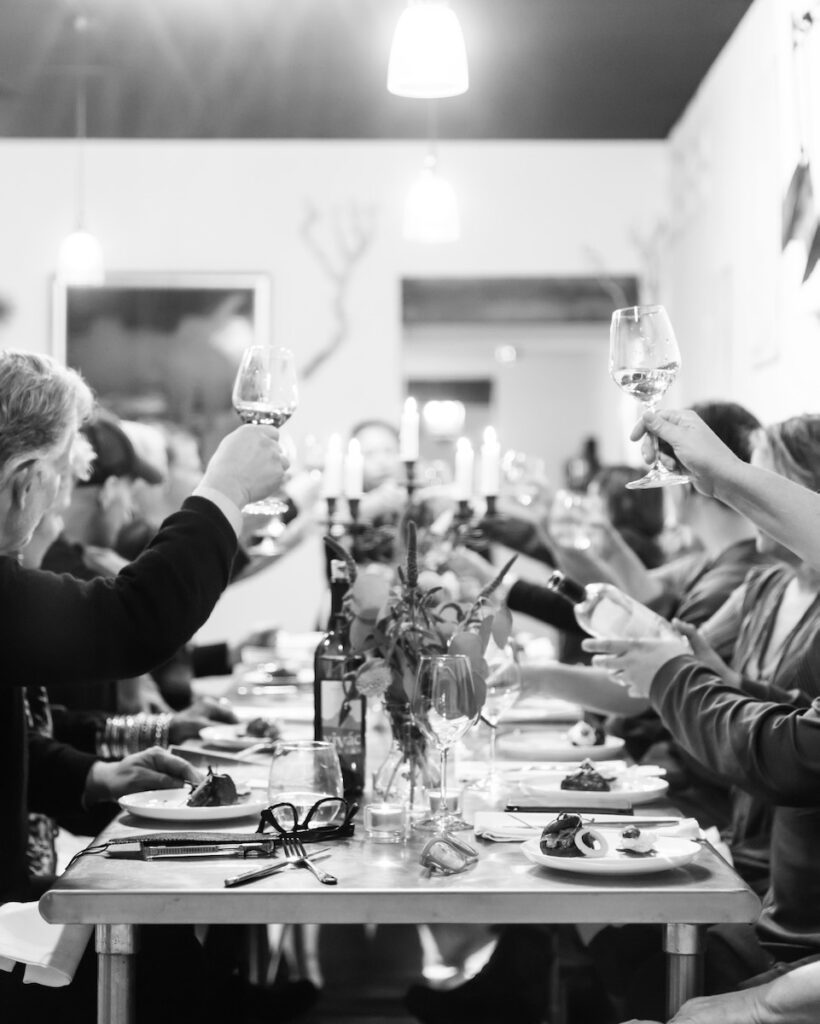
Open Kitchen is known for cooking up flavorful fun at catered events, cooking classes, private parties, and other edible experiences. In 2022, a special gathering of dinner guests took things to new heights when this collaborative hub hosted an artful evening of creativity, camaraderie, and delight.
Part of the joy came from friends and strangers reconnecting after two years of pandemic isolation. But much more was at work. The event marked Open Kitchen’s inaugural Meet the Makers Collaborative Wine Dinner, pairing Beck & Bulow’s premium meats and seafood with Vivac Winery’s award-winning New Mexico wines. Six courses of Open Kitchen’s culinary wizardry followed. The result felt like true alchemy.
“It was such a beautiful night and it really made my heart sing,” said Open Kitchen founder and chef Hue-Chan Karels. “There was a wonderful perfect storm, so to speak. During the pandemic there was such a hunger for gathering and people craved the desire for everyone coming together. We had 45 people, packed, it was a sell-out. Everyone was feeling a specialness to be among each other. There was a hunger for connection, a hunger for seeing food created in a very special way.”
Food as Art
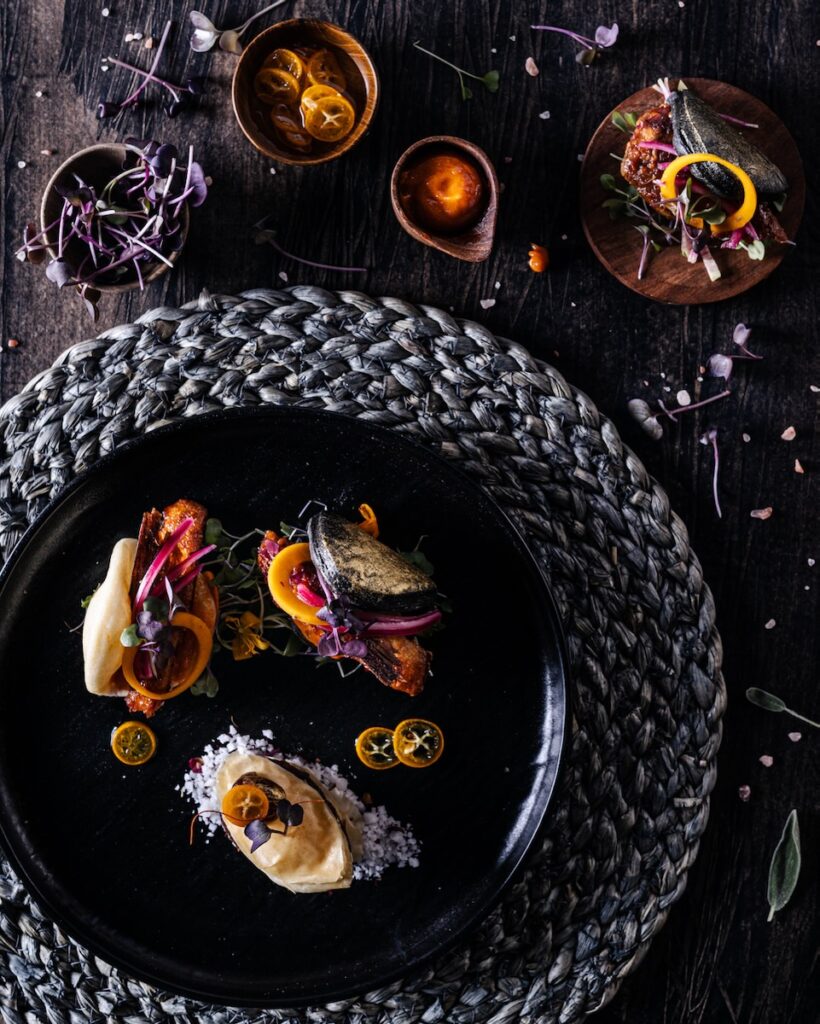
Each dish at this dinner seemed to spring from a meditation on beauty and melody. With a symphony of flavors, the presentations resembled still-life paintings.
Take the passed hors d’oeuvres: Wild Boar Bacon Mille Feuille with Citrus Mascarpone Cheese and Mini Bao with Gochujang-Hibiscus Candied Salmon Belly, featuring Beck & Bulow’s specialty meats. The colors and composition created artistry that looked almost too good to eat. Vivac Winery’s 2020 Rosé of Sangiovese added light, bright berry notes.
“We’re very color-oriented,” Karels said. “We always make a plate like a painting. At Open Kitchen, we do cooking classes and we always want to teach people to honor ingredients, to really look at the beauty of it before you cook it, and how you preserve the beauty despite the cooking.”
The Flavors of the Evening
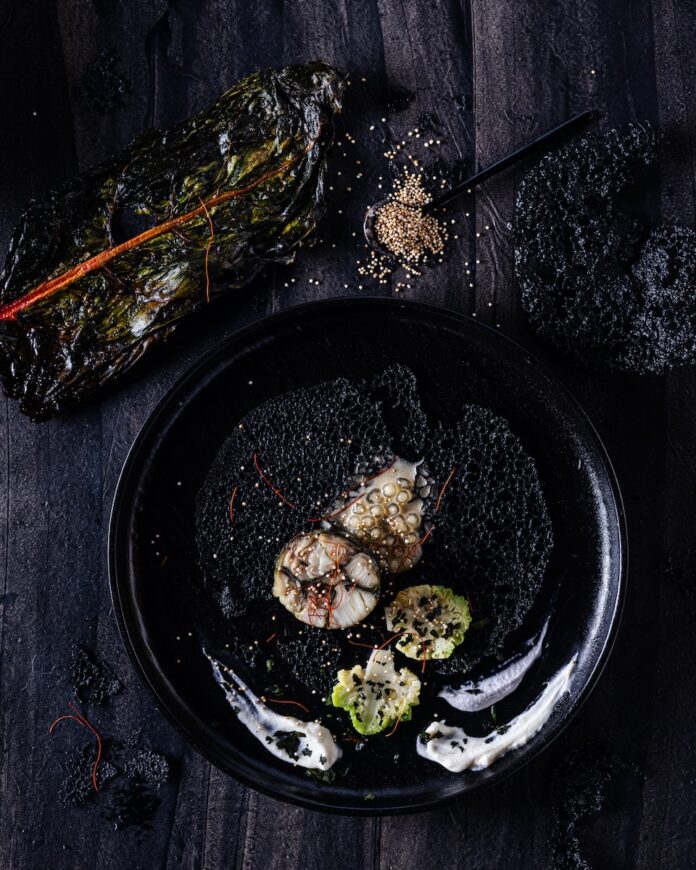
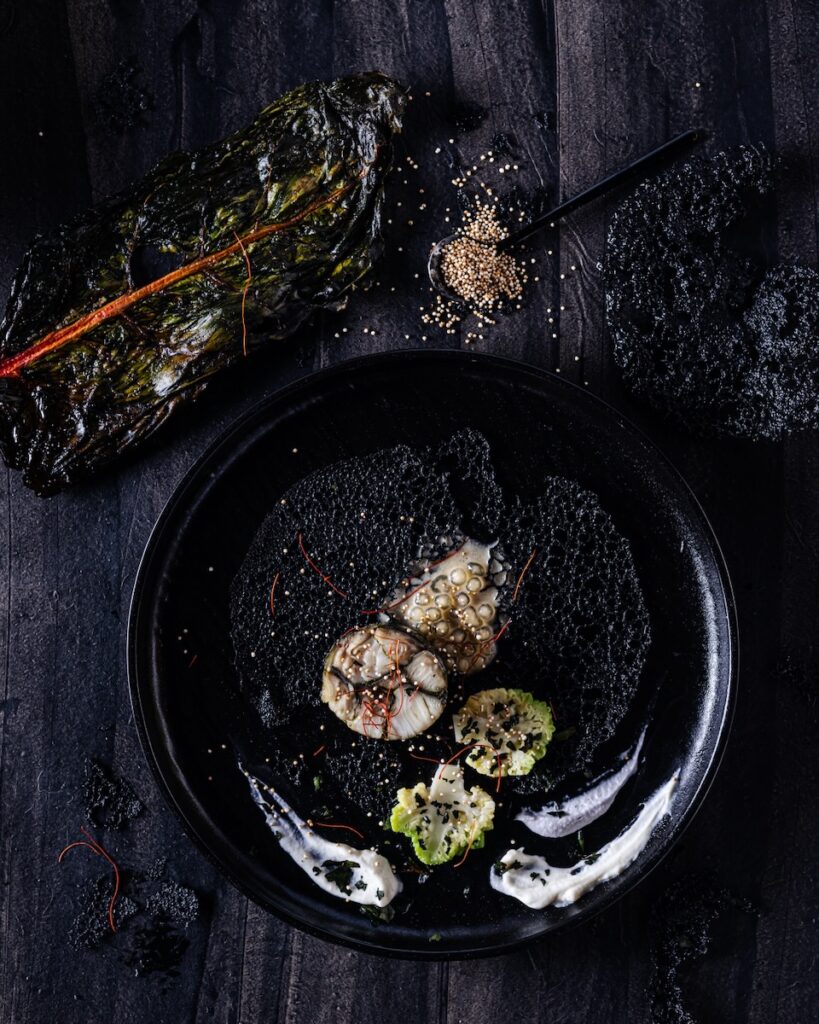
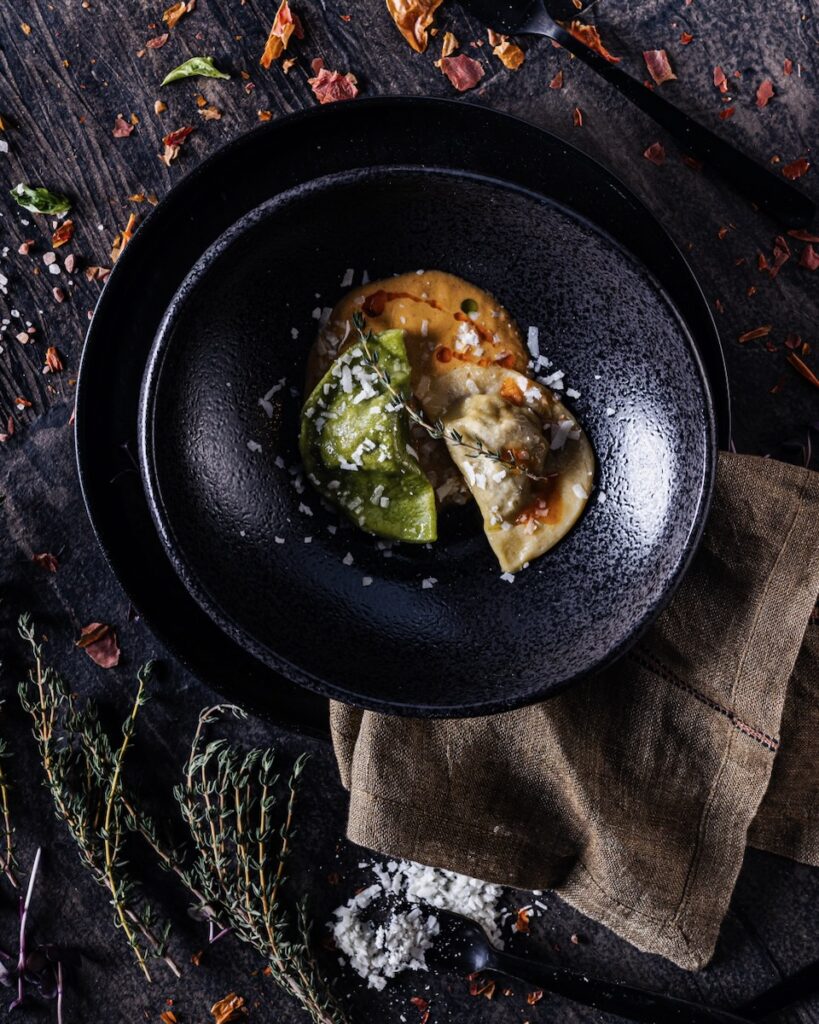
Plate after plate arrived: Silky Elk Ravioli with Creamy Purple Potato, Blackened Yellow Tomato Sauce & Basil Oil; Pan-Roasted Wild Caught Alaskan Sablefish with Miso Beurre Blanc, Cauliflower Purée, Crispy Swiss Chard & Squid Ink Tuile; and Wild Cedar Muscovy Duck Breast with Pearl Couscous, Roasted King Oyster Mushroom & Wilted Greens.
Vivac’s wines flowed freely—Chardonnay, Abbot Merlot, and a dry Riesling made in an Alsace style. Karels noted the crowd favorite: the ravioli. “Everyone’s favorite dish, it seemed, was the ravioli,” Karels said. “You can’t beat hand-made ravioli. We used spinach and yellow bean, making it by hand. We love the look and the taste of the purple potatoes, and the black and yellow tomato sauce is an inspiration from one of Chef Mark Miller’s sauces so we kind of jazzed that in, and the fresh basil oil. Everything we do, I literally spend weeks, sleepless nights, trying to imagine how the flavors will come together. Most often it does really work.”
A Team Effort
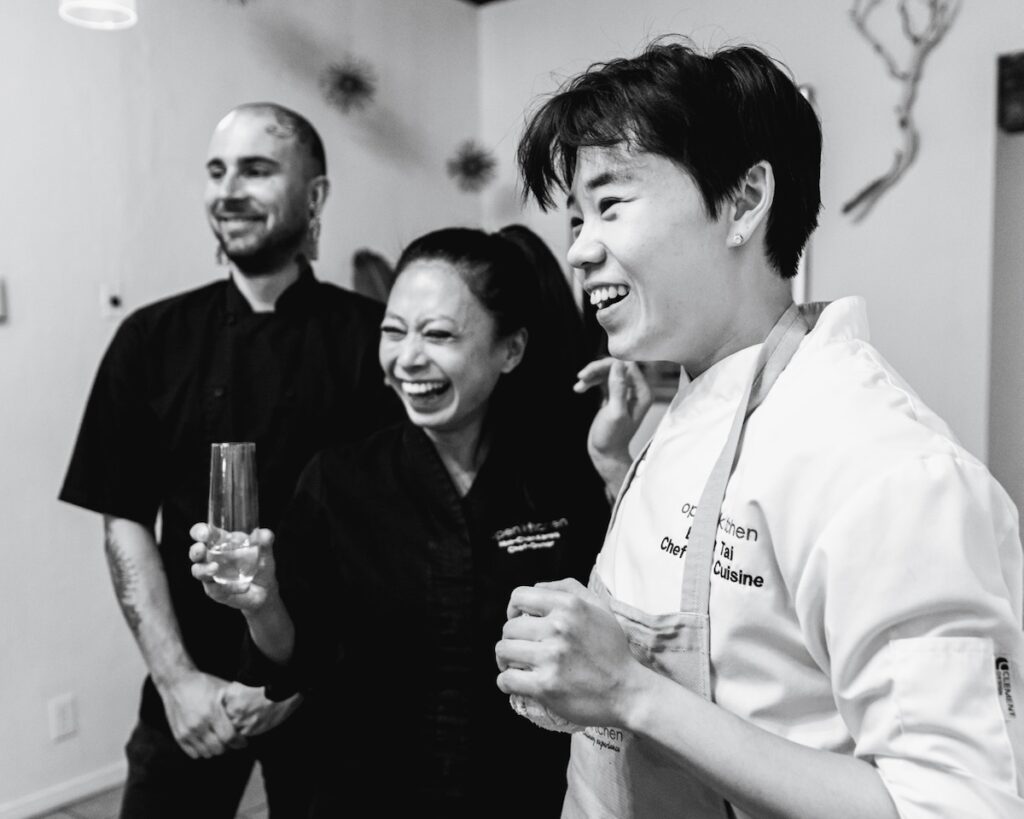
Open Kitchen began as a collaborative culinary center, and Karels credits her team for its success. She highlights chef de cuisine Erica Tai: “Erica Tai is my second hand, the chef de cuisine. She was one of Santa Fe Community College’s Culinary Program students working with me nonstop during the pandemic, when we were making prepared meals, and now we have the ability to make inspiring food for people.
It takes a lot to be a chef these days—it’s not just cooking, it’s creating what you do in a special way and she has been amazing. We’re not like regular restaurants where we have menus that are static for a year. Every menu that we do is new, and creating and executing the vision is a talent that you have to have in your repertoire to make it in this new world of this industry. Erica has that amazing skill to create beautiful food and she’s very disciplined.”
Celebrating the Makers
Naturally, the dinner featured the makers themselves, who were thrilled by the pairings. “It was a knock-it-out-of-the-park evening all around,” said Chris Padberg, co-owner, co-founder and winemaker at Vivac Winery in Dixon. “When we’re doing a wine dinner with a chef, it’s hard to know what to expect. Sometimes the pairing won’t work or the dishes will be awful or the people—you have to win them over and make them love you while you’re talking to them. If you can’t do that, it can be kind of a dead night. But from the get-go to the end, that crowd was ready to party and be happy.”
Beck & Bulow’s co-owners, Tony Beck and J.P. Bulow, were equally impressed. “Our heartfelt thanks goes to Open Kitchen for honoring the makers,” said Bulow. “We want to pass that honor to these amazing, life-changing meats and seafoods that were featured. The best chefs use the best ingredients, so it was great to work with Chef Hue-Chan who highlighted our local bison, elk, and Alaskan wild salmon and sablefish.”
Every menu Open Kitchen creates is new, opening up avenues of culinary creativity and beautiful presentation.
Story by Lynn Cline Photography by Tira Howard Food Styling by Keith Recker
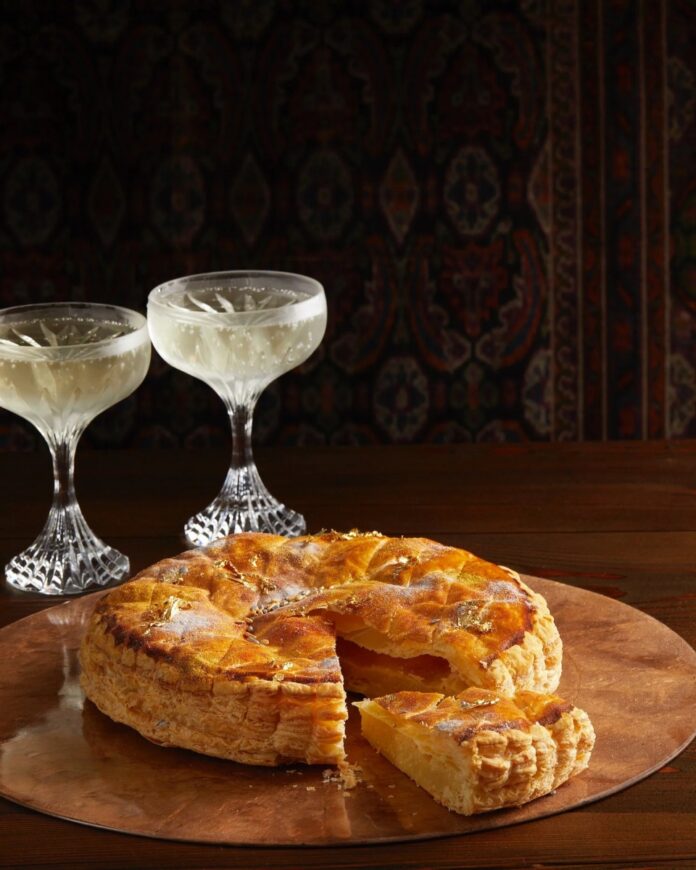
The King Cake is a puff pastry confection served on Epiphany. Its purpose is to commemorate the Three Kings’ arrival at the stable where Jesus was born. As the Christmas carol reminds us, they followed a star to find the way, bringing rare and symbolic gifts of gold, frankincense, and myrrh. In New Orleans it’s iced in three colors: purple (justice), green (faith), as well as gold (power). Elsewhere, simplicity generally prevails with a bit of sugar and a sprinkle of gold nonpareils.
What is a King (Epiphany) Cake?
Meals with religious and cultural underpinnings, such as the festivities during Mardi Gras are reminder of how food connects us. It takes to traditions, nurtures faith, and by design is meant for sharing. The cake is cut and then distributed among guests. A tiny plastic baby, once made of porcelain, hides in one slice. The lucky person to find the baby in their slice is king for a day. As is the custom, they are also obliged to host the next gathering where a new King Cake is served.
We whipped up this delicious King Cake for TABLE readers. We hope you’ll bake it as a delicious way to close out this holiday season, and that happy memories make even more scrumptious.
We’re making this celebratory dessert as easy as possible.
Ingredients
Scale
For the almond filling:
1 ½ cups slivered almonds
¾ cup (150 g) sugar
2 tbsp all-purpose flour
⅛ tsp salt
1 large egg + 1 large white (reserve the yolk for the glaze)
1 tsp almond extract
½ tsp vanilla extract
6 tbsp unsalted butter, softened
1 (17 oz) package of frozen puff pastry, thawed in the refrigerator overnight
For the glaze:
1 egg yolk
1 tsp milk
Instructions
To make the almond filling, combine the almonds, sugar, flour, and salt in a food processor and process until they are very finely ground. Add the egg and egg white, almond and vanilla extracts; process until combined, about 10 seconds. Add butter and process until no lumps remain, about 10 seconds. Scrape the bottom and sides of bowl with a rubber spatula and process to combine thoroughly, about 10 seconds longer. Refrigerate until ready to use.
Heat the oven to 400 degrees with the rack in the middle position. Line a baking sheet with parchment paper. On lightly floured surface, lay both sheets of puff pastry and cut a 9-inch circle out of each one. Transfer them to the baking sheet and refrigerate for 30 minutes.
Remove the dough and almond filling from the refrigerator. Slide one circle of dough from the pan so that there is only one circle of dough on the parchment-lined baking sheet. Spread the almond filling over the center of the dough, leaving a 1-inch exposed border.
Brush water generously around the exposed perimeter of the dough then place the second circle of dough on top and press down to seal the edges very well, then flute the sides of the galette.
Make the glaze by whisking the egg yolk and milk together and then brush it evenly over the top. Use a paring knife to lightly score a design on the top and then poke 4-5 holes all the way through the dough to allow steam to escape.
Bake for 30-40 minutes, or until the galette is well browned on top and up the sides. Serve warm or at room temperature.
Notes
We preferred Pepperidge Farm puff pastry because it includes two large sheets of pastry, from which we could easily cut two circles. If you buy a brand that contains less than 17 ounces, or only comes as one sheet, you may roll out or reshape the dough. Be sure to chill the dough frequently if doing this, as it quickly softens and becomes difficult to work with and also needs a long rest after being worked.
Food and Recipe by Erica Bruce Story by Gabe Gomez Photography by Dave Bryce Baccarat champagne coupes courtesy of Glassworks
Sean Sinclair of Level 5 in Albuquerque talks persimmons, dream meals, and the memory of a baguette in a Parisian park that led him to chase both his personal and professional dreams.
Proust Questionnaire with Sean Sinclair
Red, green, or Christmas?
Always red! I like green chile on burgers but when I eat New Mexican it’s always red.
What qualities make for a great restaurant?
Consistency is everything both in food and service. Great food brings people in. Great service brings them back.
What qualities make for a great chef?
To be a great chef requires that a lot of skills to be linked together. Being just a great cook does not make one a great chef. When you can link great cooking with excellent leadership, top notch organizational skills, deep knowledge of food products and sourcing, labor and cost control management expertise, and a level head…that makes a great chef.
What makes your restaurant special?
Level 5 is special because we have a high level of attention to detail. The restaurant is gorgeous, the food is simple yet focused, and the service is impeccable.
What inspired you to become a chef?
I have always loved the response of people when you feed them well. I loved that feeling as a young man and I chase that still to this day.
What do you appreciate most/look for in your sous chefs?
Our Sous Chef, Todd, is a silent assassin. He’s humble, hard-working, kind, and extremely knowledgeable about food. Sous Chef is the hardest job in every restaurant and ours is top notch.
What is your favorite ingredient?
My favorite ingredient is always changing with season. This year the persimmons have been particularly delicious.
What is your favorite dish you make?
Currently, my favorite dish on our menu is our Foie Gras Pasta.
When you’re not working, where can we find you?
When I am not working, I am at home with my family. I have two kids River (3.5) and Sonny (1). I I try to spend as much time with them as possible.
I don’t really consider what else I would be because I love what I do so much.
What’s the best meal you ever had?
The best meal I’ve ever had was shared with my wife in Paris in a random park. We had a fresh baguette, some charcuterie and some cheese. We watched as a group of kids played in the park and we talked about our future and how maybe someday we’d have a little family. Today I look back on that meal with a feeling of accomplishment that we set out to do something and we did it together.
If you could make a dinner reservation anywhere in the world…?
My first food memory is making pico de gallo in a slap chopper for my family. There was a recipe on the side of the box the machine came in and I followed it closely. I served the salsa to my family and I remember them being very surprised and happy. They said they liked it, I doubt they did. I think that was the moment I wanted to pursue cooking and I was 6 or 7 years old.
Story by Julia Platt Leonard Photo by Emily Okamoto
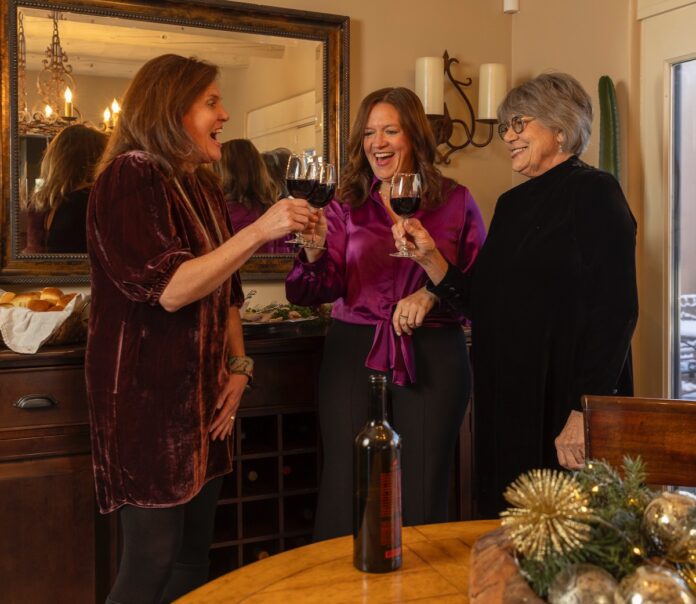
Nicole Curtis Ammerman, her sister Kristen Krell, and their mom, SFSC founder Susan Curtis, toast the school’s 35th anniversary.
The Santa Fe School of Cooking is a must-go destination for culinary inspiration for locals and visitors alike, all eager to learn more about New Mexican cooking. Julia Platt Leonard and Gabriella Marks dropped by to celebrate the school’s 35th anniversary.
Celebrating the 35th Anniversary of the Santa Fe School of Cooking
It’s all down to a cooking class Susan Curtis took at the New Orleans School of Cooking in 1989. She was there with her husband, David, who was on a business trip. “And I said, ‘You have to skip a meeting and come to this. It’s so much fun.’” The idea stuck and Curtis decided to open her own cooking school. The result is the Santa Fe School of Cooking which is celebrating its 35th anniversary.
“I never imagined and I don’t know that she (Curtis) ever imagined it would take on the life that it’s taken. It’s phenomenal,” says Nicole Curtis Ammerman, Susan’s daughter and Director of Operations at the school. SFSC is truly a family affair with Nicole’s sister, Kristen Krell, running the wildly popular Dave’s Jazz Bistro – named after Susan’s late husband, David Ballantyne Curtis – whose twin loves were jazz and fine dining.
More Than Just Cooking
Family extends to the chef instructors who work at the school and who gathered to raise a toast to SFSC’s anniversary. Many, like Noe Cano, have worked with the school for years (he’s been there for over 25 years and Ammerman calls him “our rock”). “He is the most hardworking, loyal person you’ve ever met. And he is a perfectionist,” Ammerman says of Cano.
And while the chef instructors make teaching look easy, it’s a tightrope that demands culinary acumen, a strong knowledge of Southwestern food, and the gregarious, chatty ways of tour guides and beloved teachers. “That was a test for me, to learn how to talk and cook at the same time, because it’s not easy,” Cano says. Hands-on classes – like deep dives into tamale-making or their popular red chile workshop – mean that instructors have to keep an eye on students whose cooking expertise varies from confident to fledgling beginner. “Hands-on are a lot of fun. It’s like herding cats. Culinary cats,” Chef Peter O’Brien, a SFSC veteran says with a laugh.
Curtis and Ammerman learned early on that there was a desire from both locals and visitors to learn about authentic New Mexican cuisine. Long-time chef instructor Allen Smith says it’s not uncommon for students to take the same class again and again. “Whenever they visit New Mexico, they come to the school, they see what’s being taught, and even if they’ve taken it before, they take it again, because each of the instructors offers something different.” They’re more than cooking classes, he says, “Because cuisine is really the gateway to culture.”
Making the Changes the People Want
Along the way, Curtis and Ammerman learned on the hoof, saying ‘yes’ and then figuring out how to do it. Their first catalogue was pink and blue because those were the colors of chairs Susan snapped up at a restaurant sale. “She found chairs for $5 and they were turquoise and pink and so those were the colors,” Nicole laughs.
When customers asked if they did mail order of the New Mexican products they sell at the school, they said yes, but didn’t. Those inquiries led to what has now become a successful mail order business. Everyone helped, including David Curtis. “He was support staff,” says Nicole. “Back in the old days, we printed our own labels for the bags of blue corn meal, so he printed the labels and he fixed things around here. But it was always support for Mom’s vision.”
And that vision continues. Curtis still wakes up in the middle of the night with an idea about how to make the school better. “I got up and started writing and writing about ideas that we should implement. I woke up in the morning and thought, ‘Well, I wonder what the hell I wrote in the middle of the night?’ And you know what? It was very good.”
Story by Julia Platt Leonard Photography by Gabriella Marks
After more than 30 years of delectable cakes and delicious breakfast, lunch, and brunch fare, could Santa Fe’s Chocolate Maven get any better? The answer is yes, with the exciting launch of Unit B.
Unit B, Chocolate Maven’s Jazzy New Dinner Theater
This spectacular dinner theater sits next door to the Chocolate Maven in a soaring space that, over the years, has been home to a furniture store, a children’s theater, and various other businesses. When Unit B recently became available, Chocolate Maven’s co-owner Dharm Andrew Segal – who co-owns Chocolate Maven with his wife, Cassie Ramos – saw the potential for a beguiling performance space, where musicians, actors, and comedians could enchant guests after an upscale dinner in a cocktail bar ambience, à la Humphrey Bogart.
“I’m a musician, I play guitar, I play piano, and I sing, occasionally,” Segal says. “It was a why not. If I knew what it would take, I wouldn’t have done it, but sometimes life just grabs you.”
Creating a Space for Entertainment
A tour of Unit B with Segal shortly before its debut in early September revealed just how much was required to transform the 3,500-square-foot-space into an inviting dinner theater that accommodates up to 227 people. A teak cocktail bar greets guests at the entry way, next to a roll-up garage door. Tables and chairs fill the main floor. Upstairs, balcony seating overlooks the wide stage, where a restored 1892 Steinway piano promises lively music from jazz players and other local musicians.
Unit B serves dinner from 5 to 7 p.m., followed by a 7:30 p.m. show. The menu features fancy pizza baked in a wood-burning oven, pasta, and green chile cheeseburgers. Alluring craft cocktails include Love, a blend of mezcal, coconut milk, house-made orgeat (almond syrup), lime, ginger, Peychaud’s bitters, and rosewater, garnished with smoked chili salt, dry rose petals, and dill flowers.
Segal regards Chocolate Maven as theater, in a sense. “It’s something of an art form and certainly the food is part of that,” he says. Unit B, then, isn’t so much of a stretch. “Here, we’re trying to bring a lot of joy and upliftment, which we desperately need after the pandemic. What I love is making people happy.”
For more than three decades, guests have left Chocolate Maven looking very happy. Now, beaming guests light up the night after an evening at this welcoming new dinner theater.
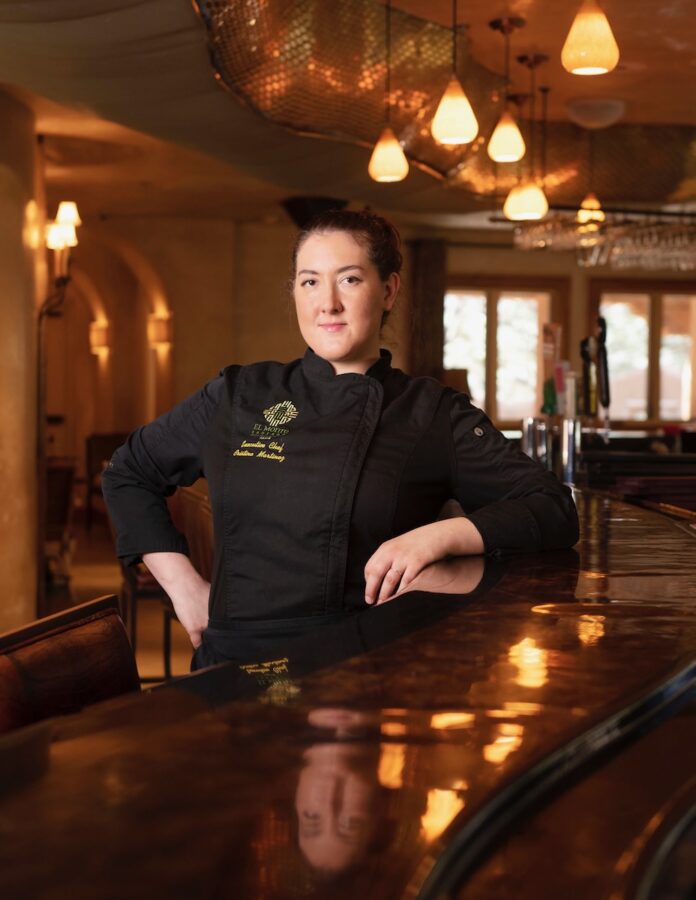
TABLE caught up with Chef Cristina Martinez at El Monte Sagrado in Taos to find out her favorite dishes, ingredients, guilty pleasures and importantly, the answer to the eternal question: red, green, or Christmas? This is the first in a series of the classic Proust Questionnaire with local chefs we love.
Proust Questionnaire with Cristina Martinez
Red, green, or Christmas?
Christmas, but definitely depends on what it’s going on, the day, and where it’s from.
What qualities make for a great restaurant?
Communication, dedication to excellence, consistency, constant growth, a great chef and great restaurant manager.
What qualities make for a great chef?
Passion, dedication, openness for growth, endurance, great communication.
What makes you a great chef?
I strive for excellence and consistent growth, constant study, highly aware, I’m very creative and full of solutions.
What makes your restaurant special?
We have a very unique environment and ambiance. I try to create eclectic dishes with a touch of eccentricity to enhance the experience in such a unique and beautiful place. The team we have is dedicated to constantly doing better and growing for our employees and guests.
What inspired you to become a chef?
I’m obsessed with food and I have a great ability to lead and organize experiences with food. When I was young friends and family encouraged me to pursue being a chef.
What do you appreciate most/look for in your sous chefs?
Passion, organization, dependability, willingness to push themselves and learn.
What is your favorite ingredient?
Cheese, butter, vinegar. Hard to choose.
What is your favorite dish you make?
At home: green chile stew. At work: probably our lobster Benedict or cioppino.
When you’re not working, where can we find you?
At home with my husband and dogs.
What is your guilty pleasure?
Watching horror movies.
If you weren’t a chef, what would you be?
In dog rescue or a vet.
What’s the best meal you ever had?
Too many to count, I’m not sure if I’ve had the best yet either.
If you could make a dinner reservation anywhere in the world…?
My parents used to take me to all the restaurants I wanted to try in Albuquerque and Santa Fe. It was a hobby for sure since I was very young. This grew my passion for good food, so when I was very young, like 10 or 11, I would make manicotti and crepes with ricotta and berries and chocolate. That was so much fun because everyone was so impressed. I knew I had to cook to eat what I truly wanted.
Story by Julia Platt Leonard Photo courtesy of Cristina Martinez