The gradual rise and fall of Bishop’s Lodge Road, as it winds towards Tesuque, is as sensual and lyrical as a road can be. The views of the Jemez to the left and the Sangre de Cristos to the right only add to the pleasure. So does the knowledge that one will shortly turn off onto the drive of the Auberge at Bishop’s Lodge for a drink and a nibble at SkyFire, the Auberge’s bar, and restaurant. Completing our work on this debut issue of TABLE Magazine New Mexico has been a journey, and we’re looking forward to a libation.
More on the Sangre Sunset
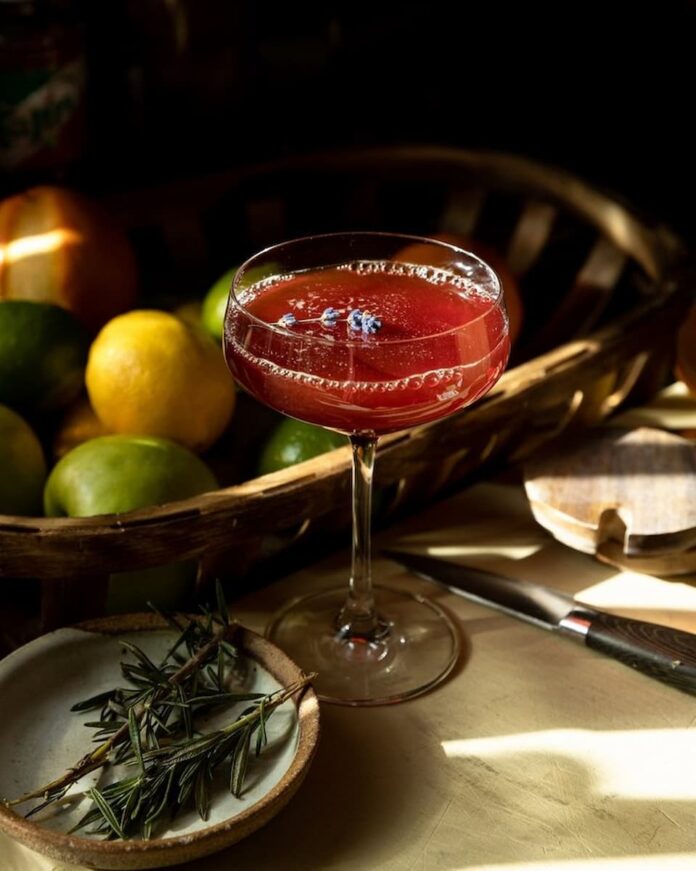
One of us chooses the Sangre Sunset, a concoction of blueberry lavender vodka, aperol, lime, vermouth rosso, and also grapefruit juice. Another one of us sips at the delicate smokiness of Ilegàl Mezcal with one cube and a slice of orange. The others go for a margarita variation and a prickly pear Collins. Yes, we take a sip from each other’s drinks. Though, we are each happiest with the one we chose for ourselves. Yes, we are very happy indeed to be in this lovely bar, celebrating something wonderful and toasting what we hope is a future as vibrant and bright as the sunset sky over SkyFire’s terrace. Here’s to a great summer for everyone.
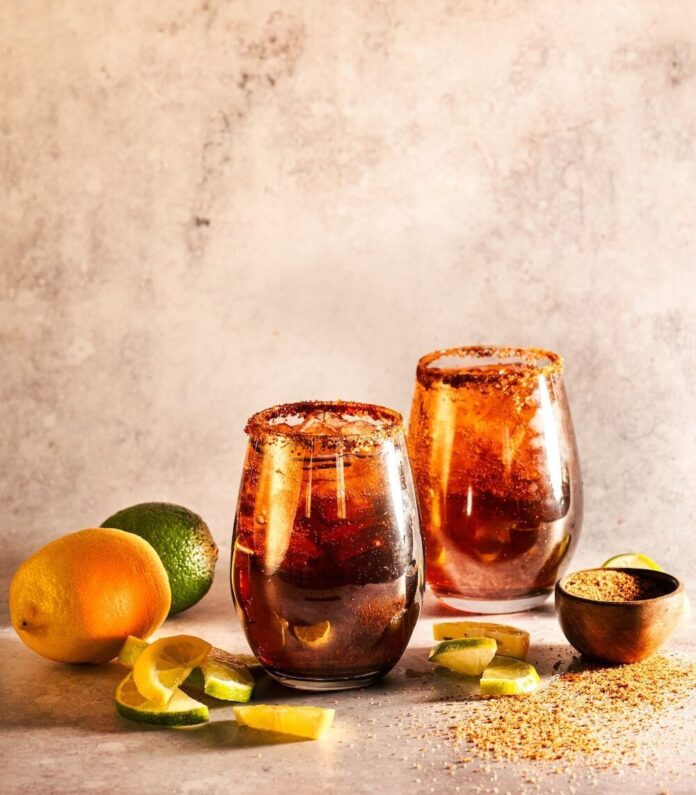
We’ve reinvented a classic Dark & Stormy into a Dark & Handsome (Rum Moscow Mule) with some help from Vara Anejo Rum and a Tajín salted lip for that extra spice in your life.
A great way to learn about a place and their culture is to enjoy its local spirits. It’s incredible what this Rum Moscow Mule cocktail can do to enliven the senses. Not to mention this recipe is perfectly mixed for the heat of summer, expressing the flavors and magic of New Mexico.
What’s So Special About Vara Anejo Rum?
Vara Anejo Rum gets its luscious taste through a their production process. This process starts with the careful refinement of a rich but also balanced dark molasses. Then, artisanal distilling perfects the science of ensures a precise proprietary aging process. The resulting spirit has a smooth character with hints of caramelized sugar and also sweet vanilla. Its forwardness in a sandalwood spiciness layers with wood spice, caramelized sugar, and roasted nuts. It all makes this elevated rum the best pick for making a Rum Moscow Mule since it blends well with the lime and ginger beer.
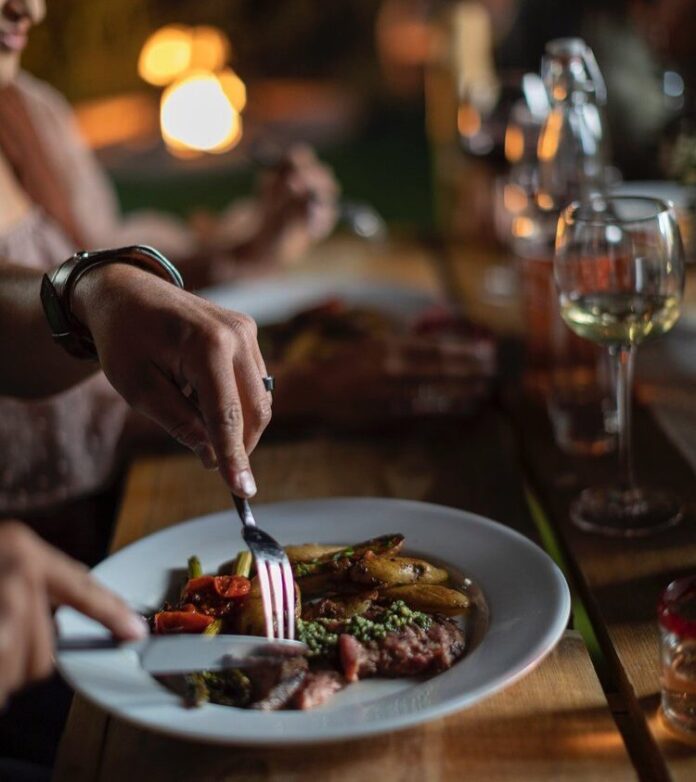
If you’re looking to treat you and your family or partner to an all-out weekend dinner then our Grilled Flank Steak & Pesto with Veggies is here to save the day. Tender, juicy grilled flank steak meets a homemade, nutty pesto but that’s not where the party ends. We also add roasted asparagus, perfectly cooked Campari tomatoes, and crispy fingerling potatoes so both your plate and stomach end up full.
What is Different About Flank Steak?
Flank steak stands out as a versatile cut of beef from the abdominal muscles of the cow. Unlike the cuts that come from the loin or rib areas, flank steak carries a robust, beefy taste. You’ll also see a grain running down through the meat. This grain is actually the key to how it should be prepared and sliced. Most of the time, you’ll want to go against the grain to coax along the tenderness.
Flank steak can be a bit tougher than other prime cuts but it really comes into its own when marinated to tenderize the muscle fibers. It also helps to cook the steak quickly over high heat, such as grilling or pan-searing. The way it absorbs marinades and its satisfying chew both contribute to why it works so well with our pesto sauce and veggies.
This recipe is a must for whenever grilling season comes around.
Ingredients
Scale
1 ½ lb flank steak
1 tsp kosher salt
1 tsp pepper, freshly cracked
2 tsp granulated garlic
Zest of 1 lemon
For the pesto:
1/2 cup toasted pine nuts
2 tbsp lemon juice
1 garlic clove
1/4 tsp kosher salt
Freshly ground black pepper
2 cups basil leaves
1/4 cup olive oil, more for a smoother pesto
1/4 cup grated Parmesan cheese
For the asparagus and roasted Campari tomatoes:
1 bunch of asparagus
Olive oil
Kosher salt
Freshly ground black pepper
Campari tomatoes
Garlic
Chopped herbs of choice
For the roasted fingerling potatoes:
1 lb fingerling potatoes
4 slices thick-cut bacon
4 tbsp chopped chives
Olive oil
Salt and pepper
Instructions
Lay flank steak out flat and trim off any extra fat or silver skin. Generously season the steak with salt and pepper.
Grill for 5 minutes on each side for a medium-rare steak.
Let the steak rest for 5 minutes then slice against the grain.
Since flank steak has very little fat and connective tissues, it can become tough when cooked too long at low temperatures. For perfect tender juicy flank steak, grill it hot and fast!
For the pesto:
Lay flank steak out flat and trim off any extra fat or silver skin. Generously season the steak with salt and pepper.
Grill for 5 minutes on each side for a medium-rare steak.
Let the steak rest for 5 minutes then slice against the grain.
Since flank steak has very little fat and connective tissues, it can become tough when cooked too long at low temperatures. For perfect tender juicy flank steak, grill it hot and fast!
For the asparagus and roasted Campari tomatoes:
Coat asparagus with olive oil. Add salt and pepper. Roast at 400 degrees for 8-10 minutes, until you see some char.
Quarter Campari tomatoes. Mince garlic. Toss with olive oil, salt and pepper. Roast with asparagus.
Plate with chopped fresh herbs of your choice, preferably sage, basil, and thyme.
For the roasted fingerling potatoes:
Cut fingerling potatoes in half lengthwise. Coat with olive oil and toss with kosher salt, and freshly ground black pepper.
Roast in a 400-degree oven for 30 minutes.
While potatoes are cooking, cut bacon into small pieces and sauté in a frying pan until crispy. When potatoes are ready, remove them from the oven.
Add chopped chives and crispy bacon. Serve.
Recipe by Leslie Chavez of Open Kitchen Santa Fe Photography Gabriella Marks Styling by Robert Nachman
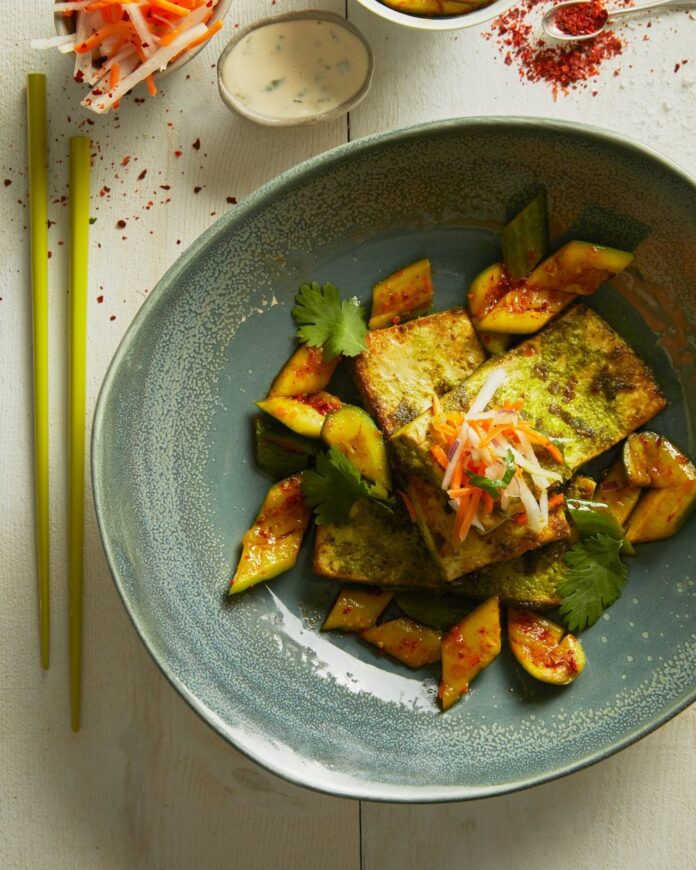
Enjoy the vibrant flavors of Deconstructed Tofu Bahn Mi - a vegetarian twist on the classic Vietnamese street food.
The Banh Mi sandwich is the iconic street food from Vietnam. Here it is reimagined by chef and TABLE contributor, Veda Sankaran, as a delicious vegetarian dish in the form of tofu banh mi.
The History of Banh Mi
Banh Mi has a surprising history, tied to colonial resistance in Vietnam. When the French colonized Vietnam, they brought the baguette with them, along with other dishes like pâté. Up until the 1950s, the sandwiches skewed more towards traditional French ingredients. But after the Vietnamese people fought back against the French presence, their sandwiches changed, too, incorporating more local flavors. Now, banh mi is popular all over the world, particularly in places with large Southeast Asian populations. However, in Vietnam itself tofu banh mi is somewhat uncommon, but is often a snack during Buddhist festivals when people are abstaining from meat.
This tofu banh mi is a delicious vegetarian recipe.
Ingredients
Scale
For the tofu marinade:
4 large cloves of garlic smashed
½ cup chopped cilantro including stems
1 tsp black peppercorn crushed
1 tsp coriander
⅓ cup thinly sliced lemongrass
1½ tbsp Palm or brown sugar
2 tsp soy sauce
3 tbsp oil
1 block extra firm tofu
For the pickled daikon and carrots:
1 ½ cups daikon, peeled and julienned
1 ½ cups shredded or peeled and julienned carrot
¾ cup water
2 tbsp sugar
1 tsp salt
¼ cup brown rice vinegar
Ingredients for chili oil:
3 tbsp neutral oil
1 tbsp Szechuan chili flakes
1 tbsp gochugaru
For the smashed cucumbers:
7 Persian cucumbers (14 oz) sliced lengthwise in half
2 tbsp soy sauce
2 tbsp sesame oil
3 tsp brown rice vinegar
4 large cloves of garlic grated or finely minced
1 tsp sugar
2 tbsp chili oil with the pepper flakes
Instructions
To make the marinade for the tofu, blend all the marinade ingredients together until smooth. Slice the tofu into ½” – ¾” steaks. Spread the marinade on all sides and place in a closed container and refrigerate for a few hours or preferably overnight. When ready to assemble the dish, heat a skillet and coat with some neutral oil. Cook each of the tofu steaks on medium heat for a few minutes per side, until cooked through and lightly browned.
To make the pickled daikon and carrots, dissolve the sugar and salt into the water. Stir in the vinegar. Pour this over the julienned daikon and carrot. Place in a tightly sealed container in the refrigerator until ready to use.
To make the chili oil, Stir together the gochugaru and the Szechuan chili flakes in a heat safe bowl. Heat the oil until it reaches around 350 degrees. You want the oil hot enough, but not so much as to burn the chili flakes. Once hot enough, pour the oil over the chili flakes, stir, and let sit to infuse. Once cool, you can place it in a tightly sealed container at room temperature for about 2 weeks. It will keep longer in the refrigerator.
To make the smashed cucumbers, salt the halved Persian cucumbers and let sit cut side down on a paper towel lined baking sheet. This is so you will have crispy and not watery cucumbers. After about 20 minutes, smash the cucumbers by using a rolling pin, flat side of a cleaver, or or even a meat tenderizer. Be careful to hit it only once or twice, with just enough force to crack the skin and slightly flatten.
Stir together all the ingredients for the sauce, adjusting the chili oil so as to get your preferred heat level. Once you are ready to assemble the dish, pour the sauce over the smashed cucumbers and toss to evenly coat.
To assemble the dish, plate the smashed cucumbers, add a few tofu steaks, and top with the pickled daikon carrots.
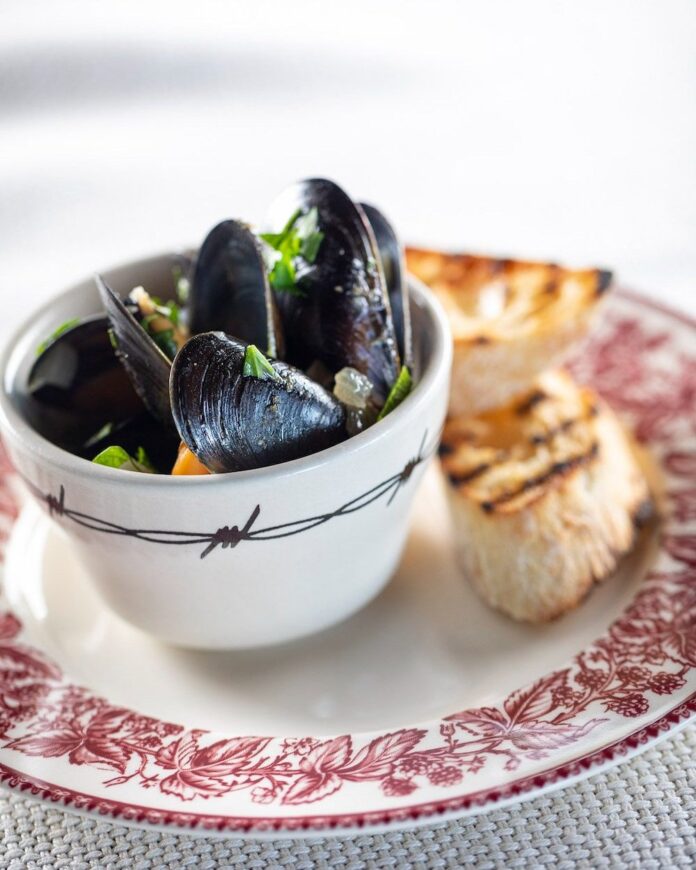
This Mussels in Broth recipe creates a warming dish that infuses this shellfish with spices and dry white wine. Try it with a few pieces of baguettes and you’ll find your next meal delightfully care of. To make this recipe, Blame Her Ranch hosted TABLE Magazine New Mexico for an incredible dinner party under the stars. Chef Leslie Chavez created superb dishes for the occasion that were enjoyed with a selection of Gruet wines and beverages from Leaf & Hive.
What’s the Difference Between Mussels, Clams, and Oysters?
Mussels, clams, and oysters, while all bivalve mollusks, are still distinct in their appearance and flavor. Mussels usually have more of an elongated, dark blue or black shells and attach to surfaces using their strong threads. Clams on the other hand are rounder in their shell shape and burrow in sand or mud, meaning a saltier, chewier texture. Oysters, with their rough, irregular shells, have a briny and sometimes creamy flavor. These differences are the reason why we choose to use mussels with our broth. Their texture is tender while maintaining a sweet, briny flavor too.
A warm and savory broth with perfectly tender mussels.
Ingredients
Scale
2 tbsp butter
3 small shallots, thinly sliced
4 garlic cloves, finely chopped
2 cups low-sodium chicken stock
1 cup dry white wine
4 lb mussels, cleaned
Splash of heavy cream
1/2 cup fresh parsley, roughly chopped
Salt and freshly ground black pepper
Lemon wedges, for serving
2 baguettes, warmed for serving
Instructions
Melt butter in a large pot with a lid over medium heat. When the butter begins to bubble, stir in the shallots and garlic. Cook until softened, about 5 minutes.
Add the chicken stock, white wine, and mussels, and then give them a good toss. Cover the pot with its lid and cook until all the mussels have opened, 8-12 minutes. If any mussels do not open, discard them.
Remove the pot from the heat, then stir in the cream and parsley. Taste, then add more salt and pepper to taste.
Cut the baguettes lengthwise and toast. Rub the toast with a garlic clove for some lovely garlic flavor. Serve in big bowls with lemon wedges and bread to sop up the broth.
Recipes Leslie Chavez Styling by Robert Nachman Photography Gabriella Marks
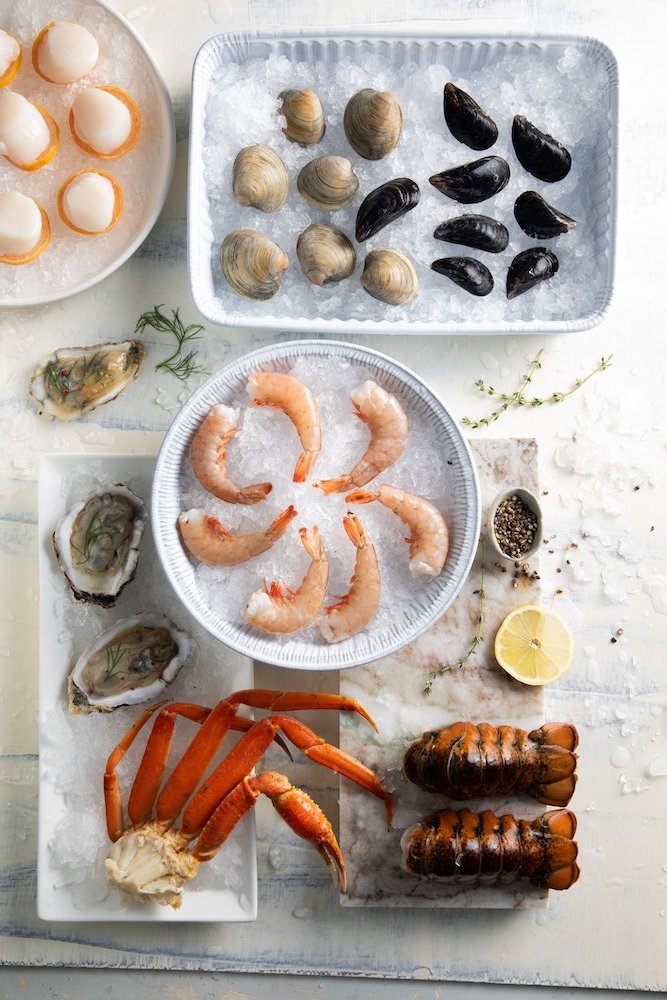
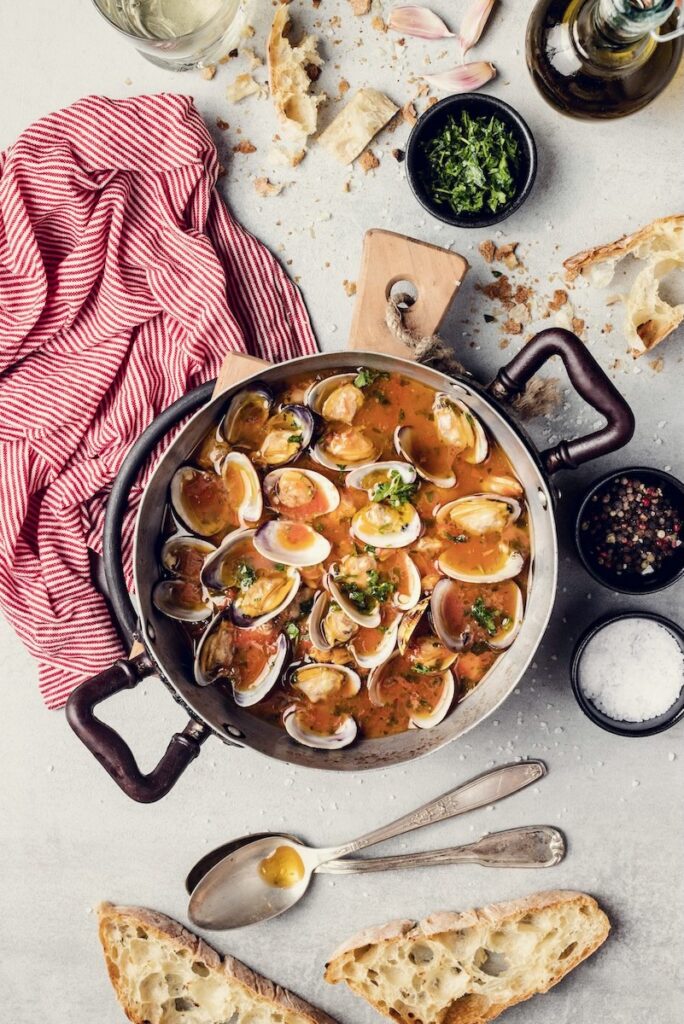
Clams can heighten humble recipes to extraordinary heights. We’re partial to northern quahogs, also known as the Atlantic hard-shell clam. Classed by size as topnecks or littlenecks, they come predominantly from the coastal waters of Virginia. Littlenecks are less chewy and can be enjoyed raw on the half shell.
Easy to prepare, clams reward even beginners with an expansive flavor profile and an affinity for absorbing the flavors that surround them. In our direct-from-Italy Tuscan Clam Soup recipe, for example, they offer a briny balance amid the acidy ping of tomato, bouquet of white wine, and aromatic garlic notes. Clams also add a perfect salty bit to pasta, and are at home in most chowders.
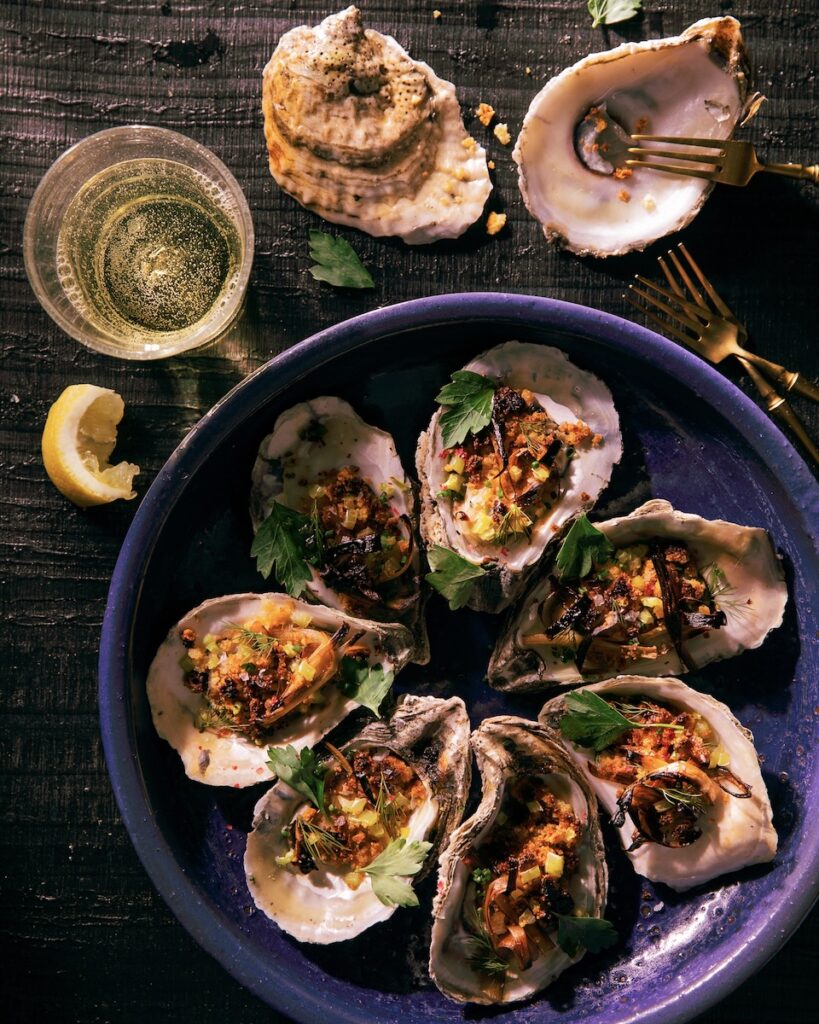
It is fair to compare oysters to wine. As much as the vine’s temperature, soil, and age inform the grape’s complexity, the 200 varieties of oyster are similarly shaped by their aquatic terroir. Shown here are Wholey’s Chesapeake oysters, which are milder in taste than most Pacific, Eastern, Kumamoto, Olympia or European oysters because of the Chesapeake Bay’s brackish mix of freshwater and seawater.
When in the presence of a fine fresh oyster, simplicity is the best option: carefully shuck one, and add just a gentle squeeze of lemon or a dab of cocktail sauce to open the palate. More elaborate oyster dishes, however, are wonderful, such as Roasted Oysters with Cornbread, Leek & Banana Peppers from Chef Sarah Baugher of The Speckled Egg.
Coldwater blue mussels harvested from the waters of the Eastern Seaboard coast can be found naturally, but most are farmed on suspended ropes and harvested commercially. Available year-round, this rich and hearty bivalve is a fatty and briny bite strong enough to carry a main dish or subtle enough for a little mystery as part of a more layered recipe, like our Coconut Curry Mussels. A traveling circus of bold yet balanced flavors, this dish is a solid introduction to mussels at home. Remember to avoid mussels with cracked shells…and if it doesn’t smell fresh, it isn’t.
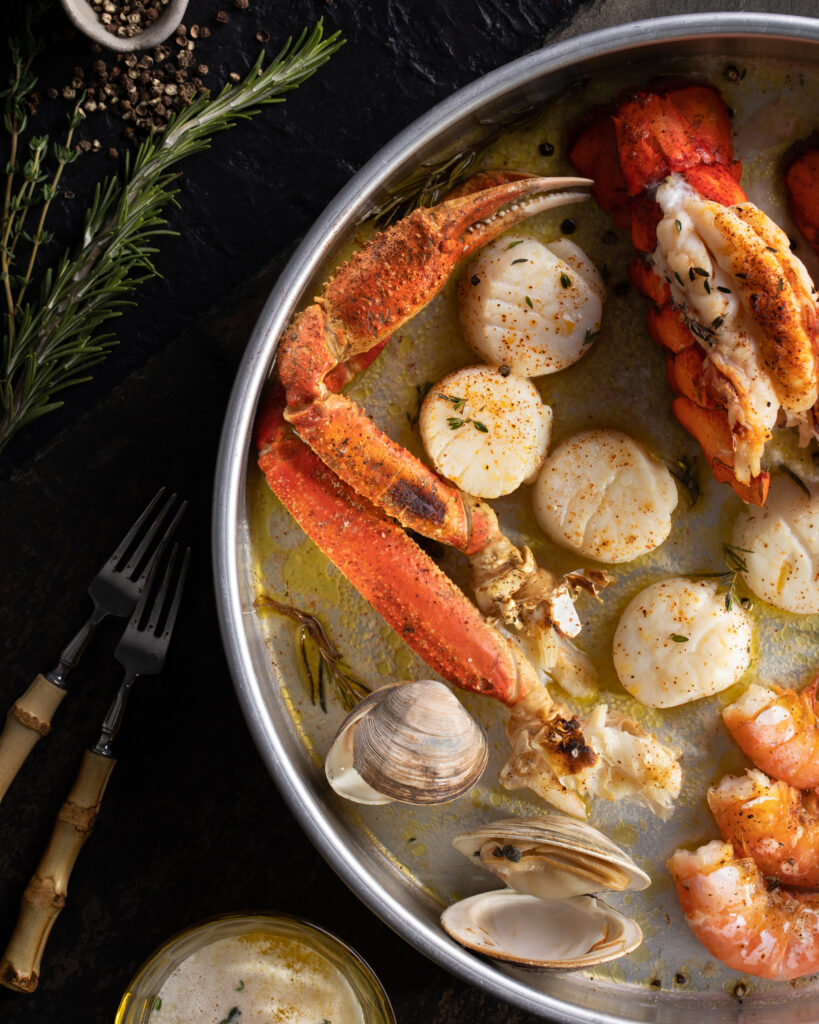
In the words of Pittsburgh seafood master, Sam Wholey, “Lobsters are the most delicious and versatile meat.” For the best lobster experience, choose a live lobster: the sweetest, freshest, buttery bite comes from fresh, in-the-tank lobsters. Most folks boil a fresh lobster and dip the cooked meat in drawn butter with a bit of fresh lemon juice. Sam also offers fully cooked lobster claws and knuckle meat which you can use to introduce your family to this delicacy in the form.
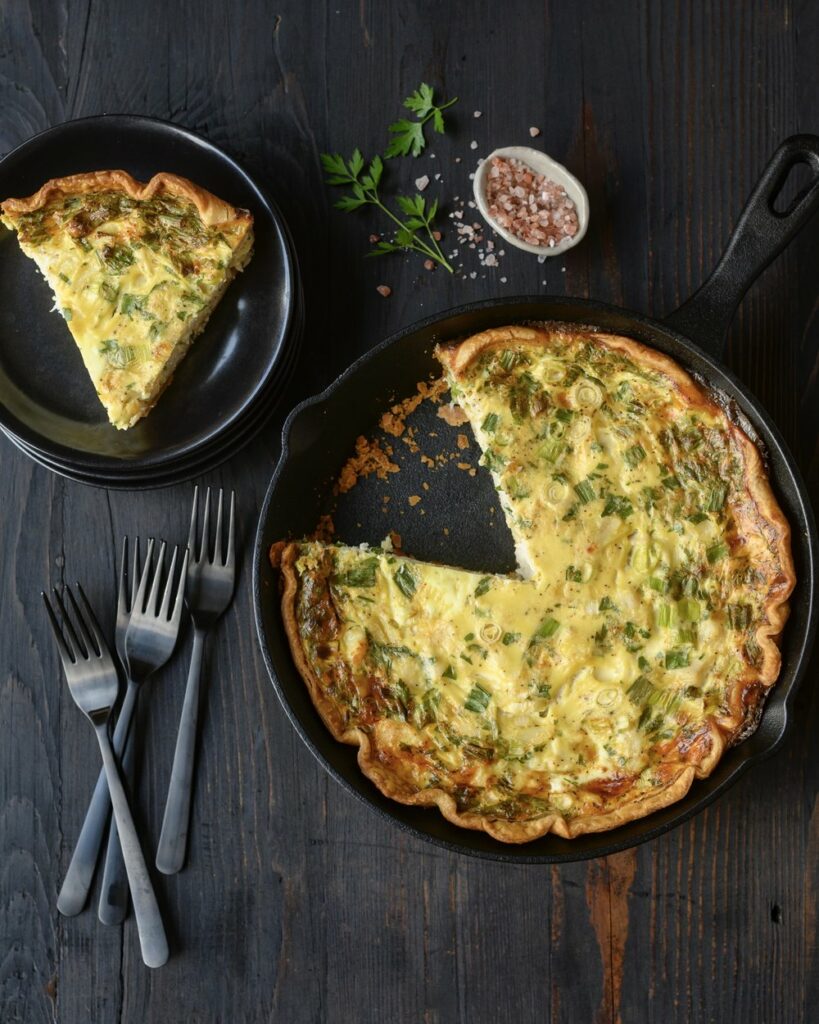
You may know something about snow crabs by watching the Deadliest Catch on the Discovery Channel. Entertainment value aside, snow crab is another delicious and versatile gift from the ocean floor. Unlike their burlier king-crab cousins, snow crabs are smaller with a more delicate shell. Their meat is tender and sweet and best enjoyed, in our opinion, in a quick dip of melted butter after a brisk 5- to 10-minute steam bath. You will likely buy frozen since they are harvested in Alaska and Canada between October and January. If you’re searching for a dish in which to include this seafood, try Chef Jackie Page’s Jarlsberg & Crab Quiche.
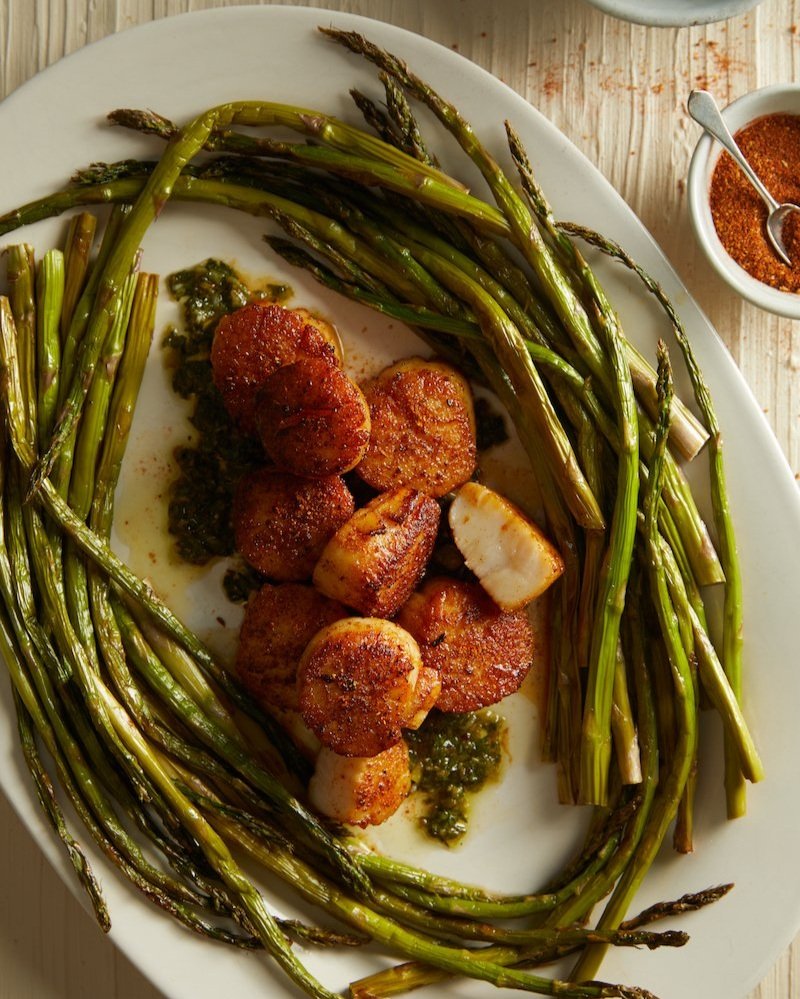
“Like clams and oysters, scallops are bivalves,” says Sam Wholey. “They are active swimmers propelling themselves by clapping their shells together using a muscle called the eye, the part of the scallop that is eaten.” Since they come live from the North Atlantic, they must go through processing and icing immediately. Scallops cook very quickly. If using extra-virgin olive oil, which is ideal, a quick sear beautifully textures the scallop without compromising the oil or its smoke point of 400 degrees. Add them to salad or pasta, and it’s a party.
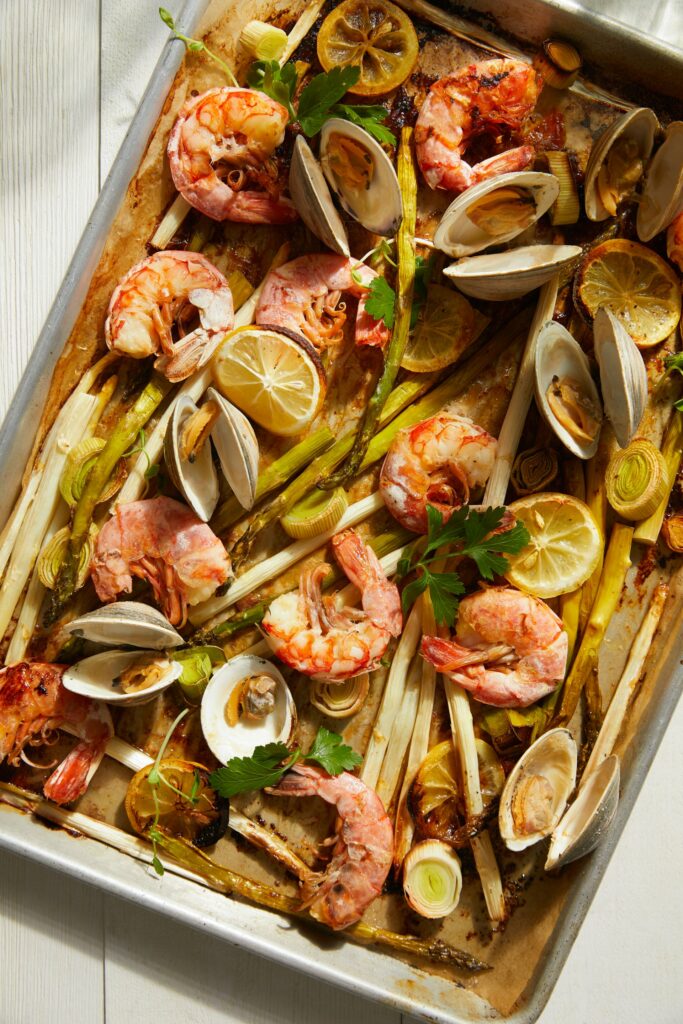
Fresh from the warm waters of the Gulf of Mexico, Gulf shrimp have a distinctly mild and earthy flavor attributed to low and coastal tides. Shrimpers use a large cone-shaped net to harvest the abundant shrimp along the Gulf Coast waters, yielding about five million pounds each year. Their texture is dense and full of protein, making them perfect for a main course dish, perhaps of a southeast Asian variety, our recipe for Anna Franklin’s Pan-Roasted Shrimp with Clams, Asparagus & Leeks.
Story by Gabe Gomez Cover Photo by Dave Bryce Shellfish Courtesy of Robert Wholey & Co.
This recipe for our Go-To Cheddar Mac and Cheese is infinitely adaptable. You can use any easy-melting, flavorful cheese (or combination of cheeses) that suits your fancy. It can also be served straight from the pot — smooth and creamy — or topped with buttered bread crumbs, extra cheese, and baked for a gooey, cheesy, crunchy treat. It’s truly up to you. You could even make individual servings that each one of your guests can dress up with their own toppings like crackers, chicken, or broccoli.
What Are Easy to Melt Cheese for Mac and Cheese?
Thankfully, when it comes to customizing your Mac and Cheese, you have plenty of choices beyond just cheddar. If you want to add a bit of a bite to your mac you can try using colby-jack or pepper-jack cheeses. To contribute to complex flavors you can use gruyère, gouda, fontina which each have their own unique flavors. After you’ve chosen your cheese, we also recommend adding some cream cheese for the smoothest texture possible. Just make sure whatever decision you make, you grate the cheese finally, incorporate the cheese a little at a time, and the sauce heat low and slow.
More Mac and Cheese Topping Ideas
Sauteed mushrooms, fresh thyme, and truffle oil
Pulled pork, candied jalapenos, and barbeque sauce
Bacon, extra cheese, topped with an egg and black pepper (the egg will come out of the oven sunny side up)
1 lb dried elbow macaroni (or gluten-free brown rice macaroni)
6 tbsp unsalted butter
½ cup all-purpose flour (or gluten-free all-purpose flour)
4 ½ cups milk (or plain almond or oat milk)
4 + 1 ½ cups white cheddar cheese, shredded (I prefer to hand shred the cheese vs. using packaged)
1 ½ cups, shredded or cubed white American cheese
½ tsp salt
½ tsp black pepper
½ tsp granulated garlic
Instructions
Fill a large pot with water and cook the macaroni according to package directions. If you are making baked Mac and Cheese, cook the macaroni 2 minutes less than package instructions — you want the macaroni under-cooked, as it will continue cooking when baking.
Drain cooked macaroni and rinse with cold water. Set aside while making the cheese sauce.
Over medium heat, melt butter in a large heavy sauce pot. When melted and bubbly, whisk in the flour until a paste is formed. Cook 1 minute while whisking, then slowly add the milk to the pot. Continue whisking the mixture until it becomes thick and bubbly.
Remove from heat and stir in 4 cups of the cheddar cheese, all of the American cheese, salt, pepper and garlic until well combined.
Gently stir in the cooked macaroni. If not baking, return pot to the stove and gently warm the macaroni.
If baking, pour the macaroni and cheese sauce mixture into a greased 9×13 baking dish. Cover with aluminum foil and bake at 350 degrees for 30-40 minutes until bubbly.
Uncover and sprinkle with the remaining 1 ½ cups shredded cheddar and buttered bread crumbs*. Bake, uncovered, for another 10-15 minutes until the cheese is melted and the bread crumbs are lightly toasted and crunchy.
Notes
For bread crumb topping, cut regular or gluten free bread slices into ½ inch cubes, toss with 2-tablespoons melted butter and ¼ teaspoon granulated garlic.
Recipe by TABLE Magazine Staff Photo by Leanne Meyers
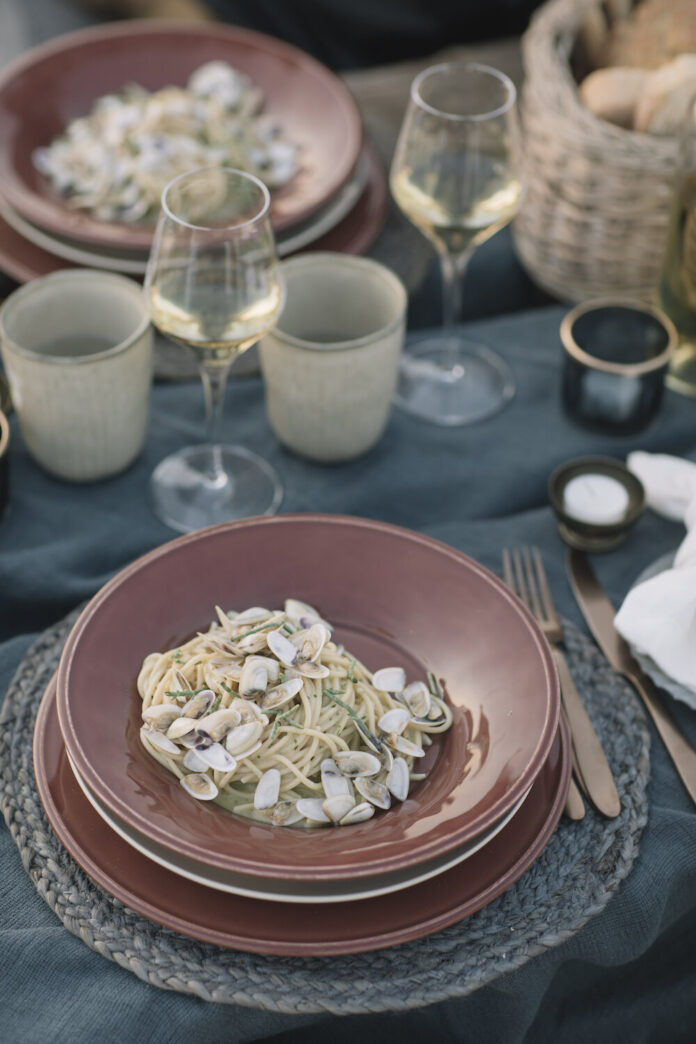
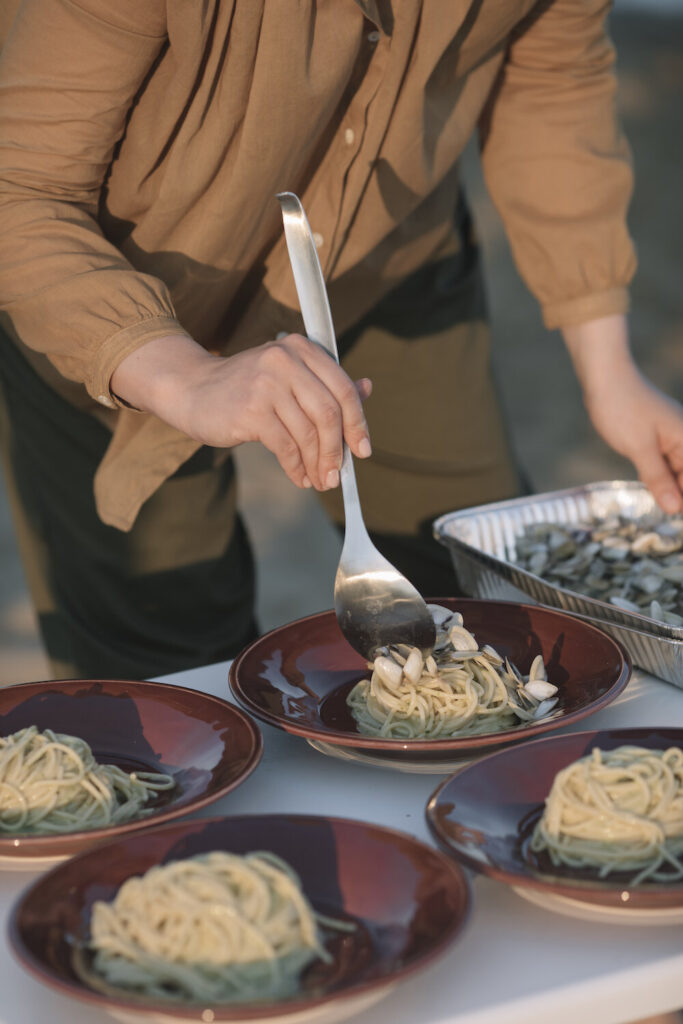
What is the charm of a legit Italian pasta dish such as our Spaghetti with Clams? Something with such simple ingredients holds such a special place in our hearts. We like to think it’s due to the atmosphere that Italian recipes create. For instance, there’s the romance of lightly seasoned clams tossed with olive oil, spaghetti, and black pepper. It activates all our senses and truly shows off our love in an edible form. Each ingredient speaks in a clear voice, and they all work together in perfect harmony.
An Ode to Venice Featuring our Spaghetti with Clams
Venice is nicknamed, La Serenissima, “the most peaceful,” and a romantic repast of classic seafood dishes reminds us why.
A summer evening. A peaceful spot on the beaches of Cavallino-Treporti, a little town just to the east of Venice. Barefoot dancing in the sand. The pearlescence of a late sunset. Fresh seafood prepared with the simplicity of flavor and technique characteristic of Venetian fare. A moment of relaxed laughter and togetherness.
While all of that sounds like a moment out of an Italian film with a happy, lighthearted ending, we can capture the same feeling here at home – except for the nearness of Venice, and sand between our toes. Get your family on board to clear the calendar of all distractions for a Saturday. Put the smartphones in a drawer. Shop for clams, scallops, baby octopus, salad fixings, garlic, and fresh pepperoncino. Run to your favorite bakery for a loaf of crusty bread. Find a bottle of crisp white wine from Veneto, Friuli, or Alto Adige.
Once you’re home again, search Spotify for their “La Dolce Vita” playlist. Put the wine in the fridge. Mix up a classic Spritz alla Veneta to sip while you cook with your loved ones. Toss together your favorite salad. Sit down to a candlelit table to enjoy the light touch of these classic dishes. Later, find a Fellini classic to stream, or watch Mr. and Mrs. Smith traipse through La Serenissima in a less-than-peaceful caper.
Through it all, thank the heavens we live in a world that has Venice in it.
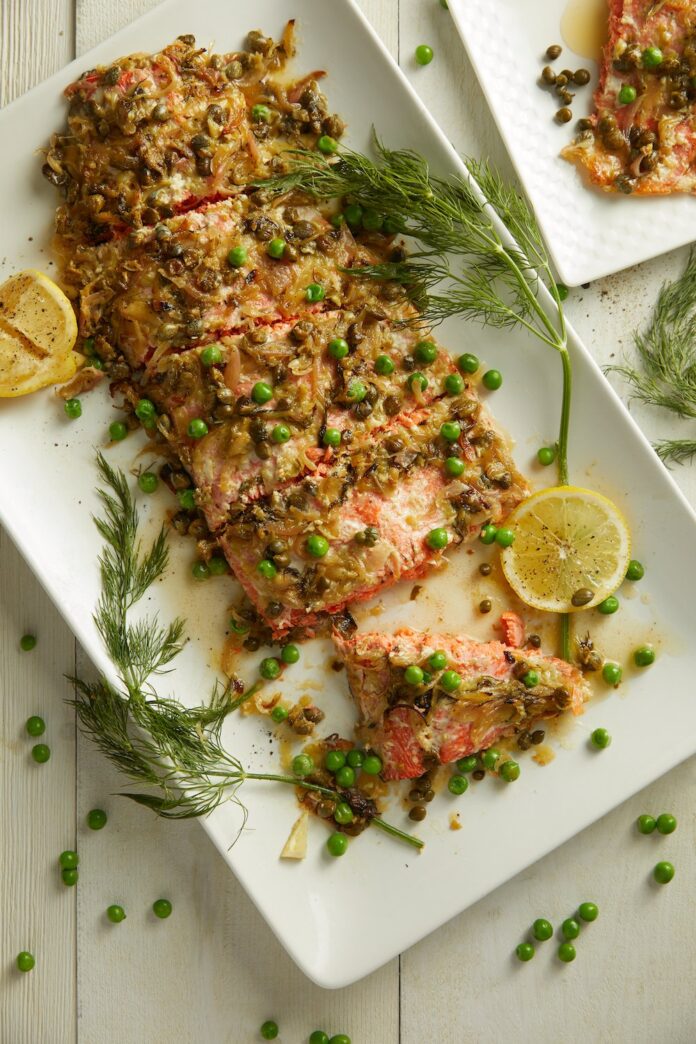
This dish features flaky, perfectly cooked salmon served alongside tender, sweet English peas, generously drizzled with a brightening dill butter sauce. We’re infusing a rich, buttery sauce with the fresh, slightly tangy notes of dill. It’s a way to dress up your salmon while still letting the natural flavors come through. The sweet, springtime flavor of the English peas as a side complements both the fish and the sauce, adding a touch of seasonality. Every aspect is to balance the flavors and textures, making for a sophisticated yet still comforting meal.
Can I Use Frozen Peas in This Recipe?
If it’s outside of English peas season or you can’t find fresh ones at your local grocer, frozen peas are a perfectly suitable option. Frozen vegetables usually get frozen shortly after harvesting for preservation, so you’ll still get your dose of vitamins and minerals. When it comes to achieving the best flavor and texture, stick to cooking according to your package instructions. But, if you do want a slightly brighter green and crisper texture, you can blanch the frozen peas. Simply cook in boiling water for a minute or two, then immediately plunge them into ice water to stop the cooking process.
The Dill Butter Sauce adds a bit of earthy freshness.
Ingredients
Scale
10 oz English peas boiled for 90 seconds and then placed in cold water bath
1 tbsp + 7 tbsp unsalted butter
5 large cloves of garlic, finely minced
½ cup thinly sliced shallots
½ lemon, juice
4 sprigs of dill fronds
2 tbsp capers with juice
Salt
1 ¼ lb sockeye salmon fillet
Instructions
Preheat the oven to 425 degrees.
To make the butter sauce, melt a tablespoon of butter in a small saucepan and add the garlic followed by shallots, and sauté until softened and very lightly golden.
Place in the remaining 7 tbsps of butter. Once melted, pour in the fresh lemon juice and add the dill fronds, capers, and salt. Adjust seasoning to taste.
Place the salmon on a parchment-lined baking sheet. Cover with the butter sauce. Bake for approximately 20 minutes or until the fish flakes easily. Right before serving, place the peas on top of and around the fish.
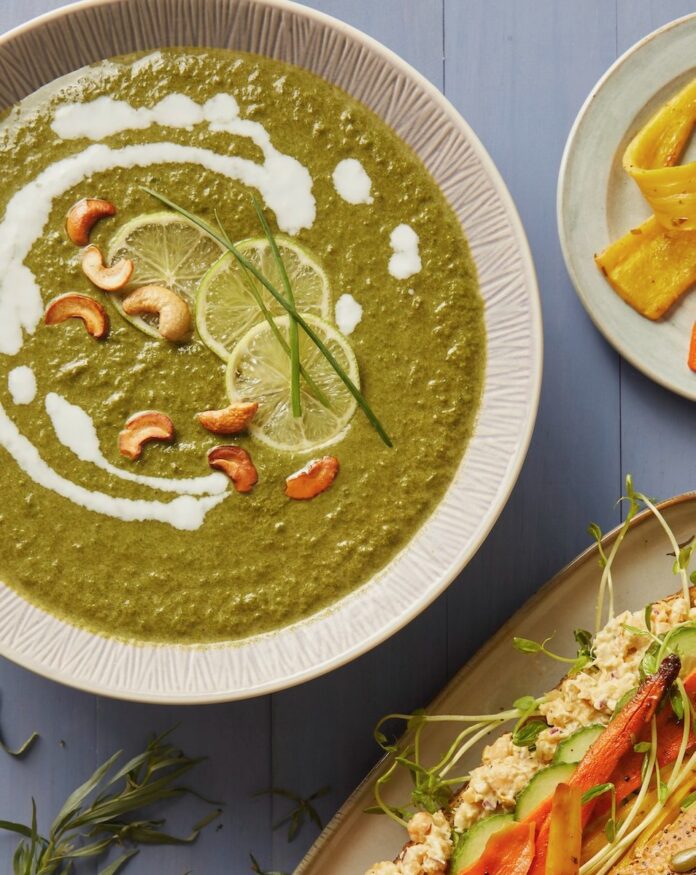
This Spinach Soup with Cashew Cream is the perfect choice for a weeknight dinner when you’re looking for something a little healthier but still filling and flavorful. It’s full of vibrat, leafy greens with the silky texture of cashew cream, combining nourishing earthy flavor with a velvety mouthful. Whether you’re looking for a light meal or a hearty appetizer, this recipe is a fantastic way to incorporate more greens into your diet while enjoying a rich and creamy bowl of goodness. You can customize it to make it vegan, or add different kind of stock.
Health Benefits of Cashew Cream
Cashew cream is a creamy, nutrient-packed substitute that’s becoming a go-to ingredient for those looking to make healthier choices in their diets. Made from blending raw cashews with water, cashew cream is rich in healthy fats, vitamins, and minerals, making it an excellent addition to plant-based meals. But what truly sets cashew cream apart as a healthy alternative is its versatility and impressive nutritional profile.
One of the main benefits of cashew cream is its healthy fat content. Cashews are high in unsaturated fats, particularly monounsaturated fats, which are known to promote heart health by helping to lower bad cholesterol levels. These fats also support brain function, contribute to healthy skin, and help your body absorb essential nutrients. This Spinach Soup with Cashew Cream uses it for its textural qualities within the soup, adding more body.
Place the cashews in a heat safe bowl and pour enough boiling water to cover them. Let sit for 15 minutes, then drain the water.
Add the softened cashews into a small blender container along with as much water as necessary to blend into a smooth paste.
Place the cashew paste into a bowl and then slowly pour in 1 cup boiling water, stirring until it reaches the consistency of milk.
For the soup:
Heat a pot and add the oil. Once it is hot enough, place in the onions, green chilies if you are using, garlic, and ginger. Sprinkle on a little salt and the roasted cumin powder. Sauté, stirring occasionally, until the onions become lightly golden.
At this stage, add the spinach, stirring to combine with the onions. Once the spinach wilts, pour in the broth, coconut milk, and lime juice.
Stir and simmer together for 3 minutes. Taste and adjust the salt. Take off the heat and cool, before blitzing in a regular blender or with an immersion blender until smooth.
Place the blended soup back into the pot along with the cashew milk. Stir and simmer to warm the soup. Serve warm garnished with toasted cashews.
Recipe and Styling by Veda Sankaran Photography by Dave Bryce