Home Blog Page 37

King (Epiphany) Cake

0
King Cake served on a round, flat, brownish plate with a piece cut and protruded out. Two stylish glasses filled with a drink.

The King Cake is a puff pastry confection served on Epiphany. Its purpose is to commemorate the Three Kings’ arrival at the stable where Jesus was born. As the Christmas carol reminds us, they followed a star to find the way, bringing rare and symbolic gifts of gold, frankincense, and myrrh. In New Orleans it’s iced in three colors: purple (justice), green (faith), as well as gold (power). Elsewhere, simplicity generally prevails with a bit of sugar and a sprinkle of gold nonpareils.

What is a King (Epiphany) Cake?

Meals with religious and cultural underpinnings, such as the festivities during Mardi Gras are reminder of how food connects us. It takes to traditions, nurtures faith, and by design is meant for sharing. The cake is cut and then distributed among guests. A tiny plastic baby, once made of porcelain, hides in one slice. The lucky person to find the baby in their slice is king for a day. As is the custom, they are also obliged to host the next gathering where a new King Cake is served.

We whipped up this delicious King Cake for TABLE readers. We hope you’ll bake it as a delicious way to close out this holiday season, and that happy memories make even more scrumptious.

Print
clock clock iconcutlery cutlery iconflag flag iconfolder folder iconinstagram instagram iconpinterest pinterest iconfacebook facebook iconprint print iconsquares squares iconheart heart iconheart solid heart solid icon
King Cake served on a round, flat, brownish plate with a piece cut and protruded out. Two stylish glasses filled with a drink.

King (Epiphany) Cake


  • Author: Erika Bruce

Description

We’re making this celebratory dessert as easy as possible. 


Ingredients

Scale

For the almond filling:

  • 1 ½ cups slivered almonds
  • ¾ cup (150 g) sugar
  • 2 tbsp all-purpose flour
  • ⅛ tsp salt
  • 1 large egg + 1 large white (reserve the yolk for the glaze)
  • 1 tsp almond extract
  • ½ tsp vanilla extract
  • 6 tbsp unsalted butter, softened
  • 1 (17 oz) package of frozen puff pastry, thawed in the refrigerator overnight

For the glaze:

  • 1 egg yolk
  • 1 tsp milk


Instructions

  1. To make the almond filling, combine the almonds, sugar, flour, and salt in a food processor and process until they are very finely ground. Add the egg and egg white, almond and vanilla extracts; process until combined, about 10 seconds. Add butter and process until no lumps remain, about 10 seconds. Scrape the bottom and sides of bowl with a rubber spatula and process to combine thoroughly, about 10 seconds longer. Refrigerate until ready to use.
  2. Heat the oven to 400 degrees with the rack in the middle position. Line a baking sheet with parchment paper. On lightly floured surface, lay both sheets of puff pastry and cut a 9-inch circle out of each one. Transfer them to the baking sheet and refrigerate for 30 minutes.
  3. Remove the dough and almond filling from the refrigerator. Slide one circle of dough from the pan so that there is only one circle of dough on the parchment-lined baking sheet. Spread the almond filling over the center of the dough, leaving a 1-inch exposed border.
  4. Brush water generously around the exposed perimeter of the dough then place the second circle of dough on top and press down to seal the edges very well, then flute the sides of the galette.
  5. Make the glaze by whisking the egg yolk and milk together and then brush it evenly over the top. Use a paring knife to lightly score a design on the top and then poke 4-5 holes all the way through the dough to allow steam to escape.
  6. Bake for 30-40 minutes, or until the galette is well browned on top and up the sides. Serve warm or at room temperature.

Notes

We preferred Pepperidge Farm puff pastry because it includes two large sheets of pastry, from which we could easily cut two circles. If you buy a brand that contains less than 17 ounces, or only comes as one sheet, you may roll out or reshape the dough. Be sure to chill the dough frequently if doing this, as it quickly softens and becomes difficult to work with and also needs a long rest after being worked.


Food and Recipe by Erica Bruce
Story by Gabe Gomez
Photography by Dave Bryce
Baccarat champagne coupes courtesy of Glassworks

Subscribe to TABLE Magazine’s print edition.
Proust Questionnaire with Sean Sinclair

0
Chef Sean Sinclair stands in his restaurant in Albequerque, smiling at the camera

Sean Sinclair of Level 5 in Albuquerque talks persimmons, dream meals, and the memory of a baguette in a Parisian park that led him to chase both his personal and professional dreams.

Proust Questionnaire with Sean Sinclair

Red, green, or Christmas?

Always red! I like green chile on burgers but when I eat New Mexican it’s always red.  

What qualities make for a great restaurant?

Consistency is everything both in food and service.  Great food brings people in. Great service brings them back. 

What qualities make for a great chef?

To be a great chef requires that a lot of skills to be linked together. Being just a great cook does not make one a great chef. When you can link great cooking with excellent leadership, top notch organizational skills, deep knowledge of food products and sourcing, labor and cost control management expertise, and a level head…that makes a great chef.

What makes your restaurant special?

Level 5 is special because we have a high level of attention to detail.  The restaurant is gorgeous, the food is simple yet focused, and the service is impeccable.  

What inspired you to become a chef?

 I have always loved the response of people when you feed them well.  I loved that feeling as a young man and I chase that still to this day.  

What do you appreciate most/look for in your sous chefs?

Our Sous Chef, Todd, is a silent assassin.  He’s humble, hard-working, kind, and extremely knowledgeable about food.  Sous Chef is the hardest job in every restaurant and ours is top notch. 

What is your favorite ingredient?

My favorite ingredient is always changing with season.  This year the persimmons have been particularly delicious.  

What is your favorite dish you make?

Currently, my favorite dish on our menu is our Foie Gras Pasta.  

When you’re not working, where can we find you?

When I am not working, I am at home with my family.  I have two kids River (3.5) and Sonny (1). I I try to spend as much time with them as possible.  

What is your guilty pleasure?

A basket of Fish & Chips from Hook It Up Fish & Chips in Sawmill Market. 

If you weren’t a chef, what would you be?

I don’t really consider what else I would be because I love what I do so much. 

What’s the best meal you ever had?

The best meal I’ve ever had was shared with my wife in Paris in a random park.  We had a fresh baguette, some charcuterie and some cheese.  We watched as a group of kids played in the park and we talked about our future and how maybe someday we’d have a little family.  Today I look back on that meal with a feeling of accomplishment that we set out to do something and we did it together. 

If you could make a dinner reservation anywhere in the world…?

Hard pick. Frog by Adam Handling in London or Atomix by Chef Junghyum ‘JP’ Park in NYC.

What is your first food memory? Happy? Not?

My first food memory is making pico de gallo in a slap chopper for my family.  There was a recipe on the side of the box the machine came in and I followed it closely.  I served the salsa to my family and I remember them being very surprised and happy.  They said they liked it, I doubt they did.  I think that was the moment I wanted to pursue cooking and I was 6 or 7 years old.  

Story by Julia Platt Leonard
Photo by Emily Okamoto

Subscribe to TABLE Magazine’s print edition

Celebrating the 35th Anniversary of the Santa Fe School of Cooking

0
Nicole Curtis Ammerman, her sister Kristen Krell, and their mom, SFSC founder Susan Curtis, toast the school’s 35th anniversary.

The Santa Fe School of Cooking is a must-go destination for culinary inspiration for locals and visitors alike, all eager to learn more about New Mexican cooking. Julia Platt Leonard and Gabriella Marks dropped by to celebrate the school’s 35th anniversary.

Celebrating the 35th Anniversary of the Santa Fe School of Cooking

It’s all down to a cooking class Susan Curtis took at the New Orleans School of Cooking in 1989. She was there with her husband, David, who was on a business trip. “And I said, ‘You have to skip a meeting and come to this. It’s so much fun.’” The idea stuck and Curtis decided to open her own cooking school. The result is the Santa Fe School of Cooking which is celebrating its 35th anniversary.

“I never imagined and I don’t know that she (Curtis) ever imagined it would take on the life that it’s taken. It’s phenomenal,” says Nicole Curtis Ammerman, Susan’s daughter and Director of Operations at the school. SFSC is truly a family affair with Nicole’s sister, Kristen Krell, running the wildly popular Dave’s Jazz Bistro – named after Susan’s late husband, David Ballantyne Curtis – whose twin loves were jazz and fine dining.

A plated display of New Mexican cuisine, highlighting the offerings of the Santa Fe School of Cooking on its 35th anniversary.

More Than Just Cooking

Family extends to the chef instructors who work at the school and who gathered to raise a toast to SFSC’s anniversary. Many, like Noe Cano, have worked with the school for years (he’s been there for over 25 years and Ammerman calls him “our rock”). “He is the most hardworking, loyal person you’ve ever met. And he is a perfectionist,” Ammerman says of Cano.

The founder of the Santa Fe School of Cooking and, the school's director of operations, celebrate the school's 35th anniversary by sharing a warm embrace and joyful laughter

And while the chef instructors make teaching look easy, it’s a tightrope that demands culinary acumen, a strong knowledge of Southwestern food, and the gregarious, chatty ways of tour guides and beloved teachers. “That was a test for me, to learn how to talk and cook at the same time, because it’s not easy,” Cano says. Hands-on classes – like deep dives into tamale-making or their popular red chile workshop – mean that instructors have to keep an eye on students whose cooking expertise varies from confident to fledgling beginner. “Hands-on are a lot of fun. It’s like herding cats. Culinary cats,” Chef Peter O’Brien, a SFSC veteran says with a laugh.

Curtis and Ammerman learned early on that there was a desire from both locals and visitors to learn about authentic New Mexican cuisine. Long-time chef instructor Allen Smith says it’s not uncommon for students to take the same class again and again. “Whenever they visit New Mexico, they come to the school, they see what’s being taught, and even if they’ve taken it before, they take it again, because each of the instructors offers something different.” They’re more than cooking classes, he says, “Because cuisine is really the gateway to culture.”

The director of operations at the Santa Fe School of Cooking celebrates the school's anniversary with a chef instructor.

Making the Changes the People Want

Along the way, Curtis and Ammerman learned on the hoof, saying ‘yes’ and then figuring out how to do it. Their first catalogue was pink and blue because those were the colors of chairs Susan snapped up at a restaurant sale. “She found chairs for $5 and they were turquoise and pink and so those were the colors,” Nicole laughs.

A close-up view of a seared shrimp or scallop garnished with green herbs, resting on a bed of seasoned grits or polenta, showcasing New Mexican culinary offerings.

When customers asked if they did mail order of the New Mexican products they sell at the school, they said yes, but didn’t. Those inquiries led to what has now become a successful mail order business. Everyone helped, including David Curtis. “He was support staff,” says Nicole. “Back in the old days, we printed our own labels for the bags of blue corn meal, so he printed the labels and he fixed things around here. But it was always support for Mom’s vision.”

A smiling chef instructor holding a skillet of freshly prepared New Mexican stew or chile.

And that vision continues. Curtis still wakes up in the middle of the night with an idea about how to make the school better. “I got up and started writing and writing about ideas that we should implement. I woke up in the morning and thought, ‘Well, I wonder what the hell I wrote in the middle of the night?’ And you know what? It was very good.”

Story by Julia Platt Leonard
Photography by Gabriella Marks

Subscribe to TABLE Magazine‘s print edition

Unit B, Chocolate Maven’s Jazzy New Dinner Theater

0
A man sits at a drumset while a man in the background plays upright bass at Unit B within Chocolate Maven.

After more than 30 years of delectable cakes and delicious breakfast, lunch, and brunch fare, could Santa Fe’s Chocolate Maven get any better? The answer is yes, with the exciting launch of Unit B

Unit B, Chocolate Maven’s Jazzy New Dinner Theater

This spectacular dinner theater sits next door to the Chocolate Maven in a soaring space that, over the years, has been home to a furniture store, a children’s theater, and various other businesses. When Unit B recently became available, Chocolate Maven’s co-owner Dharm Andrew Segal – who co-owns Chocolate Maven with his wife, Cassie Ramos – saw the potential for a beguiling performance space, where musicians, actors, and comedians could enchant guests after an upscale dinner in a cocktail bar ambience, à la Humphrey Bogart. 

A woman pours orange juice into a jigger with a cocktail shaker beneath it.

“I’m a musician, I play guitar, I play piano, and I sing, occasionally,” Segal says. “It was a why not. If I knew what it would take, I wouldn’t have done it, but sometimes life just grabs you.” 

Creating a Space for Entertainment

A tour of Unit B with Segal shortly before its debut in early September revealed just how much was required to transform the 3,500-square-foot-space into an inviting dinner theater that accommodates up to 227 people. A teak cocktail bar greets guests at the entry way, next to a roll-up garage door. Tables and chairs fill the main floor. Upstairs, balcony seating overlooks the wide stage, where a restored 1892 Steinway piano promises lively music from jazz players and other local musicians.  

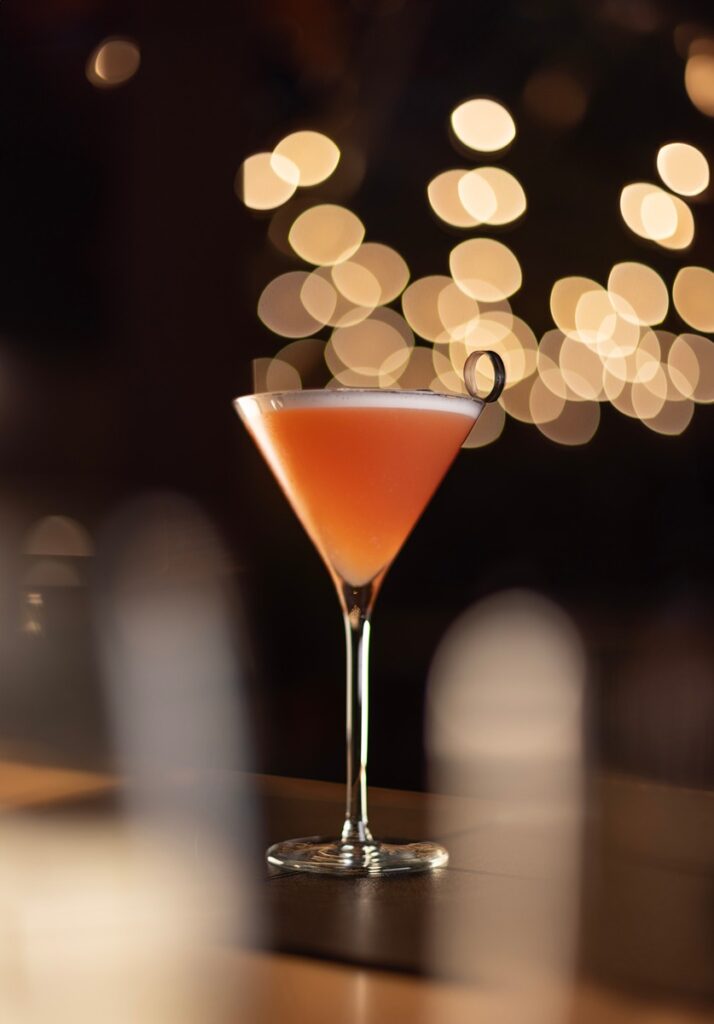
Unit B serves dinner from 5 to 7 p.m., followed by a 7:30 p.m. show. The menu features fancy pizza baked in a wood-burning oven, pasta, and green chile cheeseburgers. Alluring craft cocktails include Love, a blend of mezcal, coconut milk, house-made orgeat (almond syrup), lime, ginger, Peychaud’s bitters, and rosewater, garnished with smoked chili salt, dry rose petals, and dill flowers.  

Three tacos sit open face with meat, onion, tomato, and cilantro on top.

Segal regards Chocolate Maven as theater, in a sense. “It’s something of an art form and certainly the food is part of that,” he says. Unit B, then, isn’t so much of a stretch. “Here, we’re trying to bring a lot of joy and upliftment, which we desperately need after the pandemic. What I love is making people happy.” 

For more than three decades, guests have left Chocolate Maven looking very happy. Now, beaming guests light up the night after an evening at this welcoming new dinner theater. 

Story by Lynn Cline
Photo Courtesy of Carl Coan

Subscribe to TABLE Magazine’s print edition.

Proust Questionnaire with Cristina Martinez

0
Cristina Martinez. Chef, El Monte Segardao. Taos NM, stands at a dimly lit bar

TABLE caught up with Chef Cristina Martinez at El Monte Sagrado in Taos to find out her favorite dishes, ingredients, guilty pleasures and importantly, the answer to the eternal question: red, green, or Christmas? This is the first in a series of the classic Proust Questionnaire with local chefs we love.

Proust Questionnaire with Cristina Martinez

Red, green, or Christmas?

Christmas, but definitely depends on what it’s going on, the day, and where it’s from.

What qualities make for a great restaurant?

Communication, dedication to excellence, consistency, constant growth, a great chef and great restaurant manager.

What qualities make for a great chef?

Passion, dedication, openness for growth, endurance, great communication.

What makes you a great chef?

I strive for excellence and consistent growth, constant study, highly aware, I’m very creative and full of solutions.

What makes your restaurant special?

We have a very unique environment and ambiance. I try to create eclectic dishes with a touch of eccentricity to enhance the experience in such a unique and beautiful place. The team we have is dedicated to constantly doing better and growing for our employees and guests.

What inspired you to become a chef?

I’m obsessed with food and I have a great ability to lead and organize experiences with food. When I was young friends and family encouraged me to pursue being a chef.

What do you appreciate most/look for in your sous chefs?

Passion, organization, dependability, willingness to push themselves and learn.

What is your favorite ingredient?

Cheese, butter, vinegar. Hard to choose.

What is your favorite dish you make?

At home: green chile stew. At work: probably our lobster Benedict or cioppino. 

When you’re not working, where can we find you?

At home with my husband and dogs.

What is your guilty pleasure?

Watching horror movies.

If you weren’t a chef, what would you be?

In dog rescue or a vet.

What’s the best meal you ever had?

Too many to count, I’m not sure if I’ve had the best yet either.

If you could make a dinner reservation anywhere in the world…? 

Osteria Francescana.

What is your first food memory? Happy? Not?

My parents used to take me to all the restaurants I wanted to try in Albuquerque and Santa Fe. It was a hobby for sure since I was very young. This grew my passion for good food, so when I was very young, like 10 or 11,  I would make manicotti and crepes with ricotta and berries and chocolate. That was so much fun because everyone was so impressed. I knew I had to cook to eat what I truly wanted.

Story by Julia Platt Leonard
Photo courtesy of Cristina Martinez

Subscribe to TABLE Magazine‘s print edition

Proust Questionnaire with Weston Ludeke

0
Chef Weston Ludeke of The Compound in his apron stands in a brightly lit courtyard

Weston Ludeke, Executive Chef at The Compound in Sante Fe talks pâté, favorite restaurants, and a dream meal at restaurant that no longer exists as part of our Proust Questionnaire series.

Proust Questionnaire with Weston Ludeke

Red, green, or Christmas?

Green.

What qualities make for a great restaurant?

Culture and History. I think the best restaurants are those founded upon being a part of the community for decades.

What qualities make for a great chef?

Willingness to teach, mentor, and impact an individual. 

What makes you a great chef?

I don’t stop learning, and that includes from my staff, which I think sets us apart.

What makes your restaurant special?

It is timeless. It is grateful, and it gives back. That is the backbone of a restaurant that has impact.

What inspired you to become a chef?

At first, it was fun. Now, it is important.

What is your favorite ingredient?

Salt.

What is your favorite dish you make?

Pâté, terrine, etc. Charcuterie is a lost skill and one I pride myself on knowing. 

When you’re not working, where can we find you?

It’s cold now, so in my home, building a fire and grilling on the Egg.

What is your guilty pleasure?

 Too much of anything.

If you weren’t a chef, what would you be?

A cook.

What’s the best meal you ever had?

L’Ambroisie Paris. Tradition, family, recipes that defined an era. Closest second is St. John in London.

If you could make a dinner reservation anywhere in the world…? 

Can it not exist? Harveys in 1987 while Marco Pierre White was still cooking. Or Charlie Trotters, if he was alive and still cooking.

Story by Julia Platt Leonard
Photo by Gabriella Marks

Subscribe to TABLE Magazine‘s print edition

Keep Your Holiday Gift Wrapping Eco-Friendly

0
An eco-friendly wrapped gift, tied with twine and a natural paper tag with a stamped Christmas tree, next to a woven yellow fabric roll.

Americans add approximately four million tons of gift wrap to landfill in just the last quarter. This is a statistic we can change by following “the three Rs.”

Eco-Friendly Gift Wrapping Tips

An eco-friendly wrapped gift, tied with twine and a natural paper tag with a stamped Christmas tree, next to a woven yellow fabric roll.

Reduce:

Avoid layers of wrapping paper that are discarded seconds after opening. Instead, let your gift speak for itself with minimal wrapping. Add a thoughtful, handmade tag with a personalized message. Garnish naturally with sprigs of greenery, a pinecone, found bird feathers, or the end of a skein of yarn.

A vintage green wooden bench topped with a white fur throw, holding several gifts wrapped in reusable fabric and natural materials like furoshiki.

Re-use:

It’s time to rethink single-use items, like traditional wrapping paper. Enter furoshiki – the zero-waste Japanese art of wrapping with fabrics that you can use again and again. Take this a step further by wrapping your gift in a secondary gift: a tea towel, a cloth napkin, even a scarf that the recipient can reuse.

A gift wrapped in brown paper with a braided yarn ribbon and a sprig of fresh thyme, on a rustic shelf.

Recycle:

Give a second life to newspaper, an old map, pages from a tattered book, or even a brown paper bag. Create bands of contrasting papers for rich visual effects. Ecoprint with floral waste or windfall botanicals. Save ribbon and scraps of yarn all year round and deploy them now in braids or single strands. Creative reuse centers provide a veritable trove of found and donated materials. Remember not to add glitter, sparkles, plastics, or other non-recyclable elements: these create downstream consequences that are easily avoided.

Story by Anne Reynolds
Styling by Quelcy Kogel
Photography by Erin Kelly
Materials from Pittsburgh Center for Creative Reuse

Subscribe to TABLE Magazine’s print edition.
Holiday Decorating with an Africa-Inspired Twist

0
A bright white room featuring a decorated Christmas tree and a cozy rug, capturing the festive spirit of New Mexico.

After years of traveling the world, photographer Ashley Hafstead and her husband Marc chose Lamy. Cullen Curtiss was invited to experience how they honor the festive season in their new Africa-inspired home, a blend of beloved artifacts and landscape.

Holiday Decorating with an Africa-Inspired Twist

Whether it’s the 75 baskets she purchased from local artisans on her travels to five African countries arranged in a mesmerizing wall array. Or the image of Naked Lady lilies at the edge of McWay Falls in Big Sur, California, finally captured in full bloom after six years of trying. Or the subtle festooning of her home to celebrate Christmas. Ashley Hafstead is driven by a vision.

A picturesque snowy landscape with a wide field and snow-laden trees, embodying the beauty of winter.

Her husband Marc often jokes, “Do you have to make everything pretty?” To which she answers, “I love taking that extra moment to make something special and beautiful because we have just one life.”

A charming fireplace with a Christmas tree and wreaths on the wall, enhancing the festive spirit in a tastefully designed living space.

Falling in Love With the Land

A graduate of San Francisco’s Academy of Art University in Fine Art Photography, Ashley is a travel and lifestyle photographer, sought by various luxury hotels and travel companies. She’s quick to credit her father as an early mentor, putting a camera in her hands as a child and encouraging her to capture whatever she saw.

“He would develop every single roll of film, even though most of the pictures were horrible, half of them underexposed or overexposed.”

A pair of feet in a snow-filled bathtub, capturing a cozy and imaginative winter scene that invites relaxation and wonder.

Equally pivotal, Ashley’s dad introduced his East Coast daughter to Santa Fe and the Western landscape through summers of whitewater rafting and camping. She knew in her young soul that she’d come back. “This land is pure magic,” she says.

An inviting space with a wooden door and a wall adorned with intricately arranged baskets, showcasing global artistry.

And here she is decades later in her freshly built 4,000-square-foot Lamy home, surrounded and enchanted by forever-protected views of the Sangres.

Bringing the World to Santa Fe

Suffusing her home are pieces collected during their travels to Africa, Ashley’s favorite place in the world outside of Santa Fe. “We basically created a gallery to allow what we collected the space to shine.” You feel as though you are in a camp on safari and that an elephant might lumber by on their one and a half acres, if not for the high-elevation piñon-juniper landscape.

A white house surrounded by snow features two chairs and a table, embodying a serene winter scene in a festive setting.

“I used to be very colorful. Deep jewel tones. My photography was bright and kind of a slap-in-the-face color. And then I went to Africa on safari and now everything, even my clothing, is a neutral palette with a ton of texture. I joke that I am color phobic.”

A beautifully arranged basket filled with gifts sits beside a decorated Christmas tree, embodying the festive spirit of the season.

That’s true until Christmastime when fragrant New Mexico juniper and fir clippings complement other greenery, including eucalyptus. Among other approaches, Ashley says, “I like to bring the high desert inside.”

A warm kitchen adorned with wooden shelves and chairs, showcasing a harmonious mix of travel artifacts and seasonal decorations.

She adds, “I put all of my effort into this one special time of year, and I love to have a full house of friends and family to experience it with. It’s like a warm hug all month long.”

An exquisite table setting adorned with silver and gold accents, creating a warm and inviting ambiance for the festive season.

Ashley’s 10 Pro Decorating Tips

Want to get the look? While Ashley acknowledges every home and taste is different, she has pro tips for anyone wanting to create a special mood in their home.

  1. Tree shopping: “Wherever you go for your Christmas tree, gather or ask about clippings. I get a trunk full!”
  2. Story. “Bring out the beautiful elements that you’ve collected throughout your life. Find the ones that transport you back to a little moment you love.” Examples include her mother’s vintage gold glass ornaments and napkins she found in a boutique in Marrakesh.
  3. Frame. “As a photographer, I have always seen things through an A-frame.” Use this approach to look at your interior from various vantage points and imagine what element you can add to create surprise or joy. “From where I sit on the couch for my early morning coffee, I see festive pops of green in different corners and I always place a couple of wreaths in the laundry room to keep the spirit alive!”
  4. Simplicity. “We decorate our 11-foot tree in white lights only. Don’t overdo it.”
  5. Unexpected. “I use this Moroccan wedding blanket that I purchased in the Atlas Mountains as a tablecloth.” It’s fun and creative to decorate with things in unexpected ways.
  6. Palette. “Get yourself a color wheel. Go with direct opposites or pick your favorite color and the one right next to it.” The space will pop or blend accordingly.
  7. Repetition. “I buy multiples of things to create art.” One wreath on the back of each beige kitchen barstool creates a vignette and a sense of order and calm.
  8. Texture. “In our neutral home, different elements of texture are essential to create warmth. The baskets have texture. The fireplace wood has texture and so do all of the different types of greenery.”
  9. Fragrance. “Fresh juniper, eucalyptus, and fir bring the scent of the outdoors in.”
  10. Post-holiday. “Buy all of your festive accents post-holiday when they’re half price! And then you are all set for the wonderful season to come.”

Story by Cullen Curtiss / Photography by Ashley Hafstead

Subscribe to TABLE Magazine‘s print edition

Pine Needle Shortbread Cookies

0
A dark green plate filled with Christmas tree-shaped shortbread cookies, some dusted with powdered sugar.

The chill of winter gives us the perfect excuse to turn on the oven, warm up the kitchen, and try our hands at a new cookie recipe. One of our latest favorites comes from TABLE Magazine collaborator Anna Franklin, whose appreciation for a walk in the woods is expressed here in cookie form!

Pine Needle Shortbread Cookies Recipe

These shortbread cookies bring a touch of the outdoors inside, made with finely chopped pine needles blended into a buttery dough. Baked until golden and dusted with powdered sugar, they’re a fragrant winter treat that pairs beautifully with a cozy drink. Better yet: pine needles are rich in vitamin C, antioxidants and anti-inflammatories. Enjoy!

Print
clock clock iconcutlery cutlery iconflag flag iconfolder folder iconinstagram instagram iconpinterest pinterest iconfacebook facebook iconprint print iconsquares squares iconheart heart iconheart solid heart solid icon
A dark green plate filled with Christmas tree-shaped shortbread cookies, some dusted with powdered sugar.

Pine Needle Shortbread Cookies


  • Author: Anna Franklin

Description

An easy to make cookie with a subtle, aromatic flavor perfect for the Winter holidays.


Ingredients

Scale
  • 4 cups all-purpose flour
  • 1/2 cup cornstarch
  • 2 tbsp finely chopped pine needles
  • 1 cup powdered sugar
  • 1/2 tsp sea salt
  • 1 lb butter


Instructions

  1. Preheat oven to 350 degrees.
  2. Put the flour, cornstarch, and pine needles in a food processor and blend until the pine needles are finely chopped and mixed into the flour. (This will make the pine needles very fragrant, but the flavor will mellow out once they are cooked.)
  3. Combine the powdered sugar, salt, and butter with a pastry cutter into pea-sized pieces.
  4. Add flour and mix until evenly incorporated and the dough forms into a ball.
  5. Roll out dough to barely ¼-inch thick on a floured surface, and use your favorite cookie cutters to cut out cookies.
  6. Bake for 8-10 minutes or until slightly golden brown.
  7. Sprinkle with powdered sugar once cool, and serve. Grownups might try them with a cold glass of pine-infused Retsina wine from Greece.

Recipe and Styling by Anna Franklin
Story by Keith Recker
Photography by Dave Bryce
Plate by FD Ceramics

Subscribe to TABLE Magazine’s print edition.
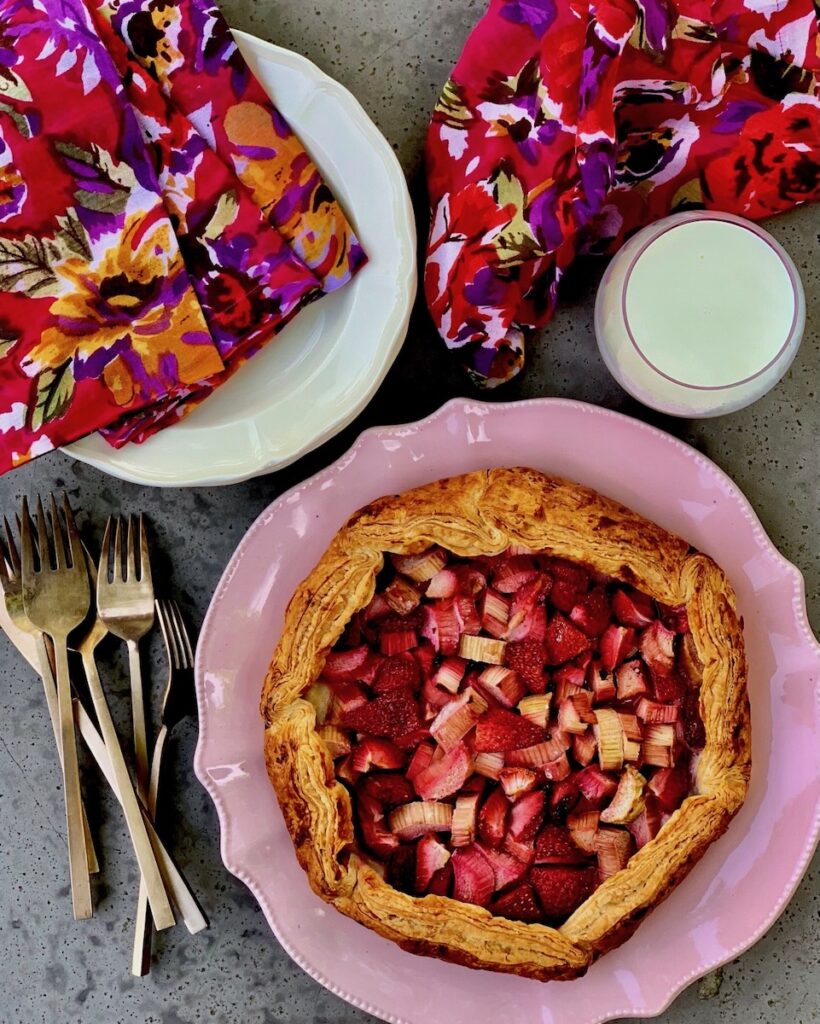
King (Epiphany) Cake

0
King Cake served on a round, flat, brownish plate with a piece cut and protruded out. Two stylish glasses filled with a drink.

The King Cake is a puff pastry confection served on Epiphany. Its purpose is to commemorate the Three Kings’ arrival at the stable where Jesus was born. As the Christmas carol reminds us, they followed a star to find the way, bringing rare and symbolic gifts of gold, frankincense, and myrrh. In New Orleans it’s iced in three colors: purple (justice), green (faith), as well as gold (power). Elsewhere, simplicity generally prevails with a bit of sugar and a sprinkle of gold nonpareils.

What is a King (Epiphany) Cake?

Meals with religious and cultural underpinnings, such as the festivities during Mardi Gras are reminder of how food connects us. It takes to traditions, nurtures faith, and by design is meant for sharing. The cake is cut and then distributed among guests. A tiny plastic baby, once made of porcelain, hides in one slice. The lucky person to find the baby in their slice is king for a day. As is the custom, they are also obliged to host the next gathering where a new King Cake is served.

We whipped up this delicious King Cake for TABLE readers. We hope you’ll bake it as a delicious way to close out this holiday season, and that happy memories make even more scrumptious.

Print
clock clock iconcutlery cutlery iconflag flag iconfolder folder iconinstagram instagram iconpinterest pinterest iconfacebook facebook iconprint print iconsquares squares iconheart heart iconheart solid heart solid icon
King Cake served on a round, flat, brownish plate with a piece cut and protruded out. Two stylish glasses filled with a drink.

King (Epiphany) Cake


  • Author: Erika Bruce

Description

We’re making this celebratory dessert as easy as possible. 


Ingredients

Scale

For the almond filling:

  • 1 ½ cups slivered almonds
  • ¾ cup (150 g) sugar
  • 2 tbsp all-purpose flour
  • ⅛ tsp salt
  • 1 large egg + 1 large white (reserve the yolk for the glaze)
  • 1 tsp almond extract
  • ½ tsp vanilla extract
  • 6 tbsp unsalted butter, softened
  • 1 (17 oz) package of frozen puff pastry, thawed in the refrigerator overnight

For the glaze:

  • 1 egg yolk
  • 1 tsp milk


Instructions

  1. To make the almond filling, combine the almonds, sugar, flour, and salt in a food processor and process until they are very finely ground. Add the egg and egg white, almond and vanilla extracts; process until combined, about 10 seconds. Add butter and process until no lumps remain, about 10 seconds. Scrape the bottom and sides of bowl with a rubber spatula and process to combine thoroughly, about 10 seconds longer. Refrigerate until ready to use.
  2. Heat the oven to 400 degrees with the rack in the middle position. Line a baking sheet with parchment paper. On lightly floured surface, lay both sheets of puff pastry and cut a 9-inch circle out of each one. Transfer them to the baking sheet and refrigerate for 30 minutes.
  3. Remove the dough and almond filling from the refrigerator. Slide one circle of dough from the pan so that there is only one circle of dough on the parchment-lined baking sheet. Spread the almond filling over the center of the dough, leaving a 1-inch exposed border.
  4. Brush water generously around the exposed perimeter of the dough then place the second circle of dough on top and press down to seal the edges very well, then flute the sides of the galette.
  5. Make the glaze by whisking the egg yolk and milk together and then brush it evenly over the top. Use a paring knife to lightly score a design on the top and then poke 4-5 holes all the way through the dough to allow steam to escape.
  6. Bake for 30-40 minutes, or until the galette is well browned on top and up the sides. Serve warm or at room temperature.

Notes

We preferred Pepperidge Farm puff pastry because it includes two large sheets of pastry, from which we could easily cut two circles. If you buy a brand that contains less than 17 ounces, or only comes as one sheet, you may roll out or reshape the dough. Be sure to chill the dough frequently if doing this, as it quickly softens and becomes difficult to work with and also needs a long rest after being worked.


Food and Recipe by Erika Bruce
Story by Gabe Gomez
Photography by Dave Bryce
Baccarat champagne coupes courtesy of Glassworks

Subscribe to TABLE Magazine’s print edition.

Create a free account, or log in.

Gain access to read this article, plus limited free content.

Yes! I would like to receive new content and updates.