When the beloved former Executive Director of The Food Depot, Sherry Hooper, announced her retirement in 2024, it was big news. Hooper had spent nearly a quarter century building The Food Depot into the state’s most effective food security organization that serves nine counties, across 26,000 miles, at 152 distribution sites, reaching 40,000 people each year. Thankfully, the organization’s search for a new leader looked internally and Jill Dixon, who’d spent 13 years working beside Hooper in a number of roles, was named the new Executive Director.
How Jill Dixon is Taking The Food Depot to New Heights
Since Jill ascended to the leadership role, the economic security of many of our neighbors has been further eroded by economic pressures and policies that have exacerbated the need that The Food Depot fills. Jill says she knew immediately that she’d found an organization where she could work and make a difference. “The first day I stepped inside that building and breathed in the challenge, I knew I’d found my home…I persevere because the work isn’t done. To me, it is intolerable that, in a nation of abundance, we allow one single person to be hungry, ever. The work continues until we develop the appetite to create systemic solutions and move hunger out of our communities permanently.”
Of all the skills necessary for the role, Jill says there is one that has been the most critical. “The most important thing that prepared me to be the current leader of The Food Depot was believing. Believing in myself and my colleagues, and most of all, in the possibility of ending hunger. A food-secure future is possible, and if we believe it, we can work towards it, together.”
Every non-profit leader has an origin story about why they do what they do. Jill is no exception, but her story is a deeply reflective one, illustrating how examining one’s own privilege creates a profound perspective.
Who It’s All For
“I launched into adulthood as a public school teacher in predominantly low-income communities, places where I first realized how dramatically different childhood can be based on your socioeconomic status. There I saw what it meant to only have access to food at school, to live in a home with no electricity. I understood that the children in my classrooms did not have the same opportunity I’d had as a child, opportunity that came from having had a nutritionally balanced meal put on the table for dinner every single night of my life. That lit my fire to work in food security and be part of the solution.”
The Food Depot and its 80 partners continue to valiantly address food insecurity in our region, and when Jill spoke to us about that work, she continually brought the focus back to individuals – concrete people who were part of The Food Depot’s mission.
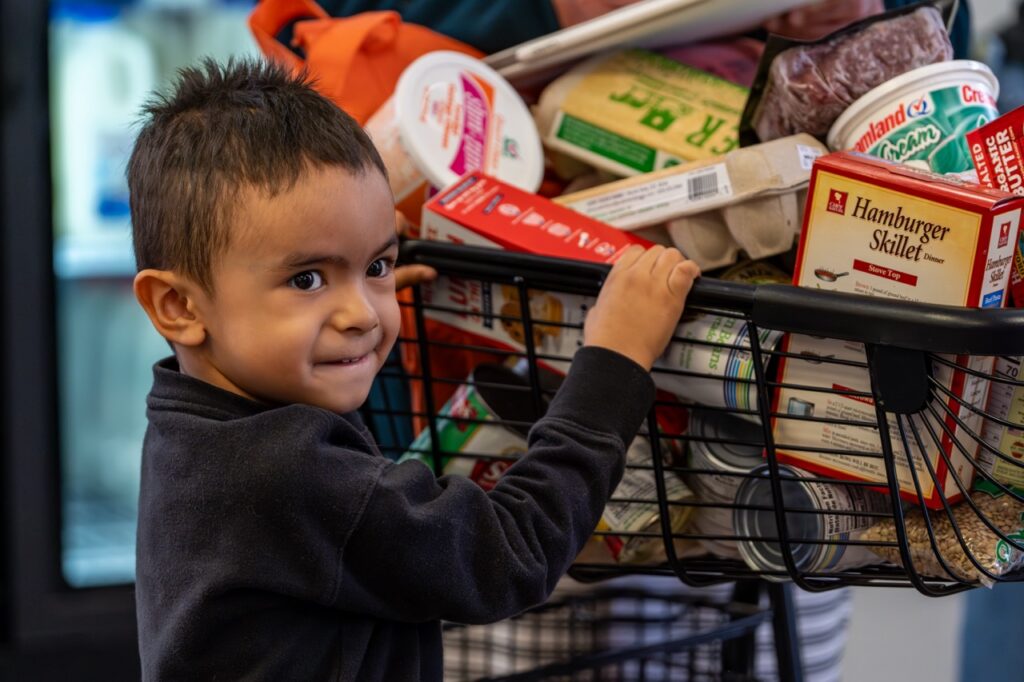
“At one food distribution I worked, there was a little boy, maybe four years old, watching us put food in the truck of their car. We made eye contact, and he smiled. He made a heart with his hands, I made one back. That boy knew that day, and the days that followed, that total strangers cared about him and his family. He knew that even if things were hard, people cared and helped. The Food Depot creates space for people to access nutritious food, but most importantly we create thousands of moments for people to know that they are cared for. That is the place where strong communities are built. The place where we come together to show others we care.”
How You Can Help
The Food Depot receives government support in the form of both grants and donated food, but donations from individuals, volunteers, corporations and other partners make up a significant amount of the resources they need to support our communities. Information about supporting The Food Depot financially and through volunteer opportunities can be found at their website.
Story by Bill Smith
Photos Courtesy of The Food Depot
Subscribe to TABLE Magazine’s print edition.