
Home Blog Page 4

Jungle Bird Cocktail

0
A Jungle Bird tiki cocktail being poured from a shaker, garnished with a pineapple wedge, cherry, and fronds, on a vibrant red wooden surface.

Fantasizing about a wintertime holiday in the sun? Sip no further. The Jungle
Bird is a perennially popular cocktail created by ace mixologist Beth Gieske.
You’ll find her at The Bitter Nun – the mezzanine cocktail lounge at the downtown Albuquerque location of Ex Novo. “The Jungle Bird is tropical and
refreshing without being overly sweet; fresh pineapple and lime keep it bright,
while bitter liqueur and Angostura add a sophisticated edge,” say the folks at Ex Novo. “Layers of rich Jamaican and Guyanese rums bring warm spice and just a touch of funk, making it a slow-sipping tiki classic with a modern twist.”

What’s a Jungle Bird Cocktail Recipe?

The Jungle Bird is a bright and tropical cocktail that balances fresh pineapple and lime with the bold edge of bitter liqueur. Layered with rich Jamaican and Guyanese rums, it’s a modern tiki classic that’s refreshing yet sophisticated.

Print
clock clock iconcutlery cutlery iconflag flag iconfolder folder iconinstagram instagram iconpinterest pinterest iconfacebook facebook iconprint print iconsquares squares iconheart heart iconheart solid heart solid icon
A Jungle Bird tiki cocktail being poured from a shaker, garnished with a pineapple wedge, cherry, and fronds, on a vibrant red wooden surface.

Jungle Bird Cocktail


  • Author: Beth Gieske

Description

This cocktail has us dreaming of summer days. 


Ingredients

Scale
  • ½ oz Jamaican gold rum
  • ½ oz Jamaican black rum
  • ½ oz Guyana demerara river rum
  • ½ oz bitter liqueur
  • 1 ½ oz pineapple juice
  • ½ oz lime juice
  • ½ oz dark simple syrup
  • 2 dashes Angostura bitters
  • Pineapple, garnish
  • Drunken cherry, garnish
  • Pineapple fronds, garnish


Instructions

  1. Shake all ingredients vigorously in a shaker tin for 7 seconds, strain over ice.
  2. Garnish with a pineapple wedge, a drunken cherry, and three pineapple fronds. (The cherry as the “eye” and fronds as the “mohawk” give it that birdlike look.)

Recipe by Beth Gieske
Photography by Laura Petrilla

Subscribe to TABLE Magazine’s print edition.
Pear Hot Toddy

0
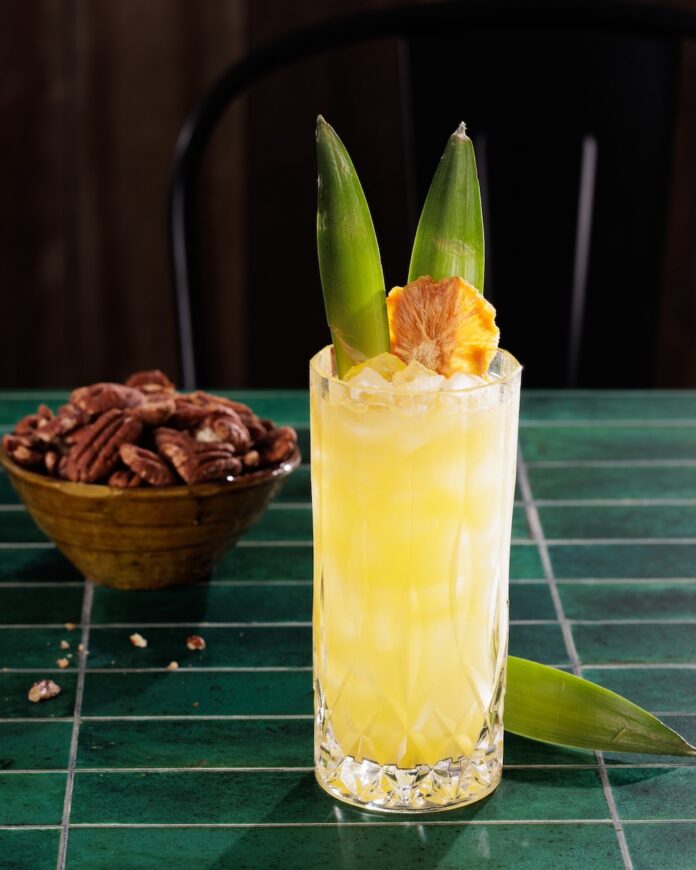
A clear glass mug containing a warm orange Pear Hot Toddy, garnished with a clove-studded lemon slice, set on a red wooden background with pine needles.

Made with pears from the Tumbleroot orchard infused into their own house-crafted Oro Rum, this warm and fragrant cocktail layers spice and citrus, creating a cozy wintertime favorite. If your grandmother, like ours, considered the hot toddy a valuable and effective cure for symptoms of the common cold, add this to your pharmaceutical options this season.

What’s in Our Pear Hot Toddy Recipe?

The Pear Hot Toddy is a warm, spiced cocktail made with pear-infused rum, ginger, and citrus for a cozy winter drink. Comforting and fragrant, it’s the perfect way to unwind on a chilly evening.

Print
clock clock iconcutlery cutlery iconflag flag iconfolder folder iconinstagram instagram iconpinterest pinterest iconfacebook facebook iconprint print iconsquares squares iconheart heart iconheart solid heart solid icon
A clear glass mug containing a warm orange Pear Hot Toddy, garnished with a clove-studded lemon slice, set on a red wooden background with pine needles.

Pear Hot Toddy


  • Author: Jason Kirkman

Description

Nothing is quite as soothing as a hot toddy.


Ingredients

Scale

For the pear-infused rum:

For the Tumbleroot house-made ginger syrup:

  • 3 cups water
  • 6 cups granulated sugar
  • 1 ¼ g star anise (about 1 small piece or a generous pinch)
  • 12 ½ g mixed whole peppercorns (about 2 1⁄2 tsp)
  • 2 ½ g whole cinnamon (roughly 1⁄2 stick)
  • 12 cardamom pods
  • 3/41 ¼ g dried red chile pod (a small piece, to taste)
  • 1⁄8 stick vanilla bean (or a small segment, split)
  • Citric acid to taste; start with around 2 tsp

For the pear hot toddy:

  • 1⁄4 oz agave syrup
  • 1⁄4 oz ginger syrup, house recipe or substitute store-bought
  • 1⁄2 oz fresh lemon juice
  • 2 oz pear-infused Tumbleroot Oro Rum
  • Hot water (to top)
  • Lemon wheel, studded with 3 whole cloves (for garnish)


Instructions

For the pear-infused rum:

  1. Place the pear pieces into a clean quart-sized jar.
  2. Fill the jar with Oro Rum, covering the fruit completely.
  3. Seal the jar and let it steep at room temperature for 3–5 days.
  4. Strain out the pears and discard or save for another use.
  5. Store the infused rum in a clean bottle or jar.

For the Tumbleroot house-made ginger syrup:

  1. Toast all spices (except chile) in a pot until aromatic, just before they begin to smoke.
  2. Add chile, then immediately pour in the water.
  3. Stir in ginger juice.
  4. Once warmed, add sugar and stir until fully dissolved.
  5. Bring to a boil, then reduce heat and simmer for 30–60 minutes.
  6. Add citric acid to taste.
  7. Strain and store chilled.

For the pear hot toddy:

  1. In a mug, combine the agave syrup, ginger syrup, lemon juice, and pear-infused Oro Rum.
  2. Top with hot water and stir gently.
  3. Garnish with a clove-studded lemon wheel.

Recipe by Jason Kirkman
Photography by Laura Petrilla

Subscribe to TABLE Magazine’s print edition.
Winter Cocktail Recipes from Northern New Mexico’s Bartenders

0
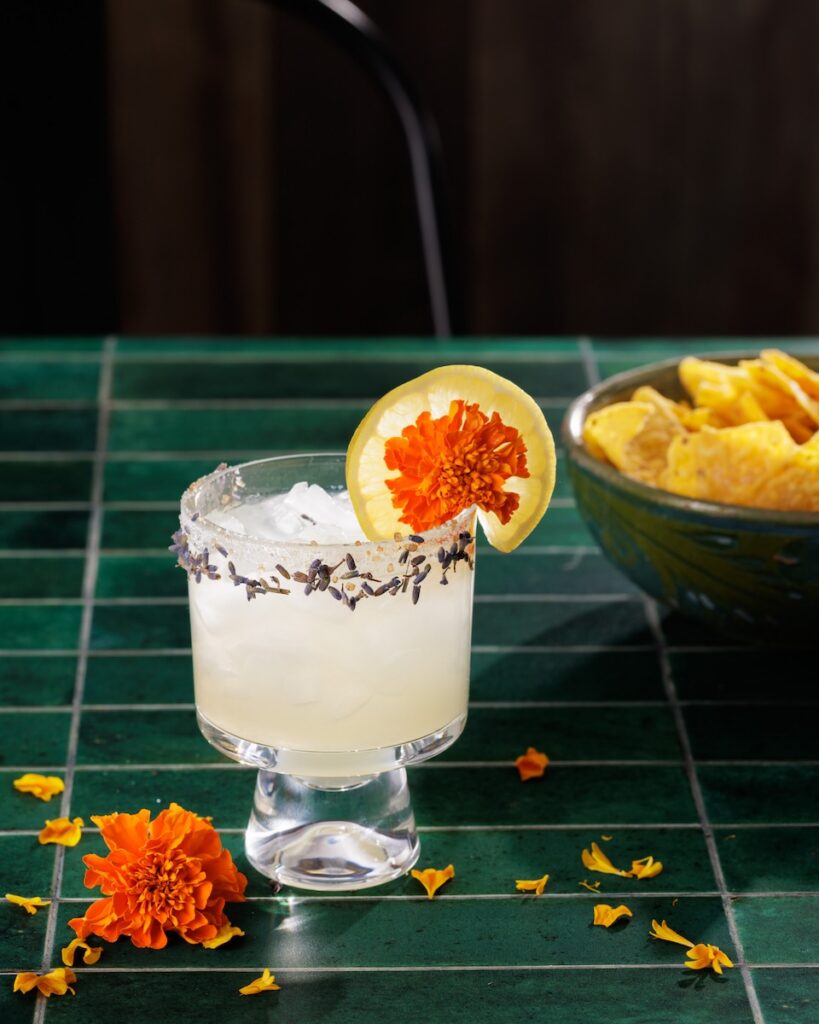
A multicolored striped ceramic mug of Mexican Hot Chocolate topped with whipped cream and a toasted marshmallow, next to a gold spoon and pine cone, on a red wooden surface.

A bevy of Northern New Mexico’s finest bartenders jumped at the chance to share their favorite warm-ups with TABLE readers. Whether nostalgic or innovative in their inspiration, these cocktails are sure to spice up an evening with friends, next to a roaring fire, with a platter of the hors d’oeuvres that make you the happiest.

Winter Cocktail Recipes

Biscochito Old Fashioned

Recipe by Aliya Harrison, Dorothea Fine Greek

A Biscochito Old Fashioned cocktail in a rocks glass with a cinnamon sugar rim, orange peel, and smoking cinnamon stick, on a red wooden surface with pine branches.

Among many “firsts,” New Mexico was the first state to have an official cookie. In 1989, the legislature named the biscochito as our cookie of choice.
It’s also the inspiration for Dorothea Fine Greek mixologist Aliya Harrison’s riff on a classic Old Fashioned that dazzles with winter warming spices, evoking a cookie in a cocktail. Rich demerara syrup uses demerara sugar instead of granulated sugar for a toasty warmth and that hanging-out-by-the-fireplace vibe. The allure of butterscotch schnapps is, perhaps, self-explanatory!

Mexican Hot Chocolate

Recipe by Jason Kirkman, Tumbleroot Pottery Pub

A multicolored striped ceramic mug of Mexican Hot Chocolate topped with whipped cream and a toasted marshmallow, next to a gold spoon and pine cone, on a red wooden surface.

Tumbleroot Pottery Pub turns up the heat this winter with a decidedly adult (and decadent) Mexican hot chocolate from Jason Kirkman, its owner and master distiller. Rich, spiced, and distinctly New Mexican, this hot chocolate features a house-made cocoa mix, a subtle red chile kick, and a generous pour of Tumbleroot Oro Rum, all served in one of their handmade mugs. What more could you ask for?

Canelazo

Recipe by David Pecocari, Joe’s Tequila Bar at Inn on the Alameda

A tall stemmed glass containing a vibrant orange Canelazo cocktail, garnished with a lime slice and cinnamon stick, set on a red wooden background with pine boughs.

When mixologist David Pecorari of Joe’s Tequila Bar-fame was growing up in Quito, Ecuador, canelazo was the winter beverage of choice. He and friends would gather on a chiva – an open sided bus – with a band on the roof and cruise through the city at night. “Because we would be partying on an open bus into the early morning the canelazo would keep us warm in more ways than one,” he says. They’d fill old Gatorade sports containers to the brim with this warming brew that is traditionally made with aguardiente – a distilled spirit. This spin on one of his favorite drinks is now one of ours. Salud!

Jungle Bird

Recipe by Beth Gieske for The Bitter Nun

A Jungle Bird tiki cocktail being poured from a shaker, garnished with a pineapple wedge, cherry, and fronds, on a vibrant red wooden surface.

Fantasizing about a wintertime holiday in the sun? Sip no further. The Jungle
Bird is a perennially popular cocktail created by ace mixologist Beth Gieske. You’ll find her at The Bitter Nun – the mezzanine cocktail lounge at the
downtown Albuquerque location of Ex Novo. “The Jungle Bird is tropical and refreshing without being overly sweet; fresh pineapple and lime keep it bright, while bitter liqueur and Angostura add a sophisticated edge,” say the folks at Ex Novo. “Layers of rich Jamaican and Guyanese rums bring warm spice and just a touch of funk, making it a slow-sipping tiki classic with a modern twist.”

Pear Hot Toddy

Recipe by Jason Kirkman, Tumbleroot Pottery

A clear glass mug containing a warm orange Pear Hot Toddy, garnished with a clove-studded lemon slice, set on a red wooden background with pine needles.

Start with pears from the Tumbleroot orchard. Infuse them in their own house-crafted Oro Rum. Craft a warm and fragrant cocktail that layers together spice and citrus, creating a cozy wintertime favorite. Did you grandmother, like ours, considered the hot toddy a valuable and effective cure for the common cold? Add this to your pharmaceutical options this season.

Story by Julia Platt Leonard
Styling by Star Laliberte and Anna Franklin
Photography by Laura Petrilla

Subscribe to TABLE Magazine’s print edition.
Lemon Meringue Tarts from Cafe Pasqual’s

0
Four individual lemon meringue tarts with toasted meringue peaks, arranged on white platters next to fresh lemons and a white bust statue.

Cafe Pasqual’s always has a lemon dessert on the menu, and these individual Lemon Meringue Tarts are a firm favorite with guests at the restaurant. The crust is made with pine nuts (piñon), filled with a luscious lemon curd, and topped with meringue which is piped and browned to perfection before service. It’s the perfect combination of creamy, tart, crispy, and buttery. No wonder it’s rarely off the menu.

Try these delicious Lemon Meringue Tarts from the kitchen of this legendary Santa Fe restaurant. You’ll come back to it again and again.

Print
clock clock iconcutlery cutlery iconflag flag iconfolder folder iconinstagram instagram iconpinterest pinterest iconfacebook facebook iconprint print iconsquares squares iconheart heart iconheart solid heart solid icon
Four individual lemon meringue tarts with toasted meringue peaks, arranged on white platters next to fresh lemons and a white bust statue.

Cafe Pasqual’s Lemon Meringue Tarts


  • Author: Katherine Kagel, Cafe Pasqual’s
  • Yield: Makes 8 4-inch tart shells 1x

Description

These lemon meringue tarts from Café Pasqual’s feature a buttery pine nut crust, silky lemon curd, and a perfectly toasted meringue topping. 


Ingredients

Scale

For the tertlet crust:

  • 10 oz raw unsalted shelled pine nuts (piñon)
  • 1/3 cup granulated sugar
  • 3 cups all-purpose flour
  • 8 oz unsalted butter (room temperature)
  • 1 egg
  • 1 tsp vanilla extract

For the lemon curd:

  • 1 cup granulated sugar
  • Zest of 8 Meyer lemons or medium-size lemons
  • ½ tsp kosher salt
  • 4 large eggs
  • ¾ cup lemon juice
  • 7 oz butter, softened

For the meringue:

  • 2 large egg whites
  • ½ cup granulated sugar
  • 2 pinches Kosher salt


Instructions

For the tertlet crust:

  1. Preheat oven to 300 degrees.
  2. Toast the pine nuts in a 300 degree oven for 5 minutes – or less – watch closely so they don’t burn!
  3. Remove the pine nuts and allow to cool. When they are cool, place them in a food processor and pulse only 3 to 4 times – they should be chunky. Increase the oven temperature to 375 degrees.
  4. In the bowl of an electric mixer fitted with the paddle attachment, blend the sugar and butter until well incorporated. Add the eggs and vanilla, mix until blended, and then add the flour. Do not over mix. Add the piñon, just to combine.
  5. Press the pine nut dough into the tart shells and bake at 375 degrees for 20 minutes until golden.
  6. Remove the shells from the tart pans before filling. Do not fill the shells until completely cooled.

For the lemon curd:

  1. Place the sugar, zest, salt, and eggs into a large non-reactive saucepan and stir until incorporated.
  2. Over medium heat, stir until the mixture is thickened, approximately 8 minutes.
  3. Pour the mixture through a fine mesh strainer into a mixing bowl. Extract and discard the zest.
  4. Whisk the softened butter into the mixture until incorporated.

For the meringue:

  1. In the bowl of an electric mixer (free of any oil), whip the egg whites for 2 minutes on high speed.
  2. Gradually add ¾ of the sugar and whip for 3 minutes more.
  3. Add the remaining sugar and whip until the meringue appears shiny and holds stiff peaks.
  4. Fill the tart shells with curd, dividing evenly between the eight shells.
  5. Place the meringue in a piping bag and pipe onto the filled tart shells.
  6. To toast the meringue just before serving, use a kitchen torch to evenly brown.

Recipe by Katherine Kagel, Cafe Pasqual’s
Story by Julia Platt Leonard
Photography by Tira Howard

Subscribe to TABLE Magazine’s print edition.
Upside Down Bejeweled Citrus Cake from Cafe Pasqual’s

0
A round, vibrant upside-down citrus cake topped with sliced oranges, blood oranges, and pomegranate seeds, next to a cup of coffee.

If we eat with our eyes first, then Cafe Pasqual’s Upside Down Bejeweled Citrus Cake is everything we hunger for in life. The citrus rounds on top
create what Kagel thinks of as a kind of edible stained glass window on the cake’s surface. The pomegranate seeds are dotted between the citrus, for a glistening surface that speaks of sun and warmth even in the darkest days of winter. “There’s a shine that we’re all needing,” Kagel says. We couldn’t agree more.

Print
clock clock iconcutlery cutlery iconflag flag iconfolder folder iconinstagram instagram iconpinterest pinterest iconfacebook facebook iconprint print iconsquares squares iconheart heart iconheart solid heart solid icon
A round, vibrant upside-down citrus cake topped with sliced oranges, blood oranges, and pomegranate seeds, next to a cup of coffee.

Cafe Pasqual’s Upside Down Bejeweled Citrus Cake


  • Author: Katherine Kagel, Cafe Pasqual’s
  • Yield: Serves 812 1x

Description

Cafe Pasqual’s Upside Down Bejeweled Citrus Cake is a stunning dessert topped with bright citrus slices and sparkling pomegranate seeds. With its golden sponge, honey-orange soak, and jewel-like finish, it’s as beautiful as it is delicious.


Ingredients

Scale

For the pan syrup for the fruit:

  • 1⁄2 cup sugar
  • 1⁄4 cup water

For the cake:

  • 12 organic oranges – or a combination of oranges, blood oranges, tangerines, or tangelos, zested, set aside
  • 2 organic lemons, zested, set aside
  • 4 large eggs at room temperature
  • 1 cup granulated sugar
  • 1 pinch of kosher salt
  • 1 1⁄4 cup plus 2 tbsp all-purpose flour, sifted
  • 1⁄2 tsp baking powder, sifted
  • 1⁄3 cup heavy whipping cream
  • 2 oz melted unsalted butter

For the soaking syrup (for the baked and cooled cake):

  • 1⁄2 cup orange juice
  • 1 cup powdered sugar
  • 1⁄2 cup honey
  • Pomegranate seeds to garnish


Instructions

For the pan syrup for the fruit:

  1. Grease the bottom and sides of an 8 inch cake pan with softened butter or a spray of cooking oil release. Flour the sides and bottom of the pan discarding any excess flour.
  2. Line the bottom of the cake pan with parchment paper cut to fit the base.
  3. Put the sugar and water in a small saucepan on the stove top over low heat to dissolve the sugar or in a microwave safe pan for approximately 40 seconds.
  4. Pour the dissolved sugar and water in the prepared paper-lined cake pan.

For the cake:

  1. Preheat oven to 325 degrees.
  2. Slice the oranges in uniform rounds, either 1/4 or 1/2 inch.
  3. Slice the lemon in uniform rounds, either 1/4 or 1/2 inch (the same thicknesses as the orange) and then cut into quarters.
  4. Arrange the citrus rounds and lemon quarters artfully in the bottom of the parchment paper-prepared pan.
  5. In a large mixing bowl place the eggs, sugar, salt, all the zest, and stir until well incorporated.
  6. Add in sifted-together flour and baking powder and then the heavy cream, stir to blend. Stir in the melted butter. Pour the batter into the cake pan and bake for 35 minutes in the preheated oven.

For the soaking syrup (for the baked and cooled cake):

  1. Heat all the ingredients together briefly over low heat in a small saucepan until the mixture is warmed.
  2. When the cake has cooled completely, loosen it from the sides of the pan with a table knife. Place an inverted serving plate or platter over the cake pan, then quickly flip over. Remove the parchment paper.
  3. With a wooden toothpick, poke holes in the interstices of the fruit slices and pour the warm soaking syrup carefully along the trail of the holes.
  4. Decorate the same interstitial trail lines between the citrus slices with pomegranate arils (seeds) to “bejewel” the cake.

Recipe by Katherine Kagel, Cafe Pasqual’s
Story by Julia Platt Leonard
Photography by Tira Howard

Subscribe to TABLE Magazine’s print edition.
Winter Citrus Recipes at Café Pasqual’s

0
A dark red cocktail in a stemmed glass with a sugared rim and a slice of blood orange, flanked by two other citrus cocktails and festive cut paper decorations.

A spritz of citrus juice or some freshly grated zest may be the secret to cooking success. It makes everything taste fresher and livelier. And there’s no time when we need that more than winter. Self-confessed citrus fanatic Katharine Kagel, owner of legendary Cafe Pasqual’s, shares her citrus love affair with us through their winter recipes.

The Sweet and the Sour of Cafe Pasqual’s Winter Citrus Recipes

“My father was obsessed with oranges – all fruits – but oranges made an appearance every day in his life,” says Katharine Kagel, executive chef and owner of Cafe Pasqual’s in Santa Fe. “He was always peeling an orange at some point in the day or after dinner. And he got to be ninety-eight, so it seemed to work for him,” she laughs. Growing up in California, citrus was part and parcel of life and still is today. (In the 2023-24 growing season, California accounted for just shy of 80% of U.S. citrus production).

A round, vibrant upside-down citrus cake topped with sliced oranges, blood oranges, and pomegranate seeds, next to a cup of coffee.

Find the recipe for Cafe Pasqual’s Upside Down Bejeweled Citrus cake here!

It’s a fact that hit home when Kagel was on a Greyhound bus with her grandmother on a childhood road trip bound for Los Angeles. What captured her eye and her imagination were the unending citrus groves. “It was a fairyland to see grove after grove after grove uninterrupted, it seemed. And I was just entranced.”

Working with the Tang of Citrus Every Day

That love and awe for citrus plays out every day at Cafe Pasqual’s, the restaurant Kagel has owned and run for 47 years. And while we can find citrus year-round at the grocery store, it’s winter when it really comes into its own.

Four individual lemon meringue tarts with toasted meringue peaks, arranged on white platters next to fresh lemons and a white bust statue.

Find the recipe for cafe Pasqual’s Lemon Meringue Tarts here!

Cara cara, blood, and Seville oranges all arrive during winter, like a welcome friend here to lift our spirits. Kagel marks the arrival of Seville orange season by bringing them into Cafe Pasqual’s kitchen by the caseload and juicing them for their signature Cochinita Pibil – a Yucatan pork dish. “We squeeze and squeeze and set them aside in the freezer, so we have them all year, till the next Seville orange season,” she says.

Mini lemon meringue tarts with tall, stiff, white piped meringue peaks on a white surface.

A Bright Spot in Winter

And in the dead of winter when we’re faced with stews as dark as the nights are long and a seemingly unrelenting diet of root vegetables, citrus provides the lift – the umph – we’re all craving. “That’s why there is gremolata – zested lemon peel and garlic and parsley – and you put it on a lamb shank that is dark, serious meat, and all of the sudden it’s kind of lively and fun,” she says.

Kumquats – “itty-bitty miniatures” – make their way into salads; orange and grapefruit (both zest and fruit) find a home in Cafe Pasqual’s Citrus Gazpacho; while an individual lemon meringue tart is rarely off the menu as small scale riots occur when it’s not on offer. “I always, always have lemon on the list for dessert in some way,” she says. “It might be lemon ice cream with a honeycomb dribbling on top of the ice cream. Or it might be a lemon cream, which is lovely.” Recently she’s been playing with pouring a bit of French cassis in the bottom of a tulip glass, topping it off with Meyer lemon cream, berries, and then more cassis. “Because there’s nothing worse than getting to the bottom of a sundae and there’s no more fun and sauce!”

A martini glass filled with orange citrus sorbet melting into chocolate sauce, next to a partially peeled clementine on a mother-of-pearl plate.

Making Curds with Winter Citrus

Curds are another favorite citrus incarnation. Egg yolks, sugar, butter, and citrus plus some gentle heat and you have something creamy and lush. She says their reputation as tricky to make is undeserved and all that’s required is time and a little patience. “It’s magic. It’s going to come together. Those eggs are busy. They’re doing their own thing. No, it’s very simple to do a curd and to surprise people at breakfast, to have a curd to put on toast.” Even better, it will keep for a few days.

A bowl of housemade popovers, various citrus curds, jams, and fresh kumquats arranged on a gray and brown rustic table.

And it’s little wonder that citrus-based desserts are appealing even to those without a pronounced sweet tooth, as citrus’s acidity can act as a welcome palate cleanser. In cooking – sweet or savory – Kagel says it’s indispensable. “I don’t think I ever leave a grocery store without lemons and fennel,” she says. A aromatic notes and essential oils are released when you zest a lemon, while lemon juice has a clean, fresh flavor that can lift many dishes, giving them a brightness we crave.

Listening to Kagel sing the praises of citrus you realize just how transformative it can be. Citrus adds sparkle to dishes – sweet or savory – and makes them shine. And that lift, that shine, is welcome in every season but perhaps no more than winter when skies and palettes are dull and we need a bit of dazzle.

Story by Julia Platt Leonard
Food by Cafe Pasqual’s
Photography by Tira Howard

Subscribe to TABLE Magazine’s print edition.
Winter Greens Minestrone Soup

0
Hand drizzling cheese onto a dish

I’ve made versions of this vegetable-rich soup for most of my life, but never had a formal Minestrone recipe until today. Feel free to use more prosciutto, fewer carrots, or even a lonely celery stalk. I often add ditalini or another small pasta. If you have it, a chunk of rind from a wheel of Parmigiano-Reggiano adds subtle umami to the broth.

The fine mince of the sofrito melts into the soup, giving it complexity. One constant for me is the rough-textured cavolo nero. It is the star in the dish I first ate in Tuscany decades ago. Cavolo nero is now much easier to find in farmers’ markets and well-stocked produce sections.

This minestrone makes a flavorful base for ribollita, the hearty Tuscan dish in which soup is re-boiled with torn bread to create a savory bread pudding. Whether soup or ribollita, it’s perfection when you crave vegetables or simply need a warm hug in a bowl.

Check out some more winter greens recipes here!

Print
clock clock iconcutlery cutlery iconflag flag iconfolder folder iconinstagram instagram iconpinterest pinterest iconfacebook facebook iconprint print iconsquares squares iconheart heart iconheart solid heart solid icon
Hand drizzling cheese onto a dish

Winter Greens Minestrone Soup


  • Author: Cheryl Alters Jamison
  • Yield: Serves 8

Description

The fine mince of the sofrito melts into the soup, giving it complexity.


Ingredients

Scale

For the sofrito:

  • 1 large carrot
  • 2 garlic cloves
  • ½ small red onion
  • 2 oz thin-sliced prosciutto

For the soup:

  • ¼ cup olive oil
  • 2 large carrots, sliced in thin rounds
  • 1 bunch cavolo nero or lacinato kale
  • 6 to 8 oz green beans, cut in ½- to ¾-inch pieces
  • 6 to 8 oz cauliflower, cut into small florets
  • 2-inch chunk of Parmigiano-Reggiano rind, optional
  • 15-oz can diced tomatoes in juice
  • 1 qt (4 cups) low-sodium chicken stock
  • 14 ½ to 15-oz can chickpeas or cannellini beans, drained and rinsed
  • Best quality olive oil
  • Grated Parmigiano-Reggiano


Instructions

For the sofrito:

  1. Make the sofrito in a food processor, blitzing it into a very fine mixture, just short of pureed.

For the soup:

  1. Warm the oil in a stockpot or large saucepan over medium heat. Stir in the sofrito and cook a couple of minutes until aromatic.
  2. Stir in carrots, cavolo nero, green beans, cauliflower, optional cheese rind, tomatoes, and stock. Reduce the heat to medium-low and simmer, partially covered, for 30 to 40 minutes, until the vegetables are quite tender.
  3. Add the beans and cook another 5 minutes. Add water if the mixture is no longer soupy.
  4. Ladle into bowls. Drizzle oil over each bowl, and top with Parmigiano-Reggiano. Serve hot.

Story by Cheryl Alters Jamison
Styling by Keith Recker
Photography by Tira Howard

Subscribe to TABLE Magazine‘s print edition

Chard and Feta Pie

0
Chard and Feta Pie in a skillet with things around it

Rainbow chard, with its colorful stems, shines in this open-faced version of Greek spanakopita. In addition to rainbow chard, you can also use other varieties—or even a mix of chard, mustard greens, and kale—for a more complex flavor. Meanwhile, I chose salted butter to “paint” the filo dough because it enhances the flavor of the crust for this Chard & Feta Pie.

Furthermore, the walnuts, layered between the sheets of pastry, add texture and a nutty richness. To finish, I added an optional saffron aioli on the side—a quick, nontraditional sauce that acts like a ray of sunshine when dolloped over slices of the pie.

Check out some more winter greens recipes here!

Print
clock clock iconcutlery cutlery iconflag flag iconfolder folder iconinstagram instagram iconpinterest pinterest iconfacebook facebook iconprint print iconsquares squares iconheart heart iconheart solid heart solid icon
Chard and Feta Pie in a skillet with things around it

Chard and Feta Pie


  • Author: Cheryl Alters Jamison
  • Yield: Serves 8

Description

This open-faced Greek spanakopita features rainbow chard, buttery filo layers with walnuts for texture, and a bright saffron aioli for a sunny finish.


Ingredients

Scale

For the filling:

  • ¼ cup olive oil
  • 2 large leeks, sliced
  • 2 large shallots, minced
  • 4 garlic cloves, minced
  • to lb rainbow chard, chopped with the stems
  • 2 tbsp dry white wine or lemon juice
  • ½ tsp kosher salt
  • 1 bunch fresh dill, chopped
  • 12 oz feta, crumbled
  • 2 large eggs, beaten

For the crust:

  • 1 stick (8 tbsp) salted butter
  • ¼ cup olive oil
  • ½ lb frozen filo dough, defrosted in the refrigerator
  • ½ cup walnuts, chopped fine

For the saffron aioli:

  • Big pinch of saffron threads
  • 1 tbsp hot water
  • 1 cup mayonnaise
  • Several drops of garlic oil


Instructions

  1. Preheat the oven to 375 degrees.

For the filling:

  1.  Preheat the oven to 375 degrees.
  2. Warm the oil in a large skillet or saucepan over medium heat. Stir in the leeks and shallots and sauté until soft. Add the garlic and cook another minute.
  3. Stir in the chard, which will likely fill the pan to overflowing. Combine it with the leek mixture, add the wine and salt, and cover the pan. Cook for 5 minutes, then uncover, stir, and continue cooking until the chard is very tender. The liquid will evaporate, but the mixture should still be moist.
  4. Remove from the heat and stir in the dill, feta, and eggs.

For the crust:

  1. Oil a heavy 9-inch skillet or a round deep-dish baking vessel several inches deep.
  2.  Prepare the pie’s filo crust. Work quickly so that the filo doesn’t dry out. First, melt the butter together with the oil in a small pan. Have the walnuts nearby as well as a pastry brush. Have a damp towel ready to place over the filo once it is unwrapped. When prepared to layer the filo dough, open the package and unfold the filo. You will need about half the sheets.
  3. Lay a sheet into the skillet with its edges overlapping, then quickly brush all over with the melted butter mixture. Scatter a teaspoon or so of walnut pieces over. Repeat with the layers of filo, turning each sheet about a quarter-turn each time, so that the overhanging dough covers the entire rim of the skillet.
  4. Scoop in the filling and smooth it. Fold some of the interior layers of filo inward, over the filling. Leave some of the outer layers sticking up, like broken shards. Bake for 50 to 55 minutes, or until filo is golden brown.
  5. Let the pie cool on a baking rack for at least 15 minutes before slicing. It can be served warm or at room temperature. Present it whole to show off its pretty design, before cutting it into wedges. Pass the optional aioli on the side.

For the saffron aioli:

  1. While the pie cooks, make the aioli, if you wish. Stir together the ingredients, adding garlic oil to taste. Cover and refrigerate if not using soon.

Story by Cheryl Alters Jamison
Styling by Keith Recker
Photography by Tira Howard

Subscribe to TABLE Magazine‘s print edition

The Compound Restaurant Marks Their 25th Anniversary with Winter Comfort Fare

0
A white plate full of veal chops and various herbs.

This year marks Mark Kiffin’s 25th anniversary as owner of The Compound Restaurant. Throughout those two-and-a-half decades, the mission has remained constant: to serve the kind of classically inspired, high-end cooking you’d find in New York, Paris, or London but without the fuss, and in a
sophisticated yet relaxed setting. For Executive Chef Weston Ludeke, it’s about sourcing the very best ingredients, adding a touch of nostalgia, as well as always making you feel at home.

Fall Comfort Fare from The Compound Restaurant

Apple Cider Risotto

A white plate with an Apple Cider Risotto in an orange color from The Compound Restaurant sits on a table with springs of greenery.

A humble goulash or hearty winter stew is the starting point for this risotto of Carnaroli rice – with its firm texture, high starch content, and long grain—lardons, roasted butternut squash, and then an apple cider reduction to finish it off. “You can take the idea of goulash and savvy it up into a risotto. It doesn’t necessarily need to be beef – it can be smoky pork, it can be butternut squash, it can be maple and cider and all of those things that sit on the stove all day long,” comments Ludeke. This is comfort food at its most comforting.

Grilled Bone-In Veal Chop for Two

A white plate full of veal chops and various herbs.

It’s all about bounty with this grilled veal chop for two. And while the veal
might be the star, the sides aren’t slouches either, from the vibrant fall ratatouille to the playful baked chilaquiles with chimichurri for a hit of freshness and a veal demi-glace for richness. It’s like a classic steakhouse but with everything working in harmony, Ludeke says. “By focusing on the sides just as much as we do the sauces and the protein itself, it’s that same idea except you have the confidence that everything is going to be great together.”

Kale and Brussels Sprouts Salad

A white palte holds a salad with kale, brussels sprouts, and apple sticks from The Compound Restaurant.

For Chef Ludeke, the better the ingredients, the simpler a dish can be, like this winter salad that showcases seasonal stalwarts kale and Brussels sprouts, with Honeycrisp apples, Medjool dates, crumbled goat cheese, toasted pecans, and a zingy lemon vinaigrette. “If you put a lot of effort into sourcing your products, you don’t need to take so much effort in changing those products,” he says. “You can let them be themselves, let them speak for themselves.”

Pappardelle ai Funghi

A white plate with a mushroom stroganoff in the center surrounded by mushrooms on the table.

This homage to mushrooms was inspired by one of the ultimate winter comfort foods: beef stroganoff. “It’s beef stroganoff but it’s vegetarian and it’s everything you want, from egg noodles by way of fresh pappardelle, which gives you a little more length, a little more softness, a little more chewiness,” Chef Ludeke says. “And you know what? You feel like you’re on the Amalfi Coast, except you’re warm because you’ve got Dijon mustard, and cognac, and Worcestershire and heavy, heavy DOP parmesan coming through the sauce notes.”

Story by Julia Platt Leonard
Photos by Tira Howard
Food by Executive Chef Weston Ludeke, The Compound

Subscribe to TABLE Magazine‘s print edition.
Savory Kale, Cheese, and Cornmeal Scones

0
Savory Kale, Cheese, and Cornmeal Scones on a baking sheet.

These Savory Kale, Cheese, and Cornmeal Scones make a bright breakfast bread, but they also pair beautifully with a bowl of soup later in the day. The cornmeal adds texture, while buttermilk brings tang. Mustard greens lend little bursts of flavor balanced by slightly salty pecorino cheese. A smear of savory butter is welcome, though not necessary—the scones are moist enough on their own.

Check out some more winter greens recipes here!

Print
clock clock iconcutlery cutlery iconflag flag iconfolder folder iconinstagram instagram iconpinterest pinterest iconfacebook facebook iconprint print iconsquares squares iconheart heart iconheart solid heart solid icon
Savory Kale, Cheese, and Cornmeal Scones on a baking sheet.

Savory Kale, Cheese, and Cornmeal Scones


  • Author: Cheryl Alters Jamison
  • Yield: Makes 1 dozen 1x

Description

These savory scones blend cheddar, pecorino, and mustard greens into a tender cornmeal dough, creating a rich, cheesy bite with hearty texture and golden crunch.


Ingredients

Scale
  • 2 cups all-purpose flour
  • 1 cup stone-ground yellow cornmeal
  • ¼ cup sugar
  • 1 tbsp baking powder
  • ½ tsp baking soda
  • 1 tsp fine sea salt
  • 12 tbsp (1½ sticks) unsalted butter, well-chilled and cut into small bits
  • 2 oz grated (about ½ cup) cheddar
  • 2 oz finely grated (about 1/3 cup) pecorino, plus more for sprinkling over the top
  • 1 cup buttermilk
  • ¾ cup finely chopped mustard greens
  • 1 medium egg, beaten
  • Flaky salt


Instructions

  1. Preheat the oven to 400 degrees. Cover a baking sheet with a silicone mat or parchment paper.
  2. In a food processor, whir together the flour, cornmeal, sugar, baking powder, baking soda, and salt.
  3. Scatter the butter and cheeses over the dry ingredients and pulse the mixture just until it resembles coarse meal.
  4. Pour in the buttermilk and pulse the mixture just until combined.
  5. Turn the dough out onto a floured work surface and scatter the mustard greens over it. Gently pat out the dough and fold it back over itself about a half-dozen times, until smooth. (A dough scraper helps with this.) Don’t overmix.
  6.  Divide the dough in half and pat it out again into two ¾-inch-thick disks. Refrigerate the dough for 30 minutes. Cut each disk into 6 plump pie-shaped wedges.
  7. Transfer the scones to the prepared baking sheet. Brush the scones with the beaten egg. Sprinkle with pecorino and flaky salt. Bake for 13 to 15 minutes, until golden. Serve warm or at room temperature.

Story by Cheryl Alters Jamison
Photography by Tira Howard
Styling by Keith Recker

Subscribe to TABLE Magazine‘s print edition