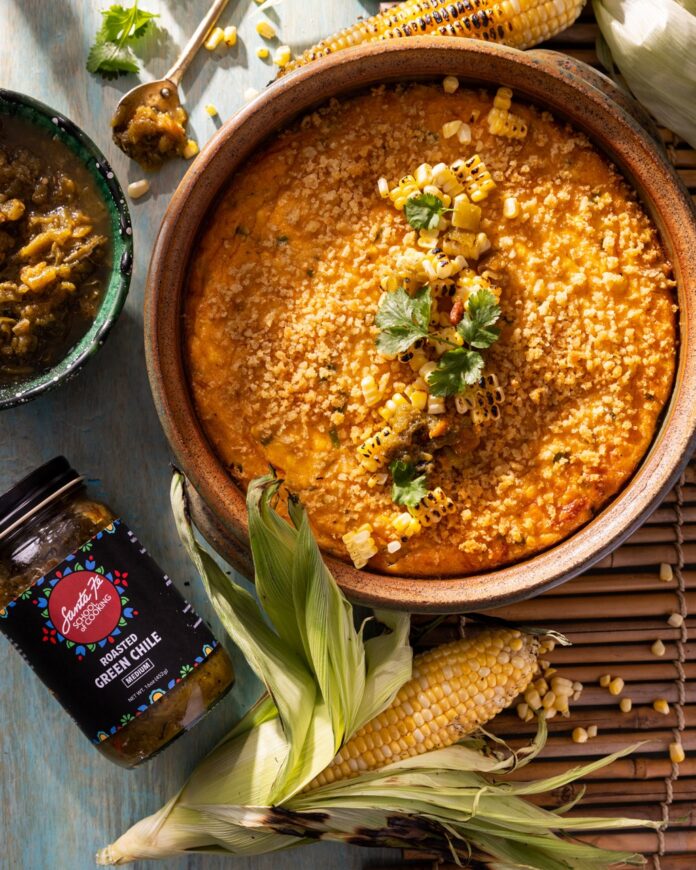
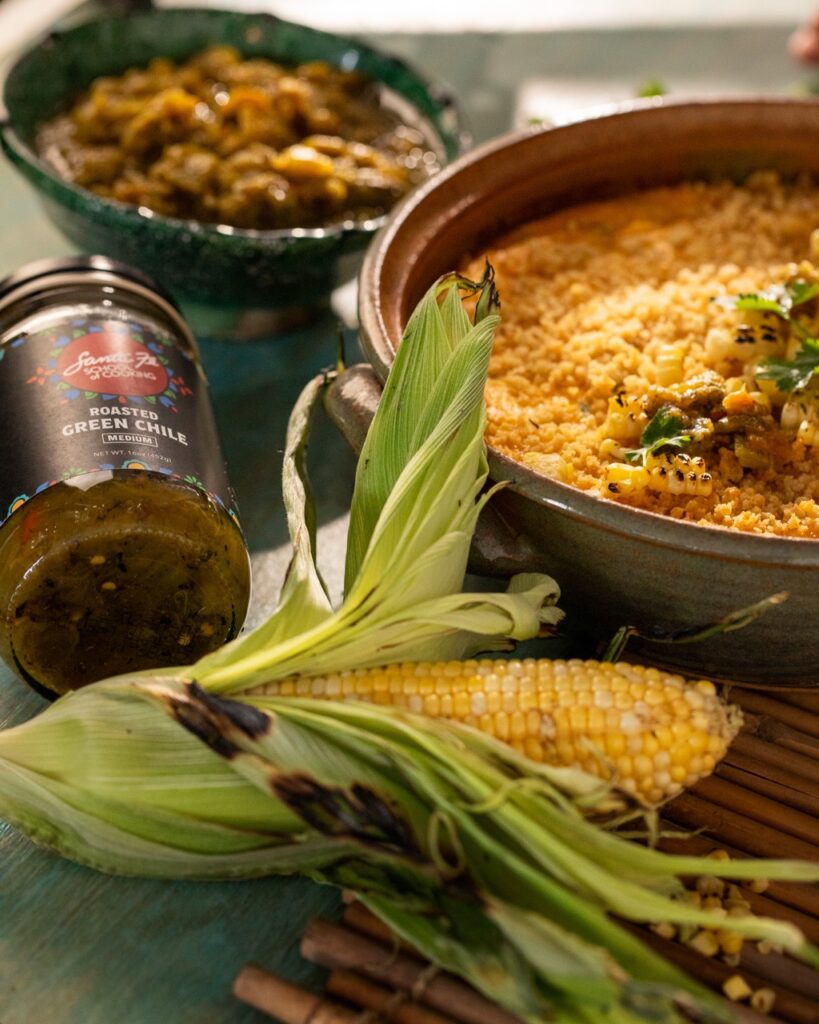
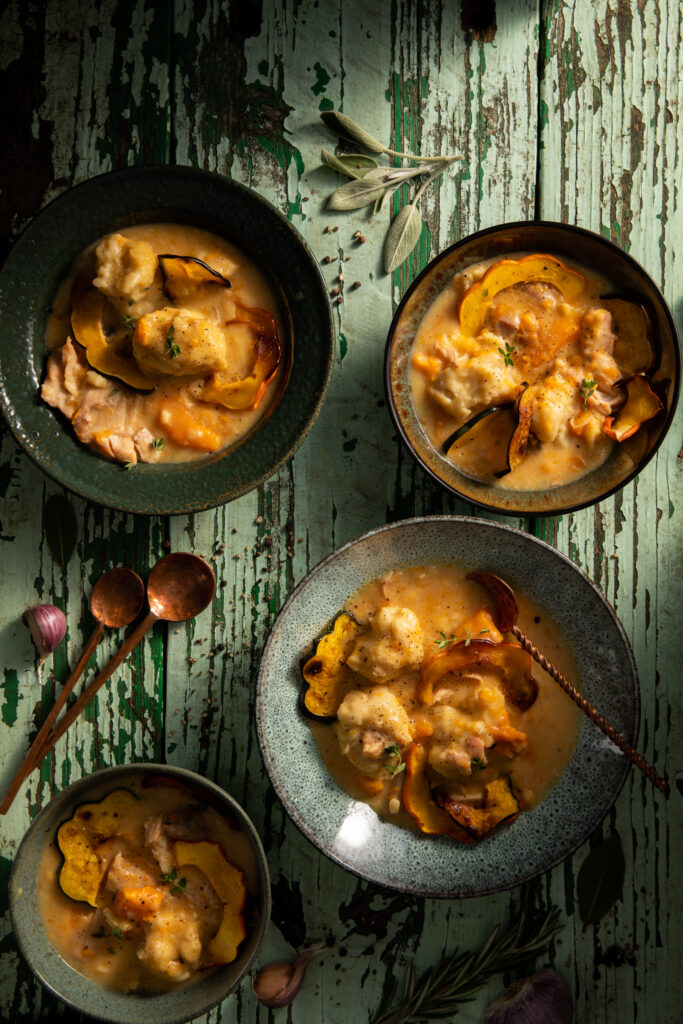
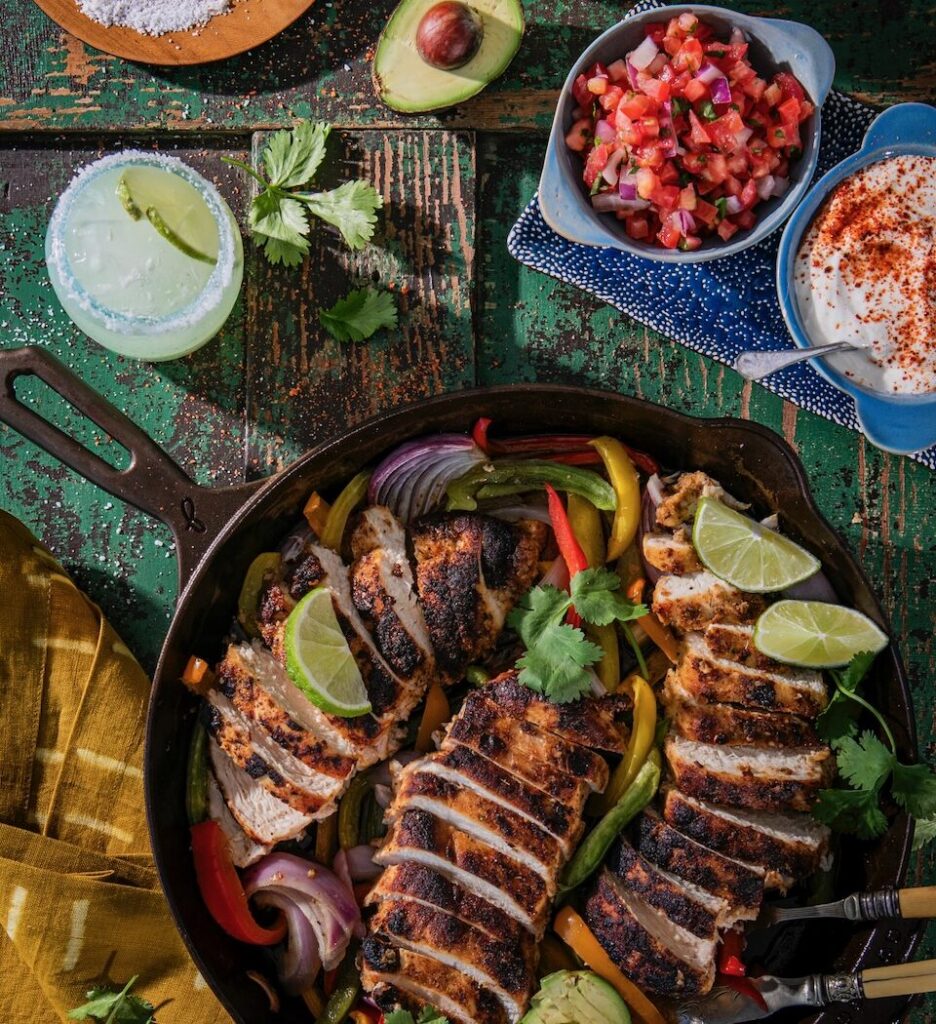
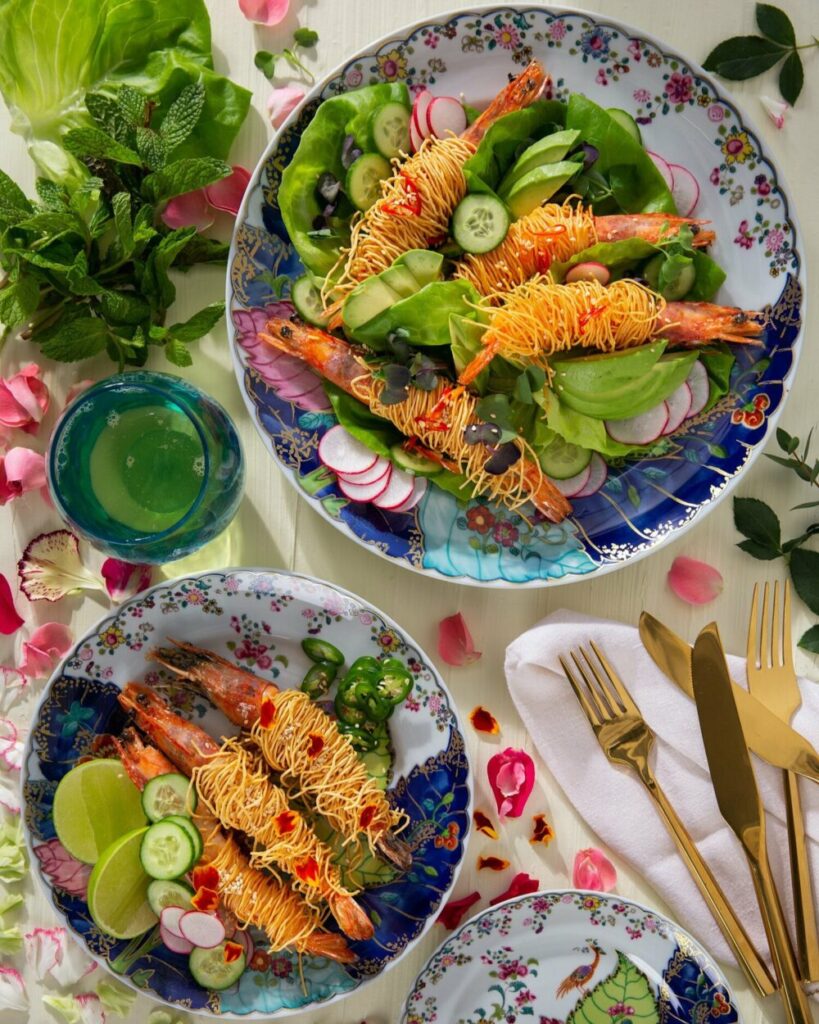
This recipe is a dreamy side to serve with ham or grilled meats. It can be made ahead, and reheated. It’s perfect for a potluck because it’s tasty either hot out of the oven or served at room temperature. The star is Santa Fe School of Cooking’s own Hatch green chile – a cupboard staple that we’re never without.
What Exactly is Flan?
At its core, a combination of eggs and milk (or cream) makes a flan, with the addition of sugar for a dessert version. We gently cook these ingredients until they set into a smooth, sliceable custard. The key to this Corn Flan is how the heavy cream and eggs set around the corn. Unlike puddings or gelatin-based desserts, flan relies entirely on eggs for structure, and unlike cakes, it’s baked low and slow.
1 cup grated Monterey Jack, cheddar or Fontina cheese (may be combined with Cojita, Romano or Asiago for a sharper flavor)
1 tsp salt and black pepper to taste
Instructions
Preheat the oven to 350 degrees. Lightly butter a 9×13 baking dish or 10 individual ramekins.
Melt the butter and combine a third of it with the bread crumbs. Set aside.
In a food processor, puree half the corn with half the cream, cornstarch and chile.
In the pan with the remaining butter, add the green onions and sauté for 2 minutes. Add the garlic and marjoram or sage and cook 2 minutes more.
Place all the corn, corn puree, onion, and garlic in a bowl and mix well. Stir in eggs, cheese and remaining cream. Season with salt and pepper and pour into prepared baking dish or ramekins.
Sprinkle with bread crumbs. Bake 45 to 50 minutes for a baking dish, 35 to 40 minutes for ramekins.
TABLE Magazine New Mexico’s SOURCE section is created with the support of Ricky Allen and Tara Earley Real Estate Group. SOURCE finds the best locally made ingredients and artisanal products, as well as locally available luxuries for fashion and home. Ricky and Tara join us in our support of local businesses.
The secret behind Tumbleweed Lounge’s Pistachio Martini is orgeat syrup – a silky, nutty, sweet concoction that is a key ingredient in Tiki cocktails like the (in)famous Mai Tai. But rather than use traditional almond orgeat, Kauffman makes a house made pistachio orgeat with pistachios from Heart of the Desert in Alamogordo, New Mexico. “I started by mixing our Tularosa Sotol with our house made pistachio orgeat to see what else to add,” says Kauffman. “When I tasted it, I thought there was no need to add anything else.” You can make your own pistachio orgeat, or, even easier, purchase it online.
Place the orgeat and sotol a cocktail shaker with ice, shake lightly, and pour into a Nick and Nora glass.
Garnish with crushed pistachio.
Try a dish that also showcases local ingredients: Corn Flan.
Recipe by Peter Kauffman, Tumbleweed Lounge Story by Julia Platt Leonard Styling by Anna Franklin Photography by Dave Bryce
TABLE Magazine New Mexico’s SOURCE section is created with the support of Ricky Allen and Tara Earley Real Estate Group. SOURCE finds the best locally made ingredients and artisanal products, as well as locally available luxuries for fashion and home. Ricky and Tara join us in our support of local businesses.
TABLE’s Italian correspondent Sara Ghedina was born in Cortina d’Ampezzo, the site (with Milan) of the 2026 Winter Olympics. By sharing some of the region’s most loved recipes, Sara invites us to immerse ourselves in the games and the culture of their host country. Prepare your feast for the opening ceremonies on February 6.
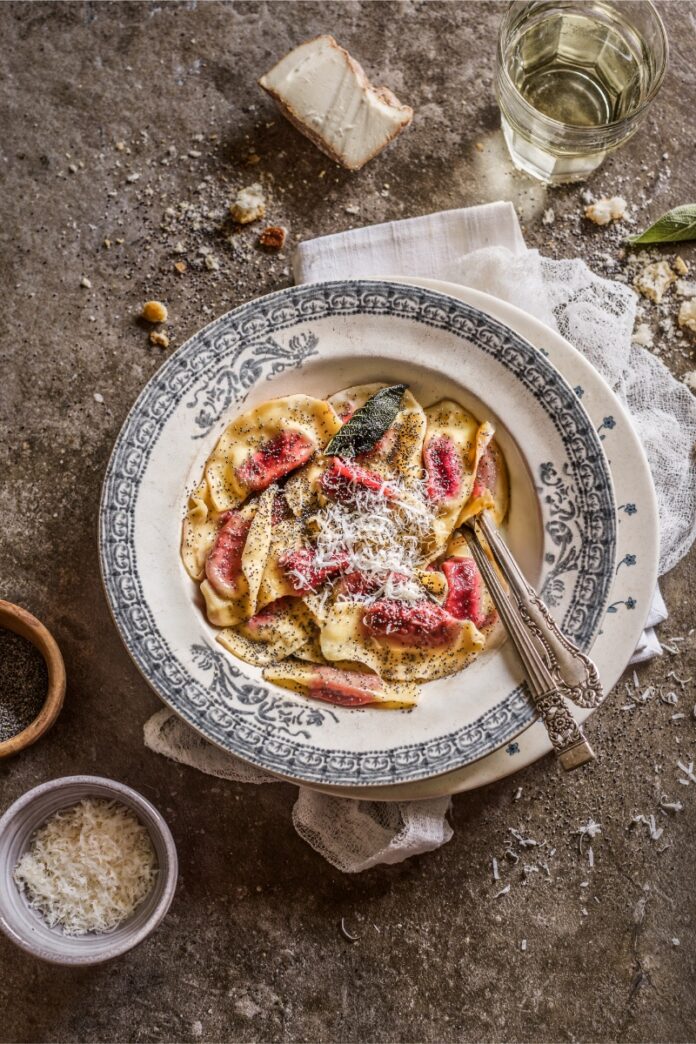
Crescent-shaped red beet ravioli are, hands down, the most famous dish from Cortina d’Ampezzo. They are part of this resort town’s attractions, along with the beautiful mountains and challenging ski slopes. Every mountain hut, hotel, or restaurant offers its own version, and of course, every family has their own recipe. The uniqueness of the ravioli lies mainly in the earthy and colorful filling. The pasta shell should be extra thin to allow for the flavor (and the color) of the beets to shine through.
I grew up eating homemade casunziei prepared with love by both my grandmothers. As kids we would argue which of the two versions was our favorite. My brother and my cousin were often competing against each other to see who was able to eat the most, with my brother usually winning. It wasn’t difficult, really, because doused in butter, poppy seeds, and freshly grated Parmigiano, they are that good!
Cortina d’Ampezzo has always been a borderland. It is in the province of Belluno in the Veneto region, and was part of the Austro-Hungarian Empire for more than a century until Italy annexed Cortina in 1918, at the end of World War I. From Veneto, Cortina has certainly inherited polenta, which some often serve with game meats, but local cuisine is generally from Austria and South Tyrol traditions. This is where speck comes in. It’s one of the most famous cured meats of the Tyrolean region and one of the Dolomites’ culinary specialties. Speck comes from boneless pork leg. It is both cured and smoked, which gives it a more intense flavor than its cousin, prosciutto.
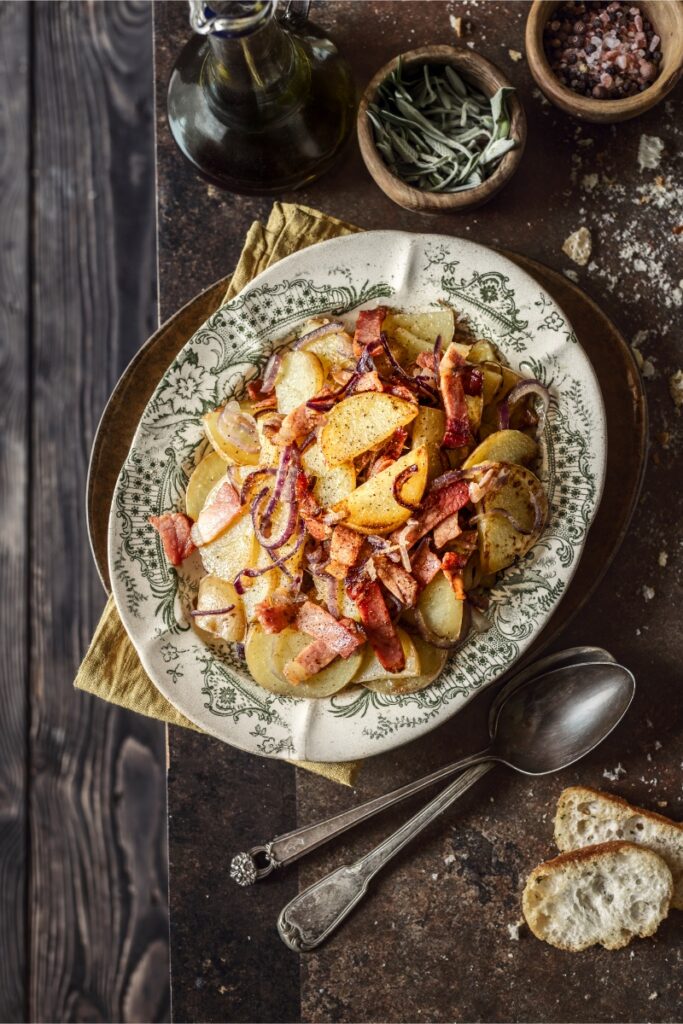
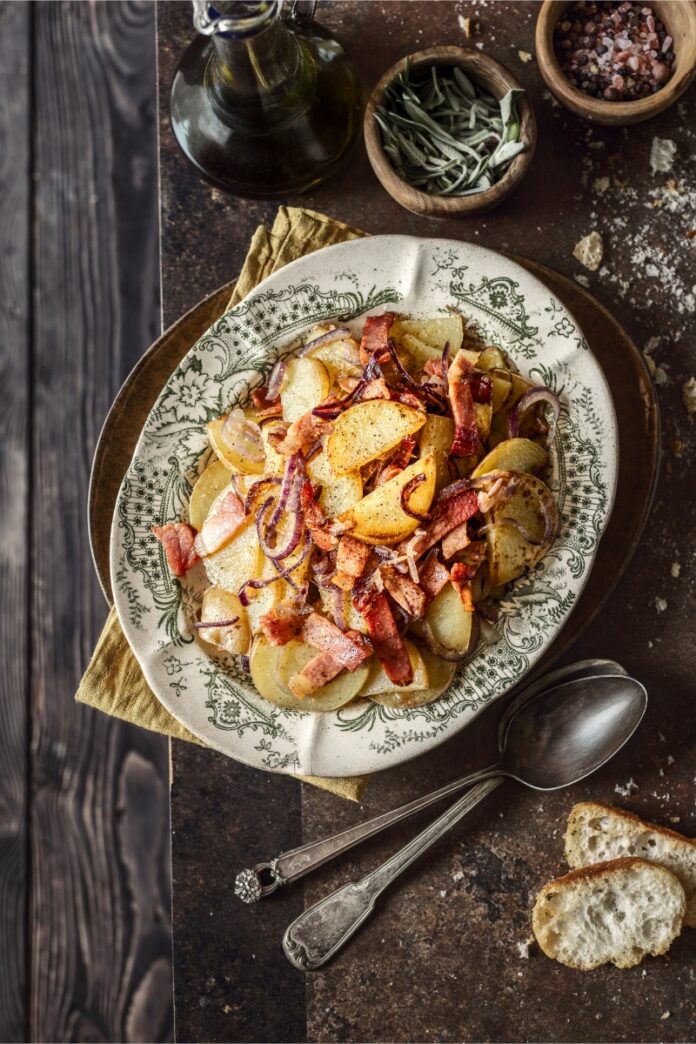
Ampezzo-style potatoes are a warm and comforting side dish made with a few simple ingredients, but their flavor is so intense and unique that it immediately puts you in a “Dolomite mood.” Perfect for dinner after a day spent on the ski slopes, you can serve these potatoes as a main dish along with a green salad and a thick slice of local cheese. Quantities for this recipe are very approximate. My suggestion is to eyeball everything and use your instinct to add the ingredients in the amount your heart desires. If you can’t find speck, use smoked pancetta or bacon instead. The result will not have the same distinct flavor, but it will be equally satisfying.
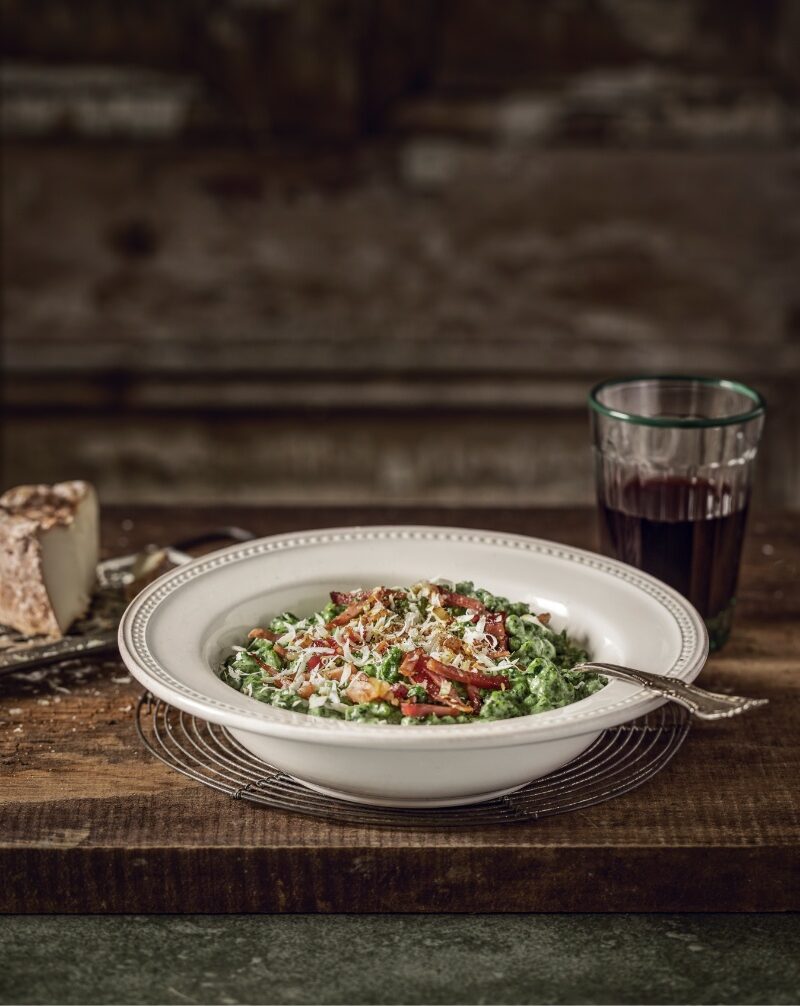
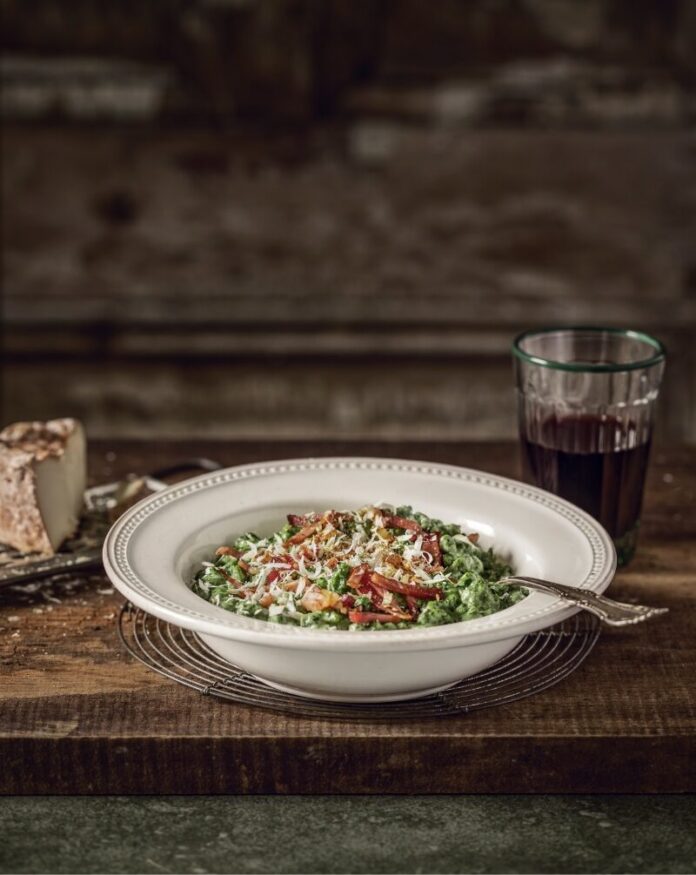
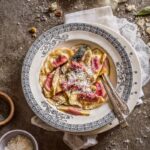
Spätzle are a type of dumpling typical of South Tyrolean cuisine. Traditional spätzle uses flour, eggs, and water as a side dish for meat courses. In Cortina you will find a green version, with spinach added to the basic dough. They are served on their own as a main course, just like gnocchi, usually topped with cream sauce and strips of sautéed speck. It is a rich and tasty dish perfect for Sunday lunch, dinner with friends, or any time you want to indulge.
They’re very easy to make, but you will need a spätzle maker, a tool similar to a horizontal grater with large holes that will let irregular drops of batter fall directly into the boiling water (you can easily find it online or in kitchen supply stores). Spätzle cook in just a few minutes. When they float to the surface, they’re ready to be tossed in the pan with the sauce, which will stick perfectly to the little dumplings, thanks to their irregular shape. You can also try them with melted butter and Parmesan cheese or with a simple tomato sauce, a less traditional variant that is nevertheless delicious.
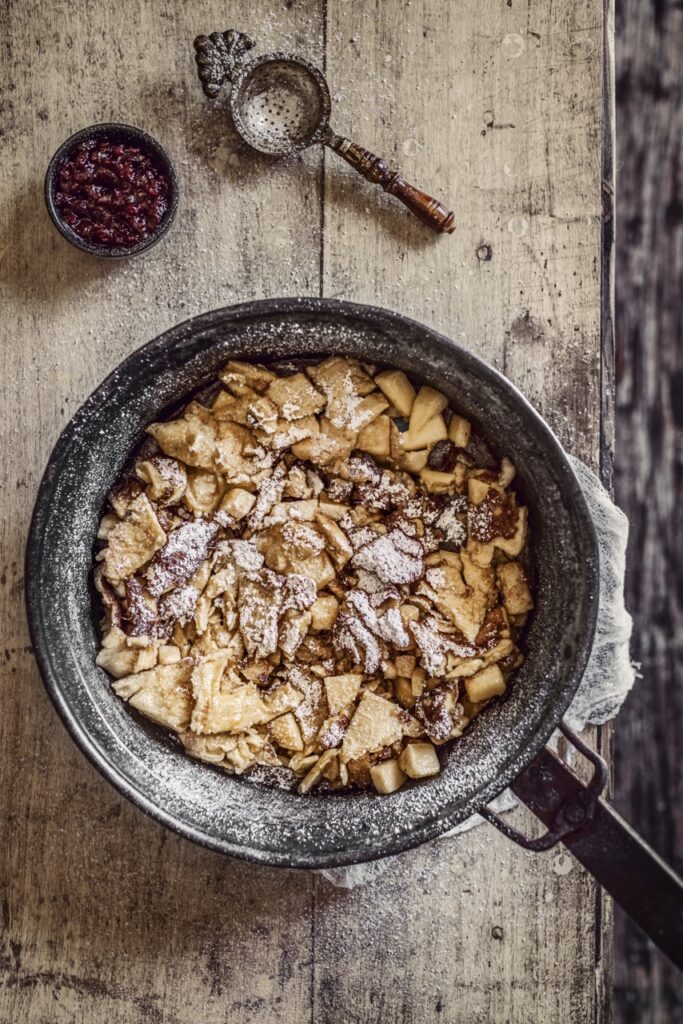
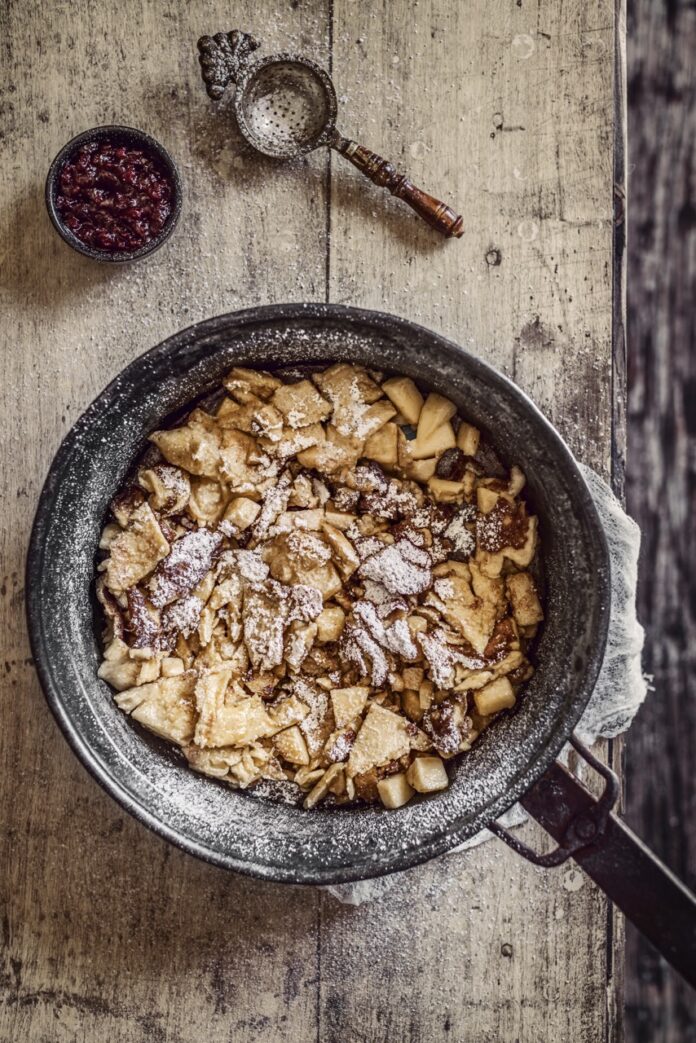
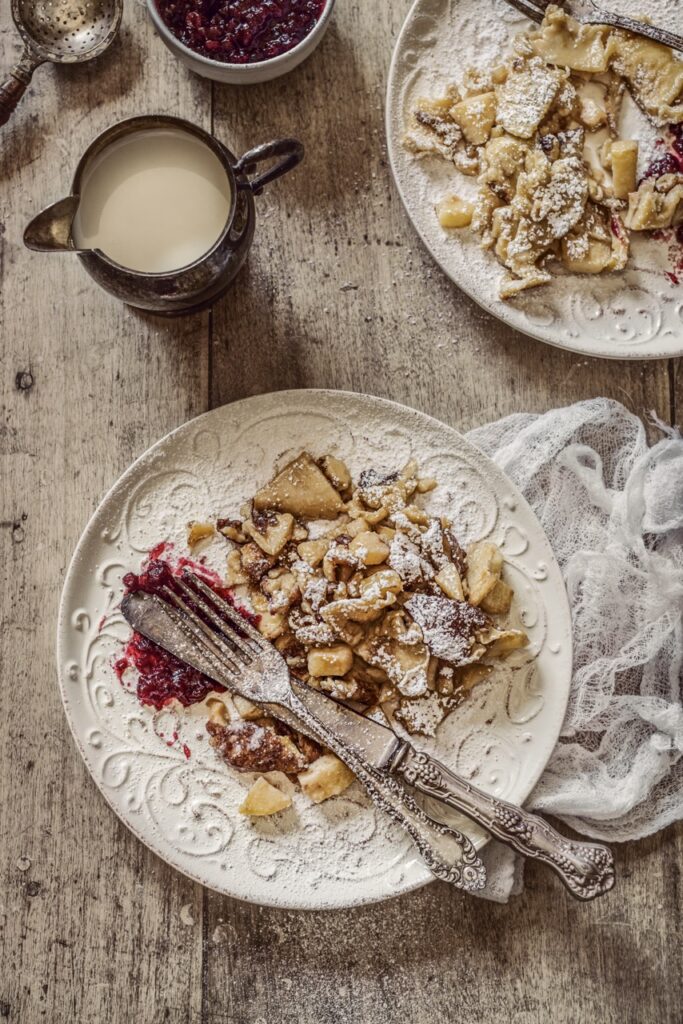
Many of the desserts and pastries typically found in Cortina are of Austrian origin, such as Linzertorte, Sachertorte, Apple Strudel, or Krapfen. Kaiserschmarrn is no exception: in almost every mountain hut in Cortina you’ll find a local variation of the original Austrian treat, which was the favorite dessert of the Emperor (Kaiser in German) Franz Joseph, hence its name. A true energy boost after a day spent skiing or hiking, Kaiserschmarrn is not an omelet nor a crepe, but something in between. The simple batter made with egg, flour, and milk is enriched by chunks of apples and rum-soaked raisins, and the result is a giant, fluffy, and light pancake, which is then torn into bite-size pieces and served warm with lots of powdered sugar and cranberry preserve.
There are many ways to prepare Kaiserschmarrn. Omit the raisins or use water instead of rum to soak them for an alcohol-free version. Separate the eggs and beat the whites until stiff peaks form to have an even fluffier dessert. Substitute vanilla extract for lemon. Skip the apples if you prefer (although I do not recommend it). Whichever path you choose, this simple dish comes together in 15 minutes! Beyond dessert, it makes a great breakfast or brunch, and it is loved by adults and kids alike.
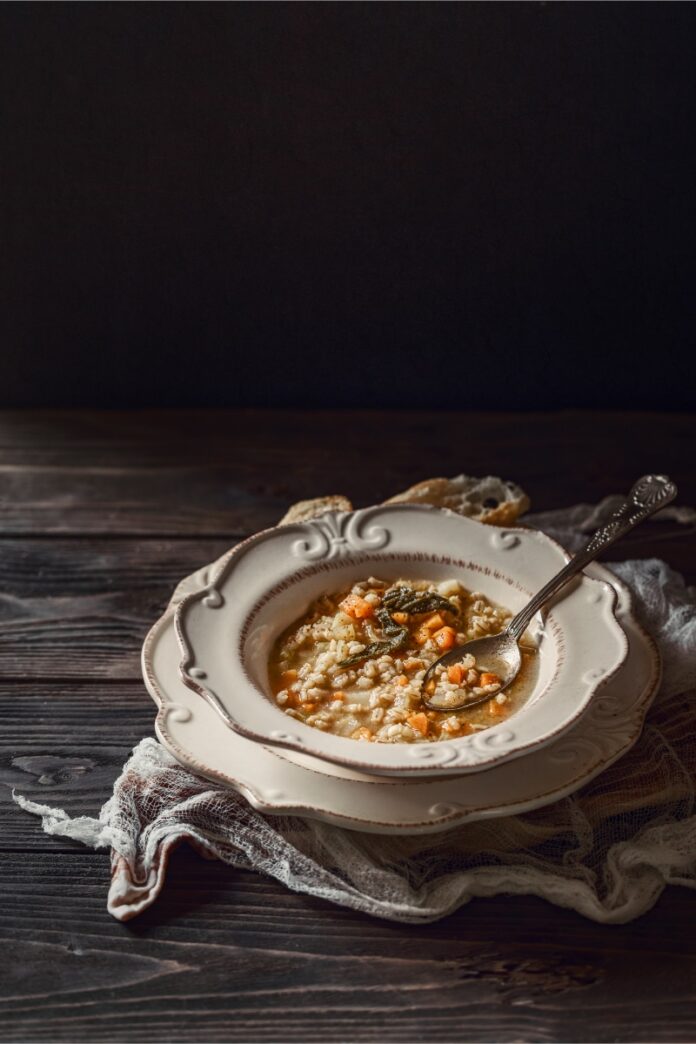
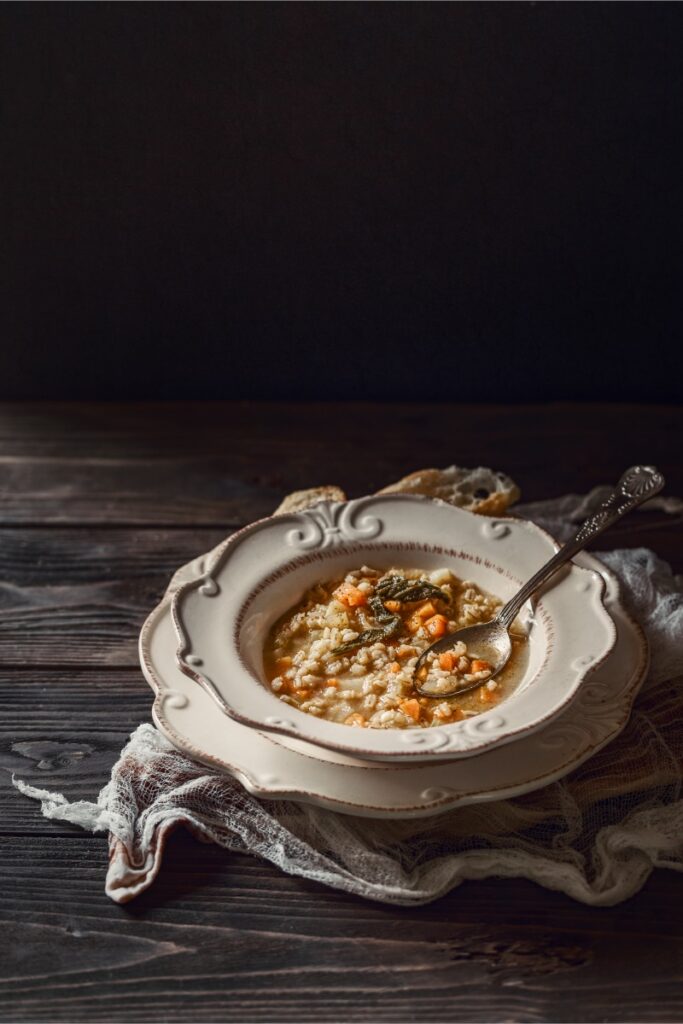
Simple, warm, and comforting, this soup is ideal for an easy midweek dinner that will combine the convenience of everyday cooking with the nourishing goodness of your grandma’s’ recipes. Barley soup is a staple in South-Tyrolean cuisine and in the Dolomites, too. Its unique character comes once again from speck, which gives it a distinct smoky flavor. The traditional soup is made with whole barley grains, which need to be soaked overnight. However, most people now use pearled barley, which doesn’t need soaking and can be cooked immediately. If you want an even richer and creamier result, try adding 1 cup whole milk (or more) about 10 minutes before the soup is ready. This is how we used to make it at home, and it was pure heaven!
Simple, warm, and comforting, this soup is ideal for an easy midweek dinner that will combine the convenience of everyday cooking with the nourishing goodness of your grandma’s’ recipes. Barley soup is a staple in South-Tyrolean cuisine and in the Dolomites, too. Its unique character comes once again from speck, which gives it a distinct smoky flavor.
Tips for Making Barley Soup
The traditional soup is made with whole barley grains, which need to be soaked overnight. However, most people now use pearled barley, which doesn’t need soaking and can be cooked immediately. If you want an even richer and creamier result, try adding 1 cup whole milk (or more) about 10 minutes before the soup is ready. This is how we used to make it at home, and it was pure heaven!
This South-Tyrolean barley soup is hearty and comforting.
Ingredients
Scale
8 oz pearled barley
1 yellow onion
2 garlic cloves
2 small carrots
1 celery stalk
1/4 lb speck or smoked pancetta, cut in thick slices
2 bay leaves
2 sage leaves
2 medium-size potatoes, such as Yukon Gold
1 tbsp butter
1 tbsp extra-virgin olive oil
About 5–6 cups meat or vegetable stock + more water if needed
Salt and pepper to taste
Instructions
Finely dice the onion, carrots, and celery.
Peel the potatoes and place them in a large bowl covered with water to help them release the starch. Set them aside while you make the soup.
Dice speck or pancetta and set it aside.
Heat oil and butter in a large pot, add onion and peeled garlic cloves, and cook for about 10 minutes until translucent.
Add carrots and celery, season with salt and pepper, and cook at medium heat until vegetables have softened.
Add diced speck and sauté for a minute or two.
Add barley, sage, and bay leaves, and cook for another few minutes.
Add broth to cover the barley mixture generously. Simmer covered for about 45 minutes or until the barley is tender, stirring from time to time and adding more broth or water as needed.
Meanwhile, drain the potatoes and dice or cut them in chunks. About 10 minutes before barley is ready, add them to the soup and cook until they are tender.
Remove bay and sage leaves, adjust the seasoning if needed, and serve right away, topping each bowl with some chives and a drizzle of extra-virgin olive oil.
Many of the desserts and pastries typically found in Cortina are of Austrian origin, such as Linzertorte, Sachertorte, Apple Strudel or Krapfen. Kaiserschmarrn is no exception: in almost every mountain hut in Cortina you’ll find a local variation of the original Austrian treat, which was the favourite dessert of the Emperor (Kaiser in German) Franz Joseph, hence its name. A true energy boost after a day spent skiing or hiking, Kaiserschmarrn is not an omelette nor a crepe, but something in between.
What is the Cortina Dessert Kaiserschmarrn?
The simple batter uses egg, flour and milk that you enrich with chunks of apples and rum-soaked raisins. The result is a giant, fluffy, and light pancake, which is then torn into bite-size pieces and served warm with lots of powdered sugar and cranberry preserve. As always, there are many different ways to prepare Kaiserschmarrn: you can omit the raisins or use water instead of rum to soak them for an alcohol-free version, you can separate the eggs and beat the whites until stiff peaks form to have an even fluffier result, you can substitute vanilla extract for lemon, and you can skip the apples if you prefer (although I do not recommend it). Whichever way, it is a simple dish that comes together in 15 minutes, it also makes a great option for breakfast or brunch (and sometimes dinner!), and both adults and kids love it.
Soak raisins with rum and set aside while you prepare the batter.
Whisk together flour and milk, stirring vigorously until the batter is fairly thick and smooth. Add eggs, one at a time, sugar, salt, and lemon zest and mix again.
Peel, core, and thinly slice the apples (you could also dice them if you prefer). Add them to the batter along with the drained raisins, and mix well.
Melt butter in a large pan over medium heat, pour the batter into it few tablespoons at a time, breaking it up with a wooden spoon as it thickens, and swirling the pan often. Alternatively, you could pour the Kaiserschmarrn mixture in the pan all at once and treat it like an omelet, cooking it on both sides and breaking it into bite-size pieces when it’s done.
Serve it warm, sprinkled with lots of powdered sugar and accompanied by a spoonful of cranberry jam.
Spätzle are a type of dumpling typical of South Tyrolean cuisine. Traditional spätzle uses flour, eggs, and water, and is generally a side dish for meat courses. In Cortina you will find a green version, with spinach added to the basic dough. They are served on their own as a main course, just like gnocchi, usually topped with cream sauce and strips of sautéed speck. It is a rich and tasty dish perfect for Sunday lunch, dinner with friends, or any time you want to indulge.
Don’t Forget Your SpätzleMaker
They’re very easy to make, but you will need a spätzle maker, a tool similar to a horizontal grater with large holes that will let irregular drops of batter fall directly into the boiling water (you can easily find it online or in kitchen supply stores). Spätzle cook in just a few minutes. When they float to the surface, they’re ready for you to toss them in the pan with the sauce, which will stick perfectly to the little dumplings, thanks to their irregular shape. You can also try them with melted butter and Parmesan cheese or with a simple tomato sauce, a less traditional variant that is nevertheless delicious.
Spinach Spätzle is a South Tyrolean specialty where tender green dumplings meet a rich cream-and-speck sauce.
Ingredients
Scale
For the spätzle:
2 lb fresh spinach
3 medium eggs
2 ½ to 3 cups flour
pinch of nutmeg
salt and pepper to taste
For the sauce:
1 tbsp butter
1/4 lb speck, cut in thick slices
1 cup heavy cream
Salt and pepper to taste
Parmigiano cheese to serve
Instructions
For the spätzle, wash spinach thoroughly. Drain and place in a large, dry pan. Cook on medium heat until completely wilted, adding few tablespoons of water if needed and stirring often to prevent them from sticking. It will take about 7-8 minutes.
Remove from heat and let the spinach cool off a bit, then squeeze over a strainer to remove as much water as possible.
Place spinach in a large bowl. Puree using an immersion blender until creamy or chop very finely with a knife. Season with salt, pepper, and freshly grated nutmeg.
Add eggs one at a time and whisk to combine.
Gradually add flour and stir with a spoon to incorporate it into the mixture, taking care not to form lumps. You may need flour depending on the spinach. The batter should have a creamy consistency and you want it to be slightly thicker than pancake batter. You need to be able to pour it into the spätzle maker without it flowing through the holes too fast, but you also want to avoid adding too much flour or else the spätzle will be too chewy, and the spinach flavor will be less intense. If you’re in doubt, take about 1 teaspoon of batter and place it in boiling water, cook it for few minutes and see if it holds the shape. Once ready, set the spätzle batter aside.
For the sauce, cut speck into strips about ¾ inch long. Melt the butter in a large pan, add speck and fry it for 2-3 minutes until crispy. Pour in the heavy cream, season with salt and pepper, and let the sauce thicken over moderate heat. Keep it warm while you prepare the spätzle.
Bring a pot filled with salted water to a boil, place the spätzle maker on top and pour few tablespoons of batter at a time over it, sliding the hopper back and forth to let the spätzle fall into the water. You’ll likely need to do this in several batches. When the spätzle float, cook them for one more minute. Then using a slotted spoon, transfer them to the pan with the sauce.
Sauté for one minute, stirring gently, adjust the seasoning if needed, and serve them immediately in individual bowls, topping each one with a generous amount of freshly grated Parmesan cheese.
Cortina d’Ampezzo has always been a borderland. It is in the province of Belluno in the Veneto region, and was part of the Austro-Hungarian Empire for more than a century until Cortina was annexed by Italy in 1918, at the end of World War I. From Veneto, Cortina has certainly inherited polenta, which is often served with game meats, but local cuisine is generally heavily inspired by traditions from Austria and South Tyrol. This is where speck comes in. It’s one of the most famous cured meats of the Tyrolean region and one of the Dolomites’ culinary specialties. Speck is produced from boneless pork leg. It is both cured and smoked, which gives it a more intense flavor than its cousin, prosciutto.
Chef Sara Ghedina’s Tips for Ampezzo-Style Potatoes
Ampezzo-style potatoes are a warm and comforting side dish made with a few simple ingredients, but their flavor is so intense and unique that it immediately puts you in a “Dolomite mood.” Perfect for dinner after a day spent on the ski slopes, these potatoes can also be served as a main dish along with a green salad and a thick slice of local cheese. Quantities for this recipe are very approximate. My suggestion is to eyeball everything and use your instinct to add the ingredients in the amount your heart desires. If you can’t find speck, use smoked pancetta or bacon instead. The result will not have the same distinct flavor, but it will be equally satisfying.
A rustic Dolomite dish made with golden potatoes, sweet onions, and smoky speck.
Ingredients
Scale
1 1/2 lb potatoes such as Yukon Gold
2 small red onions
1/4 lb speck, cut in thick slices
4–5 tbsp extra-virgin olive oil
Salt and pepper to taste
Instructions
Wash potatoes thoroughly, removing any residual dirt. Cut them in half and leave them in a bowl of water for at least 15 minutes. This will help remove starch and prevent them from sticking together while cooking.
Drain and rinse, then place them in a large pot, cover with cold water. Add salt. Simmer for 20-30 minutes, depending on the size of the potatoes. They should be slightly softened, but still firm.
Remove from heat and drain. Let them cool off, then peel if you’d like (I prefer to leave the skin on for this recipe). Cut them in thick slices or chunks and set aside.
Cut speck into thick strips about 3/4 inch long. You could also dice, if you prefer.
Peel and slice onions and set them aside.
Heat 2 tablespoons extravirgin olive oil in a large pan. Add speck and cook for 2-3 minutes until crispy. Place them on a plate lined with paper towels to drain excess oil and let cool off.
In the same pan, add 2-3 tablespoons olive oil. When hot, add the potatoes and sauté over high heat until golden brown: they should get a little crunchy on the outside. Add the sliced onions and sauté for another 10-15 minutes until onions get soft.
Season with salt and pepper, add the reserved speck stripes, cook for another few minutes and serve.
Crescent-shaped Red Beet Ravioli are, hands down, the most famous dish from Cortina d’Ampezzo. They are part of this resort town’s attractions, along with the beautiful mountains and challenging ski slopes. Every mountain hut, hotel, or restaurant offers its own version, and of course, every family has their own recipe. The uniqueness of the ravioli lies mainly in the earthy and colorful filling. The pasta shell should be extra thin to allow for the flavor (and the color) of the beets to shine through.
Chef Sara Ghedina’s Memories of Casunziei Rossi (Red Beet Ravioli)
I grew up eating homemade casunziei prepared with love by both my grandmothers. As kids we would argue which of the two versions was our favorite. My brother and my cousin were often competing against each other to see who was able to eat the most, with my brother usually winning. It wasn’t difficult, really, because doused in butter, poppy seeds, and freshly grated Parmigiano, they are that good!
Casunziei Rossi are delicate crescent-shaped ravioli filled with earthy red beets and potatoes, a beloved specialty from Cortina d’Ampezzo.
Ingredients
Scale
For the dough:
7 oz type 00 flour
3.5 oz semolina flour
3 large eggs + 1 to assemble the casunziei
Pinch of salt
Additional semolina flour to dust
For the filling:
1 lb red beets (cooked)
1/3 lb russet potatoes (cooked)
1–2 tbsp breadcrumbs
2 tbsp butter
1/2 tsp cinnamon
1/4 tsp nutmeg
Salt and pepper to taste
To serve:
5 tbsp butter
2 tbsp poppy seeds
4–5 sage leaves (optional)
Grated Parmesan cheese to taste
Instructions
For the filling, bring a large pot of water to boil. Cover witha steamer basket and add the beets and potatoes, unpeeled. Steam until tender, about 30 to 45 minutes. (Instead of steaming, you could also bake the beets and potatoes, wrapped individually in aluminum foil, so that they will absorb less water and the flavor will be more intense.)
Remove from the heat and let the vegetables cool a bit. Peel and mash through a ricer. Mix them together, calculating 2/3 of the weight for the beets and 1/3 for the potatoes.
To drain excess moisture, set the pureed mixture in a fine mesh strainer over a bowl for about 20-30 minutes.
Melt the butter in a large skillet, add the breadcrumbs, stir and cook for two minutes until lightly toasted. Add the pureed vegetables, season with cinnamon, nutmeg, salt, and black pepper. Cook for about 5 minutes to absorb any remaining moisture, remove from the stove, and let cool down. The filling can be prepared a day in advance and refrigerated.
For the pasta dough, combine the flour and the semolina and mound the mixture on a board. Make a well in the center and break the eggs into it. Add a pinch of salt, then using a fork, gently break up the eggs and start to incorporate the flour a little at a time. When you’ve incorporated enough flour to form a dough, use your hands and knead until it all comes together and the dough is smooth and elastic. If it seems too dry, dip your hands in water and knead again for a minute, if it seems too wet, add a sprinkle of flour and knead to combine.
Roll the dough into a ball, cover it with plastic wrap, and allow to rest at room temperature for 30-45 minutes.
To assemble the casunziei, divide the dough into 4 or 5 equal pieces. Using a pasta machine or a rolling pin, roll each piece into a thin sheet, about 1.5 mm thickness. While rolling out each piece, make sure to keep the remaining pasta covered with a damp kitchen towel. Cut the pasta sheet into circles using a round cutter (about 3 inch diameter). Place about 1 teaspoon of filling in the middle of each circle, leaving the edges clear. Lightly beat an egg with 2 tablespoons of water in a small bowl and brush the mixture on the edges of each pasta circle, fold it in half over the filling to create a crescent shape, then press down on the edges to seal well.
Sprinkle some flour on a parchment-lined baking sheet and place finished casunziei on it. Repeat the process with the remaining dough.
To cook and serve the casunziei, bring a large pot of water to boil, and add salt as needed.
Meanwhile, place the butter in a pan and melt it on low heat. Add the poppy seeds and sage leaves, if using, to gently toast them, making sure not to let the butter brown. Remove from heat.
When the water is boiling, gently place the casunziei into the pot. They should float when cooked, and as they are ready scoop them out with a slotted spoon, draining as much water as possible. Lay them in the pan with the melted butter and toss to coat. Serve immediately, drizzling any remaining butter over them and sprinkling with a generous amount of freshly grated Parmigiano cheese.
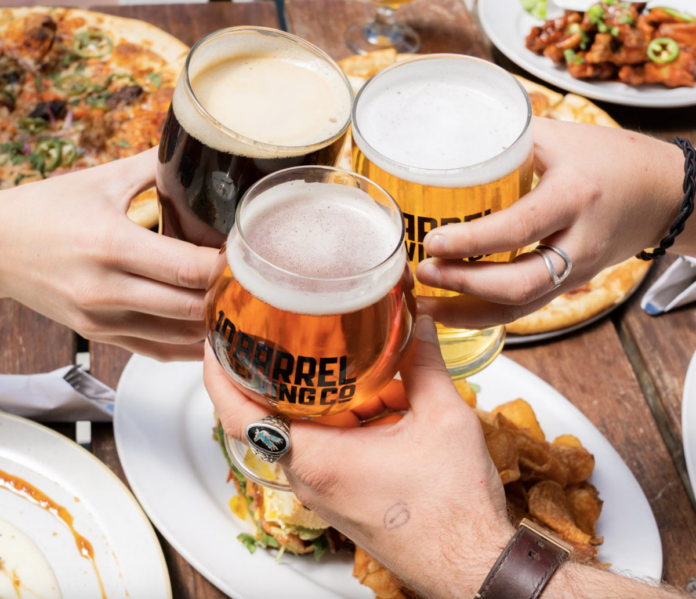
Make yourself a plate, grab a drink, and grab a seat with a good view! It’s time for Super Bowl Sunday! Whether you watch it for the game, the commercials, or the half-time performance, according to the NFL, about 60% of the United States population will be watching kick off. Make the most of your Super Bowl this year with planning tips that’ll take your party from a couple of friends and a six-pack to an extravaganza of delicious foods, drinks, and plenty of fun. You’ll feel so prepared that you can plan on actually watching the game this year instead of tending to the party itself.
The Ultimate Guide to Super Bowl Party Planning
Mix Up a Ward 8 for the True New England Patriots Fans
Celebrate your New England spirit with this Patriots-ready Ward 8 cocktail. This is a Boston-born classic that blends rye whiskey with citrus and grenadine for a bold, balanced sip honoring its historic roots in the city’s Eighth Ward. It’s perfect for toasting Super Bowl LX as well as honoring the New England Patriots. Try the recipe here!
Shake Up a Cocktail for Seattle Seahawks Fans
The modern legend of the Last Word cocktail was forged in Seattle when bartender Murray Stenson resurrected the then-forgotten recipe. Raise a glass to the Seahawks with this spirited twist on this city staple. A balanced blend of herbal gin, green Chartreuse, maraschino, and fresh lime combine into something bright and tangy that’s perfect for Seattle’s Super Bowl LX journey. Shake one up here!
Prepare What You Can Ahead of Time
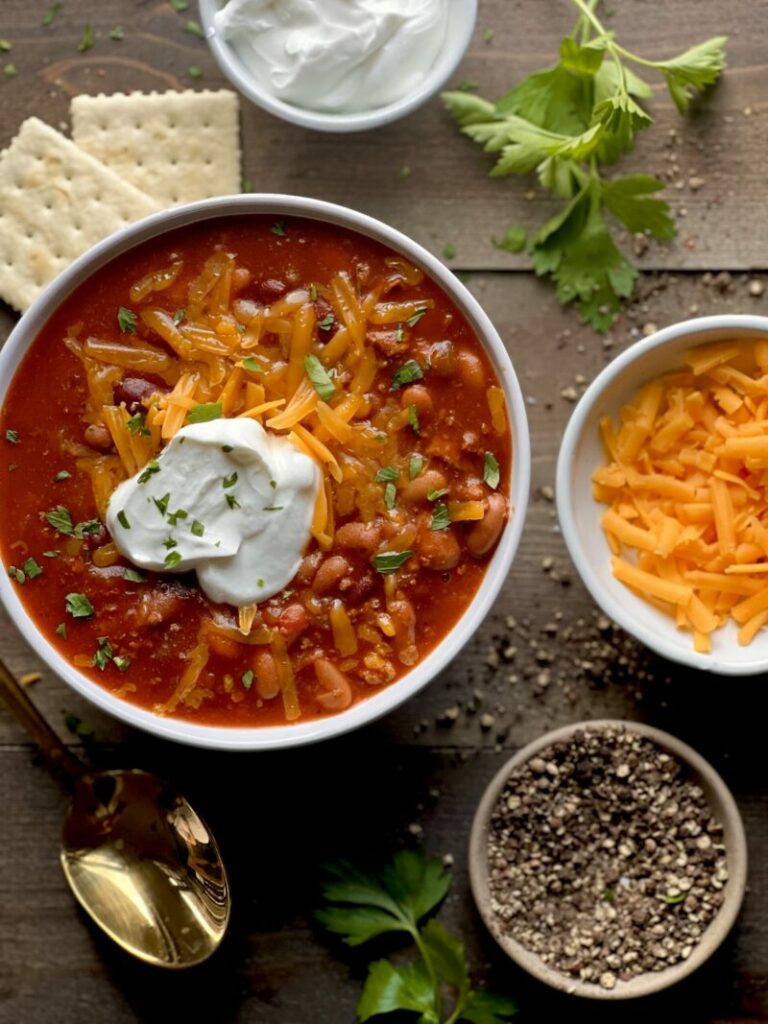
Rushing around the morning of the Super Bowl to make all the preparations you need for the evening can be stressful. Simplify things by making what you can ahead of time. Chili is a great dish to prepare in advance that’s easy to make in big quantities for plenty of guests. Try our crowd pleasing Wendy’s Copycat Chili… just make sure you double or triple the recipe depending on your headcount. Then, you can ask your guests to bring crackers, cheese, chopped onion, or other accompaniments for a potluck style garnish situation.
Create the Perfect Menu of Bite and Cocktail Pairings
Don’t leave your guests overwhelmed by sweet, spicy, or salty flavors. Create a menu that balances bold food flavors with a cocktail counterpart. In our Bites and Cocktail Pairing article, we give you a variety of perfectly paired bites and cocktails resulting in flavor profiles that are just right. You’ll look like a culinary expert in front of all your friends!
Prep a Cocktail for Halftime
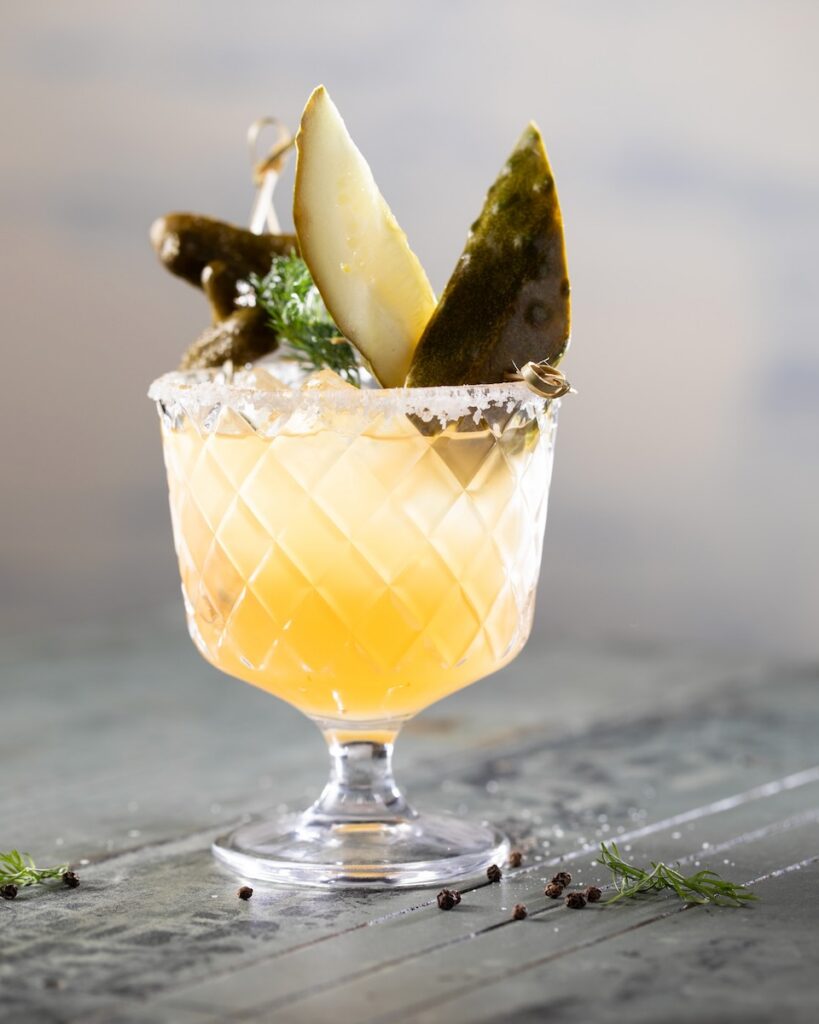
But, if you want something specific to Super Bowl LX, we’ve created a Hot Bunny Rum Smash cocktail in honor of Bad Bunny’s halftime performance. This recipe uses a Puerto Rican white rum along with orange juice, lime juice, habanero pepper slices, hot honey, as well as Tajín around the rim. Talk about a spicy way to heat up your excitement for the show!
Make Sure You Have Dietary Options
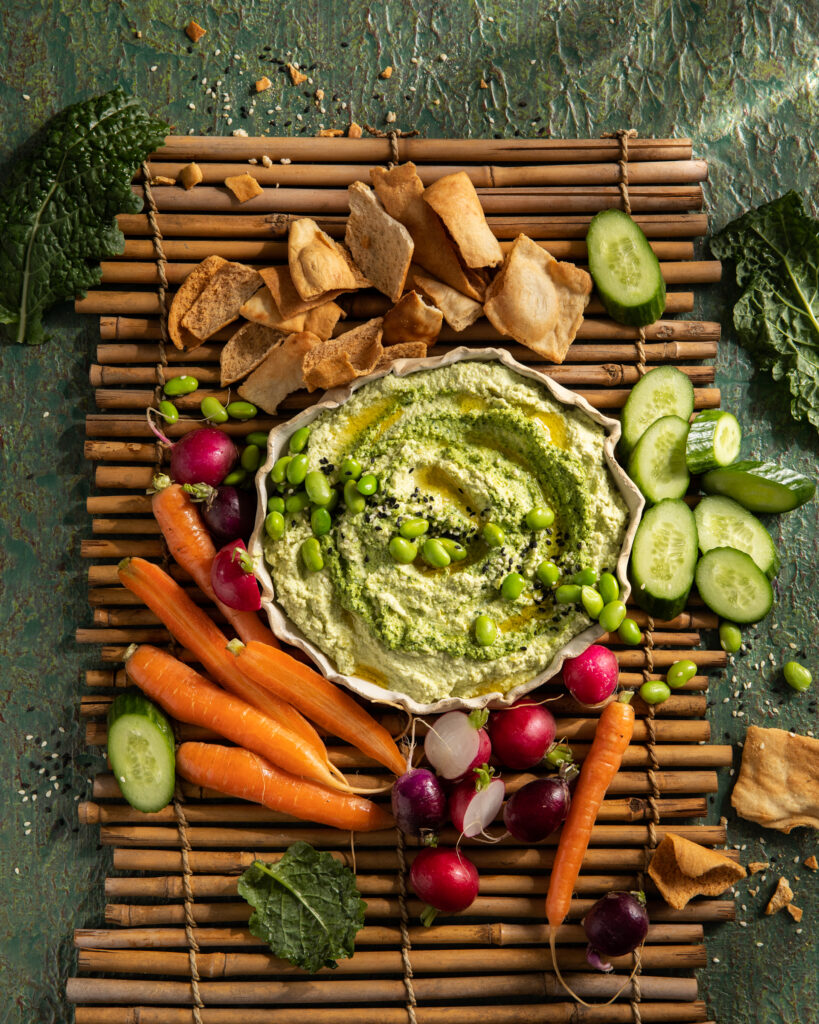
As much fun as the fried food on a Super Bowl night is, not everyone has the same dietary rules. By having some healthy plant-based, meat-free options, you can make sure that all your guests have something to enjoy. Check out our Healthy Game Day Recipes for a variety of dishes that are as delicious as they are good for you. Maybe you’ll make Fennel and Coriander Cashews for a quick snack or Edamame and Kale Hummus for a bigger bite.
Batch a Cocktail but Be Mocktail Inclusive
While many consider making a batch cocktail (like our Sparkling Pomegranate Cosmo) available at their Super Bowl party, mocktail inclusions for those who abstain from alcohol are all the rage. Don’t let your friends feel left out when toasting touchdowns throughout the evening. The best part is that many mocktails use the same core ingredients as popular cocktails so you won’t have to add much to your shopping list. Get started with our tasty Mocktail Recipes and then let your creativity fly. You can even create your own kid-friendly “mocktail” so the little ones can have a special drink too.
Don’t Forget About Dessert
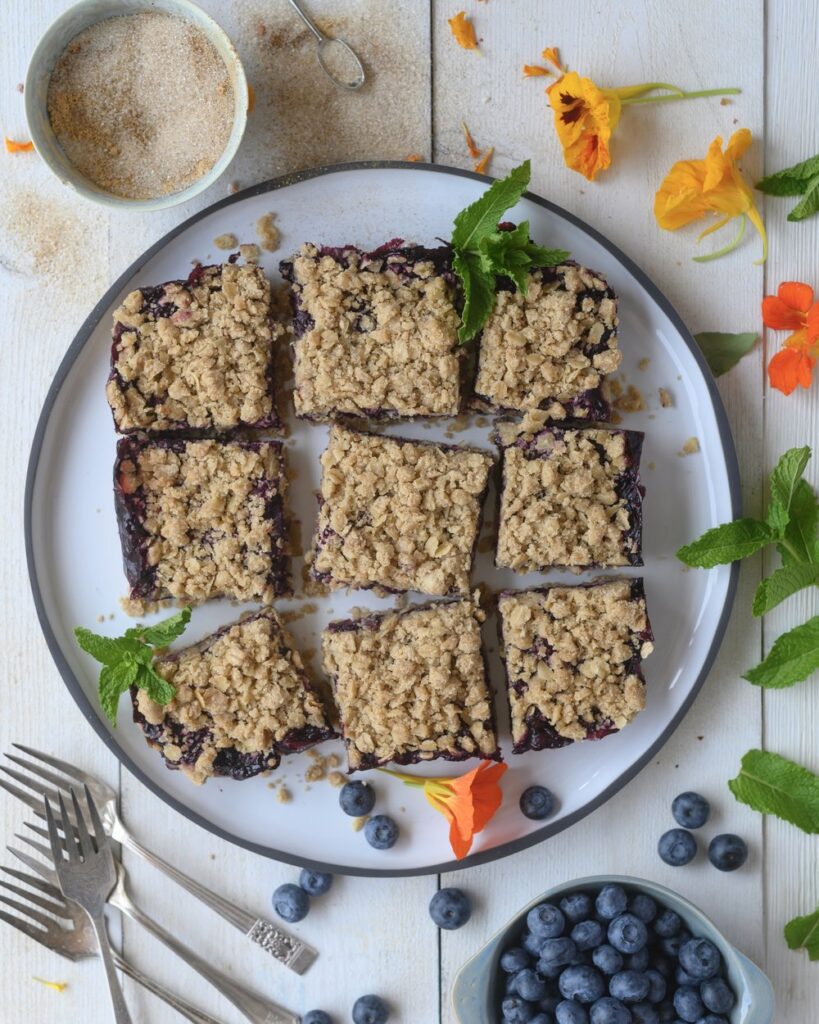
Whenever you’re focusing on main dishes and drinks, it’s easy to forget about one of the most important preparations, dessert. But, you also don’t want your dessert dishes to take up all your cooking time and end up with a table of sweets and nothing else. Make things a little simpler this year with our Dessert Bar Recipes that can be made ahead of time and are the perfect handheld treat. We even have a recipe for Gluten-Free, Vegan Jammy Blueberry Bars so you can have an option for those with dietary restrictions.
Set Yourself Up for Easy Cleanup
Using your regular dinnerware is fine for a small gathering, but, let’s be honest, most people will be paying attention to the game, not your plates. Cleanup is easier with paper plates that are compostable, biodegradable, and eco-friendly. When the time comes to clean up, just scoop any extra compostable food and the plates into your compost bin and let nature do its work. You can also ask guests to bring their own take-home container to take home leftovers.
Still itching for more Super Bowl recipes? Check out our Super Bowl Spread for more ideas.
In 2026, the way we eat feels both inventive and deeply familiar. For instance, comfort food is no longer an indulgence but rather a strategy. These recipes are built to soothe, nourish, and stretch the grocery budget in an era of grocery inflation. At the same time, high-quality proteins are moving from novelty to necessity, shaped by climate awareness and shifting dietary needs as processed foods meet their match. GLP-1 medications are quietly influencing not only the social sphere but the cooking world with extra virgin olive oil possibly becoming a solution.
Through it all though is a renewed sense for simple, high-quality ingredients that center around flavor, health, and tradition. Together, these shifts reveal that 2026 food trends are defined less by restriction or excess this year, and more so by resilience, intention, and pleasure in eating.
Why Take Part in 2026’s Food Trends?
Food trends are not just about what’s new and hot. They’re actually a reflection of how we want to live right now. This year’s trends reflect a collective craving for food that feels intentional whether that’s for comfort food, flavors that travel without excess, and techniques that honor tradition while embracing innovation. Climate-aware sourcing as well as playful nostalgia and globally inspired comfort showcases our curiosity in 2026 and zest to better out world one step at a time. Engaging with these trends (no matter if you cook, host, shop or dine) is a way to stay up-to-date with the current state of our world while also lending a helping hand to your neighbors and locals alike. We invite you to savor those moments when food feels both expressive and deeply human.
Comfort food is called that for a reason. Whether it’s a warming bowl of stew, a juicy burger, or a casserole in a hot pan, we crave comfort food when times are hard and stress is heavy. In a year like 2026, comfort foods are a must when tensions rise across the globe and your own personal battles take hold. We’ll see a rise in recipes that bring nostalgia and remind us of better times like our childhood.
One of the scariest parts of entering a New Year is not knowing what is going to happen to the prices of everyday groceries. Will milk end up a nearly five dollars a gallon again? Will eggs reach into the double digits? Well, what we do know is that chicken, beans, canned fish, and pasta are all staying at a low cost, and if they see an increase, it will be far lower than other foods. This means we’re loading up on recipes that utilize these ingredients in a variety of ways to infuse different cultural flavors into your dinner.
Families are likely to feel the biggest impact of the shifting economy of 2026. Whenever you’re feeding more than just yourself and your partner, it’s difficult to come up with larger portions at an accessible price, while maintaining nutrition for young minds and bodies. In order to save more than a dime in 2026, we recommend taking tips from a real mom who spends each day feeding three wonderful children and a hungry hubby. As author Katrina Tomacchio says, “It’s [saving money] about identifying the habits that quietly cost families the most and learning how to replace them with smarter strategies.”
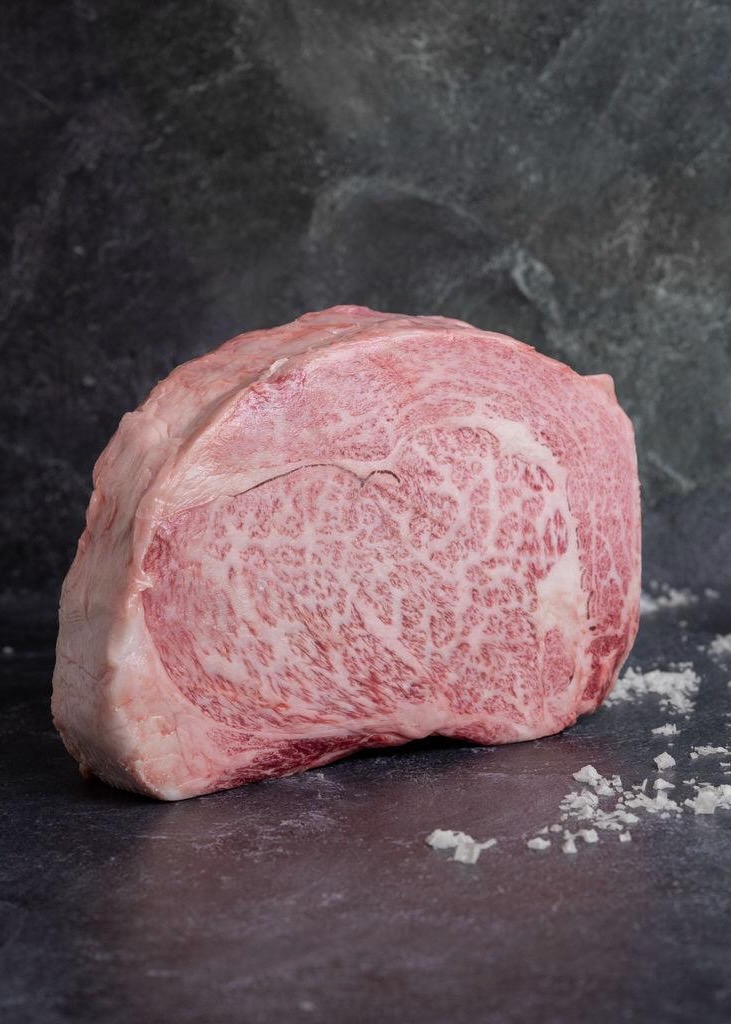
You’re used to eating ground beef, chicken, and fish but did you know there are high-quality protein options that are better for you? Local beef, tinned fish, duck, pork, and quail are just a few of the selections that are shining in 2026. Chef Maxine Sharf points out, “I think there’s been a real shift toward people caring more about the quality and sourcing of their food, especially animal proteins… I’ve definitely seen more interest in high-quality beef recipes.” Cooking these meats at home is also a great way to take advantage of the analog age. In a world of chaos, analog media and ways of living help us to slow down and savor what we have. It’s hands-on, it’s tactile, and it’s essential to 2026.
2026 is about being the best you that you can be. To help you feel just as good, you can follow a diet plan that takes your life and needs into consideration. Maybe you’re looking to cut out some meat, but not all. Or, maybe you’re thinking about giving keto a try but don’t know where to start. Each of these guides is designed to make starting a new diet as simple and as encouraging as possible. Remember as you dive in, there’s no “right” way to diet. It’s most important to listen to your body and supply it with what it needs.
In the New Year, we’re exploring the concept of Food as Medicine. This applies not only for diets but also for specific ingredients that can support a healthy lifestyle. You’ve probably heard a lot about GLP-1 in recent months and its ability to help you lose weight. Nasser Abufarha, founder and director of Canaan Palestine, explains, “With more GLP-1 in your system you’ll feel full for longer, have improved glucose tolerance, have an increase in cardiovascular health, and your digestive process will slow so your body can absorb more of the vitamins and nutrients you ingest.” But, before you go running for a shot, give extra virgin olive oil a chance. Olive oil naturally encourages your body to increase GLP-1 secretion without weekly injections. It’s also the reason you see olive oil used in the Mediterranean diet to lower the risk of cardiovascular disease.
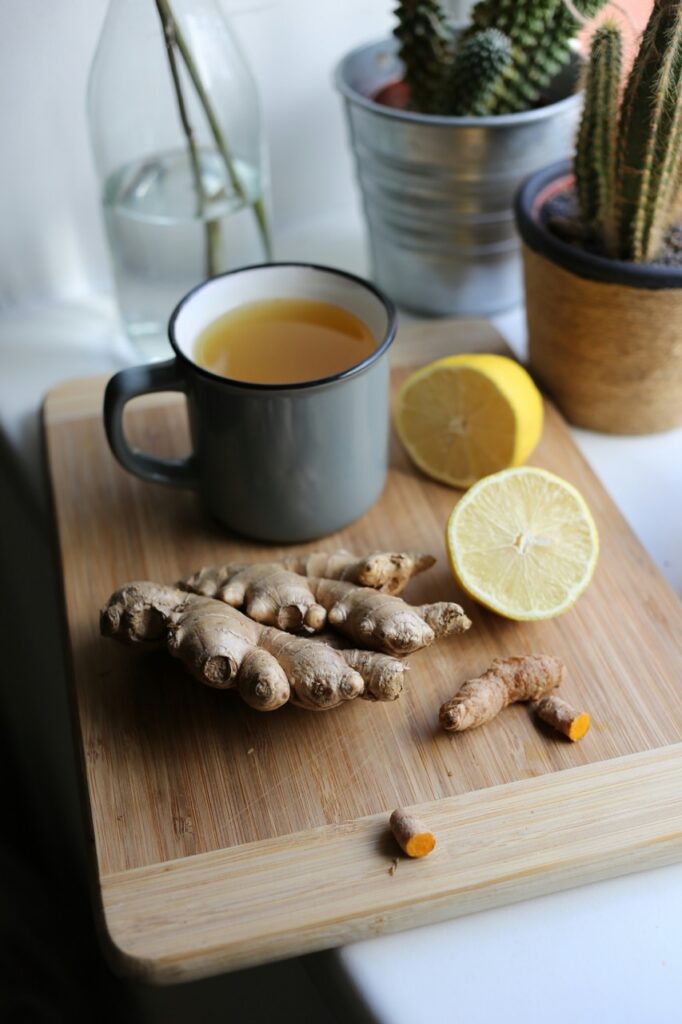
You’ve probably used ginger can soothe a sore throat or a cold but there are plenty of other reasons to use ginger as well. In a year where taking care of ourselves takes priority, ginger can become a best friend for its support with nausea, inflammation, pain, gas, boating, and so much more. As author Kristen Palmer explains, “Its use in Southeast Asia and traditional systems of medicine dates back thousands of years, and modern research is rapidly catching up.” The best part is there are so many ways to use ginger besides just dropping it into a glass of hot water. Take our advice and see how ginger can shake up your life.