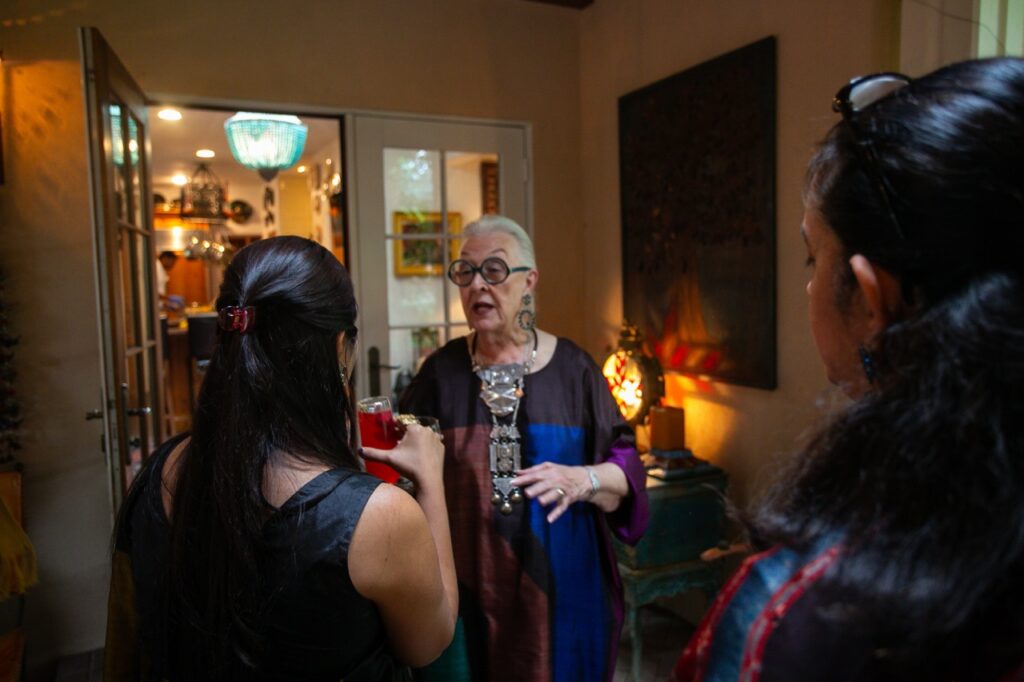
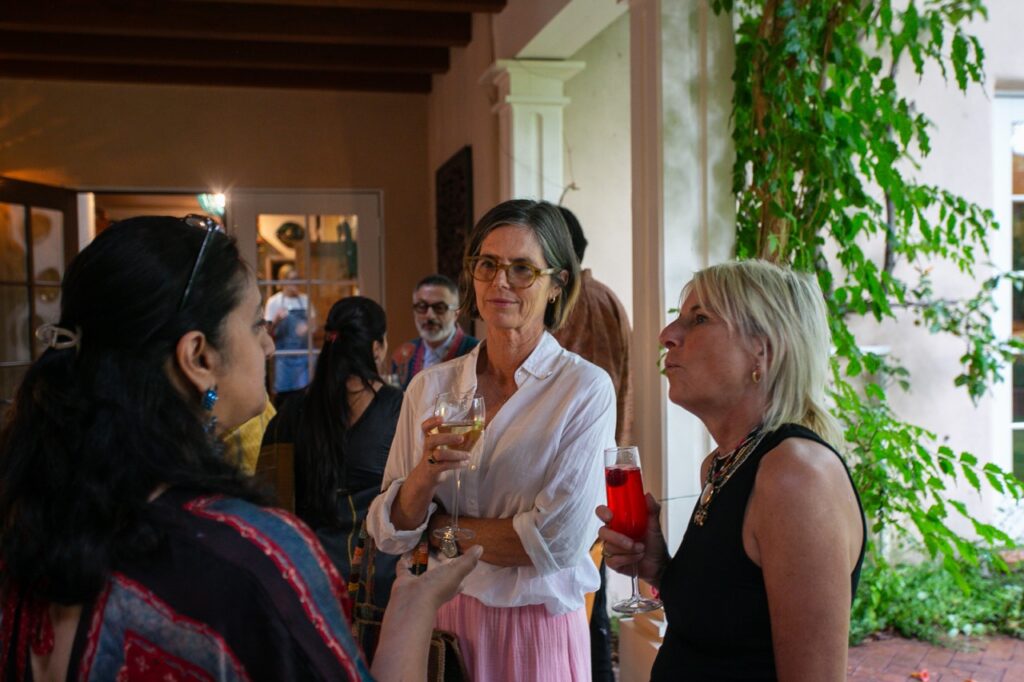
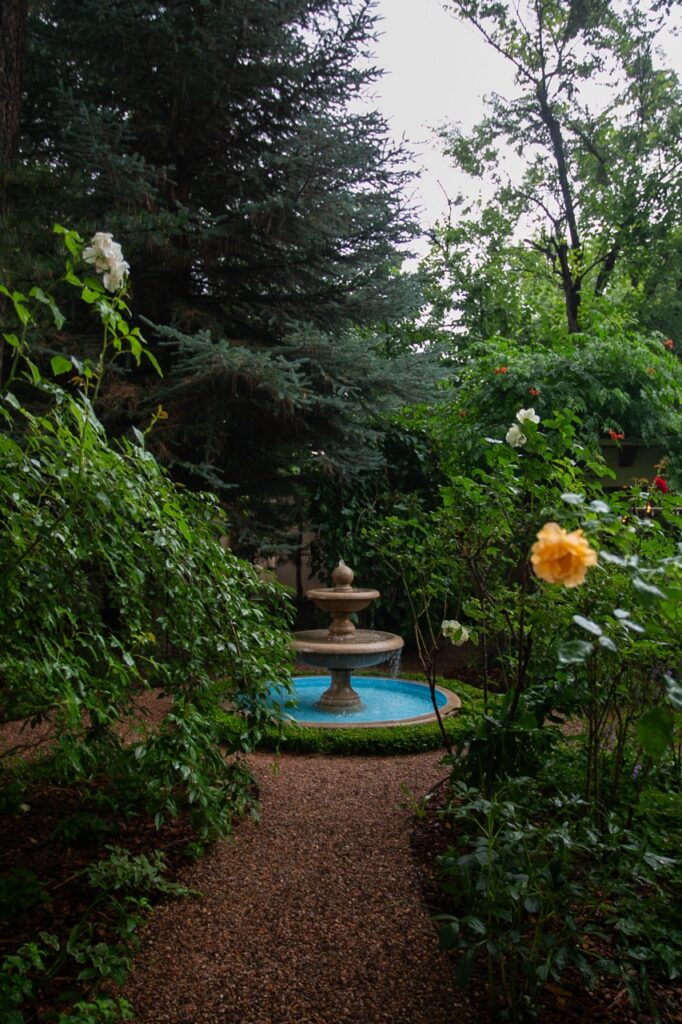
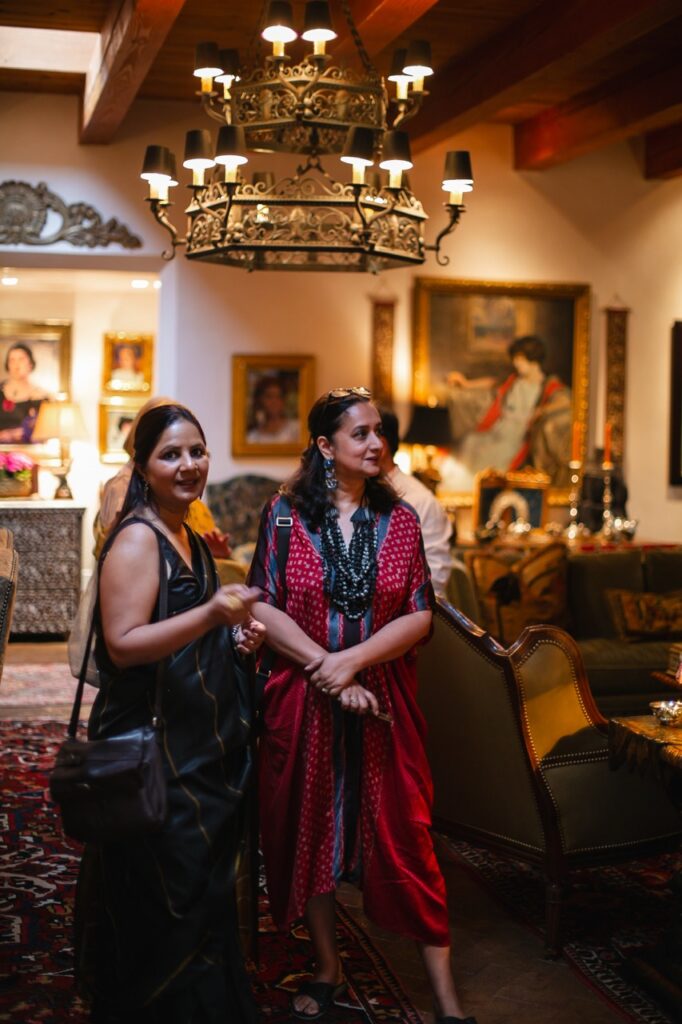
For three days, thousands of visitors descend upon the International Folk Art Market to shop for jewelry, basketry, ceramics, carpets, textiles, and other handcrafted folk art. For the artists it’s a chance not only to sell their wares but also to meet the people buying them. And while the market is a whirlwind for both artists and organizers, there are often moments to connect before the artists head home. One such occasion was a post-market dinner at Suzanne Sugg’s Santa Fe home. Sugg chairs the IFAM Artist Placement Committee and sits on the Board of Directors, and while she’s passionate about all folk art, textiles have a special place in her heart.
Exploring Indigenous Textiles at the International Folk Art Market
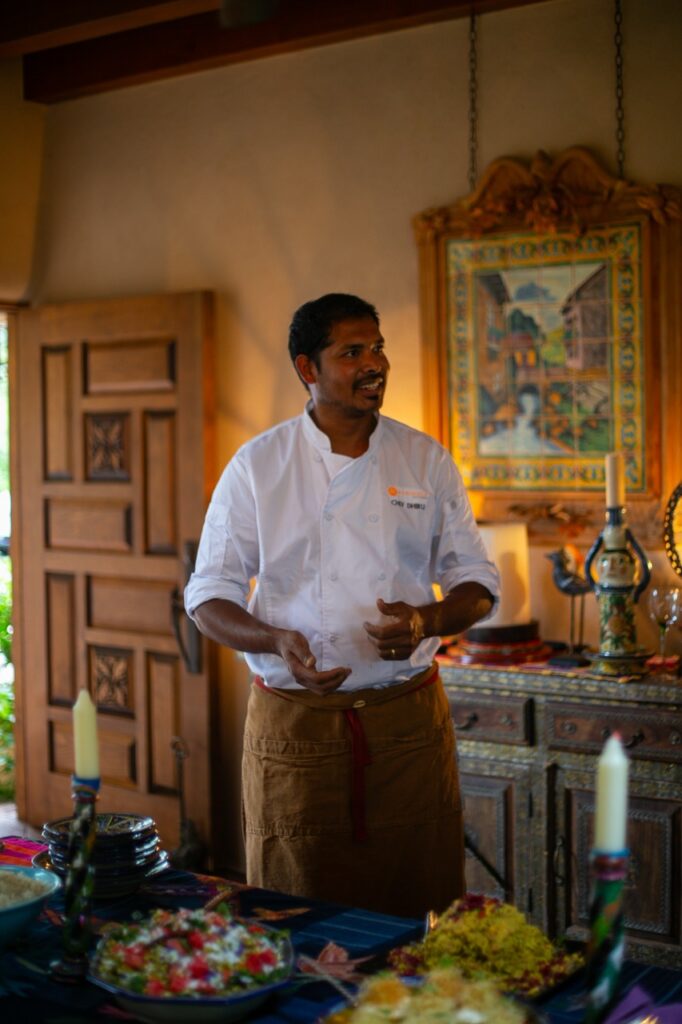
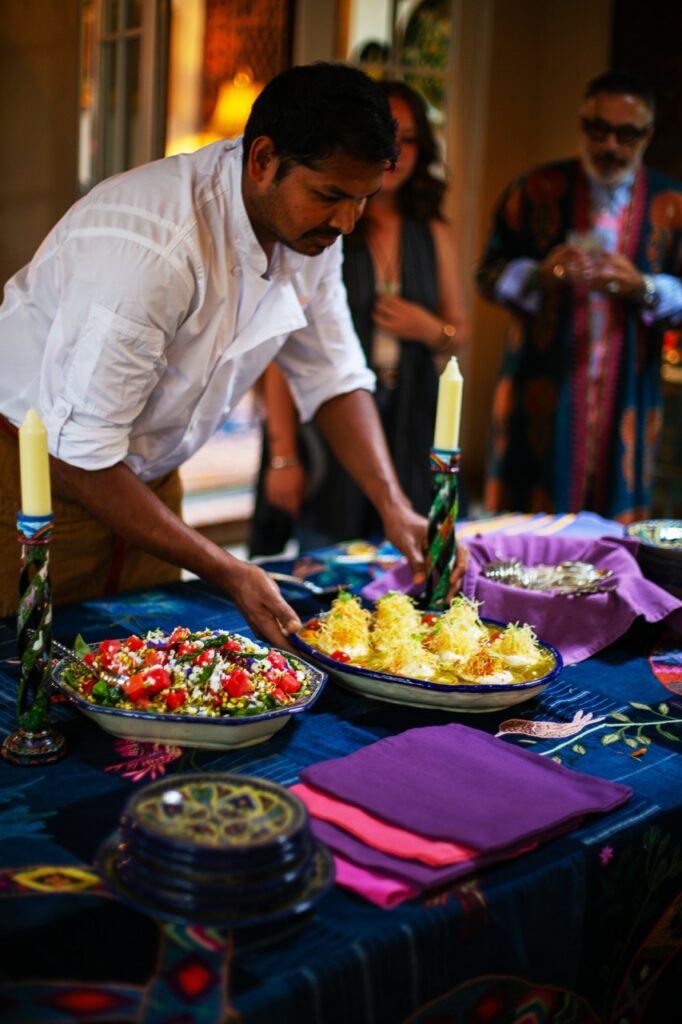
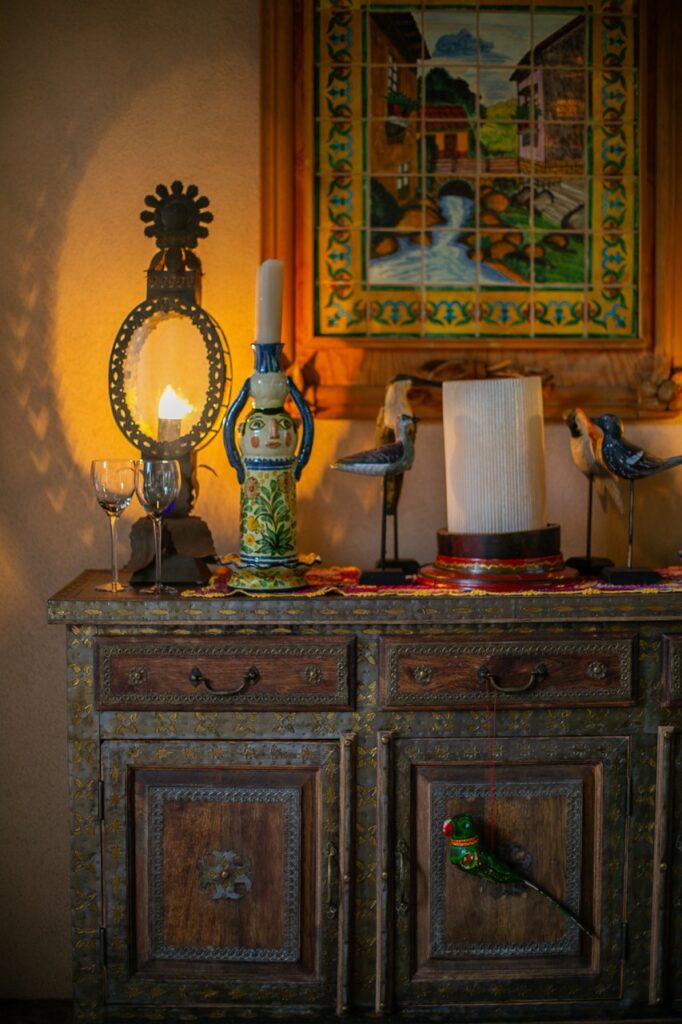
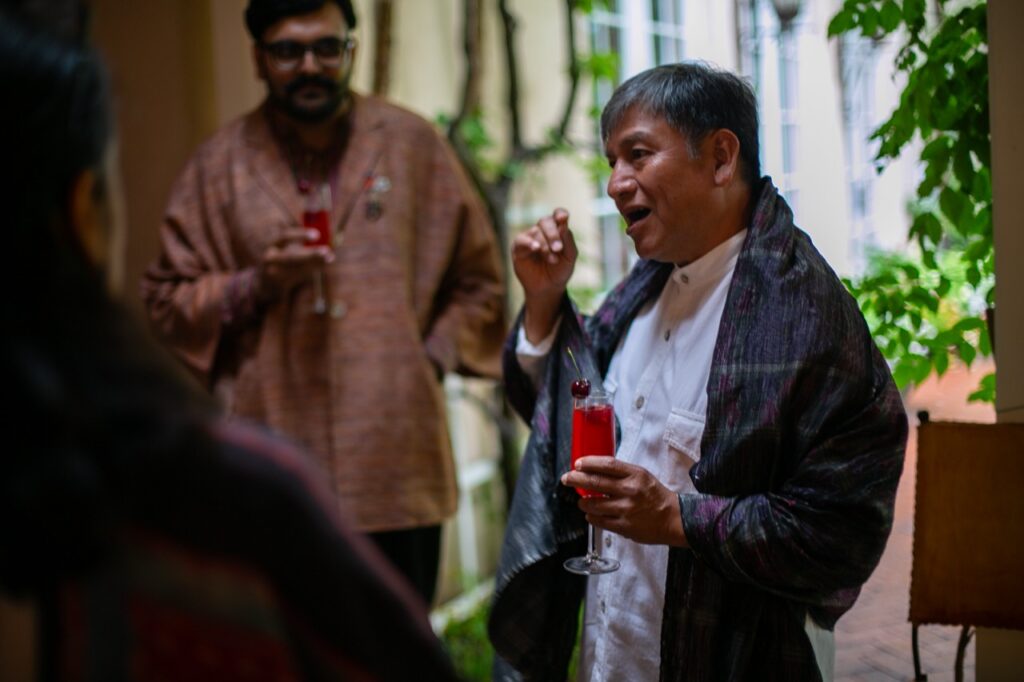
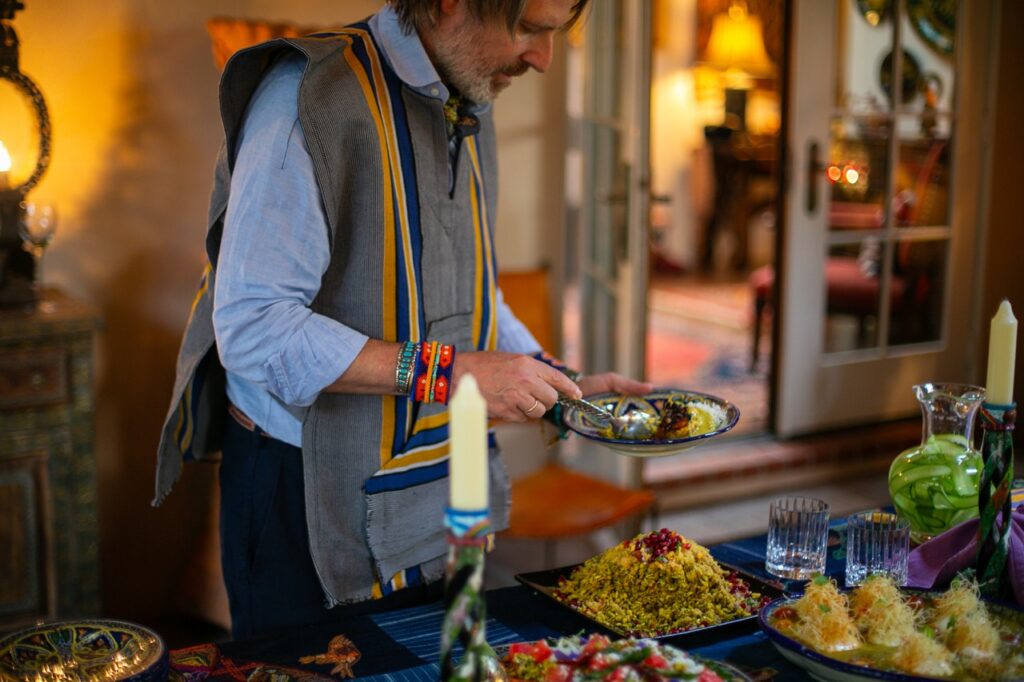
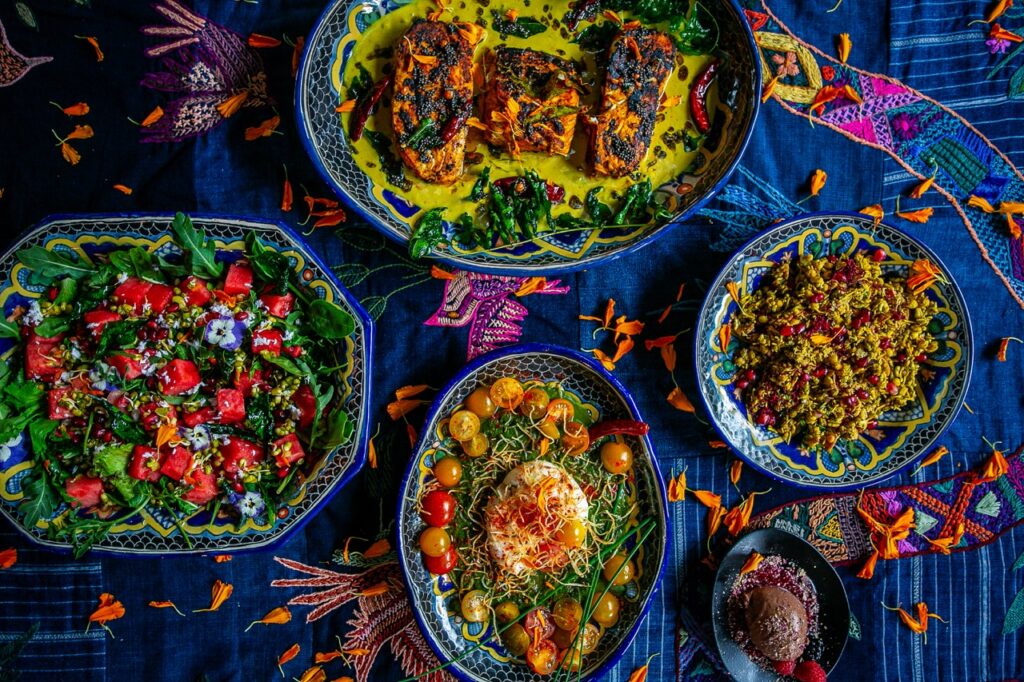
Dinner was a chance for IFAM textile artists, market supporters and volunteers, and board members to catch their breath, reconnect, and enjoy a relaxed meal created by Dhiru Paulraj, chef and owner of Marigold Kitchen. Pieces from Sugg’s own textile collection decorated the table, with bright colors mirroring vibrant dishes like a saag burrata made with a kale and spinach sauce, and then spiced with cardamom, cinnamon, cloves, and cumin. Sugg’s granddaughters were on hand as well, having finished a weekend of volunteering at the market.
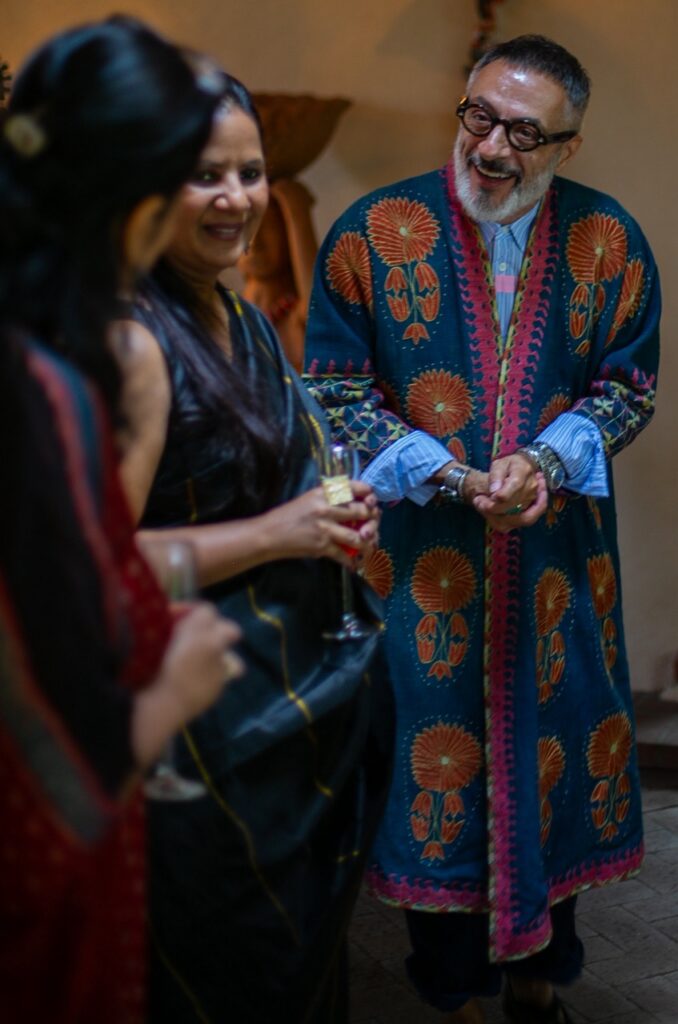
“Finding not only textiles but all types of creative traditions in the world is what makes IFAM so special,” Sugg says. She points to the work of dinner guest Gunjan Jain from Odisha, eastern India. Jain heads up Vriksh Designs, which supports the cultural heritage of people working in textiles across India, such as hand-reeling tussor silk – a so-called wild silk valued for its rich texture and golden color. She focuses on saris, dupattas, and scarves, made with a variety of techniques and patterns.
Jaipur-based Hemangini Rathore, a descendant of the royal family of Bikaner, India, was also present. Her organization, Sudarshan Textile Arts, supports heritage textiles and seeks to preserve traditions from ikat and shibori to dabu – a mud-resist method of block printing. Her work adapts traditional techniques within an elegantly restrained color palette dominated by natural indigo blues. It carries a sense of lightness as well as refinement within it.
Bringing the World to Santa Fe
As guests enjoyed Paulraj’s grilled halibut in moilee sauce – redolent of coconut milk, turmeric, and green chile, and also dotted with crispy fried curry leaves – talk turned to the market and the role it plays in nurturing artists and folk art around the world. It’s the world’s largest folk art market and is integral in preserving traditions and in providing artists with a platform for sharing their work and their stories. “They’re [the artists] going to die out if they don’t find places to show and sell their works of art. And it would be a big loss to the different cultures of the world to see the disappearance of these traditions,” Sugg says.
What’s exciting for both artists and IFAM-goers is that many of these textile artists continue to evolve both in design as well as in the materials they use. Take Remigio Mestas. At the age of seven, he started working in a handicrafts school – what he calls “my school of folk art.” At 15, he began weaving on the backstrap loom, just as his mother, grandmother, and great-great-grandmother did in Villa Hidalgo Yalalag, a Zapotec town in the Sierra Norte of Oaxaca, Mexico. Today, his work is inspired by the color he sees as he travels the world (the black and white or “yin and yang” of China, or the blues of Thailand, for example) but is always grounded in the traditions of home. “My inspiration? My mother, my genes, women in their struggle to express themselves through time and against the current,” he says.
The Real Meaning: Connection
Visitors to Oaxaca City flock to Maestas’s downtown shop, Los Baules de Juana Cata. There, they find a stunning assortment of folk textile techniques infused with Maestas’s beautiful sense of taste as well as innovation. Much like attending IFAM, each visit to his store is an education in treasured craft techniques, each with its own history delivered in symbols rich with meaning.
As the night drew to a close and goodbyes were said, it was clear that what we call textiles encompasses a huge range of work and practices. But as great as the diversity is, the points of connection are just as strong – if not stronger.
What They Ate From Marigold Kitchen
- Grilled Halibut with Moilee Sauce
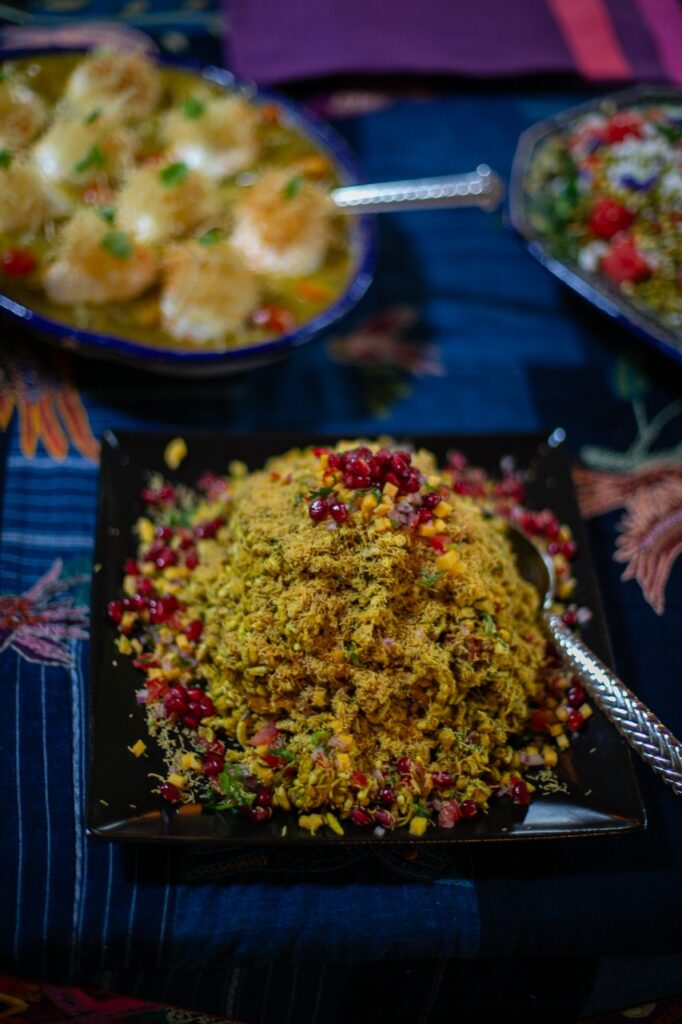
- Bhel Puri
- Saag Burrata
- Watermelon Sprout Salad
- Rosewater Chocolate Mousse with Raspberries
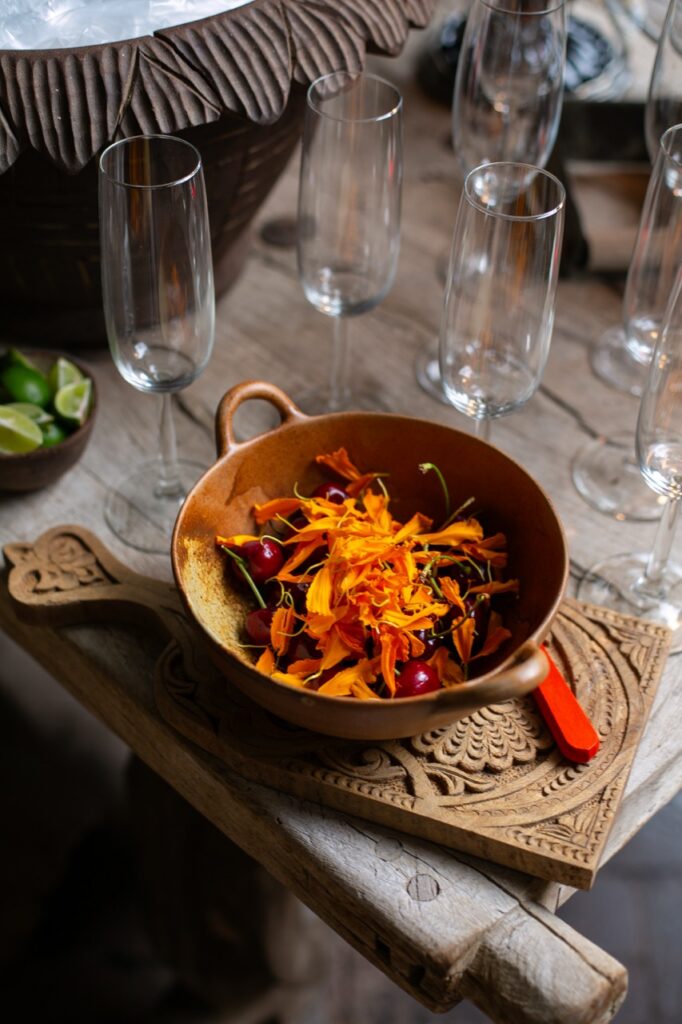
- Cherry Shrub & Ginger Mocktail
Story by Julia Platt Leonard
Photography by Ashley Perry Lynn
Food by Dhiru Paulraj & Marigold Kitchen
Subscribe to TABLE Magazine’s print edition.