Winter often gets a bad rap. Yet in New Mexico, it’s a glorious mash-up of fluffy snowflakes, azure skies, fragrant burning piñon logs, and golden sunlight. When the shortest day of the year approaches, people around the world celebrate the Winter Solstice. Among them was a group of friends who gathered at Eight Million Gods in Truchas to honor ancient traditions and create new ones of their own.
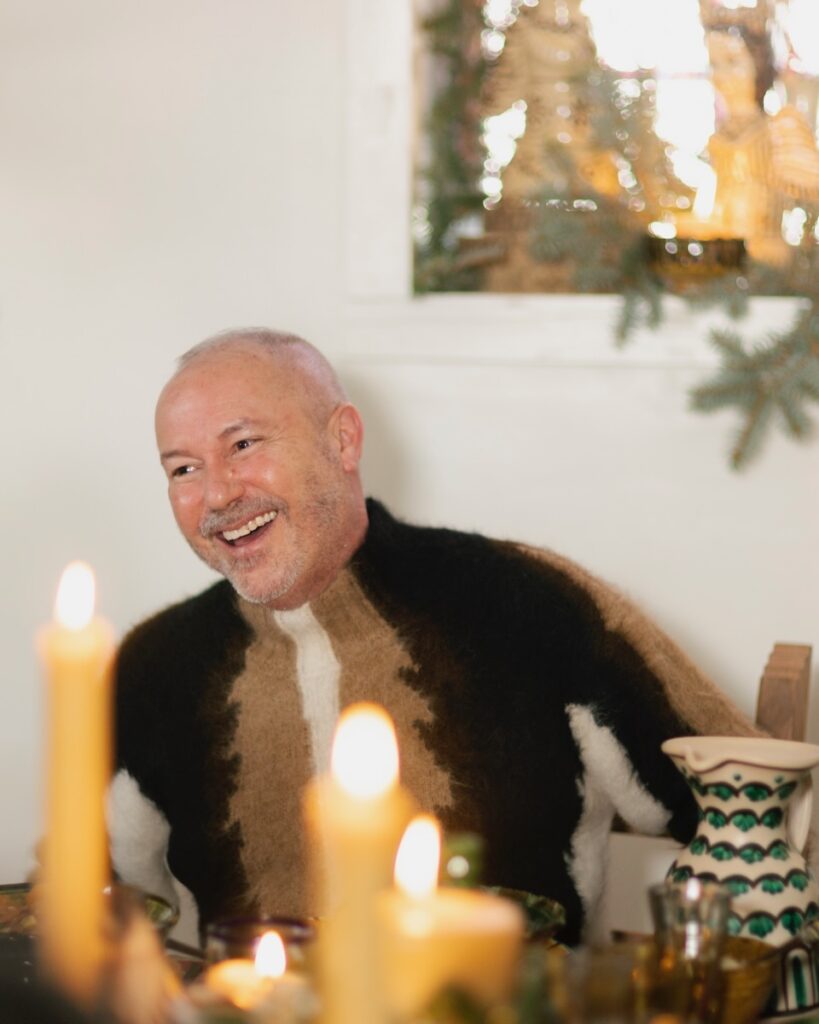
Mr. Simoneaux himself.
Finding Warmth in Truchas
New Mexicans get off relatively easy in winter. However, around 4:45 p.m., it can feel as if an iron door slams shut, locking out the light. The dark and cold linger too long until the sun returns. Still, just when the season might start to wear you down, preparations for the Winter Solstice begin. The celebration of the longest night of the year signals hope for brighter days to come.
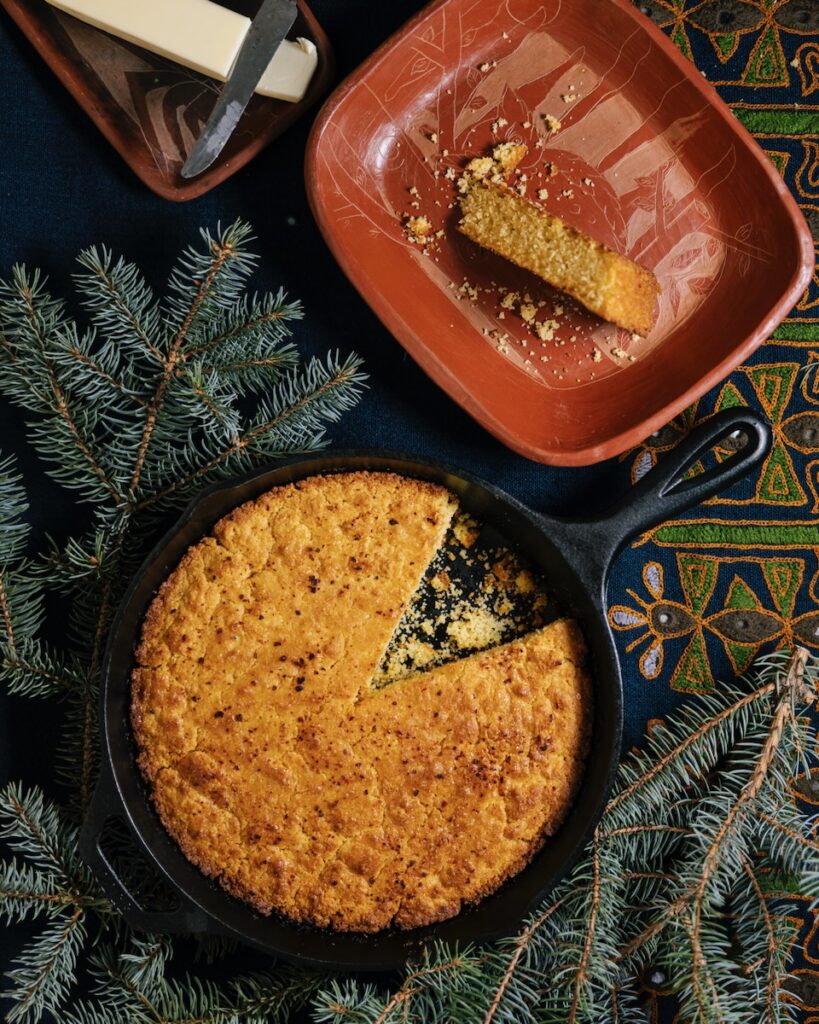
Cornbread brushed with hot honey butter.
This is where we found a merry group of eight friends. They included a dance instructor, a practicing Buddhist psychologist, a lawyer, a retired art consultant, and a specialty retail shop owner. They gathered at Eight Million Gods, an international folk art store in Truchas owned by Hayward Simoneaux. For two decades, he was the visionary behind the beloved Todos Santos Chocolates and Confections in Santa Fe.
A Feast for the Longest Night
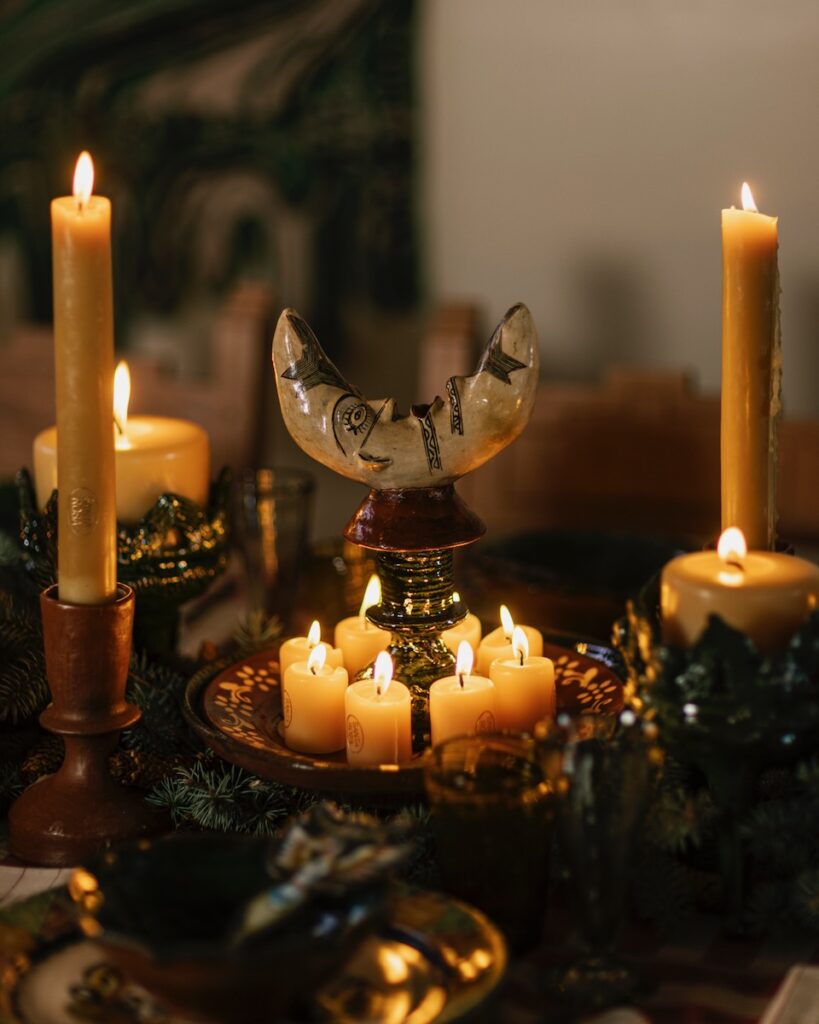
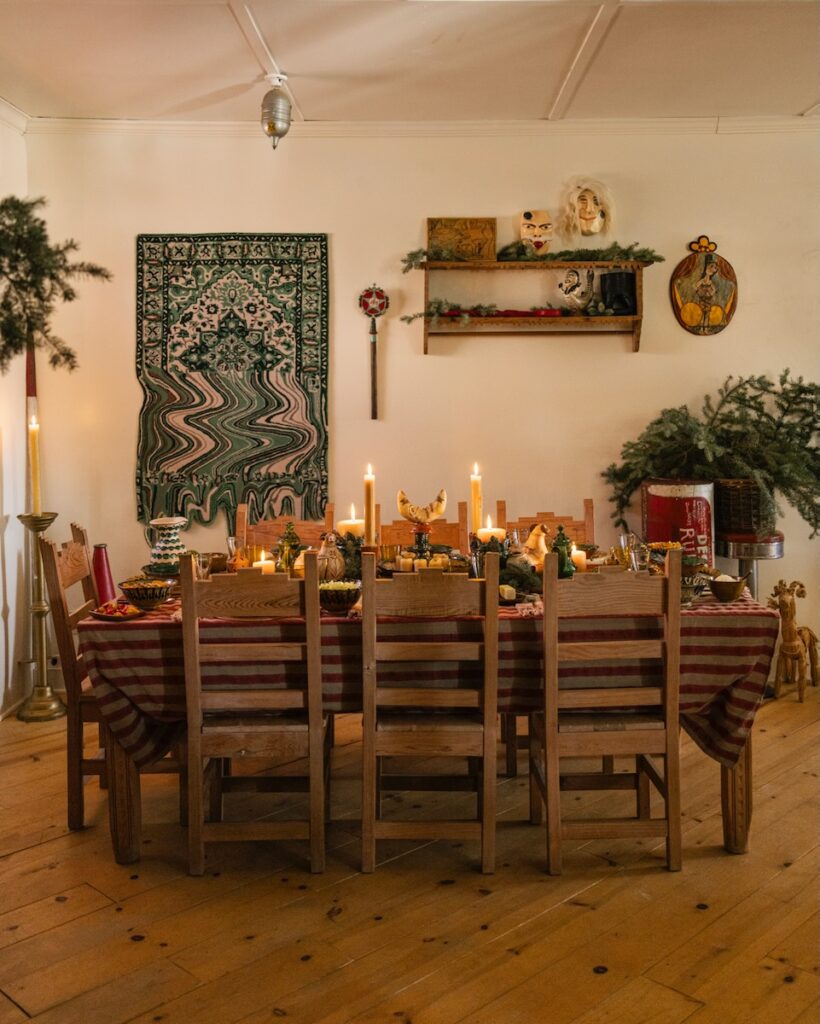
Details of the wonderful table set by Hayward Simoneaux at Eight Million Gods.
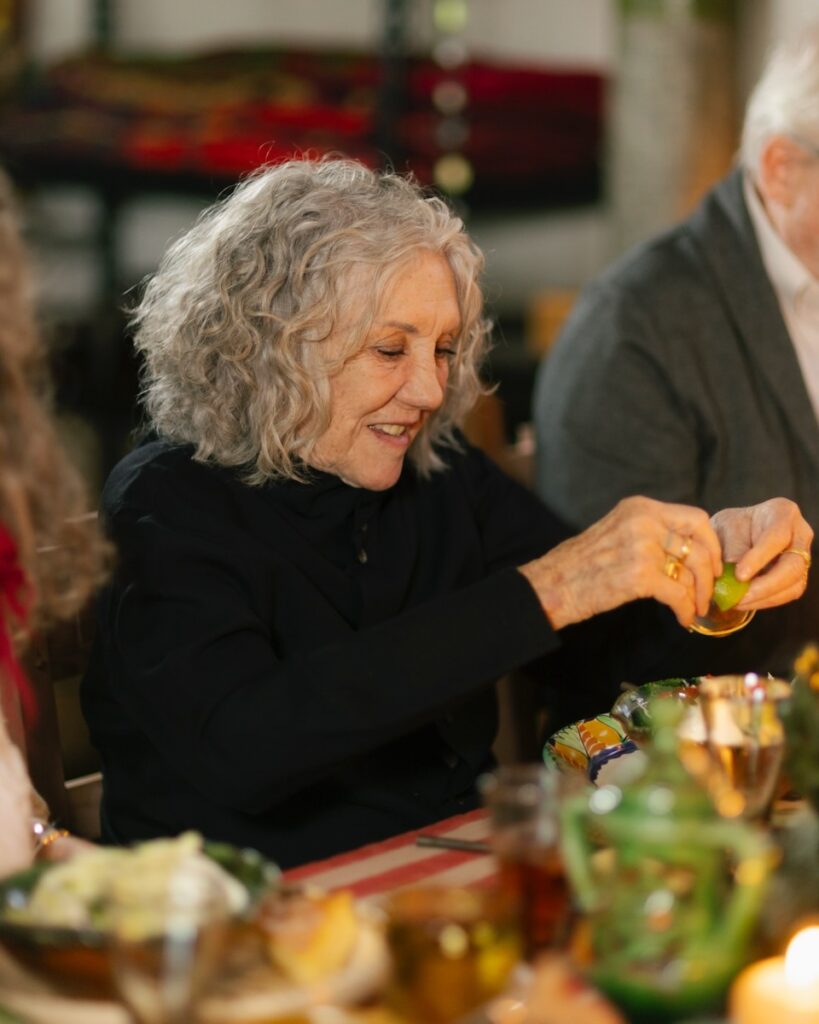
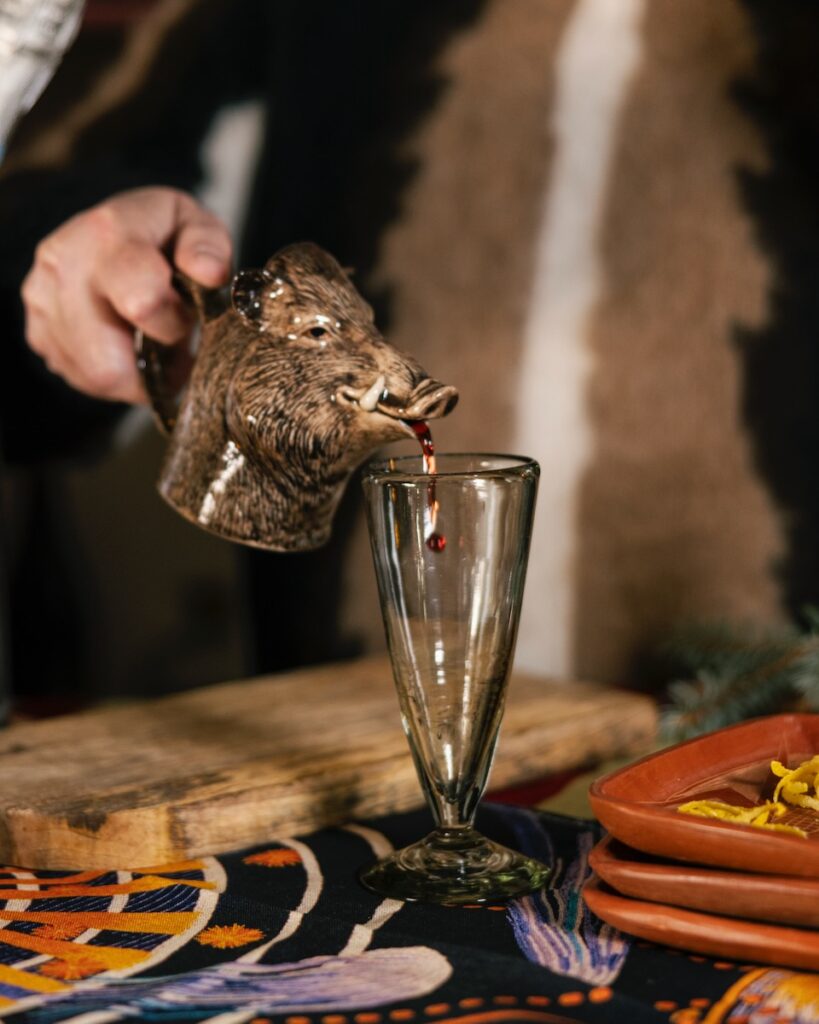
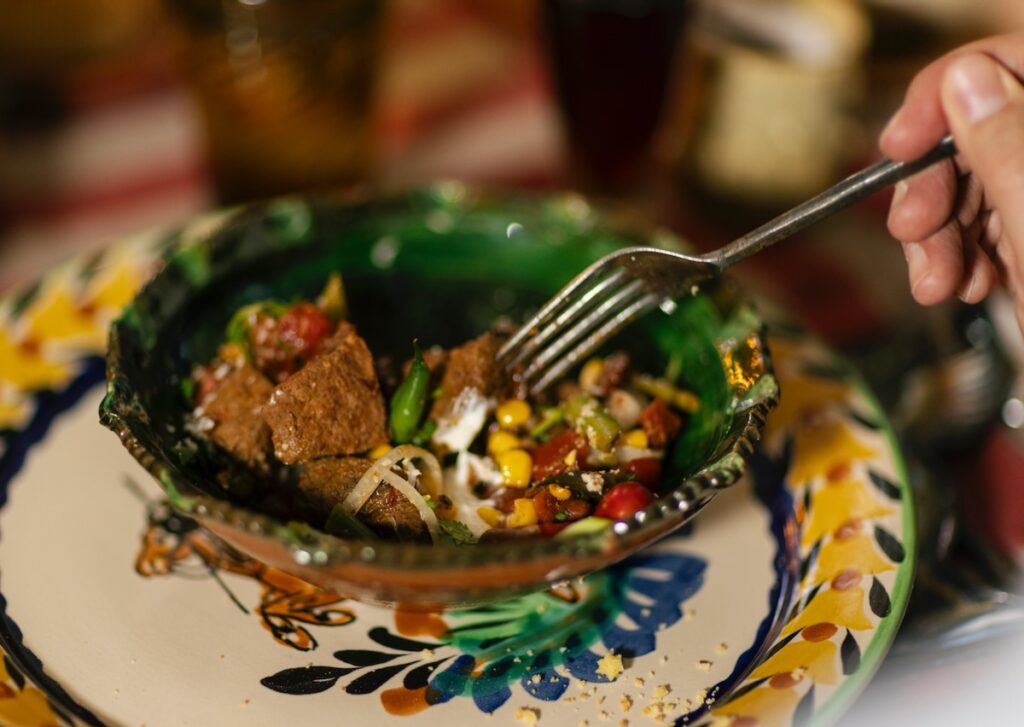
They swapped stories, shared jokes, and drew strength from one another over a hearty winter stew. The meal featured slow-cooked chipotle chile-beef with pinto beans, green beans, corn, and tomatoes. Guests dressed up their bowls with sliced radishes, cotija cheese, and other toppings. To complete the meal, there was warm cornbread brushed with hot honey butter. For drinks, everyone enjoyed a chilled mulled wine spritzer.
Dessert carried its own meaning. Hayward treated the group to an apricot and chocolate-filled yule log cake—a nod to one of the oldest Winter Solstice customs from Scandinavia. Once a sacred log soaked in wine and herbs, it was decorated with ivy, holly, or pinecones and burned over several days. The longer it burned, the more good fortune it was said to bring.
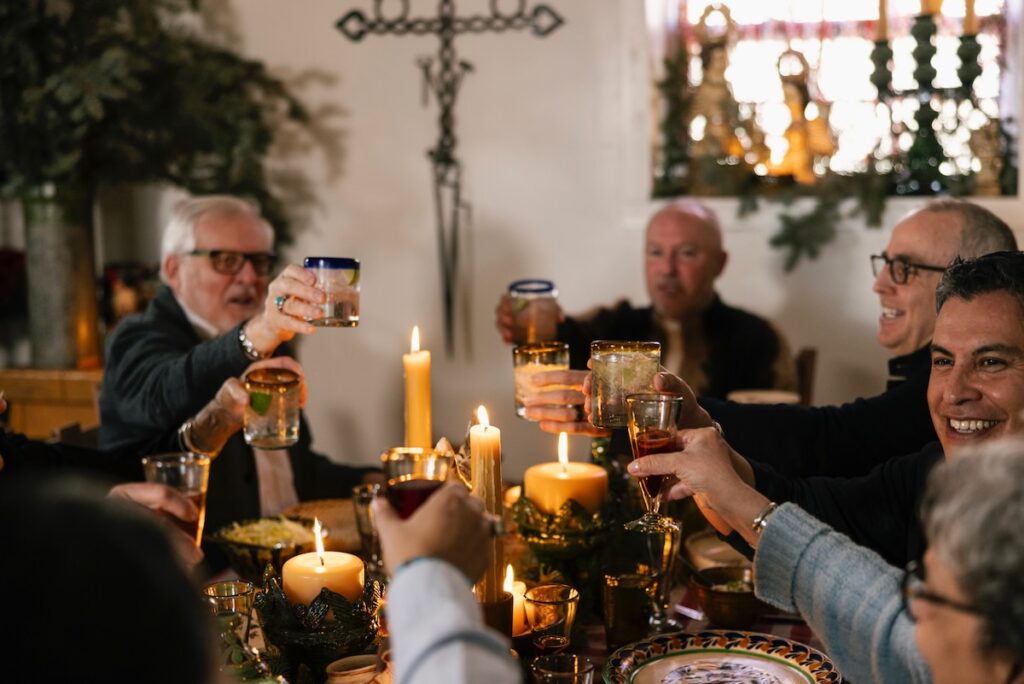
Just when you think the darkest season might break your spirit, mark the Winter Solstice’s promise of lighter and brighter days to come with candlelight, friends…and a feast!
Global Traditions, Shared Light
Meanwhile, as this group gathered in Truchas, others celebrated around the world—many through food. In Asian Winter Solstice traditions, for instance, sweet treats often take center stage. South China and Taiwan enjoy Tangyuan, soft glutinous rice balls, while Northern China celebrates Tongzhi with dumplings. Meaning “winter arrival” in Mandarin, Tongzhi marks the peak of yin (darkness) and the return of yang (light).
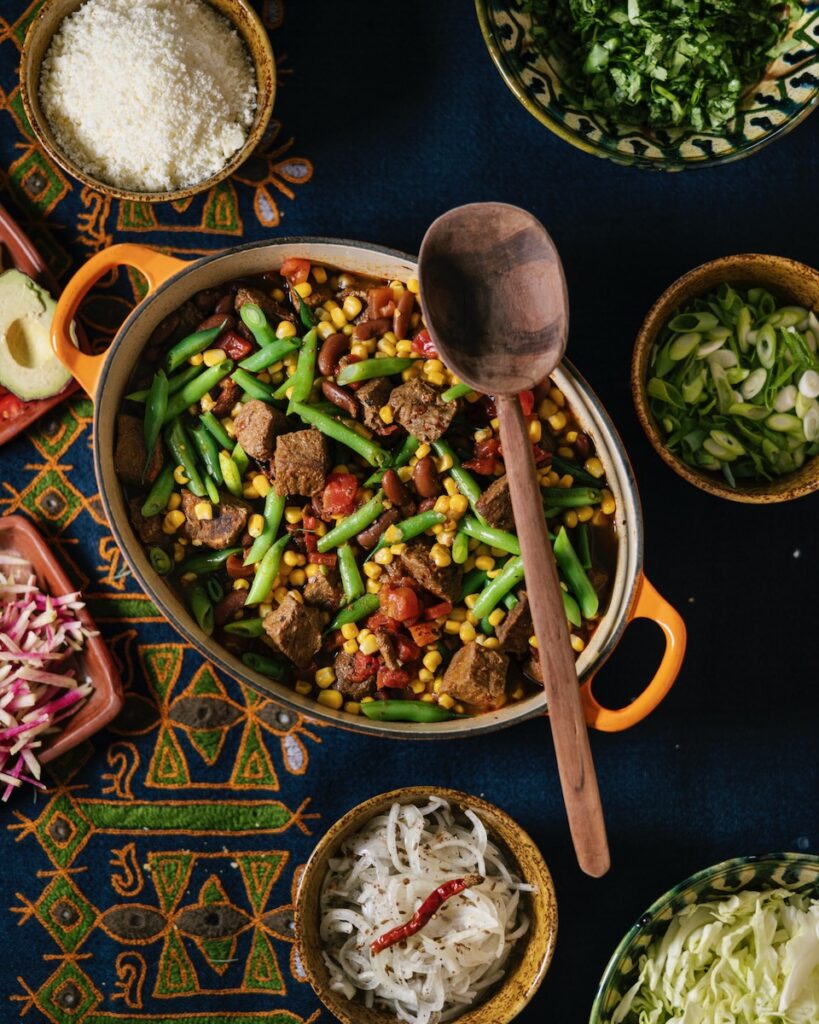
A winter stew of slow-cooked chipotle chile-beef with pinto beans, green beans, corn, and tomatoes.
In Iran and other Persian-speaking countries, communities celebrate Shab-e Yalda, or “night of rebirth.” Believed to be the peak of evil, the longest night inspires people to stay awake by fireside and candlelight. They recite poetry from The Divan of Hafez, a revered 14th-century collection. Common foods include pomegranates, whose seeds symbolize dawn’s glow, and dried fruits and nuts that provide warmth and strength through the cold.
Likewise, in Japan, some people take hot baths infused with yuzu citrus to prevent illness and attract good fortune. Across the world, pilgrims visit the ancient solar sites of Newgrange in Ireland and Stonehenge in England to witness the solstice sunrise. At the same time, Mayan spiritual leaders in Central America perform sound baths, chanting circles, and blessings.
Even in North America, gatherings have evolved to include candlelight vigils or bonfires. In New Mexico, Pueblo communities mark the sun’s return with dances, storytelling, and prayer sticks. Others reflect and set intentions while walking along farolito-lit streets dotted with glowing piñon towers.
Light in Every Culture
Regardless of origin, all these traditions share a belief—rooted in ancient, earth-based faiths—that honoring the Winter Solstice helps guide us out of darkness. Fittingly, Eight Million Gods made the perfect host for such a gathering. Hayward chose the store’s name from the Japanese Shinto religion, which teaches that gods—or positive forces—exist in everything.
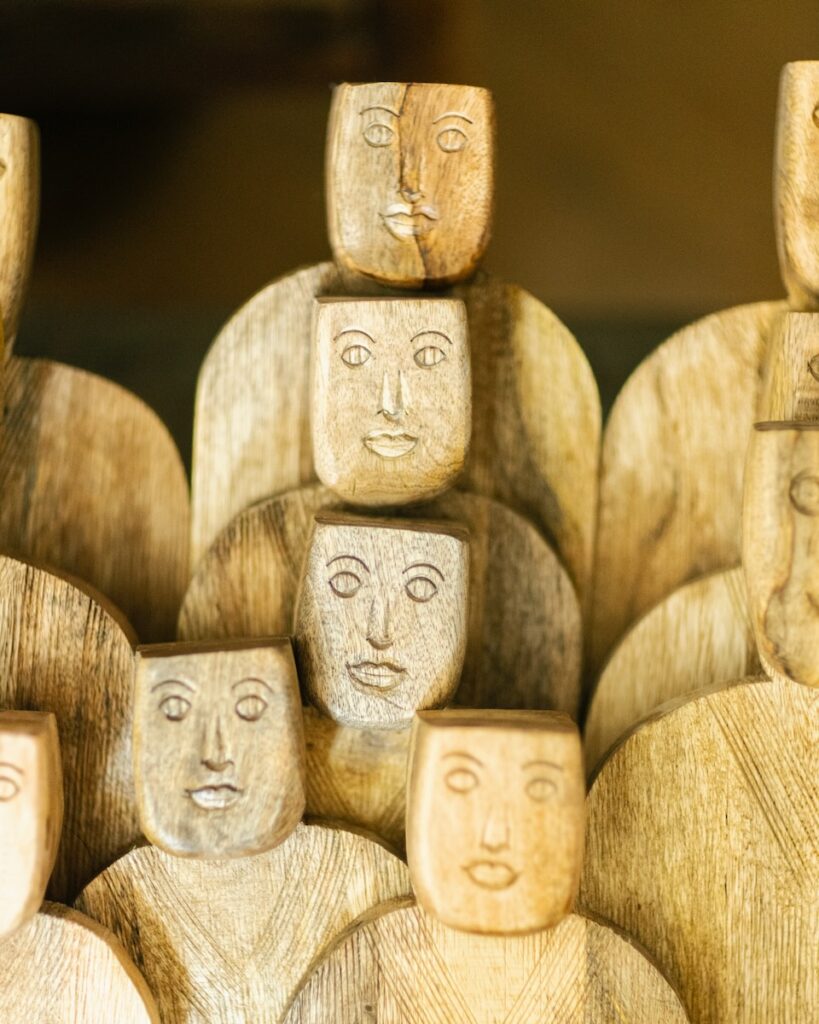
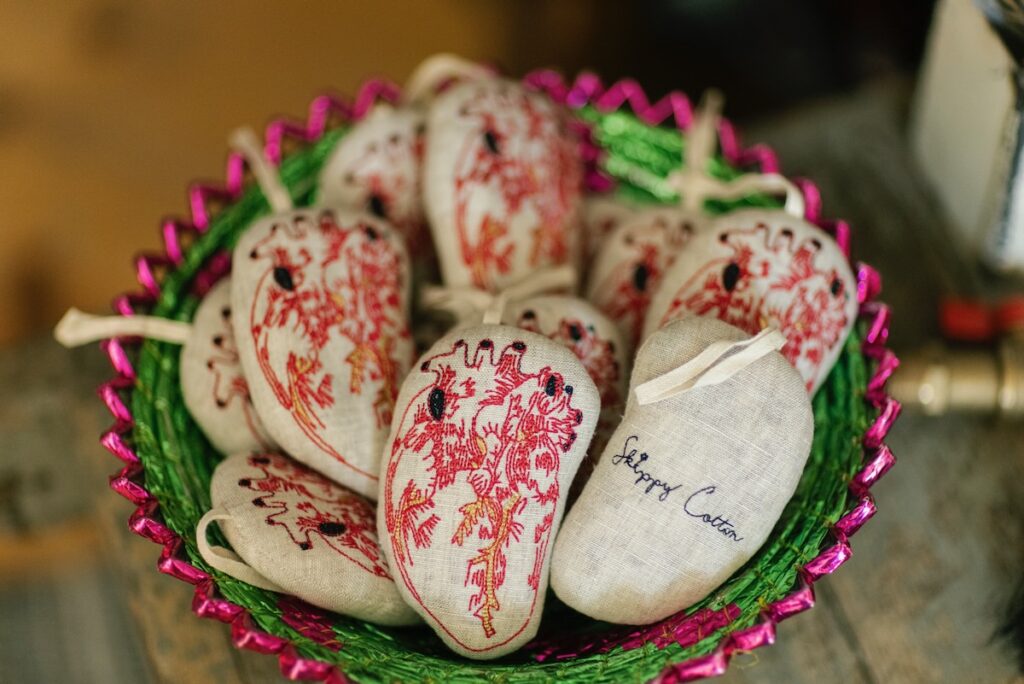
As guests wandered through the space, meaning radiated from every item. Latin American silver Milagros (miracles) promised hope. Vintage Indian kantha quilts, sewn from recycled saris, seemed to whisper stories of their pasts. A Hopi Heheya Kachina offered fertility and rain, while a “Brahma the Creator” mask symbolized divine power and sacred knowledge.
A Celebration of Spirit and Art
“What better way to come out of hibernation,” Hayward said, “than a festive meal with friends?” The evening’s blend of décor, table setting, and food reflected Eight Million Gods’ curated collection of art, clothing, and home goods from diverse cultures and traditions.
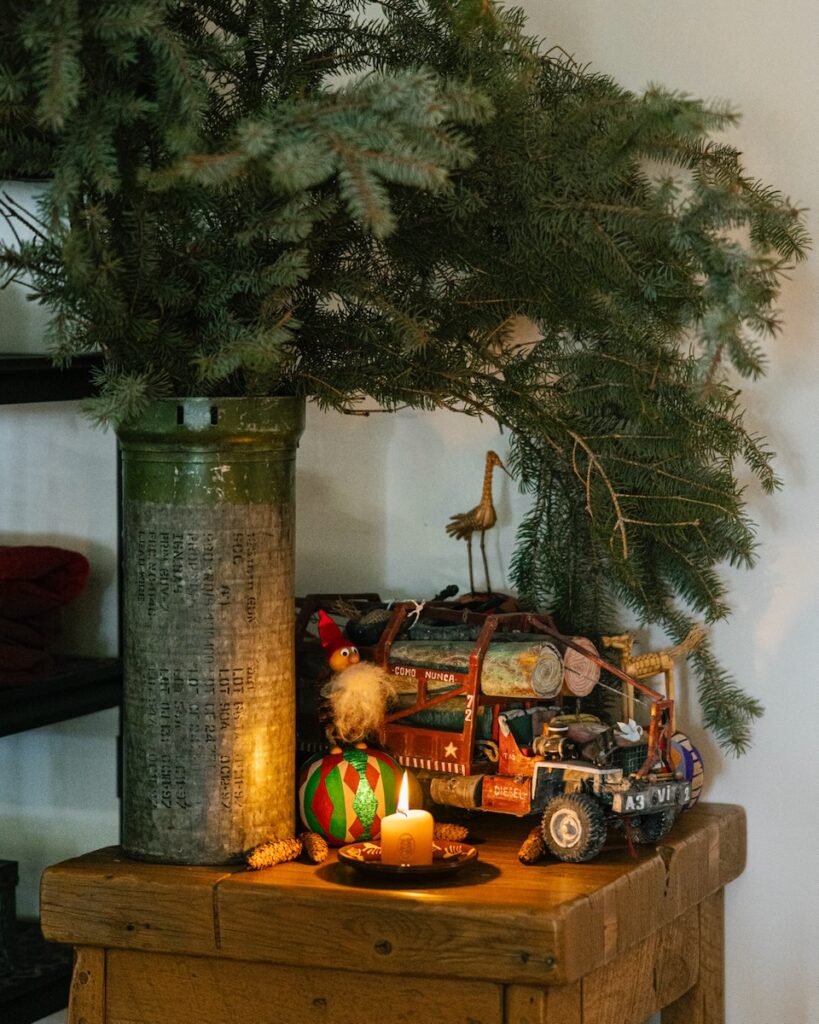
Finally, as the night came to a close, Hayward smiled and said, “We cap it all off by opening the ultimate shared party favor—a handmade Surprise Ball brimming with hidden gifts!”
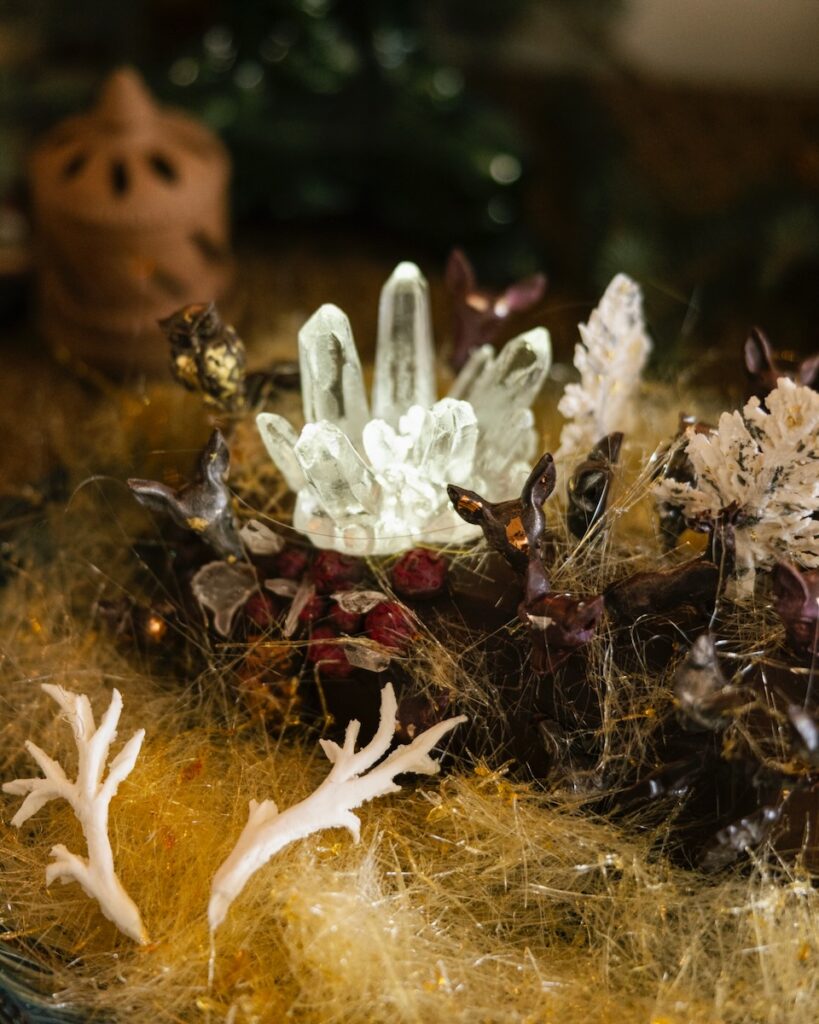
The Sun Returns
Thanks to early civilizations’ spiritual, architectural, and agricultural devotion to the sun, humanity continues to share soulful Winter Solstice traditions today. From the Egyptians’ worship of Ra to the Mayan solar pyramids, Babylonian astronomy, and the stone temples of Newgrange and Stonehenge, the story of light unites us all.
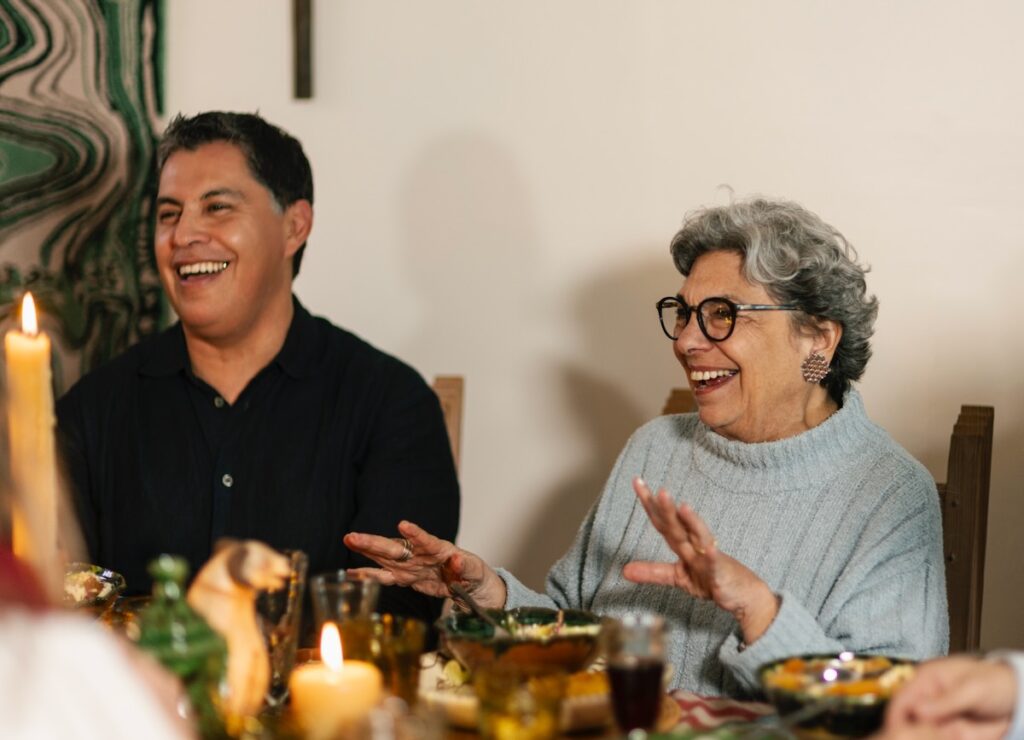
In the end, only the almighty sun could inspire such a worldwide celebration of renewal.
Story by Cullen Curtiss
Photography by Tira Howard
Food by Julia Platt Leonard
Shot on location at Eight Million Gods, @eightmilliongods
Subscribe to TABLE Magazine‘s print edition.