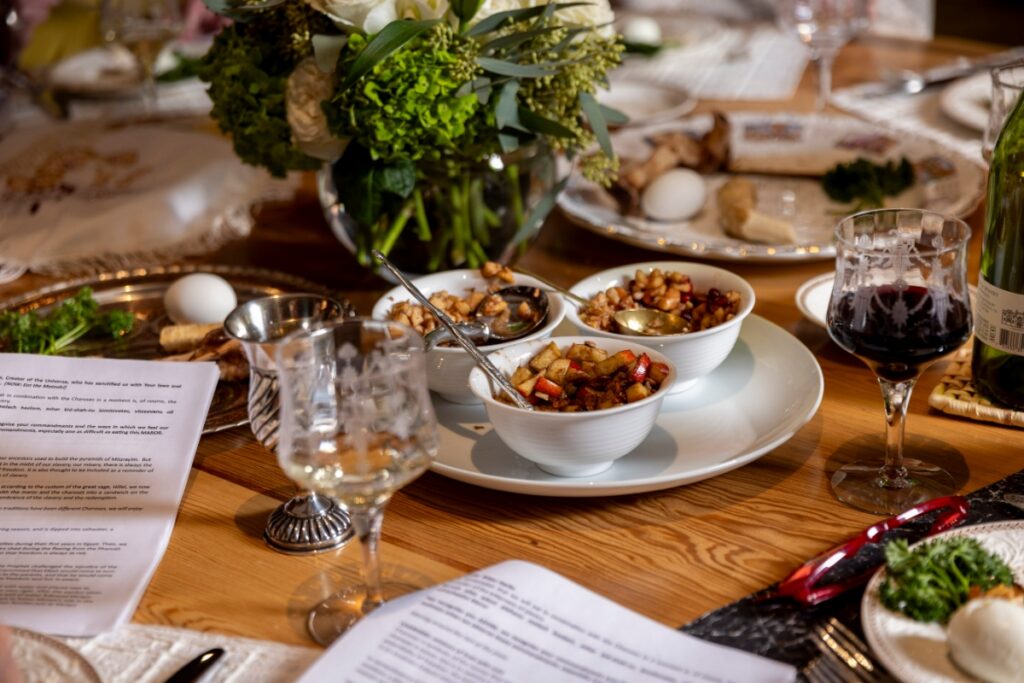
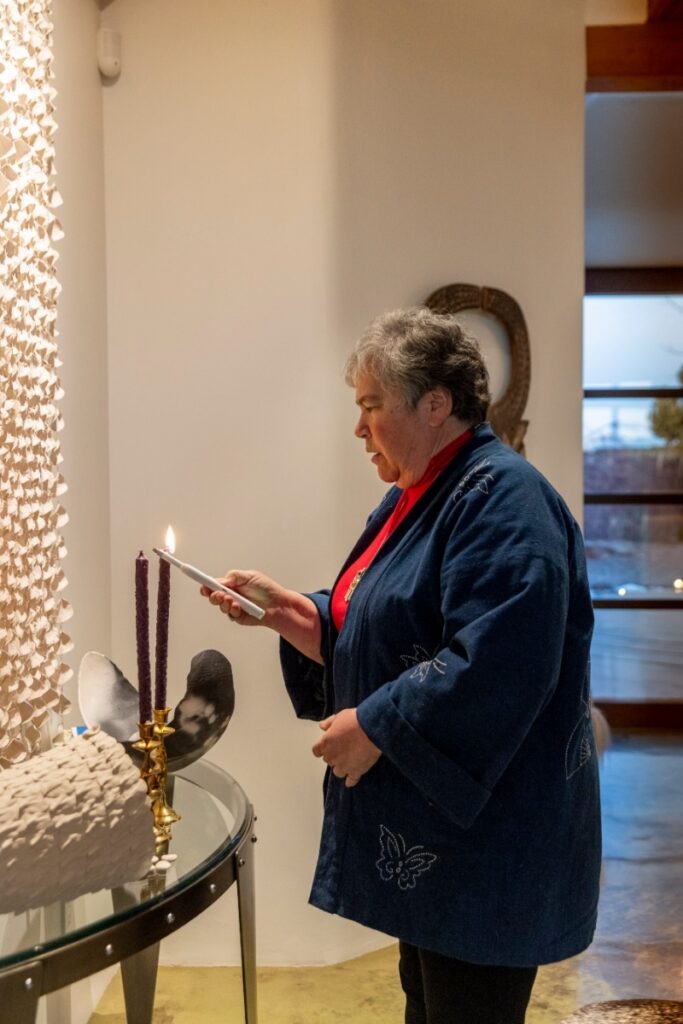
The lighting of the candles…the drinking of the first cup of wine…the horseradish, a reminder of the bitterness of slavery, and the charoset– a mixture of fruit with nuts – a sign that even in the midst of slavery, there is the sweet possibility of freedom.
The Tradition and Compassion of a Passover Seder
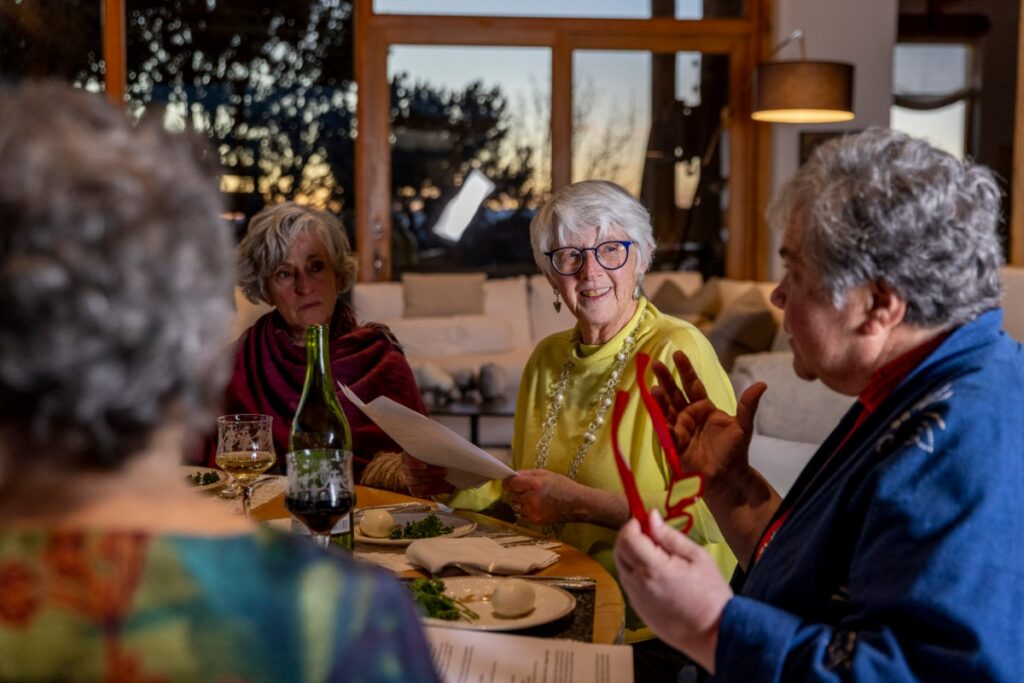
These were just some of the elements of a Passover Seder hosted by Rabbi Carolyn Silver and Jill Heppenheimer for TABLE Magazine at the home of close friend Pat Stanley in Santa Fe. Silver and Heppenheimer have celebrated Passover their entire lives and for them this beloved holiday is an opportunity to gather in both somber reflection and joy.
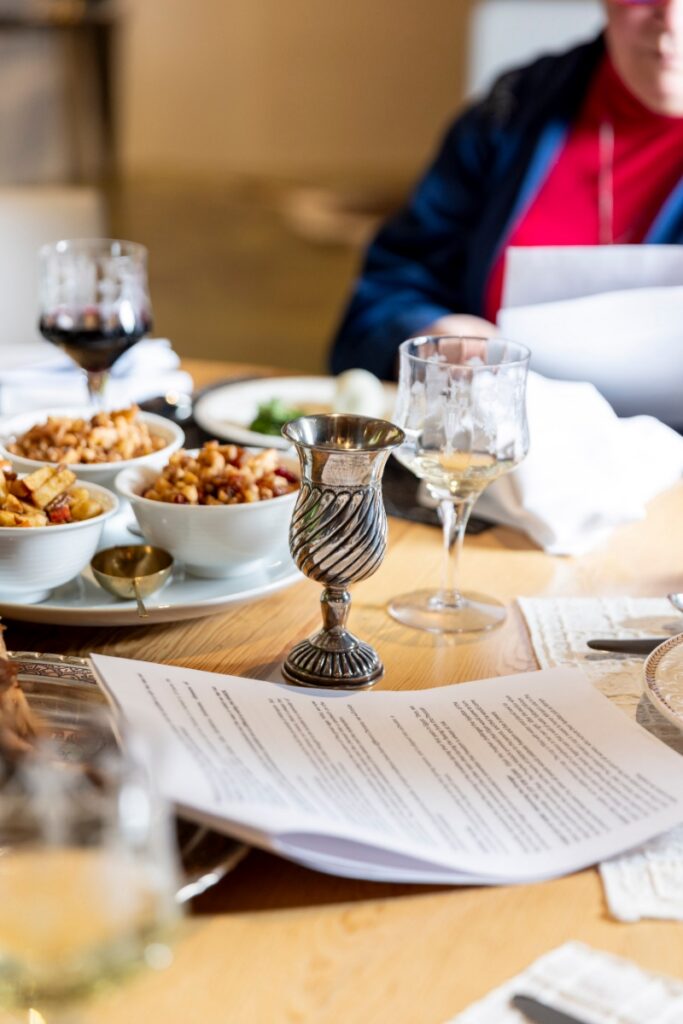
Heppenheimer calls it muscle memory – that deep familiarity that comes when you’ve celebrated a holiday every year of your life. Passover, the spring festival commemorating the Jewish people’s exodus from slavery to freedom, isn’t only historic, it’s also contemporary when people are enslaved today in many ways and many places in the world. “Jews often feel that the telling of the Passover story is an important time to bring to the forefront of our religious practice an appreciation that the journey towards liberation never ends. Even if we aren’t personally enslaved, our fellow humans around the world are,” Heppenheimer says.
A Gathering for All
“I invite Jews and non-Jews to come to the Passover Seder because I think the story of Passover is so significant, not only in the history of the Jews but in all our history – that idea of moving from bondage to liberation,” says Silver. Silver, a Santa Fe native, remembers that as a child, some 30-40 people would gather for Passover. “We always had the Seder at the temple and the women of the congregation would make all the food, including the gefilte fish, which smelled horrible but tasted great,” she laughs.
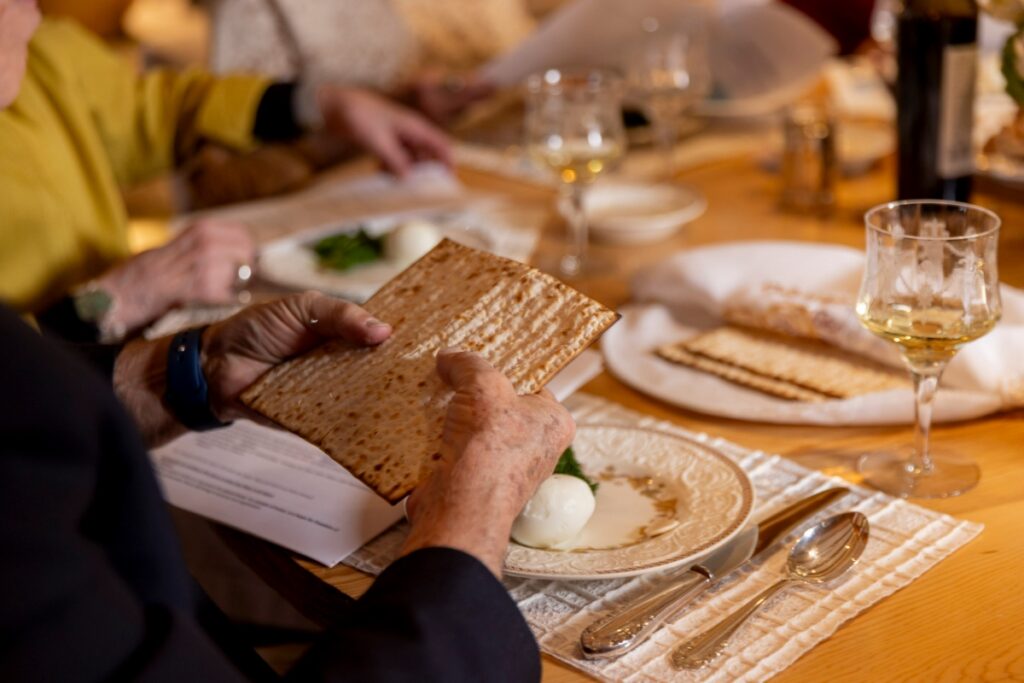
In the 70s and 80s many people started writing their own Haggadah, including Heppenheimer. “It elevated the role of women…and became more creative, more inclusive,” she says. For this seder, she and Silver wrote a Haggadah that reflects on the challenges of today. “When I write [a Haggadah], I say, ‘So what are today’s terrible things? Poverty…lack of affordable housing…the war against Gaza.’ And people call out, what are their concerns? Suicide, teenage suicide, drug addiction, you know? So we make it relevant, and we realize that many people are in pain – it’s not just slavery,” says Heppenheimer.
The Importance of Passover Today
In our current turbulent times, the Passover story has added weight. “We share this fear, and we share hope and the telling of the story is a lot about hope,” Heppenheimer says. It also calls for moments of self-reflection as they say Dayenu! (‘It would have been enough’) and consider what is enough? “What’s enough today?” Silver asks. “What is enough in our lives? And how do we teach that to our kids? How do we really say Dayenu! – it’s enough.”
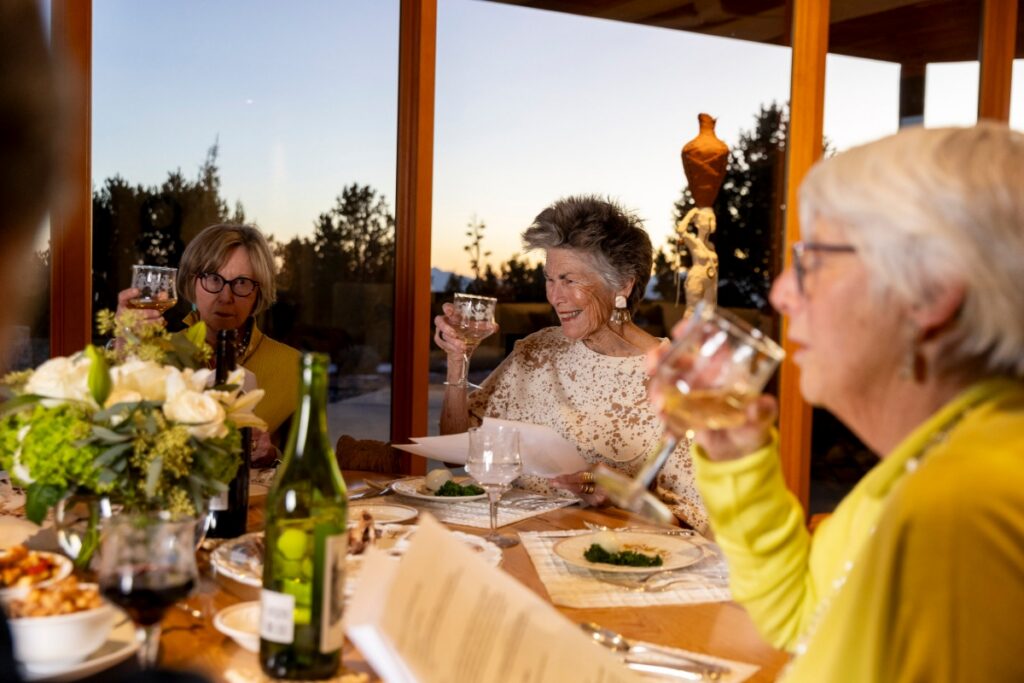
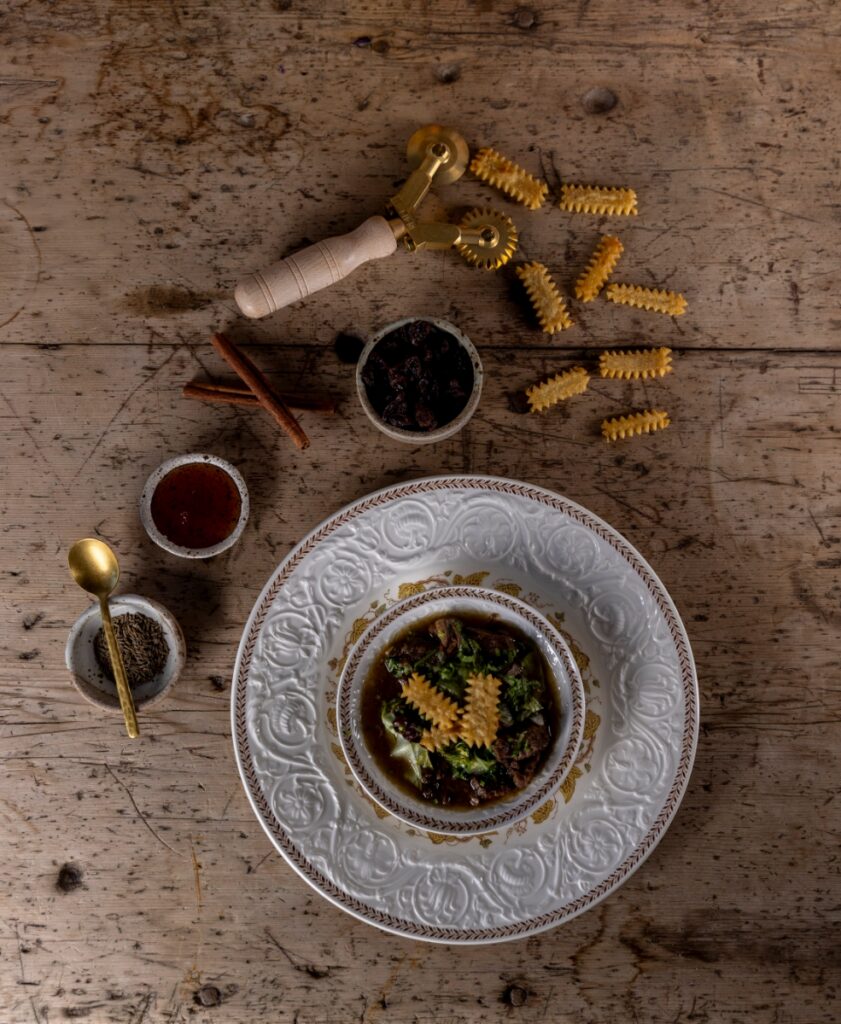
“What makes this night different than all other nights is that we’re supposed to be relaxed, which is historically a sign of those who are free,” Silver says. The mood was relaxed as friends and soon-to-be-friends shared life stories over a meal based on historic medieval Sephardic recipes from European food historian Hélène Jawhara-Piñer. Lamb was slow-cooked with spices – cumin, chile, cinnamon – honey, and raisins, while a Manjar Blanco (white pudding) was made with almond milk set with agar, then h=garnished with pomegranate seeds and pomegranate glaze.
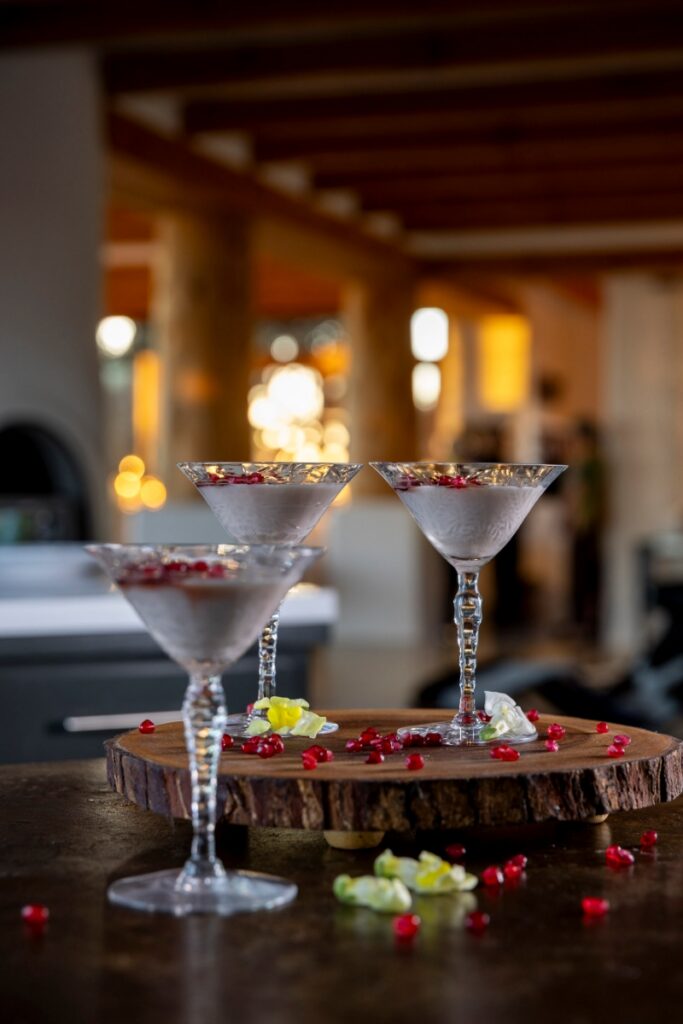
It was different from the traditional Ashkenazi Jewish Seder meals that both Silver and Heppenheimer have enjoyed in the past. “It was fascinating and a wonderful dichotomy of experience and it woke me up to thinking about the meal in a different context,” Heppenheimer says. And it’s that awakening and remembering that makes the Passover story so powerful. “It’s about remembering that we’re all connected and that we’re all significant,” Silver says.
A Celebration of History and Deliciousness
For this special Seder meal, we turned to Hélène Jawhara Piñer, food historian and PhD in Medieval History, and History of Food at the University of Tours in France,. The recipes we cooked and shared at this special Seder meal, were based on ancient recipe texts she unearthed while researching Sephardic cooking traditions. We asked this author of three books including Sephardi: Cooking the History. Recipes of the Jews of Spain and the Diaspora from the 13th century to Today to share why she is so passionate about food history.
“As a historian focused on food, I approach recipes as historical documents—cultural texts that reveal how communities negotiated identity, memory, and survival. My work on Sephardic culinary heritage, especially among crypto-Jews in the “New World,” is grounded in close readings of inquisitorial trials, medical treatises, botanical texts, and domestic records dating back to the thirteenth century onwards. These sources allow me to reconstruct not only what people ate, but why—and under what risks.

For me, food studies offer a way to understand religious customs –and here the Judaic ones– as they were lived and practiced in the Early Modern period, in a special time and place. In contexts where Jewish practice was outlawed, culinary gestures became acts of resistance and transmission. In the New World, and Mexico mainly, adaptation to the local food was a key to keep Jewish food habits, most of them directly tied to Spain, Italy or Portugal food heritage. In the New World, and especially in Mexico, adapting to local foods was key to preserving Jewish culinary habits, many of which were directly tied to the food heritage of Spain, Italy, and Portugal. The difference in climate between the two regions required creative substitutions and culinary innovation. A dish, a texture, or even a cooking technique could encode ritual meaning, although remaining sometimes visible to outside observers. I treat recipes as layered archives: fragments of memory, faith, and adaptation embedded in everyday cooking.
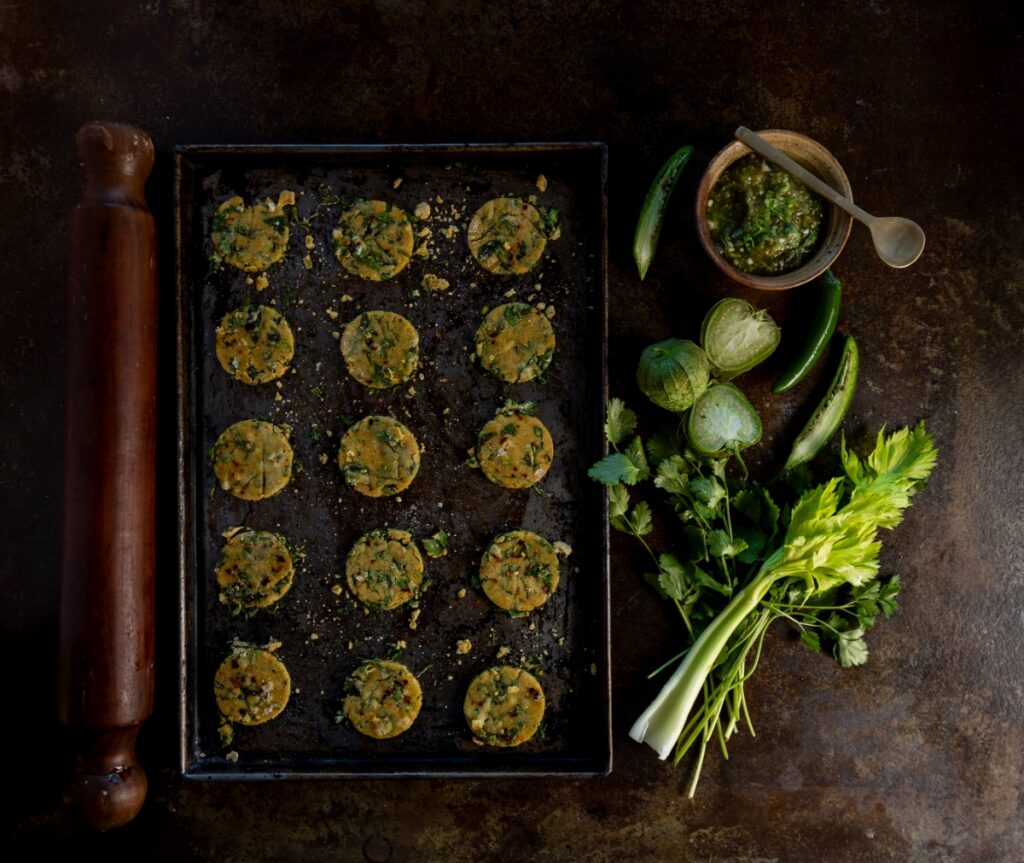
The recipes I study—such as manjar blanco prepared by crypto-Jews in Mexico City for Sukkot, Passover crackers shaped to resemble the Christian host, lamb stews cooked in secrecy during Holy Week, or fish eaten with corn tortillas—are not merely foods but strategies. They reveal how Sephardic Jews in the Americas adapted Jewish law to Indigenous ingredients, colonial environments, and the constant threat of persecution.
By working directly with original documents from the fifteenth to seventeenth centuries, I seek to restore these culinary practices to their historical and emotional contexts. Each recipe becomes a microhistory, illuminating how food sustained Jewish identity across exile, conversion, and silence—transforming kitchens into hidden sanctuaries of continuity and belief.”
Special thanks to Rabbi Carolyn Silver and Jill Heppenheimer for creating and sharing with us this Seder service. And thanks to Pat Stanley for graciously hosting us.
Story and Styling by Julia Platt Leonard
Recipes by Hélène Jawhara-Piñer
Photography by Gabriella Marks
Subscribe to TABLE Magazine’s print edition.