Go to the theatre, ballet, or opera and you make a pact to willingly suspend disbelief for as long as the performance lasts. That pact is only as strong as the world created onstage. That world-making requires skill, hard work, and total dedication. Join us backstage at the Santa Fe Opera to meet the people who make the magic happen.
Santa Fe Opera’s Stage Design and Production Team Bring Stories to Life
Before you hear the first bar of music, soak up the scene before you. There is no curtain at the Santa Fe Opera, creating a feeling that nothing stands between you and the tale about to unfold. A line runs from you to the stage, and beyond as you watch the sky and mountains turn golden in the setting sun.
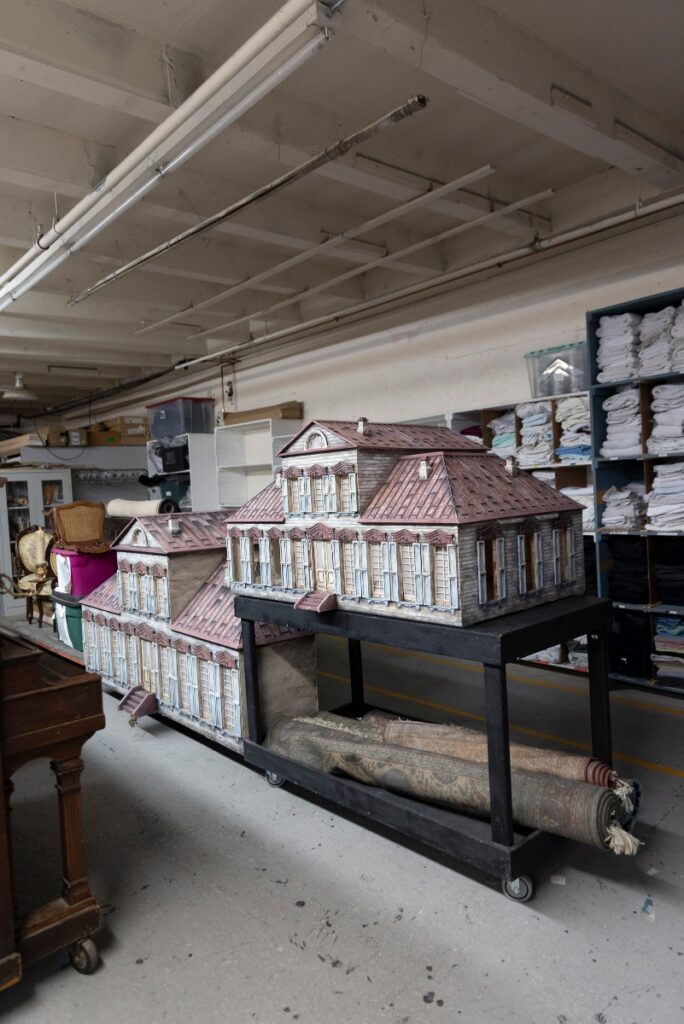
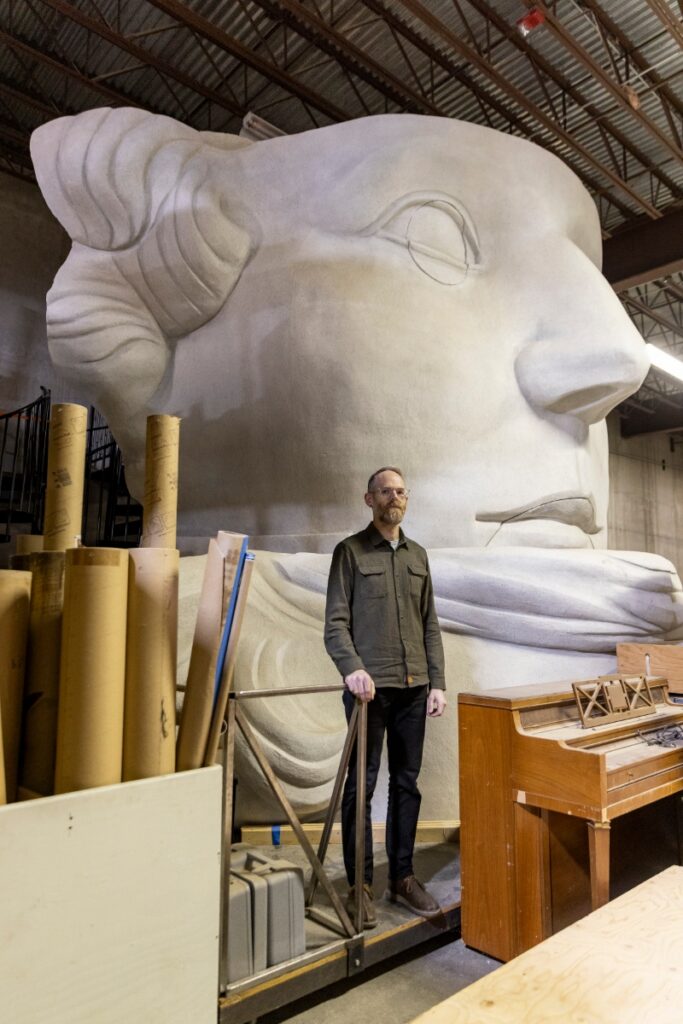
There is a monumentality about the scenery at the Santa Fe Opera whether it’s a massive set of doors that graces the stage for Eugene Onegin or the operating room from Lili Elbe – the much-anticipated U.S. premiere that tells the true story of one of the first people to undergo gender affirmation surgery more than a century ago.
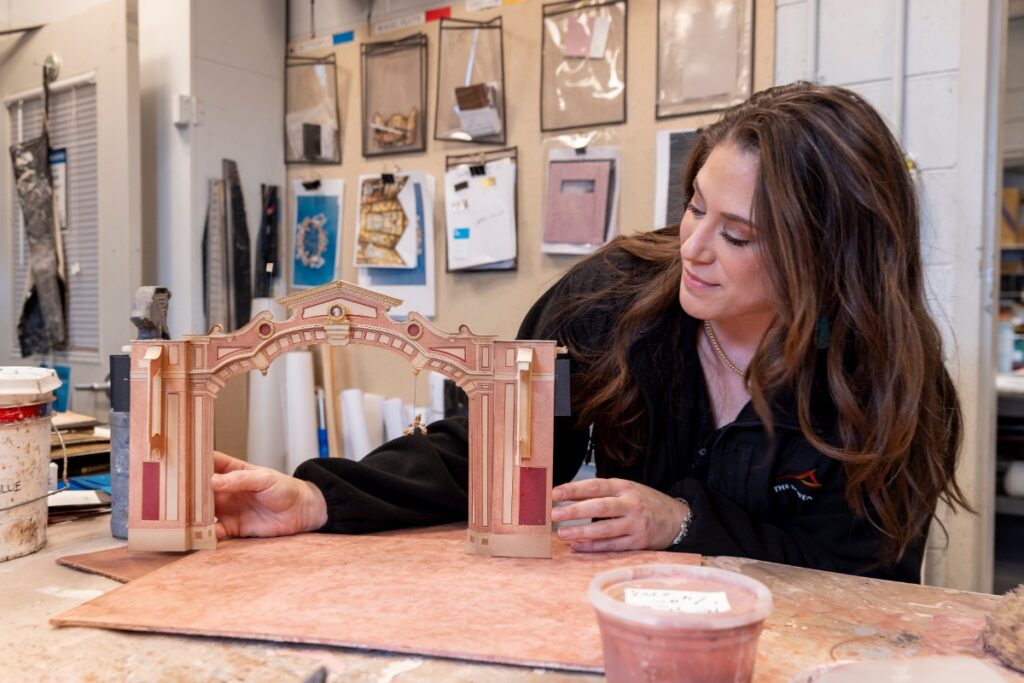
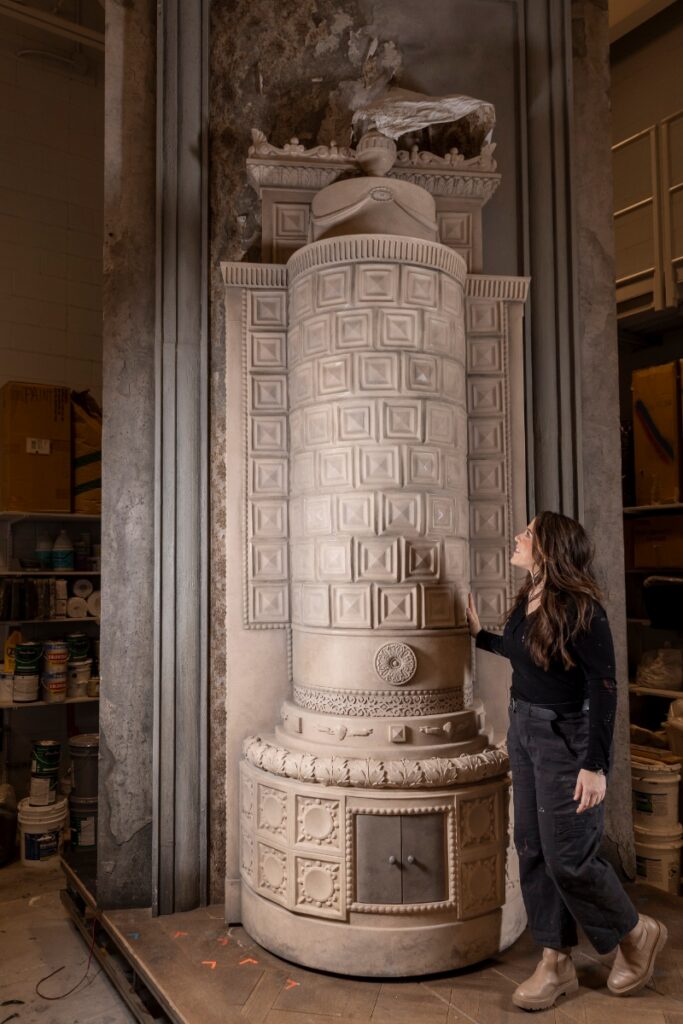
It’s the job – and the joy – of everyone backstage at the Santa Fe Opera to play a part in this scene setting. If you’re looking for evidence, then a visit to Laura Greenfield’s paint-filled lair will convince you. Greenfield is the new Scenic Charge, taking over from Mark Edlund who retired after an illustrious 42 years at the opera. It’s a fitting move as Greenfield has over fifteen years of experience in opera, theatre, film, television, theme park, museum and fashion work, including roles as an apprentice and staff Scenic Painter at the Santa Fe Opera.
From Idea to Reality
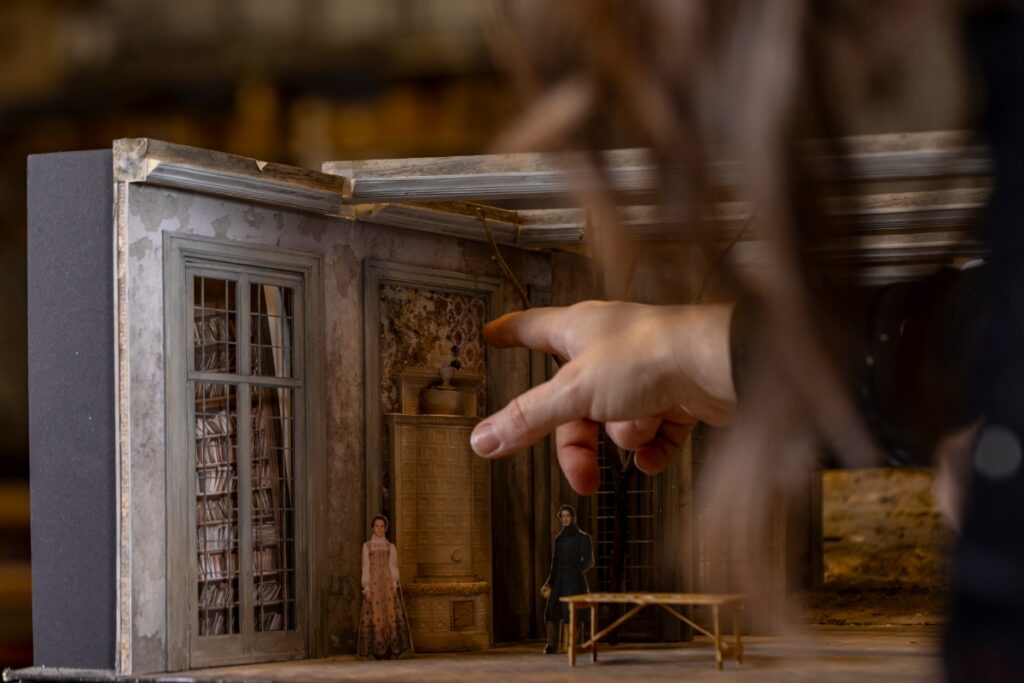
Greenfield takes a model that you can hold in both hands and translates those colors and textures into the painted scenery you see onstage. It’s a passion that was kindled by her humanities teacher, Anne Benford who recognized Greenfield’s artistic talent and invited her to the Atlanta Opera. It was a eureka moment. While the audience was watching a story unfold, Greenfield was thinking about the scenery that made the story real. “I was seeing a whole other story happening. And I was like, that’s where I want to be. That’s where I want to go and connect.” The late set Metropolitan Opera designer Hal Tiné was another important mentor.
The Santa Fe Opera was soon on her radar. A few years after college she interviewed and was offered a summer position. “As soon as I got here, I knew this was the place where I really wanted to be.” One summer turned into eight. “That excitement never really left,” she says.
Stints around the country followed including work on Saturday Night Live which she says had all the excitement of live theater. She remembers the day she had to move a ladder across the studio floor. “It’s early in the morning on Saturday, and I’m like, ‘Excuse me, I have to get through. You’re in my way.’ And who turns around but Steven Spielberg and Tom Hanks. And I’m like, ‘I am so sorry, but you’re still in my way.’”
What did she learn at SNL? “Don’t get attached because things change so quickly,” she says. Another lesson was one she first learned playing team sports in school. “Nothing is mine, everything is ours. Everything has to get done.” Greenfield is quick to credit Mark Edlund with her success and the success of the Opera. “I want to keep that going,” she says, with a sense of childlike wonder.
A Steady Production Team Makes for a Successful Performance
That wonder and excitement is one that Kris Longley-Postema (fondly called KLP by his co-workers) understands and shares. As Director of Production, he’s a master of juggling and multi-tasking. “You’re working with all the different production departments to make the show’s physical elements happen and come to life.” And the creative vision is only part of the equation – it’s also practical concerns, “Staying on budget, staying safe, staying on time.”
And unlike a new theater stage production, many operas – like Madama Butterfly and The Magic Flute, both on the 2026 schedule – are well-known and loved by audiences. “The story is already on the page, and we need to think about these awesome, creative ways to bring that particular story to life,” he says. “Opera just has so many elements to it and it’s on such a grand scale that there’s just more to coordinate. But that’s also what makes it more dynamic and more fulfilling when the show finally comes together.”
An undergraduate in theater and art history and then a graduate of the Yale School of Drama, Longley-Postema worked in New York, eventually coming to Santa Fe to work at the opera during the summer. In 2014 he took a full-time position as Associate Production and Facilities Director.
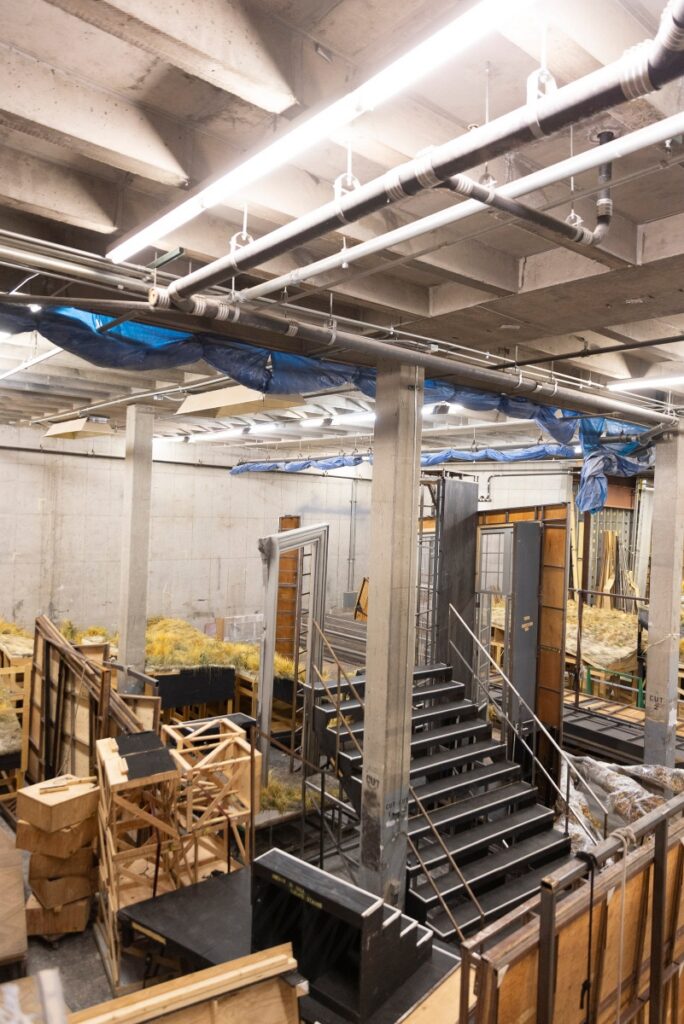
It’s Not an Overnight Process…
Creating an opera starts years in advance with creative teams coming to Santa Fe to understand first-hand the realities of staging an outdoor production. “It’s one thing to describe it to them but another to have them be here and see a show and see what the implications of being outside actually are,” he says. That means, for example, no drapery or chandeliers that could blow in the wind. “Scenery has to be built in a certain way to withstand the wind and the rain, so the site visit for the creative team is really the time for us to talk them through those considerations.”
But Longly-Postema doesn’t mind the constraints – it’s all part of what makes the Santa Fe Opera a one-of-a-kind experience. “I think if people have unlimited budget, unlimited space, unlimited whatever, you can do some cool things. But I think the constraints help you be creative and help you find interesting solutions and sometimes site-specific solutions.”
Santa Fe Opera’s 2026 Season
Director of Production Kris Longley-Postema (KLP) takes us through the delights that are on their way.
Madama Butterfly
“I don’t think we’re trying to revolutionize storytelling around Butterfly, but doing it in a very sort of thoughtful, tasteful and thought-provoking way,” says KLP.
The Magic Flute
Set in a Victorian theater and sung and spoken in English, “It’s very classic and classy in its presentation, very beautiful and ornate. It’s also based in more of a UK-centric tradition of pantomime and marrying the pantomime and the Victorian theater space together to tell a fun, family-friendly story.”
Eugene Onegin
Last performed during the pandemic in 2021, only the principal artists and dancers were on stage. This season, the chorus will be back on stage. “It’s a beautiful production with scenery and costumes by Gary McCann.”
Rodelinda
Handel a minimalist approach with a gangster vibe by director R.B. Schlater. “He is sort of approaching it like a piece of pulp fiction, which I think is going to be really great.”
Lili Elbe
The American premiere of an opera by composer Tobias Picker tells the moving story of a Danish painter and transgender woman who lived and worked in the late 19th and early 20th century. “We’re really trying to tell the story as if we were in the places that Lili was in real life. The scenery, the props, the costumes will all be real to that era.”
Story by Julia Platt Leonard
Photography by Gabriella Marks
Subscribe to TABLE Magazine’s print edition.